Collapse of uranium market led to BHP and Cameco halting uranium mining projects
 He [BHP CEO Marius Kloppers] said demand for uranium had collapsed after the Fukushima nuclear incident last year
The Olympic Dam and Yeelirrie shocks from BHP came hot on the heels of the decision by Canada’s Cameco to go slow on a development of its Kintyre uranium project in WA’s Great Sandy Desert
Barnett tells miner to sell asset to other developers BY: ANDREW BURRELL The Australian August 27, 2012 BHP Billiton has abandoned its controversial Yeelirrie uranium project in Western Australia, with chief executive Marius Kloppers saying the deposit is too small for the mining giant’s portfolio at a time of collapsing global demand. Continue reading
South Australia can now develop its diversified economy, with the Olympic mirage gone
Mining in SA is still a minnow compared with the state’s traditional economic base. Manufacturing accounts for about 11  per cent of economic activity, agriculture 6 per cent and mining 4 per cent, boosted by high commodity prices…. despite government rhetoric, SA is far from a mining state.
those things that are the reason why South Australia existed: our agriculture, fishing, aquaculture, food processing,
Prospects take a dive with shelving of Olympic Dam expansion BY: SARAH MARTIN, SA POLITICAL REPORTER The Australian August 25, 2012 BHP Billiton’s Olympic Dam mine expansion would have created a hole in the ground as deep as South Australia’s highest peak.
An open pit 4km long, 5km wide and 1km deep was to be dug across five years to create the world’s largest copper and uranium mine at Roxby Downs in the state’s outback, 560km north of Adelaide.
But it was not to be.
{ at left, BHP’s CEO Marius Kloppers and former S.A. Premier Mike Rann, in the heady days of their ill-judged fervour for Olympic Dam) BHP’s decision this week to shelve the $30 billion project has left SA without the mining boom it was promised. For almost a  decade, former premier Mike Rann and treasurer Kevin Foley spruiked the transformative power of the mine project,
proclaiming it an economic panacea for the state……
The mine’s promise continued to be sold by the Weatherill administration after Rann’s departure, with budget figures predicated on the mine going ahead, even while a global commodity downturn made its prospects doubtful…..
Adelaide-based chief economist of Prescott Securities Darryl Gobbett
says the government had promised a mining boom that would not
eventuate.
“I think they have hyped up what was going to happen before the
event,” he says. …… Continue reading
The radioactive toll on Japan’s children, and how to face up to this
 The Nuclear Sacrifice of Our Children: 14 recommendations to help radiation
  contaminated Japan http://akiomatsumura.com/2012/08/the-nuclear-sacrifice-of-our-children-14-recommendations-to-help-radiation-contaminated-japan.html?utm_source=rss&utm_medium=rss&utm_campaign=the-nuclear-sacrifice-of-our-children-14-recommendations-to-help-radiation-contaminated-japan By Helen Caldicott, M.D. 24 Aug 12
When I visited Cuba in 1979, I was struck by the number of roadside billboards that declared ”Our children are our national treasure.” (Dr. Helen Caldicott is a pediatrician specializing in cystic fibrosis and the founding president of Physicians for Social Responsibility, part of a larger umbrella group that was awarded the Nobel Peace Prize in 1985.)
This resonated with me as a pediatrician, and of course it is true. But as Akio Matsumura said in his article, our children are presently being sacrificed for the political and nuclear agenda of the United Nations, for the political survival of politicians who are mostly male, and for “national security.” The problem with the world today is that scientists have left the average person way behind in their level of understanding of science, and specifically how the misapplication of science, in particular nuclear science, has and will destroy much of the ecosphere and also human health.
The truth is that most politicians, businessmen, engineers and nuclear physicists have no innate understanding of radiobiology and the way radiation induces cancer, congenital malformations and genetic diseases which are passed generation to generation. Nor do they recognize that children are 20 times more radiosensitive than adults, girls twice as vulnerable as little boys and fetuses much more so.
Hence the response of Japanese politicians to the Fukushima disaster has been ludicrously irresponsible, not just because of their fundamental ignorance but because of their political ties with TEPCO and the nuclear industry which tends to orchestrate a large part of the Japanese political agenda.
Because the Fukushima accident released 2.5 to 3 times more radiation than Chernobyl and because Japan is far more densely populated than the Ukraine, Belarus and Russia, and because one million people have died within 25 years as a result of Chernobyl, we expect to see more than one million Japanese casualties over the next 25 years. But the incubation time for cancer after radiation exposure varies from 2 to 90 years in this generation. These facts also apply to all future generations in Japan that will be exposed to a radioactive environment and radioactive food.
It seems that the people in charge in Japan are busily ignoring or covering up these ghastly medical predictions and deciding in their ignorance that people can return to live highly contaminated areas or else remain living there. Even areas of Tokyo are recording dangerous radioactive isotopes that originated in Fukushima in house-dust, in plants, and in street soil. Continue reading
BHP dumps its Western Australian uranium project, as well as the South Australian one
BHP abandons WA uranium project Business Spectator, , 27 Aug 2012 Plans for BHP Billiton Ltd to develop its controversial WA Yeelirrie uranium site have been let go after its chief executive, Marius Kloppers, said the deposit is too small for its portfolio with the company bracing for a decline in worldwide demand, …. http://www.businessspectator.com.au/bs.nsf/Article/BHP-abandons-WA-uranium-project-pd20120827-XJSPJ?opendocument&src=rss
Foley hits out at ‘appalling’ BHP BY: SARAH MARTIN, SA POLITICAL REPORTER The Australian August 27, 2012 BHP Billiton cannot be trusted after its “appalling” treatment of the South Australian government in shelving the $28 billion Olympic Dam mine expansion, former treasurer Kevin Foley says.
Mr Foley, who was the state Labor government’s key minister for the seven-year negotiation on Olympic Dam, has lashed the company for abandoning its “deal” with the government, taking particular aim at chief executive Marius Kloppers. “How can any government, here or worldwide, take this company at its word again?” Mr Foley said.
USA’s Dept of Energy comes up with very cheap solar photovoltaic technology
Photovoltaics from Any Semiconductor Berkeley Lab Technology Could Open Door to More Widespread Solar Energy Devices Lawrence Berkely National Laboratory USA Department of  Energy JULY 26, 2012 Lynn Yarris (510) 486-5375 lcyarris@lbl.gov
A technology that would enable low-cost, high efficiency solar cells to be made from virtually any semiconductor material has been developed by researchers with the U.S. Department of Energy (DOE)’s Lawrence Berkeley National Laboratory (Berkeley Lab) and the University of California (UC) Berkeley.
This technology opens the door to the use of plentiful, relatively inexpensive semiconductors, such as the promising metal oxides, sulfides and phosphides, that have been considered unsuitable for solar cells because it is so difficult to
tailor their properties by chemical means….. http://newscenter.lbl.gov/feature-stories/2012/07/26/photovoltaics-from-any-semiconductor/…..http://newscenter.lbl.gov/feature-stories/2012/07/26/photovoltaics-from-any-semiconductor/
UK backtracks on its threat to invade Ecuador Embassy in London, to get Julian Assange
UK retreats on Assange embassy threat THE AUSTRALIAN, AFP August 27, 2012 ECUADOR’S President Rafael Correa has said he believed his country had overcome a diplomatic spat with Britain over its threat to enter the
Ecuadoran Embassy in London in order to arrest Wikileaks founder Julian Assange.
“We believe that this unfortunate incident is over,” said Mr Correa. “It was a mistake for the British Foreign Office to say that they would enter our embassy.”
“It’s good that the United Kingdom has given up its threat. Continue reading
Contradictions abound in the accusations against Julian Assange
Julian Assange hopeful a photo could help clear him of sexual assault allegations Herald Sun, Abul Taher Daily Mail August 27, 2012 IT seems an unremarkable image: a group of friends smiling broadly. But it is the photograph Julian Assange hopes will clear his name.
The Mail on Sunday has published a photo of a beaming woman, pictured with Assange and three other people, who would later tell police that 48 hours before the picture was taken, the WikiLeaks founder pinned her down in her flat and sexually assaulted her.
If the case ever reaches court – Mr Assange is currently holed up in the Ecuadorian Embassy in London – his lawyers will argue that the photograph undermines the 33-year-old woman’s entire story. And, they claim, there is more.
In the two days after the alleged assault in Sweden, Mr Assange and Woman A, as she is known, attended a conference and two dinner parties where it is claimed they were practically inseparable. During one party, Woman A tweeted that she was “with the world’s coolest, smartest people!”…..
http://www.heraldsun.com.au/news/world/julian-assange-hopeful-a-photo-could-help-clear-him-of-sexual-assault-allegations/story-fnd134gw-1226458585105
How Aborigines were cheated out of their land in Victoria
The most important outcome of this event was that Batman became the first and possibly the only early Anglo-Australian to formally recognise the indigenous Aboriginal population as property owners.
 On this day: annulment of the Batman treaty AUSTRALIAN GEOGRAPHIC 27 Aug 12 IN 2012, MOST MELBOURNIANS would be confused if you offered them a handful of tomahawks, a few handkerchiefs, some blankets and some scissors for their land. One hundred and seventy-seven years ago in the rough-shod days of early Australian settlement, however, they
represented a princely sum. And that is exactly what settler John Batman used for currency to acquire the 250,000ha on which Melbourne and Geelong sit. Continue reading
1 This month
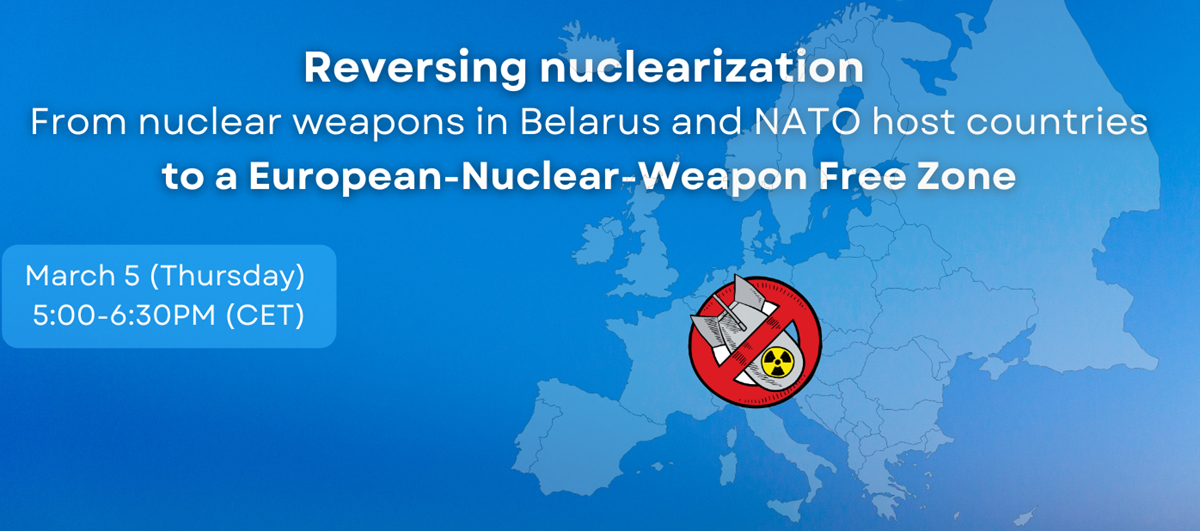
6 March -Online – Reversing nuclearization:
From nuclear weapons in Belarus and NATO host countries to a European-Nuclear-Weapon Free Zone
Mar 6, 2026 03:00 AM in Canberra, Melbourne, Sydney

of the week – Australians for War Powers Reform (AWPR)
To see nuclear-related stories in greater depth and intensity
 Antinuclear