Renewable energy news – for a change this week
Journalism highlights of the week :
*Australia’s revolving door – from politician to mining executive and back again: how miners control Australian government policy.
*The horrendous truth about just how big a mess nuclear corporation EDF is in.
 Yes, I do get tired of all the doom and gloom – about the nuclear industry – both in its harmful effects, and in its dismal future prospects.
Meanwhile – when I start looking at renewable energy news – well, there’s miles of it! And, not to be discounted, even where I live, I see new solar panels popping up in the neighbourhood every week!
- Renewables boom after ‘two-year drought’.
- Solar thermal power push to keep jobs in Port Augusta, South Australia. Could renewable power be Port Augusta’s saviour? Port Augusta community keenly concerned about renewable energy versus nuclear industry . Adelaide City Council is seeing green.
- Western Australia‘s largest solar installation at Perth shopping complex. Renewable energy micro-grid plannned for Kalbarri, Western Australia.
- Victorian town Newstead set for 100% renewable energy within 5 years.
- Sapphire Wind Farm to bring huge benefits to Australian Capital Territory‘s economy.
- Tasmania needs to ramp up its wind and solar power. Tasmania’s great opportunities in renewable energy.
- Solar energy to the grid: New South Wales‘ Moree solar farm in operation. AGL proceeding with Silverton wind farm project in far west NSW.
- Gas company APA joins throng to spend on renewable energy projects.
- Continued pro nuclear attacks on renewable energy, despite Royal Commission’s findings.developments.
- Australia at risk of missing its 2020 renewable energy target.
POLITICS. From politician to mining executive and back again: how miners control Australian government policy. Greens senator Larissa Waters attacks ‘corrupting influence’ of mining industry – video. Australian govt now admitting no true threat from ‘vigilante’ green groups? New climate brings hope to Clean Energy Finance Corporation.
NUCLEAR WASTE DUMP – FOR LUCAS HEIGHTS TRASH Submissions [due by 11 March]on proposed National Radioactive Waste Management Facility. Will the Australian govt impose a Lucas Heights nuclear waste dump on a South Australian community? Communities fight Turnbull government nuclear waste dump plan. Oman Ama community group to Canberra to reject nuclear waste dump plan. Resources Minister Josh Frydenberg would not meet Communities from outback sites designated for nuclear waste dump. Australia’s Labor and Liberal Parties unite in dismissing community concerns on nuclear waste dumping.
Submissions on proposed National Radioactive Waste Management Facility
 Tips on writing a submission and lodging comments about the proposed
National Radioactive Waste Management Facility – (closing date 11 March 16)
Groups and individuals concerned and/or potentially affected by the government’s proposed national radioactive waste management facility are strongly urged to submit comments to government. The more submissions they receive the better!
The government website about the waste dump process is: http://www.radioactivewaste.gov.au/project
Further information and an online survey is here: https://consult.industry.gov.au/radioactive-waste/national-radioactive-waste-management-project-2
How to lodge comments/submissions is here: http://www.radioactivewaste.gov.au/proposed-sites#3
Along with
- Proposed approval of nominated sites-Invitation to comment
- Nominated Site Information
Comments can be lodged via email to radioactivewaste@industry.gov.au
The six nominated sites are:
- Sallys Flat (Hill End) – New South Wales 2641 Hill End Road, Hill End
- Hale – Northern Territory Lot 1933 Old South Road, Hale
- Cortlinye – South Australia 2051 Buckleboo Hundred Line Road, Cortlinye
- Pinkawillinie – South Australia 762 Peella Road, Pinkawillinie Barndioota – South Australia 377 Wallerberdina Road, Barndioota
- Oman Ama – Queensland Cunningham Highway, Gore
General Tips Continue reading
International criticism of Australian govt cuts to climate science
 New York Times criticises CSIRO climate science cuts as ‘deplorable misunderstanding’http://www.abc.net.au/news/2016-03-04/australia-turning-its-back-on-climate-science-nyt-editorial/7222830 By Patrick Wright The New York Times has criticised Australia for turning its back on climate science, saying the CSIRO’s decision to move away from monitoring the changing climate is “deplorable”.
In an editorial titled Australia Turns Its Back on Climate Science, the Times said the federally-funded science agency’s shift in focus made no sense. “To do this at the expense of research and monitoring — undermining the search for commercially viable solutions that CSIRO proposes to join — makes no sense,” the editorial said.
“Long-term research on carbon dioxide levels in the atmosphere, and on changing ocean and weather processes, is essential to learn what lies ahead and how to prepare for it.”
The CSIRO’s new chief executive Larry Marshall, a former Silicon Valley venture capitalist, announced the shake-up in February. The plan, which involves reassigning hundreds of researchers and likely redundancies, came after $110 million was slashed from the organisation’s budget in 2014, a decision that sparked national protests.Thousands of scientists signed an open letter protesting the changes.
The Times said the cuts could affect Australia’s role in supporting the landmark climate agreement reached in Paris in December. “The decision … demonstrates a deplorable misunderstanding of the importance of basic research into what is arguably the greatest challenge facing the planet,” the Times editorial said.
The CSIRO’s shake-up of its Oceans and Atmosphere and Land and Water divisions have drawn the ire of scientific and meteorological organisations around the world.
The World Meteorological Organisation released an unprecedented statement last month condemning the decision.”Normally as a UN agency we would never intervene or interfere like this, but this is just so startling and so devastating that we have to take this stand,” director Dr Dave Carlson said.
Dr Marshall has said there will not be a net loss of jobs due to the restructure.
Western Australia’s largest solar installation at Perth shopping complex
WA’s largest solar installation generating one-third of Perth shopping centre’s power http://www.abc.net.au/news/2016-03-03/solar-panel-installation-broadway-shopping-centre-wa-largest/7217984 By Kathryn Diss A shopping complex in Perth’s western suburbs is generating one third of its power from the sun after undertaking Western Australia’s largest solar panel installation on its roof.
The Broadway Fair complex has installed 948 solar panels with the capacity to generate 312 kilowatts of power. Broadway Fair general manager Paul Avon-Smith said the move would save the complex about $20,000 a month in power bills, which could be put towards funding capital works.

“We were looking for soft approach for the cost of doing capital works,” Mr Avon-Smith said. “It gives us an alternative to help cushion rent increases and price rises for our tenant base in a pretty tough market, but allows us to finance crucial capital works. “So that allowed us to do a roof replacement project, plus put the solar in, with there being no upward pressure on our rents for tenants.”
Infinite Energy installed the system at a cost of $600,000.
Managing director Aidan Jenkins said the huge fall in the cost of solar panels in recent years has meant the business model now stacked up for commercial-sized installations. “Solar currently represents the cheapest way to generate electricity, so we will start to see these type of systems become the norm over the next couple of years.”
Government grappling with ‘tsunami’ of solar installations
Large-scale solar installation poses a big challenge for the Government, which currently has too much available power in its network. The rapid uptake of rooftop solar panels has been a big contributor to the problem, displacing traditional sources of power like coal and gas.
Energy Minister Mike Nahan has been an outspoken supporter of solar power and said the state is going to experience a “tsunami” of these types of commercial installations in coming years.
“It just adds more generating capacity to an already oversupplied system, but it is something we have to cope with,” Mr Nahan said. “Over the next decade these are going to crowd out traditional, large-scale generation of coal and gas. “As we go down the track, these technologies on businesses and households illustrates that into the future we are going to have to reduce our production of traditional energy sources and that’s the challenge.”
Victorian town Newstead set for 100% renewable energy within 5 years
PowerCor’s Thomson says it is clear that the majority of the population in Newstead are passionate  about their goal for 100% renewables, and at least five other townships are looking to follow suit.
Newstead could be the host of Victoria’s first solar-powered micro-grid.
The Victorian government is also heavily involved, allocating $200,000 in the hope that the model created for Newstead can be replicable in other communities across Victoria.
 Australian first: Newstead aims to run on 100% renewable energy within five years, http://www.theguardian.com/sustainable-business/2016/mar/01/australian-first-newstead-aims-to-run-on-100-renewable-energy-within-five-years Guardian, Giles Parkinson, 1 Mar 16
Agreement with energy company Powercor will see Victorian town move to solar power, save money and perhaps become a model for other towns. The quiet Victorian town of Newstead – population approaching 500 – has a big ambition: to source all its electricity needs without burning any fossil fuels at all. Within five years, it wants all of its power to come from renewable energy sources.
Newstead is not unique in that goal. At least a dozen towns around Australia, including Yackandandah, Tyalgum, Byron Bay and Lismore, have declared a similar ambition, even if most are allowing themselves more time to reach the target.
What makes Newstead’s situation particularly interesting is it is going ahead with the support, indeed the encouragement, of its local network provider, Powercor.
An agreement struck between the network and Newstead 2021 – the local group driving the township’s ambition – is being hailed as a “game-changer” for the way communities and network operators work together to accelerate the transition to renewable energy.
Glen Thomson, the head of the energy solutions division of Powercor, says renewable generation is now a reality, and solar, wind power and energy storage are increasingly being integrated into electricity networks. Continue reading
America set for a boom solar energy year
 Solar energy is poised for an unforgettable year, WP, By Chris Mooney March 2 New statistics just released by the U.S. Energy Information Administration suggest that in the coming year, the booming solar sector will add more new electricity-generating capacity than any other — including natural gas and wind.
EIA reports that planned installations for 2016 include 9.5 gigawatts of utility-scale solar — followed by 8 gigawatts (or 8 billion watts) of natural gas and 6.8 gigawatts of wind. This suggests solar could truly blow out the competition, because the EIA numbers are only for large or utility-scale solar arrays or farms and do not include fast-growing rooftop solar, which will also surely add several additional gigawatts of capacity in 2016.
In other words, U.S. solar seems poised for not just a record year but perhaps a blowout year. Last year, in contrast, solar set a new record with 7.3 gigawatts of total new photovoltaic capacity across residential, commercial, and utility scale installations.
“If actual additions ultimately reflect these plans, 2016 will be the first year in which utility-scale solar additions exceed additions from any other single energy source,” says EIA……….
“2016 is going to be a huge year, and then we’re going to continue to see big years over the next 5,” he [Nathan Serota, a solar industry analyst with Bloomberg New Energy Finance] said. Granted, solar could still face some headwinds, particularly from the competition offered by extremely low natural gas prices.
In the grand scheme, the tax credits for solar, as well as an extension of the production tax credit for wind, could serve as a kind of “bridge” into an era in which the Obama administration’s Clean Power Plan is operating — or at least, so the current administration hopes. Granted, that depends on whether that plan survives its current legal challenges.
A recent report from the National Renewable Energy Laboratory found that due to the tax credit extensions, the U.S. will add 53 additional gigawatts of renewable energy capacity by the year 2020. https://www.washingtonpost.com/news/energy-environment/wp/2016/03/02/solar-energy-is-poised-for-an-unforgettable-year/
Sapphire Wind Farm to bring huge benefits to Australian Capital Territory’s economy
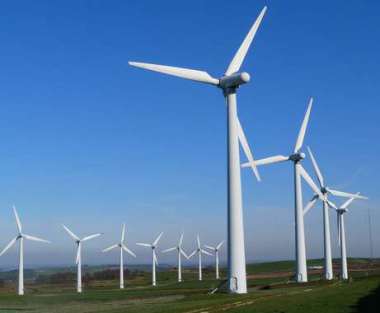 Latest wind auction winner promises millions in benefits to Canberra economy, SMH March 4, 2016 – Tom McIlroy Legislative Assembly reporter at The Canberra Times The fifth and final winner of the ACT government’s large-scale wind reverse-auction will provide enough power for more than 48,000 Canberra homes.
Environment and Climate Change Minister Simon Corbell has announced Sapphire Wind Farm, 18 kilometres west of Glenn Innes in north-eastern New South Wales, as the latest successful proponent from the government’s second wind auction, promising an estimated $100 million dollars in economic benefits to the ACT
Sapphire has been awarded a feed-in-tariff of $89.10 per mW/h for 100mW capacity. The company will spend $34 million on development of an ACT-based asset and operations management centre, relocating operations from Newcastle.
A spokesman for Mr Corbell said the consortium behind the bid included companies Continental Wind Partners and Wind Energy Holdings.
“By the time Sapphire starts producing energy in 2018, the ACT will be sourcing 80 per cent of its energy needs from renewable sources and well on the way to achieving 90 per cent by 2020,” Mr Corbell said.
In August last year, the government called for bids in its second wind auction to power up to 106,000 Canberra homes, seeking 200 megawatts in new capacity to come online within three years.
It follows two previous auctions: in 2013, three solar farms won 20-year feed-in deals, delivering 40 megawatts capacity, and in a wind auction earlier this year three wind farms won similar deals, delivering 200 megawatts among them.
CWP Renewables managing director Alex Hewitt said the auction result had allowed commencement of construction of what will be the largest wind farm in the NSW. http://www.smh.com.au/environment/energy-smart/latest-wind-auction-winner-promises-millions-in-benefits-to-canberra-economy-20160303-gn9n0a.html
The nuclear industrial chain – full of false promises
The Commission – unsurprisingly given the overwhelming market sentiment – has stated it is 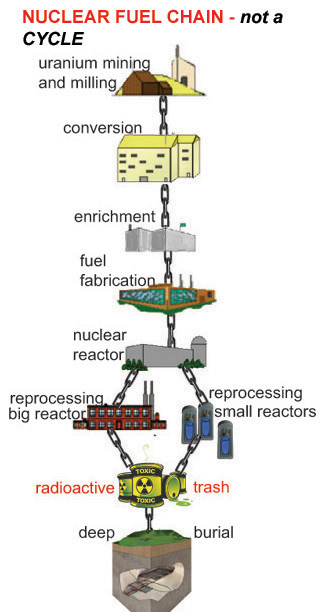 unconvinced about the chances for any uranium industry expansion and acknowledges nuclear power is not commercially viable in the foreseeable future.
A range of state and federal laws expressly preclude such an activity [importing nuclear waste] and there is continuing community contest and no bi-partisan political support. In July 2015 Labor’s national conference re-affirmed that it would ‘remain strongly opposed to the importation and storage of nuclear waste that is sourced from overseas in Australia’.
Unlike the global nuclear power sector which is dying out due to growing costs, public opposition and the rise of renewables – nuclear waste is like zombie waste – it remains undead. From its beginning to its never-end the nuclear industrial chain is full of false promises and real problems, and the Commission’s waste talk demands serious scrutiny and critical attention.
Failed Uranium Promises Highlights Need For Caution On Radioactive Waste Plans New Matilda, By Dave Sweeney on March 3, 2016 “……….Against this background, around 12 months ago South Australian Premier Jay Weatherill announced a Royal Commission to explore opportunities to expand the nuclear industry in SA. The Commission was tasked with examining development options over four broad areas: uranium mining, expanded uranium processing, domestic nuclear power and the storage and management of high-level radioactive waste.
The move surprised many at the time both because of SA’s leading role in renewable energy production (the state is on track to be 50 per cent powered by renewables this year) and the Fukushima inspired retreat from the nuclear industry.
Early commentators criticised the Commission’s pro-industry terms of reference and heavily skewed pro-nuclear ‘expert’ panel. They argued then that the process was either a Trojan Horse for, or would inevitably drift to, support for a renewed push for international radioactive waste disposal in Australia.
This view was vindicated in the Commissions recently released tentative findings. Continue reading
Community energy in UK sets up wind farm without govt support

“The benefits of the Big Field wind farm are too great for it not to go ahead just because subsidies are being withdrawn. Being community-owned will ensure that the economic benefit of the wind farm can be retained locally and re-invested in Cornwall.”
Good Energy promises UK’s first subsidy-free windfarm, http://www.theguardian.com/environment/2016/mar/02/good-energy-promises-uks-first-subsidy-free-windfarm Guardian, Fiona Harvey, 3 Mar 16
Green power company believes it can build onshore windfarm in Cornwall with local people helping finance it, despite government scrapping subsidies. The UK’s first onshore windfarm to be built without government subsidy is now under planning in Cornwall, to be financed in part by the local community.
The Big Field windfarm, near Bude, will consist of 11 turbines, none of more than 125m in height to the tip of the blade, and provide electricity for 22,000 homes. Its backers hope it will point the way to further such projects, after the damages to the onshore wind industry caused by the reversal of policy on government support for clean energy.
Likely to cost about £30m to build and install, Big Field is planned by the green power company Good Energy. While other wind and solar farms have been cancelled or left in limbo by the government’s scrapping of incentives for onshore wind, the company decided instead to try to raise funds locally to support the installation. Continue reading
Geneva suing France over dangerous and polluting nuclear reactor
 Geneva sues France over ‘dangerous’ nuclear plant, The Local, 03 Mar 2016 Geneva is taking legal action over a French nuclear reactor for “endangering lives and polluting water”. Some 70 kilometres from Geneva as the crow flies, Bugey, in the Ain department, is one of France’s oldest nuclear power plants, having come into service in 1972.
The site creates about 4.5 percent of France’s electricity using pressurized water reactors that harness water from the nearby Rhône River.
It has been the subject of controversy before, notably in 2013 when Greenpeace activists broke in to the plant to highlight alleged security weaknesses at the facility.
The current Swiss legal action is a joint initiative by Geneva’s city and cantonal authorities, which have teamed up on an issue that has preoccupied the region for some time, reports Swiss daily 24 Heures.
Back in 2012, the canton placed an official objection to French energy company EDF’s authorization to create a nuclear waste depot at the Bugey site, but the complaint was rejected by the French government. In March 2015 the city council engaged Corinne Lepage, environmental law specialist and a former French minister, to devise a legal strategy calling for the plant to be shut down.
This fresh Swiss campaign against Bugey, led by Lepage, comes as Switzerland decides to shut down one of its own nuclear plants, at Mühleberg. Continue reading
Renewable energy set to boom after ‘two-year drought’
Renewable energy is on the cusp of a long-awaited boom on a doubling in certificate prices.
The Turnbull government’s support for the goal of getting about 23.5 per cent of Australia’s electricity from renewable sources by 2020 has sparked a rise in the prices of renewable energy certificates and fresh M&A talk across the sector.
Infigen Energy managing director Miles George says that after a “two-year drought” in investment in the sector, interest has surged over the last six months thanks to the changed government rhetoric on the sector under Prime Minister Malcolm Turnbull, which has built confidence around the revised 2020 target for renewables.
The revised target of 33,000 gigawatt-hours of renewable energy supply by 2020 was cut from 41 GWh after the lengthy review that concluded last June.
Together with Infigen’s improved balance sheet after the $US274 million ($383 million) sale of its US business, the changes have sparked interest from third parties, both in individual projects in the wind energy player’s portfolio, as well as broader corporate interest, Mr George said………..
Players from other parts of the sector such as pipeline owner APA Group are also looking to grow their exposure to renewables.
Prices for large-scale renewable generation certificates or LGCs, which help underpin new renewables projects under the RET legislation, have surged from about $38 a year ago to more than $80, and are set to remain strong, with forward prices of $82 to $85 for the 2016-18 financial years.
With wholesale power prices also on the rise, prices are becoming supportive of new projects, while renewed interest on contracting for renewable power is emerging among the big three electricity retailers to meet their obligations under the RET after a few years on the sidelines……….http://www.afr.com/business/energy/renewable-energy-set-to-boom-after-twoyear-drought-20160229-gn6zob#ixzz41v2Gz4lY
Renewable energy micro-grid plannned for Kalbarri, Western Australia
 Renewable energy micro-grid could help restore faith in Kalbarri power supply, ABC News, 3 Mar 16 By Bonnie Christian The WA Government has announced it will commit $300,000 to investigate a way to build an energy micro-grid powered by renewables for the coastal town of Kalbarri.
Kalbarri has experienced several extended power outages over the past two years, costing local businesses thousands of dollars in lost trade and tourism.
The outages had been blamed on a build up of dust and salt on the 140-kilometre-long feeder line that delivers power to the town from Geraldton………..
Rebuilding trust in power supply
Western Power chief executive Paul Italiano said if the new grid did go ahead it would be the largest of its kind in Australia.
“What we’re proposing to do here is evaluating the feasibility of building a micro-grid in Kalbarri that has a combination of solar, perhaps wind, and large scale battery storage that work together to create a level of self-sufficiency for the town,” he said.
“This particular trial — if we’re able to pull it off — will be the largest in Australia.
“There’ll be lessons from this that we can apply to the rest of Western Australia. But more importantly for the whole power industry nationally.”…….http://www.abc.net.au/news/2016-03-02/kalbarri-looks-to-renewable-energy-micro-grid-for-power-solution/7215630
Australia’s uranium -nuclear sector – high risk, low return
Failed Uranium Promises Highlights Need For Caution On Radioactive Waste Plans New Matilda, By Dave Sweeney on March 3, 2016 There’s no market, there’s no expertise, and there’s no need for Australia to become the world’s nuclear waste dump.
Having failed to deliver on promises of national wealth from uranium mining – nuclear industry promoters are now talking up the prospect of ‘stupendous’ riches from Australia hosting the world’s high-level radioactive waste.
The South Australian Nuclear Fuel Cycle Royal Commission, headed by former Governor Rear Admiral  Kevin Scarce, has unleashed a frontier style enthusiasm that has seen SA’s Adelaide Advertiser newspaper trumpeting the “Scrooge McDuck levels of cash which the state would be swimming in”.
With the promised dollar signs shinier in the eyes of many politicians and commentators than the very real danger signs, it is time for some cool heads when it comes to plans to import hot wastes.
As home to around 35 per cent of the world’s uranium reserves, Australia has long been a significant player in the global nuclear trade and there are some useful lessons from this experience.
Since the 1980’s the ‘modern’ period of Australian uranium mining has been dominated by two major operations – Ranger in Kakadu and Olympic Dam in northern South Australia.
The sector has been constrained by political uncertainty, restrictions on the number of permissible mines, a consistent lack of social license and strong Aboriginal and community resistance.
Recent years have seen fewer political constraints but a dramatic decline in the price of uranium and popularity of nuclear power, following the Australian uranium fuelled Fukushima nuclear crisis – which  is fast approaching its five year anniversary, and whose radioactive fallout continues to negatively impact lives in Japan and beyond.
Australia now accounts for approximately 11 per cent of global uranium production, down from over 18 per cent a decade earlier.
Australia’s uranium production of 5,000 tonnes in 2014 was the lowest for 16 years.
The industry generates less than 0.2 per cent of national export revenue and accounts for less than 0.02 per cent of jobs in Australia. Less than one thousand people are employed in Australia’s uranium industry.
In short, the sector is high risk and low return………. https://newmatilda.com/2016/03/03/failed-uranium-promises-highlights-need-for-caution-on-radioactive-waste-plans/
From politician to mining executive and back again: how miners control Australian government policy
 Larissa Waters: Ban donations from mining companies and stop ministers working for them, Larissa Waters, Guardian, 1 Mar 16 “……….The revolving door
Former politicians:
- Former Nationals leader and deputy prime minister John Anderson became chairman of Eastern Star Gas, the company behind the Narrabri Gas Project (which is now owned by Santos) about two years after leaving politics.
- Former Nationals leader and deputy prime minister Mark Vaile became a director and then chairman of Whitehaven coal.
- Former Labor resources minister Martin Ferguson became chairman of the APPEA Advisory Board – in October 2013 – just six months after he stopped being the minister. (The lobbying code of conduct requires an 18-month cooling-off period for ex-ministers).
- Craig Emerson, a former federal Labor trade minister went on to be a consultant for AGL Energy and Santos.
- Former foreign minister Alexander Downer was at one point a registeredlobbyist with Bespoke Approach, which included the likes of Woodside Petroleum, Xstrata, Petrochina and Yancoal among its clients.
- Greg Combet, the federal Labor climate change minister, went on to be a consultant to AGL Energy and Santos.
Political staffers:
- Bill Shorten’s current chief of staff, former Queensland Labor state secretaryCameron Milner, has also worked with Adani. He was director of Milner Strategic Services & Next Level Holdings, which is co-owned by former Liberal staffer David Moore and was reportedly providing advice to Adani on the controversial Adani Carmichael coal project.
- Ben Myers worked for Queensland Gas Company, and went on be Queensland LNP premier Campbell Newman’s chief of staff.
- Mitch Grayson worked as a staffer for Queensland LNP premier Campbell Newman in 2012 and, by early 2013, had joined Santos. Later, he re-joined Premier Newman’s office.
- Stephen Galilee, who worked as chief of staff to Ian Macfarlane as Liberal federal resources minister for three years, and chief of staff to Mike Baird as NSW treasurer and shadow treasurer, went on to be CEO of the NSW Minerals Council.
- Geoff Walsh, former adviser to Labor prime ministers Paul Keating and Bob Hawke, and a former national secretary of the Labor party, was made director of public affairs at BHP in 2007.
- Claire Wilkinson, spent a year as a senior media adviser for Labor resources minister Martin Ferguson before getting a job as a senior external affairs adviser for Royal Dutch Shell. She is now at Total E&P.
- Brad Williams, who spent four years as Mark Vaile’s chief of staff, went on to become the manager for government affairs at Inpex – an oil and gas company that has approval for a $34bn LNG project near Darwin. He is now working in government relations at another mining company, South32.
- Shaughn Morgan worked as adviser to Jeff Shaw, NSW Labor’s attorney general, before becoming the manager of government and external relations at AGL.
- Lisa Harrington was a senior adviser to Mike Baird before becoming the head of government relations at AGL Energy.
- Sarah Macnamara worked at AGL before becoming chief of staff to federal Liberal resources minister Ian Macfarlane, and was resource policy adviser to Liberal PM Tony Abbott.
- Robert Underdown was senior adviser to Liberal resources minister Ian Macfarlane before becoming the manager of the government and public policy group at Santos.
-
- Caroline Hutcherson was senior media adviser to the then Liberal NSW resources minister Chris Hartcher before working as a senior adviser to Santos, and going on to work as a senior adviser to NSW Liberal premier Mike Baird.
- Alexandra Gibson was an adviser to Christopher Pyne, before becoming a policy adviser to APPEA, the oil and gas lobby group.
- Paul Fennelly was the director of the Queensland Department of State Development, Trade and Innovation before becoming the CEO of APPEA.
- Chris Ward was an adviser to the Queensland treasurer and to the consumer affairs minister in the federal Labor government under Kevin Rudd and Julia Gillard, before taking a job as media manager at APPEA.
- Charles Perrottet was senior media adviser to the then Liberal NSW resources minister Chris Hartcher, then an executive of the NSW Liberal party before becoming a government affairs analyst at BP Australia.
- Andrew Humpherson was chief of staff to the then Liberal NSW resources minister Chris Hartcher before working as a consultant to the NSW Minerals Council.
- Emma Browning was a media adviser for the then Liberal NSW resources minister Chris Hartcher before becoming director of government relations at the NSW Minerals Council.
- Brad Emery was a media adviser to federal Liberal minister Peter Dutton before working as director of media and public affairs at the NSW Minerals Council.
- Chris Rath was media and public affairs manager at the NSW Minerals Council before working as an adviser to NSW Liberal resources minister Anthony Roberts.
- Lindsay Hermes was media and communications manager at the NSW Minerals Council before working as an adviser to federal Liberal resources minister Ian Macfarlane. http://www.theguardian.com/commentisfree/2016/mar/01/larissa-waters-ban-donations-from-mining-companies-and-stop-ministers-working-for-them
Australian govt now recognising no true threat from ‘vigilante’ green groups?
No evidence of ‘vigilante’ green groups as government crackdown falls silent, The Age, Nicole Hasham, March 3, 2016 Environment Minister Greg Hunt has failed to justify his government’s claim that “vigilante” green groups are unfairly disrupting major developments in court, a parliamentary committee says, as speculation mounts that another Abbott-era attack on the environment has been quietly abandoned.
It has been almost seven months since the government proposed new laws that would strip conservation groups of the right to launch a legal challenge to environmental approval for large infrastructure and mining projects. It followed a Federal Court bid by a grassroots community group that threw a spanner in the works of Australia’s largest coal project, Adani’s proposed Carmichael mine in central Queensland – a move former prime minister Tony Abbott described as “sabotage”.
Under the proposed changes, the right to mount a court challenge would be limited to people directly affected by a development, such as a landholder.
The move drew public outrage and stalled in the Senate after failing to win support from Labor, the Greens and some crossbenchers.
In an attempt to justify the legislation to a joint parliamentary committee on human rights, Mr Hunt claimed there was “an emerging risk of the [current laws] being used to deliberately disrupt and delay key projects”.
However, a report by the committee, which is evenly split between government and other members, said no evidence was provided about the extent and nature of this threat in cases where there was “no legitimate environmental concern”.
Mr Hunt’s office insisted the proposal “remains government policy”. However the bill is unlikely to pass without changes and Labor says the government has not sought to negotiate amendments.
Mr Butler said it appeared the bill had been “tucked away in the bottom draw in the hope that the Australian public will forget the ridiculous attacks this government has made on the environment in the past two-and-a-half years”.
It follows reports that the Turnbull government has shelved plans to abolish the Clean Energy Finance Corporation, representing another departure from Mr Abbott’s environment policies………http://www.theage.com.au/federal-politics/political-news/no-evidence-of-vigilante-green-groups-as-government-crackdown-falls-silent-20160303-gn9e7c.html
1 This month
7 April – WEBINAR – Australia and the Doomsday Clock – Preventing nuclear war through NoFirstUse and other policies
Online | Tuesday April 7, 4:00-5:30pm, Australian Eastern Time / 8:00-9:30am Central Europe Time
– Access the registration link
15 April – Zoom –Nuclear Power is Not the Solution
Apr 15, 2026 01:00 AM in Canberra, Melbourne, Sydney

Join the International Physicians for the Prevention of Nuclear War (IPPNW) on Tuesday, April 14th for a timely webinar exploring the risks associated with nuclear power and challenging the myth that it offers a simple, safe, carbon-free solution to the climate crisis

21 April Webinar: No Nuclear Weapons in Australia
Start: 2026-04-21 18:00:00 UTC Canberra, Melbourne, Sydney (GMT+10:00)
End: 2026-04-21 19:30:00 UTC Canberra, Melbourne, Sydney (GMT+10:00)
Event Type: Virtual
A virtual link will be communicated before the event.
Host Contact Info: australia@icanw.org

of the week – Australians for War Powers Reform (AWPR)
To see nuclear-related stories in greater depth and intensity
 Antinuclear