Floating solar array included in South Australia Water’s big move into solar power
 SA Water set to add another 5MW solar, including floating PV array http://reneweconomy.com.au/sa-water-set-add-another-5mw-solar-including-floating-pv-array-85781/ By Sophie Vorrath on 22 March 2018 One Step Off The Grid
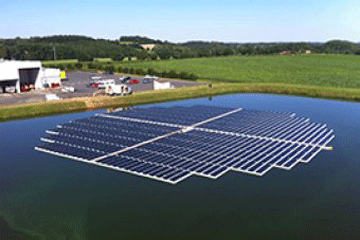
South Australia’s largest water and sewerage services supplier, SA Water, is set to install another 5MW of solar PV, including a floating solar plant, after local outfit Enerven was awarded the tender for the job.
Enerven said on Wednesday that it had won a Stage 1 contract to design and construct ground-based solar installations at facilities in Hope Valley, Christies Beach and Glenelg, and to develop a floating solar PV array.
SA Water, which has targeted zero net energy by 2020, began its shift to solar last year, with a tender to install 100kW solar and 50kWh battery storage at its Crystal Brook Workshop site.
The utility, which manages more than 27,000km of water mains, including 9,266 km in the Adelaide metropolitan area, said it was installing the solar and storage system to manage periods of high electricity prices, and to ensure safe and sustainable delivery of water to customers.
Ultimately, the company aims to get its on-site renewable energy generation to the point where it is equal to the total annual amount of energy used by SA Water’s buildings and desalination operations.
And it is not alone in its quest. As we have reported on One Step Off The Grid, a number of Australian water utilities are turning to solar and/or wind energy to lower costs and help guarantee supply.
In Queensland, Logan City Council has installed an off-grid solar and battery storage system as part of a micro-grid powered “electro-chlorinator” that will help maintain local drinking water quality 24 hours a day.
The solution – delivered by the Logan Water Infrastructure Alliance and solar installer CSR Bradford – combined a 95kWh Tesla Powerpack with 323 PV panels at the site of the relatively new 20 Megalitre Round Mountain Reservoir, which provides drinking water for residents in Flagstone, Yarrabilba, North Maclean, Spring Mountain and Woodhill.
In the regional Victorian city of Portland, Wannon Water has installed a 100kW solar system on a water tank at its treatment plant at Hamilton that was expected to cut the plant’s grid electricity consumption by 25 per cent.
In NSW, a community-funded 100kW floating solar array has been installed at the East Lismore Sewage Treatment Plant in NSW.
And Queensland’s City of Gold Coast is proposing to install a series of floating solar PV arrays on its network of wastewater ponds – both to help power the city’s wastewater treatment plants and to cut evaporation from the ponds.
Enerven says design of the SA Water solar project has commenced, and is due for completion in September 2018.
This article was originally published on RenewEconomy’s sister site, One Step Off The Grid, which focuses on customer experience with distributed generation. To sign up to One Step’s free weekly newsletter, please click here.
Solar energy poised to take off in a big way in New South Wales
 NSW, the sleeping giant of rooftop solar, is about to awake http://reneweconomy.com.au/nsw-sleeping-giant-rooftop-solar-awake-68621/ By Giles Parkinson on 22 March 2018
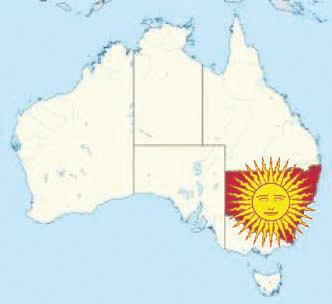
New South Wales has long played second fiddle to Queensland – the “Sunshine state”, when it comes to rooftop solar. Despite its bigger population, NSW is beaten into second place on rooftop solar installations by Queensland, which has already reached the 2GW mark.
But the Australian Energy Market Operator suggests that is about to change.
Over the next few years, it expects NSW to overtake Queensland with the most installed capacity (by 2020/21) and by 2035 it expects NSW to have more than 7GW of rooftop solar in the state – 50 per cent more than its nearest rival.
This graph above [on original] shows the estimate, including in the AEMC’s Reliability Panel’s annual report, which highlights the growing shift to decentralised energy, which includes rooftop solar and storage.
Indeed, this graph shows only one of AEMO’s installation scenarios – it’s high uptake shows another 3GW of rooftop solar, and many suggest that half of all Australia’s electricity needs may come from decentralised energy within a decade or two.
Recent data suggests that NSW recently pipped Queensland as the biggest market for rooftop solar in the month of February (with just over 28MW installed in the month), but AEMO’s forecasts suggests NSW will continue to set the pace over the next decade or two.
The rooftop solar is already having an impact, delaying and reducing the size of grid peaks, and so reducing the cost of peak demand events. Ausgrid is also looking at providing more subsidies to encourage more rooftop solar in inner-city suburbs to reduce the need for network upgrades.
The AEMO forecasts suggest a total of 18.6GW of rooftop solar PV capacity by 2035/36, which will be accompanies by strong growth of integrated solar PV and battery storage systems.
Indeed, this graph shows only one of AEMO’s installation scenarios – it’s high uptake shows another 3GW of rooftop solar, and many suggest that half of all Australia’s electricity needs may come from decentralised energy within a decade or two.
This will have an impact on the shape of the demand curve in Australia. Not only will it reduce maximum demand, and push it into the evenings, it will also push minimum demand into the middle of the day, rather than overnight.
This is already happening in South Australia (it has been since 2012), but will extend to NSW, Queensland and Victoria. Minimum demand may turn “negative” – where rooftop solar output exceeds customer demand – as early as 2025 on some days in South Australia.
AEMO suggests that in South Australia the excess rooftop solar output can be stored (in batteries) or exported to the rest of the market.
“This signals the important need for market and regulatory frameworks that support storage solutions and maximise the efficiency or shared electricity services for consumers.”
Indeed, the new South Australian government is toying with that idea, proposing its own $100 million plan to subsidise the installation of batteries in 40,000 homes, and considering what to do with the Tesla plan for solar and storage in 50,000 low income homes that would create the “world’s biggest virtual power plant”.
And here’s another interesting graph [on original] from a separate AEMO report, one that looks at the last quarter of the electricity markets.
It shows the average rooftop solar PV output in the last quarter, and it is nearing 1GW, having risen from 905MW in the same quarter last year to 969MW in the fourth quarter of 2017.
AEMO says the largest increases were in Victoria (+15 per cent) and South Australia (+8 per cent). These increases correspond with an increase in rooftop PV capacity and higher than average sunshine across all capital cities except Adelaide.
Proposed storage of spent nuclear fuel sparks resistance in Aomori Pref. City


View original post 510 more words
Fukushima Accident is Becoming More Severe, Residents Continue to Struggle: Ruiko Muto on 7 Years of the Nuclear Disaster

View original post 1,418 more words
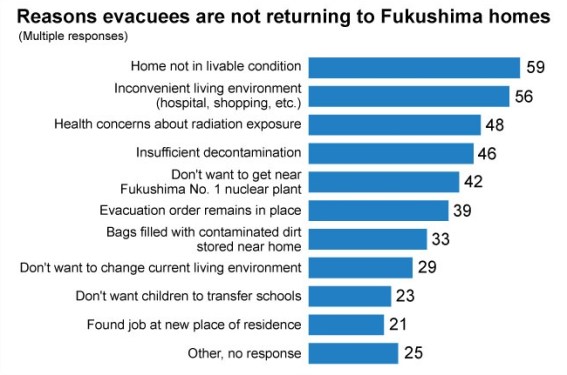
SEVEN YEARS AFTER: Only trickle of former residents returning home to Fukushima
View original post 302 more words
Earth Hour 24 March
 Scotsman 21st March 2018, WWF’s Earth Hour is the biggest global campaign for the
environment. Its unique display of darkness has become a phenomenon over
the past decade, with last year proving to be the biggest and best yet.
https://www.scotsman.com/news/opinion/dr-sam-gardner-world-embraces-the-dark-side-for-earth-hour-1-4708872
Reckless nuclear weapons testing cost many many civilian lives
US nuclear tests killed far more civilians than we knew https://qz.com/1163140/us-nuclear-tests-killed-american-civilians-on-a-scale-comparable-to-hiroshima-and-nagasaki/ Tim Fernholz@timfernholz December 21, 2017
When the US entered the nuclear age, it did so recklessly. New research suggests that the hidden cost of developing nuclear weapons were far larger than previous estimates, with radioactive fallout responsible for 340,000 to 690,000 American deaths from 1951 to 1973.
The study, performed by University of Arizona economist Keith Meyers, uses a novel method (pdf) to trace the deadly effects of this radiation, which was often consumed by Americans drinking milk far from the site of atomic tests.
From 1951 to 1963, the US tested nuclear weapons above ground in Nevada. Weapons researchers, not understanding the risks—or simply ignoring them—exposed thousands of workers to radioactive fallout. The emissions from nuclear reactions are deadly to humans in high doses, and can cause cancer even in low doses. At one point, researchers had volunteers stand underneath an airburst nuclear weapon to prove how safe it was:
The emissions, however, did not just stay at the test site, and drifted in the atmosphere. Cancer rates spiked in nearby communities, and the US government could no longer pretend that fallout was anything but a silent killer.
The cost in dollars and lives Continue reading
Indigenous work for the dole scheme ‘failing abysmally’, worsening poverty, Greens say
By political reporter Dan Conifer
“Whilst this program is allowed to continue,
there are kids not getting food on the table and communities
are being pushed into further poverty and disadvantage,”
Senator Siewert said.
‘Key points:
* Greens claim scheme is worsening poverty and hunger in Aboriginal communities
* Participants receive more penalties than every other Australian jobseeker combined
* Greens senator renewed calls to scrap penalty that freezes welfare for eight weeks ‘
‘The Government has conceded the Community Development Programme (CDP) needs a “complete rejigging”.
But it has indicated an overhaul will not be fully implemented until July 2019. …
‘Remote work for the dole participants work up to three-times longer
than city-based jobseekers to receive Centrelink payments.
‘The CDP covers three-quarters of Australia’s landmass,
and the overwhelming majority of its 33,000 participants
are Aboriginal or Torres Strait Islander. … ‘
www.abc.net.au/news/2018-03-17/work-for-the-dole-program-worsens-poverty-greens-say/9558012
1 This month

of the week – Australians for War Powers Reform (AWPR)
To see nuclear-related stories in greater depth and intensity
 Antinuclear