Australia won’t get the nuclear bomb – these are the reasons why not
The real problem is developing a credible, effective nuclear capability is about much more than possessing the bomb itself. Equally critical would be working out how to control and protect the weapon prior to use, and finally, deliver it. Doing this is, perhaps surprisingly, just as difficult – if not more so – than developing the device itself.
let’s look at what it would cost.This is where the extent of the fantasy becomes apparent.
there’s one other final, conclusive, and critical reason that not even our allies will assist an attempt to go nuclear. The truth is now they just don’t view Australia as a stable, mature democracy any more.
 The one, conclusive reason why Australia won’t go nuclear, SMH, By Nicholas Stuart, 18 September 2018 There’s a massive, although subterranean, debate going on in the strategic community at the moment – one with huge ramifications. It’s whether Australia should possess its own nuclear deterrent. Continue reading
2 Chinese nuclear power stations in direct path of Typhoon Mangkhut
 RED ALERT: Typhoon Mangkhut to SMASH into TWO nuclear plants as MILLIONS evacuate in panic https://www.express.co.uk/news/world/1018412/Typhoon-Mangkhut-Hong-Kong-China-nuclear-plants-red-alert-worst-storm
TYPHOON MANGKHUT – the most powerful storm of the year – is expected to directly hit two nuclear power plants later today with shocking 120mph winds, as officials issue a red alert warning.
The typhoon is the world’s most powerful storm of the year, with winds as high as 170 miles per hour – twice as powerful as Hurricane Florence which has struck the US east coast. At least 64 people have died in the wake of the typhoon in the Phillipines while so far two are reportedly dead in Hong Kong.
Officials have issued a red alert warning amid mounting fears over two nuclear power stations in the direct path of the typhoon.There are concerns the typhoon will damage the nuclear reactors and efforts are underway to avoid a repeat of the Japanese Fukushima catastrophe, when an earthquake and tsunami sent three nuclear reactors into meltdown.
The Taishan Nuclear Power Plant and Yangjiang Nuclear Power Station, both in Guangdong, mainland China, confirmed they were “combat ready” and in emergency lockdown as the superstorm nears.
Emergency safety investigations have been carried out at both plants for last-minute preparations behind the typhoon strikes this evening with 120mph winds.
A spokesman for the Taishan facility said: “All emergency personnel are at their posts and have conducted their preparatory work.The plant is fully prepared for the typhoon, and everything is in its place.”
Workers at the Yangjiang plant also secured the facility’s five generating units but fears remain for the sixth, which remains under construction.
Plant manager Chen Weizhong added that all doors and windows were tightly closed.
Mangkhut has already caused mass devastation in the Philippines, where around 40 gold miners are feared trapped following a landslide.The Hong Kong Observatory (HKO) raised the storm signal to T10 – the highest level possible, as the city shut down.
Footage from Hong Kong shows the scale of devastation, including a high-rise construction crane collapsing and windows in skyscrapers breaking under pressure.
One video shows a father and son swept off their feet and thrown into a wall due to the sheer power of the winds
After the typhoon passes over Hong Kong, the powerful storm is expected to wreak havoc across several Chinese megacities.
Brunswick Nuke Plant: STATE OF EMERGENCY — flying cuttlefish picayune

Duke Energy’s Brunswick nuclear plant, about 30 miles south of Wilmington, has declared a state of emergency as the 1,200-acre complex remains cut off by flood waters and and is inaccessible to outside personnel. – Zero Hedge
via Brunswick Nuke Plant: STATE OF EMERGENCY — flying cuttlefish picayune
Oh dear! Coal-loving Angus Taylor’s electorate wants action on climate change
 Energy minister’s electorate backs higher emissions reduction target, poll shows
ReachTel poll of Angus Taylor’s voters finds 42.3% want Australia to cut emissions more deeply, Guardian, Katharine Murphy Political editor@murpharoo19 Sep 2018 More voters in the electorate of the new energy minister, Angus Taylor, support an emissions reduction target for electricity and a higher national target than the Paris commitment than oppose those positions.
Australian government ‘won’t be replacing’ renewable energy target – Angus Taylor, (Minister For Fossil Fuel Energy)
Angus Taylor confirms government ‘won’t be replacing’ renewable energy target Canberra Times, 18 Sept 18, Energy Minister Angus Taylor has confirmed the Morrison government will not replace the renewable energy target after it peaks in 2020, officially creating a policy vacuum that opponents say will stifle clean energy investment and lead to higher prices.
In question time on Tuesday, Greens MP Adam Bandt challenged Mr Taylor to extend the target until 2022 to avoid a disastrous plunge in renewables investment when the current target ends.
“The renewable energy target is going to wind down from 2020, it reaches its peak in 2020, and we won’t be replacing that with anything,” Mr Taylor said……..
“We will drive prices down, that’s our policy, those opposite will drive them up,” he said.
An annual index released on Tuesday put Australia in the bottom three ranking for environmental policy among wealthy nations.
The Center for Global Development’s commitment to development index said the environment was “one of Australia’s weaker policy fields … largely due to its poor performance curbing climate change”….
Defence officials become military lobbyists
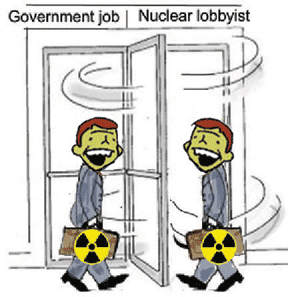
| Defence officials turn lobbyists, sometimes weeks after leaving government
Eight former defence figures, most high-ranking, are now lobbyists for military contractors, Guardian, Christopher Knaus, @knausc, 18 Sep 2018 Senior defence officials and military figures are taking paid jobs with firms lobbying for arms manufacturers, sometimes within weeks of leaving their government posts. Guardian Australia has identified eight former military officers or defence bureaucrats, most of whom were high-ranking, who have publicly registered themselves as lobbyists for firms that represent military contractors. But many other defence lobbyists operate largely in secret, either because they work directly for military contractors, or because they simply refuse to put themselves on the lobbyist register, avoiding scrutiny for themselves and their clients without any real repercussion. One recent example of a lobbyist who placed himself on the lobbyist register is Tyson Sara, a former assistant secretary in defence’s naval shipbuilding taskforce, whose role was described as “leading the implementation of the Australian naval shipbuilding plan”. Sara left defence in March and soon after joined lobbying powerhouse Cmax Advisory as its chief operating officer and vice-president for strategy and government. Cmax represents the shipbuilder Navantia Australia, defence contractor Northrop Grumman, and the Israeli weapons manufacturer Rafael Advanced Defense Systems………. Military officers who held a rank above colonel or its equivalent are banned from lobbying for 12 months on “any matter they had official dealings with” during the last year of their employment. Senior executive service officers in the public service face the same cooling-off period. But the lobbying code of conduct, already weak by international standards, is rarely enforced and staff movements are poorly monitored. The code also fails to consider former defence employees who are employed directly by weapons companies, either as in-house lobbyists or senior executives. That means it does not apply to individuals such as Sean Costello, who worked as chief of staff to the then defence minister David Johnston between June 2014 and January 2015, as the government planned its $50bn future submarines program, according to evidence in Senate estimates. Costello left Johnston’s department and two months later became the chief executive of the Australian arm of French submarine manufacturer DCNS, a Senate committee heard. That company, now known as Naval Group, eventually won the submarines contract in 2016. In Senate estimates in 2015 Defence conceded that it was “a fair assumption” that Costello, in his role as chief of staff, would have had access to confidential documents and briefings on the submarine project. Defence said in evidence to the Senate that it provided Johnston’s office with 34 pieces of written advice relating to the submarine project in the time Costello worked in the office, on top of material provided to the minister in a daily briefing pack. ……. Tim Costello, chief advocate for World Vision and the executive director of Micah Australia, said the sheer value of defence contracts meant it was necessary to apply added scrutiny to the sector. “They are so lucrative,” Costello said. “It means that the transparency and accountability must be higher and commensurate with the goldfields they represent of taxpayer dollars.” The Centre Alliance senator Rex Patrick said it was clear the lobbying code needed to be enhanced for former defence personnel. Patrick said senior defence personnel were often exposed to privileged and sensitive information on policy, strategy, and commercial and tender requirements. “While I wouldn’t suggest that this information is shared amongst a lobbyist’s clients, when former officials service their clients, it’s simply not possible to unknow this information when formulating advice,” he said.
|
12.5b litres of water for Adani coal project – no environmental impact statement needed
 Adani plans to draw 12.5b litres of water and there will be no environmental impact statement, ABC By national environment, science and technology reporter Michael Slezak 18 Sept 18 Adani’s plan to take 12.5 billion litres of water from a river in drought-stricken Queensland is a step closer to happening, according to environmental groups, after the Federal Government decided the project did not need a full environmental impact assessment.
Key points:
- Federal Government decides Adani water plan does not need environmental impact statement
- Mining giant wants to take 12.5 billion litres of water from Queensland river
- Environmentalists say the move is “appalling and dangerous”
- Adani says it will work with Government to “complete the required assessment”
To build and run its proposed Carmichael coal mine, Adani wants to extract water from the Suttor River in central Queensland for up to 60 years, expand a dam there, and build a 60-kilometre pipeline to transport the water to its mine.
Federal law requires that if coal mines are likely to have a significant impact on the country’s water resources, they must undergo a full environmental assessment, which would be scrutinised by an independent scientific committee.
But Adani argued that “water trigger” only applied if the water was used in the extraction of the coal, and that the water they would take from this river would not be used that way, but instead for practices like washing coal and dust management.
Environmental lawyers have previously said that argument does not hold water.
On Monday, the federal Department of the Environment decided the water trigger did not apply to the project and that it did not need to undergo a full assessment with an environmental impact statement………..
Water project will ‘avoid full scrutiny’
“As one of the driest continents on Earth, water is the lifeblood of inland Australia,” anti-Adani campaigner at the Australian Conservation Foundation Christian Slattery said.
“It is disappointing that while Queensland suffers through severe drought, the water infrastructure for Adani’s massive polluting coal mine will avoid full scrutiny under Australia’s national environment laws,” he said.
Anti-mining group Lock The Gate Alliance described the move as “appalling and dangerous”.
“This is another special deal for Adani that puts our water resources at risk during a terrible drought and hangs Queensland graziers and communities out to dry,” spokesperson for Lock the Gate Alliance Carmel Flint said.
Arianne Wilkinson, a lawyer at Environmental Justice Australia, said the decision to submit Adani’s proposal to the weaker form of assessment was disappointing.
“Their proposal should be given the full assessment under federal environmental law,” she said…….http://www.abc.net.au/news/2018-09-18/adani-plan-for-12.5b-litres-of-water-to-avoid-impact-assessment/10262764
Consumer group fights New Mexico nuclear waste project
 https://www.newsobserver.com/news/business/article218585655.htmlThe Associated Press, September 18, 2018, ROSWELL, N.M.
A national consumer advocacy group is joining the fight against a proposed nuclear waste storage site in southeastern New Mexico
The Roswell Daily Record reports the Washington, D.C.-based Public Citizen announced last week it had filed to intervene in the license application submitted by Holtec International to the U.S. Nuclear Regulatory Commission.
Holtec International, a New Jersey-based company specializing in nuclear storage, has applied to the U.S. Nuclear Regulatory Commission for a license to construct a nuclear waste storage facility about 35 miles (56 kilometers) east of Carlsbad.
The facility, to be located in western Lea County, could eventually store up to 10,000 shipments of spent nuclear fuel.f Public Citizen’s petition is accepted by the federal commission, it would able to participate in hearings. The group says the radioactive waste poses health risks.
Global interdependence of civil and military nuclear technology
Andrew Feinstein: The Shadow World of the Global Arms Trade | Fall 2017 Wall Exchange
<iframe width=”560″ height=”315″ src=”https://www.youtube.com/embed/hCjZXCYD_8c” frameborder=”0″ allow=
questions arise over many well-documented military entanglements of 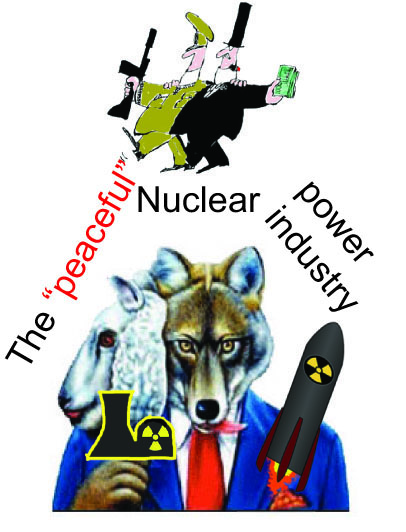 nuclear power
the “reliable provision of Russia’s defense capability is the main priority of the nuclear industry” – Rosatom
a host of other defense policy discussions are very clear that the UK nuclear ‘submarine industrial base’ would not be sustainable, if a decision were taken to discontinue civil nuclear power…statements from UK submarine industry sources note incentives to “mask” the costs of this military programme behind the related civilian industrial infrastructure…. a programme of submarine-derived small modular reactors should be adopted in UK energy policy in order to “relieve the Ministry of the burden of developing and retaining skills and capability” on the military side. – Rolls Royce
focused on facilitating ‘mobility’ between the civil and defense nuclear workforce – UK
In the USA, powerful imperatives have recently been openly declared in high level policy debate, to maintain support for otherwise-uncompetitive nuclear power in order to sustain a continuing nuclear navy.
How much of the costs of these shared underpinnings for military nuclear ambitions, are being concealed by otherwise uneconomic joint civil-military nuclear infrastructures?
A Global Picture of Industrial Interdependencies Between Civil and Military Nuclear Infrastructures https://www.sussex.ac.uk/webteam/gateway/file.php?name=2018-13-swps-stirling-and-johnstone.pdf&site=25 (this paper is richly supplied with comprehensive footnotes and references. Andy Stirling, Phil Johnstone, SPRU, August 2018 (This is an extended, updated and more fully referenced version of a chapter appearing in M. Schneider, A. Froggatt, J. Hazemann, T. Katsuta, M.V. Ramana, A. Stirling, P. Johnstone, C. von Hirschhausen, B. Wealer, The World Nuclear Industry Status Report 2018, Mycle Schneider Consulting, Paris, 2018)
Abstract
Noting the increasingly unfavourable economic and operational position of nuclear power around the world, this paper reviews evidence for a hitherto neglected connection between international commitments to civil and military nuclear infrastructures. Continue reading
September 18 Energy News — geoharvey

Opinion: ¶ “The Public Wants Renewable Energy and They Want It Now!” • Utility companies, like automakers, would like to party like it’s 1999 forever, but consumers are beginning to realize their future lies with zero emissions vehicles and renewable energy. The transition has begun. If the people will lead, their leaders will follow. Spread […]
Clean Energy Regulator counts 9GW in big solar and wind pipeline — RenewEconomy

Latest CER data shows combined capacity of large-scale wind and solar energy projects in development pipeline now nudging 9GW. The post Clean Energy Regulator counts 9GW in big solar and wind pipeline appeared first on RenewEconomy.
via Clean Energy Regulator counts 9GW in big solar and wind pipeline — RenewEconomy
Sydney takes global climate fight to the next level — RenewEconomy

Lord Mayor Clover Moore announced Sydney has joined forces with more than 100 City leaders from around the world committing to strong action on climate change as part of the Global Climate Action Summit. The post Sydney takes global climate fight to the next level appeared first on RenewEconomy.
via Sydney takes global climate fight to the next level — RenewEconomy
Clean energy industry scholarship to help build next generation of board directors — RenewEconomy

The Clean Energy Council has opened applications for the fourth annual Women in Renewables Scholarship, a program which aims to strengthen gender diversity at the leadership level across the industry. The post Clean energy industry scholarship to help build next generation of board directors appeared first on RenewEconomy.
via Clean energy industry scholarship to help build next generation of board directors — RenewEconomy
Local Government Super is the sole Australian signatory on the Green Bond Pledge — RenewEconomy

The Green Bond Pledge is an international declaration that all bonds financing long-term infrastructure and capital projects need to address environmental impacts and climate risk The post Local Government Super is the sole Australian signatory on the Green Bond Pledge appeared first on RenewEconomy.
via Local Government Super is the sole Australian signatory on the Green Bond Pledge — RenewEconomy
Solar takes centre stage in South Australia, becoming No 1 energy source in middle of day — RenewEconomy

Solar becomes biggest contributor to South Australia grid in middle of the day, signalling the next phase of the state’s transition to 100 per cent renewables. The post Solar takes centre stage in South Australia, becoming No 1 energy source in middle of day appeared first on RenewEconomy.
1 This month

of the week – Australians for War Powers Reform (AWPR)
To see nuclear-related stories in greater depth and intensity
 Antinuclear