Support for nuclear power is support for coal: John Quiggin refutes the arguments of Australia’s pro nuclear shills

|
Coal and the nuclear lobby (updated), John Quiggin AUGUST 13, 2018It’s reasonable to ask why I would bother arguing about nuclear power, given my frequently expressed view that it’s DEAD AS A DOORNAIL. The problem is that nuclear fans like Ben Heard are, in effect, advocates for coal. Their line of argument runs as follows (1) A power source with the characteristics of coal-fired electricity (always on) is essential if we are to decarbonise the electricity suppy The problem is that, on any realistic analysis, there’s no chance of getting a nuclear plant going in Australia before about 2040 (see over the fold). So, the nuclear fans end up supporting the Abbott crew saying that we will have to rely on coal until then. And to make this case, it is necessary to ignore or denounce the many options for an all-renewable electricity supply, including concentrated solar power, large-scale battery storage and vehicle-to-grid options. As a result, would-be green advocates of nuclear power end up reinforcing the arguments of the coal lobby. Looking at the argument set out above, point (1) is generally taken as self-evident, even though the idea of baseload demand is basically a nonsense, at least until the renewables share gets much closer to 100 per cent. Point (3) is based on the claim that since France did this 40 years ago, Australia can do it today. The fact that France has long since lost the special characteristics that made its dash for nuclear power possible isn’t even considered. When I looked at the issue a few years ago, I concluded that only China had anything like the characteristics needed, but nuclear power has stalled even there. Coming back to the Australian debate, it’s striking that it’s still going on, given the negative findings of the SA Royal Commission, established at the behest of the nuclear lobby. But I’ll spell out the problem one more time. Let’s look at the most optimistic possible timetable. The hardest evidence relates to the time between the issuing of a contract to build a nuclear power plant and the connection to the grid. The best-case scenario is that of the KEPCO contract in the UAE, one of the rare cases where the construction phase was completed on time and on budget. There have, however, been unexplained delays in startup. The contract was signed in December 2009 and, on current projections, the first plant (of four) will be connected to the grid ten years after that, at the end of 2019. So, to get nuclear power going in Australia before 2040, we’d need signed contracts by 2030 at the latest. What needs to happen before that goal can be achieved. * First, obviously, both major parties need to be convinced of the case for nuclear power. That’s highly unlikely but let’s suppose it can somehow be done by 2020 * Next, the current ban on nuclear power needs to be repealed. This ban looms large in the minds of nuclear fans, but actually it’s such a minor problem we can ignore it * Next, we need to set up, from scratch a legislative and regulatory framework for nuclear power, and establish and staff a regulator similar to the US NRC. Bear in mind that there is essentially no one in Australia with any relevant expertise. I’d be surprised if this could be done in five years, but let’s suppose three * Next we need to license designs that can be built here and, at the same time, completely remodel the National Electricity Market in a way that makes nuclear cost-competitive with both gas and renewables, while not opening the door for new coal (again, three years would be incredibly optimistic) * Next we need to identify greenfield sites for multiple nuclear power plants, almost certainly on the east coast, and go through the processes of EIS, Environment Court and so on. In any realistic view, this would never succeed, but let’s suppose another three years. After all that, we have to find companies willing to build the plants, and organize the necessary contracts. Given the absurdly opimsitic schedule set out above, this would have to be done inside a year. In summary, even on magical assumptions it would be impossible to get nuclear power going in Australia before 2040, by which time we would already have had to close most of the coal-fired generation fleet. It follows that the only effect of nuclear advocacy is to prolong the life of coal-fired power to the limits of technological feasibility. In practice, support for nuclear power in Australia is support for coal. Tony Abbott understands this. It’s a pity that Ben Heard and others don’t. https://johnquiggin.com/2018/08/13/coal-and-the-nuclear-lobby/?fbclid=IwAR0nXz5RBL-zJxcmCaeyin80CSc44bYGvJ94NV7YYNb2NwSgg8QDAyYjNMw |
|
Torres Strait lodges case at UN against Australia on human rights as climate change issue
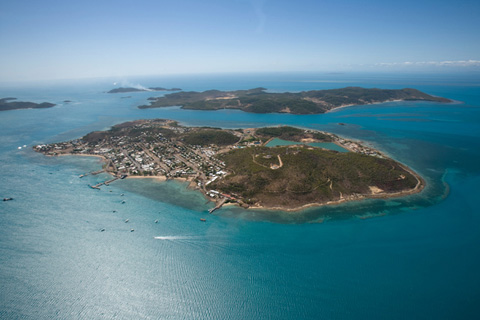   Torres Strait Islanders ask UN to hold Australia to account on climate ‘human rights abuses’ The Conversation, Professor Environment and Development Sociology, The University of Queensland. May 27, 2019 Climate change threatens Australia in many different ways, and can devastate rural and urban communities alike. For Torres Strait Islanders, it’s a crisis that’s washing away their homes, infrastructure and even cemeteries.The failure to take action on this crisis has led a group of Torres Strait Islanders to lodge a climate change case with the United Nations Human Rights Committee against the Australian federal government. Torres Strait Islanders ask UN to hold Australia to account on climate ‘human rights abuses’ The Conversation, Professor Environment and Development Sociology, The University of Queensland. May 27, 2019 Climate change threatens Australia in many different ways, and can devastate rural and urban communities alike. For Torres Strait Islanders, it’s a crisis that’s washing away their homes, infrastructure and even cemeteries.The failure to take action on this crisis has led a group of Torres Strait Islanders to lodge a climate change case with the United Nations Human Rights Committee against the Australian federal government.
It’s the first time the Australian government has been taken to the UN for their failure to take action on climate change. And its the first time people living on a low lying island have taken action against any government. This case – and other parallel cases – demonstrate that climate change is “fundamentally a human rights issue”, with First Nations most vulnerable to the brunt of a changing climate. The group of Torres Strait Islanders lodging this appeal argue that the Australian government has failed to take adequate action on climate change. They allege that the re-elected Coalition government has not only steered Australia off track in meeting globally agreed emissionsreductions, but has set us on course for climate catastrophe. In doing so, Torres Strait Islanders argue that the government has failed to uphold human rights obligations and violated their rights to culture, family and life……… Torres Straight Islanders are on the frontlinesSome Torres Strait Islands are less than one metre above sea level and are already affected by climate change. Rising tides have delivered devastating effects for local communities, including flooding homes, land and cultural sites, with dire flooding in 2018 breaking a sea wall built to protect local communities……. Parallel threats across the PacificWhile the Torres Strait appeal to the UN is groundbreaking, the challenges facing Torres Strait Islanders are not unique. Delegates at the Pacific Islands Forum in Fiji last week described climate change as the “single greatest threat” to the region, with sea level rise occurring up to four times the global average in some countries in the Pacific. Climate change is already causing migration across parts of the Pacific, including relocation of families from the Carteret Islands to Bougainville with support from local grassroots organisation Tulele Peisa. The Alliance of Small Island States, an intergovernmental organisation, has demanded that signatories to the Paris Agreement, including through the Green Climate Fund, recognise fundamental loss and damages communities are facing, and compensate those affected. The growing wave of climate litigationAcross the Torres Strait, the Pacific, and other regions on the frontline of climate change, there are a diversity of responses in defence of land and seas. These are often grounded in local and Indigenous knowledge……https://theconversation.com/torres-strait-islanders-ask-un-to-hold-australia-to-account-on-climate-human-rights-abuses-117262?
|
|
Free media now under grave threat, as USA aims to gaol Julian Assange for life
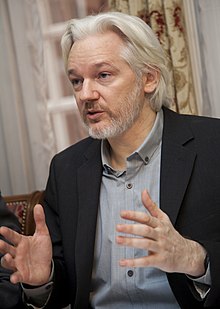 Whatever Assange got up to in 2010-11, it was not espionage. Nor is he a US citizen. The criminal acts this Australian maverick allegedly committed all happened outside the US. As Joel Simon, director of the Committee to Protect Journalists, has observed: “Under this rubric, anyone anywhere in the world who publishes information that the US government deems to be classified could be prosecuted for espionage.” Whatever Assange got up to in 2010-11, it was not espionage. Nor is he a US citizen. The criminal acts this Australian maverick allegedly committed all happened outside the US. As Joel Simon, director of the Committee to Protect Journalists, has observed: “Under this rubric, anyone anywhere in the world who publishes information that the US government deems to be classified could be prosecuted for espionage.”The new indictment against Assange falls into three parts – each of them attempting to criminalise things journalists regularly do as they receive and publish true information given to them by sources or whistleblowers.
US efforts to jail Assange for espionage are a grave threat to a free media
 https://www.theguardian.com/commentisfree/2019/may/26/prosecuting-julian-assange-for-espionage-poses-danger-freedom-of-press https://www.theguardian.com/commentisfree/2019/may/26/prosecuting-julian-assange-for-espionage-poses-danger-freedom-of-press
Do you remember the Collateral Murder video – the one that showed US air crew in Apache helicopters killing people as though playing computer games, laughing at the dead after slaughtering a dozen people, including two Iraqis working for the Reuters news agency? Do you remember how the US military had lied about what happened in that incident in July 2007 – first claiming that all the dead were insurgents, and then that the helicopters were responding to an active firefight? Neither claim was true. Do you recall that Reuters had spent three years unsuccessfully trying to obtain the video? Collateral Murder? Was it in the public interest that the world should have eventually seen the raw footage of what happened? You bet. Was it acutely embarrassing for the US military and government? Of course. Was the act of revelation espionage or journalism? You know the answer. We have two people to thank for us knowing the truth about how those Reuters employees died, along with 10 others who ended up in the crosshairs of the laughing pilots that day: Chelsea Manning, who leaked it, and Julian Assange, who published it. But the price of their actions has been considerable. Manning spent seven years in jail for her part in releasing that video, along with a huge amount of other classified material she was able to access as an intelligence analyst in the US army. Assange has been indicted on 17 new counts of violating the Espionage Act, with the prospect that he could spend the rest of his life in prison. Continue reading |
Carbon dioxide soars to record-breaking levels not seen in 800,000 years

Carbon dioxide soars to record-breaking levels not seen in 800,000 years, Fox News, 26 May 19, There is more carbon dioxide in the atmosphere than there has been for 800,000 years — since before our species evolved.
On Saturday (May 11), the levels of the greenhouse gas reached 415 parts per million (ppm), as measured by the National Oceanic and Atmospheric Administration’s Mauna Loa Observatory in Hawaii. Scientists at the observatory have been measuring atmospheric carbon dioxide levels since 1958. But because of other kinds of analysis, such as those done on ancient air bubbles trapped in ice cores, they have data on levels reaching back 800,000 years. [8 Ways Global Warming Is Already Changing the World]
But every story has its villains: Humans are burning fossil fuels, causing the release of carbon dioxide and other greenhouse gases, which are adding an extra blanket on an already feverish planet. So far, global temperatures have risen by about 1.8 degrees Fahrenheit (1 degree Celsius) since the 19th century or pre-industrial times, according to a special report released last year by the United Nation’s Intergovernmental Panel on Climate Change……
“We keep breaking records, but what makes the current levels of CO2 in the atmosphere most troubling is that we are now well into the ‘danger zone’ where large tipping points in the Earth’s climate could be crossed,” said Jonathan Overpeck, the dean of the School for Environment and Sustainability at the University of Michigan. “This is particularly true when you factor in the additional warming potential of the other greenhouse gases, including methane, that are now in the atmosphere.”
The last time atmospheric carbon dioxide levels were this high, way before Homo sapienswalked the planet, the Antarctic Ice Sheet was much smaller and sea levels were up to 65 feet (20 meters) higher than they are today, Overpeck told Live Science.
“Thus, we could soon be at the point where comparable reductions in ice sheet size, and corresponding increases in sea level, are both inevitable and irreversible over the next few centuries,” he said. Smaller ice sheets, in turn, might reduce the reflectivity of the planet and potentially accelerate the warming even more, he added…….. https://www.foxnews.com/science/carbon-dioxide-soars-to-record-breaking-levels-not-seen-in-800000-years
A fight for the future as climate change school strikes grow for fourth month running
Skipping School to Stop The Climate Crisis: Greta Thunberg and the Student Protests
A fight for the future as climate change school strikes grow for fourth month running
An estimated 4,000 teenagers and young people turn out in Manchester – and another 1.5m around the world – to demand they inherit a planet that is not dying, The Independent, 27 May 19, Colin Drury, Manchester
Japan’s proposal for June G20 meeting – a bout disposing of nuclear waste (but no mention of stopping making it)
 Japan to push for int’l conference on nuclear waste disposal at June G-20 meet https://mainichi.jp/english/articles/20190525/p2a/00m/0in/006000c 26 May 19, TOKYO — The Japanese government announced May 24 that it plans to arrange an international meeting to consider how to dispose of highly radioactive nuclear waste.
Tokyo is set to get approval for the plan at the Group of 20 Ministerial Meeting on Energy Transitions and Global Environment for Sustainable Growth scheduled for mid-June in Karuizawa, Nagano Prefecture, and aims to launch the first roundtable this autumn.
High-level nuclear refuse is usually “vitrified” — mixed with melted glass and solidified — before being deposited in an underground storage facility. Japan’s own disposal plans call for holding the waste for 30 to 50 years to cool it before burying it in stable rock formations at least 300 meters below ground. Finland is already building a major underground disposal site, while its neighbor Sweden is conducting a safety evaluation at the location of its own planned facility. However, there is no precedent for actually operating such an installation, and Japan has not yet even begun the survey process to choose a site.
The Japanese government will thus use the June 15-16 G-20 environment and energy summit meeting to urge member nations to cooperate on realistic solutions. Specifically, Japan will press nations with advanced nuclear disposal technology including those in Europe to share their know-how, and also promote international collaboration among research facilities and staff exchanges. The international roundtable will put together a collection of proposals on a basic nuclear waste disposal cooperation strategy and how to explain the issue to the citizens of member nations.
US conducted nuclear explosion experiment in February
The Department of Energy’s Lawrence Livermore National Laboratory made the announcement on Friday.
The test was the first of its kind since December 2017, and the second under the administration of President Donald Trump. It was the 29th in the United States.
The laboratory says the experiment, dubbed “Ediza,” used high explosives to implode plutonium and captured “numerous, detailed scientific measurements.” ……
The revelation is expected to prompt criticism from anti-nuclear groups. https://www3.nhk.or.jp/nhkworld/en/news/20190525_13/
The tiny plant that helped save a desert from uranium mining — Beyond Nuclear International

A spectacular landscape is spared, but opposition will remain vigilant
via The tiny plant that helped save a desert from uranium mining — Beyond Nuclear International
Russia Launched New Nuclear Power Icebreaker While Other Countries Pay To Clean up Russian Nuclear Waste Ship (& Other Russian Nuclear Messes) — Mining Awareness +

Russia launched its new nuclear icebreaker just as Norway and the EU have started helping financially and technically to cleanup one of Russia’s old nuclear waste ships! The US, Europe (including Norway), Canada, and Japan have given billions to Russian nuclear cleanup efforts, freeing Russian funds to develop more nuclear icebreakers, submarines, etc. This goes […]
May 26 Energy News — geoharvey

Opinion: ¶ “State of Global Air 2019 – A Special Report On Global Exposure To Air Pollution And Its Disease Burden” • Scientists, doctors, lung associations, medical journals, and another recent report, State of Global Air 2019, have conducted tens of thousands of studies on such topics. At this point, the message is clear – […]
Taylor gets energy and emissions portfolio, Price dumped from environment — RenewEconomy

Angus Taylor to combine energy and emissions reductions, while Melissa Price dumped from environment and replaced by Sussan Ley. The post Taylor gets energy and emissions portfolio, Price dumped from environment appeared first on RenewEconomy.
via Taylor gets energy and emissions portfolio, Price dumped from environment — RenewEconomy
Assange Indictment Marks Alarming New Stage in US War on Leaks Says The Committee to Protect Journalists — Mining Awareness +
According to The Committee to Protect Journalists https://cpj.org: “Assange indictment marks alarming new stage in US war on leaks May 24, 2019 12:00 PM ET Mexico City, May 24, 2019 — The Committee to Protect Journalists is alarmed by the U.S. Justice Department’s indictment yesterday of WikiLeaks founder Julian Assange [1] . The administration of […]
A False Answer, a Big Political Connection and $260 Million in Tax Breaks (Re Holtec International Nuclear) — Mining Awareness +
From Propublica.org: https://www.propublica.org/series/the-real-bosses-of-new-jersey “A False Answer, a Big Political Connection and $260 Million in Tax Breaks Holtec International gave a false answer in a 2014 New Jersey tax break application connected to political boss George E. Norcross III, a Holtec board member. Five days after WNYC and ProPublica asked about it, lawyers called it “inadvertent” […]
1 This month

of the week – Australians for War Powers Reform (AWPR)
To see nuclear-related stories in greater depth and intensity
 Antinuclear