Labor’s carbon price proves effective climate policy is possible, Julia Gillard says
 Labor’s carbon price proves effective climate policy is possible, Julia Gillard says, https://www.sbs.com.au/news/labor-s-carbon-price-proves-effective-climate-policy-is-possible-julia-gillard-says The former prime minister says Australia would be in a different place on climate if the carbon tax had continued.
Former prime minister Julia Gillard doesn’t want climate policy put in the too-hard basket, saying Australia can have a scheme that reduces emissions.
It has been almost 10 years since Ms Gillard’s federal election win, with her minority Labor government introducing a short-lived carbon price scheme that saw emissions drop.
Emissions rose again after the Abbott government repealed the policy.
Ms Gillard says Australia would be in a different place on climate if the scheme had continued.
“One of the frustrations of sliding door moments is, other than in the famous movie, you don’t actually get to go back in time and run the parallel universe,” she told a webinar hosted by the Australia Institute think-tank on Wednesday.
Australia is one of the last developed countries actively considering new coal-fired power stations
“What I hope is remembered from that period and taken forward into the future … is that it’s possible to put in place a scheme in Australia that does reduce our carbon emissions.
“The perceived history is ‘oh we’ve been fighting forever, nothing gets done, it’s all too hard’. I would like us to unpack to the next level: it can get done, it was done.
“We can be informed by past experience and we can get on with the job. So I do want to push back against that sort of received helplessness that it’s all too hard.”
To coincide with the online discussion the Australia Institute released a report mapping where the nation’s emissions would be if the carbon price had remained. “What I hope is remembered from that period and taken forward into the future … is that it’s possible to put in place a scheme in Australia that does reduce our carbon emissions. The think-tank says given the policy reduced emissions by two per cent, levels would be 25 million tonnes lower this year than they are.
NuScam small(ish) nuclear reactors rejected by Utah Taxpayers Association
|
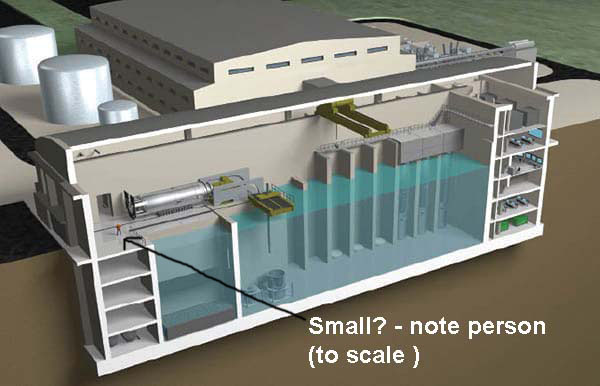
Critics of planned nuclear power project urge Utah cities to pull out before it’s too late, Utah Taxpayers Association warns it believes proposal is too costly, not transparent DeseretNews, By Amy Joi O’Donoghue@Amyjoi16 Aug 4, 2020 SALT LAKE CITY — The Utah Taxpayers Association and a former member of the U.S. Nuclear Regulatory Commission are urging cities that have signed on to a planned nuclear power plant in Idaho to get out while they can before costs become too great. NuScale’s Small Modular Reactor is planned for construction at the Idaho National Laboratory near Idaho Falls and would provide 720 megawatts of power, or enough energy for 720,000 homes. The Carbon Free Power Project is promoted as the next generation design for nuclear power, featuring 12 distinct modules, with the first scheduled to come online in 2029 with the 11 others following the next year. The project is a collaborative effort involving the U.S. Department of Energy, NuScale and the Utah Associated Municipal Power Systems, a political subdivision of the state of Utah. …… there are several off-ramps in those phases for cities to exit, one of which is coming up Sept. 14. That deadline prompted the taxpayers association to urge cities to get out now before they get trapped into paying millions for a technology it says is unproven. “Small modular reactor power is just not cost competitive,” said Rusty Cannon, vice president of the taxpayer group, adding participating cities and districts should hold a public vote to withdraw from the project…….. Peter Bradford, a former member of the U.S. Nuclear Regulatory Commission, said enthusiasm over new developments in nuclear technology that turned out to be flawed have cost ratepayers and taxpayers in multiple states billions of dollars. He said that of 31 projects pending before the commission in 2009, only two remain — with the rest canceled or indefinitely postponed. “The stranded costs of nuclear plants paid off by customers in the 1990s exceeded $50 billion nationwide,” he said. “Each period of abject failure is followed by an array of new proposals.”……. The project is backed heavily by the U.S. Department of Energy, which gave NuScale a competitive award of $226 million in 2013 to develop the technology. Two years later, the federal agency gave NuScale $16.7 million for licensing preparation…….. Cannon and Bradford also criticized the municipal power association for not being transparent enough because its briefing meetings are exempt from the Utah open meetings law and are closed……… https://www.deseret.com/utah/2020/8/4/21354171/critics-nuclear-power-project-urge-utah-cities-pull-out-nuscale-small-modular-reactor-idaho |
|
Hiroshima’s atomic bomb changed Koko Kondo’s life, but so did meeting the man who dropped it,
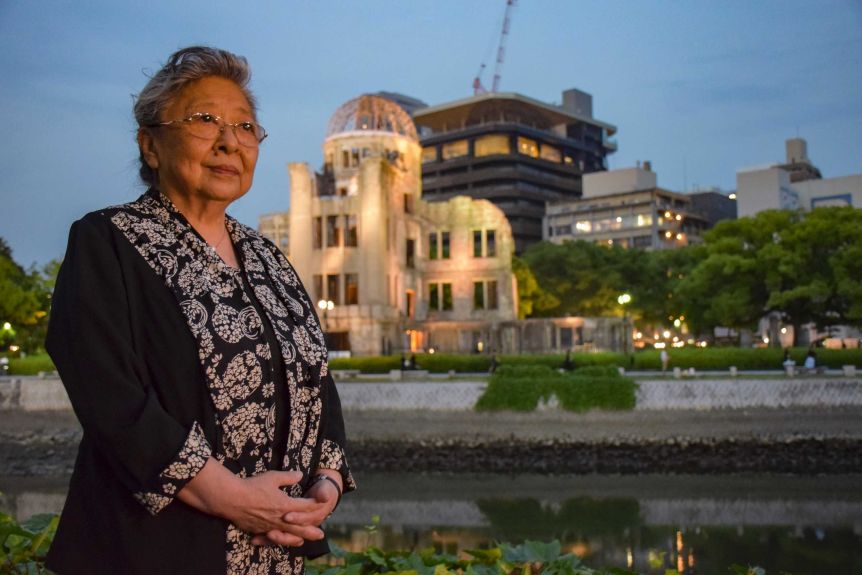
Hiroshima’s atomic bomb changed Koko Kondo’s life, but so did meeting the man who dropped it, ABC News,By Tracey Shelton, 6 August, 20, Eight-month-old Koko was in her mother’s arms the day the world’s first nuclear weapon was dropped on Hiroshima, bringing their family home crashing down on them on this day 75 years ago.
Key points:
Between 90,000 and 166,000 victims died within months of the Hiroshima bombing
Koko Kondo met pilot Robert Lewis on the set of This is Your Life
More than 150 denshosha volunteers are carrying on the memories of survivors
She was almost 40 years old before her mother finally sat her down and told her the full story of how she had inched through the rubble in darkness, with little Koko wrapped in her arms, towards a small pocket of dusty sunlight.
“She first pushed me out [through the opening], then next, she was able to get out … but the fire was all over the place according to my mother,” said Koko Kondo, who is now 75.
Ms Kondo’s father — Methodist minister Kiyoshi Tanimoto, who was visiting a parishioner across town — said in a US television interview “the whole city was on fire” as he ran through the streets to find his family.
He described people running in silence with skin hanging from their bodies “like a procession of ghosts”
In the sky above, pilot Robert Lewis was part of the United States Air Force crew who dropped the atomic bomb known as Little Boy that day, unleashing around 13 kilotons of force on the city below, where Ms Kondo’s family and about 290,000 other civilians lived, according to the Atomic Heritage Foundation.
Estimates on how many people died from the bomb either instantly or in the following months range between 90,000 and 166,000, but the Little Boy would go on to claim the lives of thousands more as the effects of radiation took their toll.
After looking back to see the once-flourishing city “disappear”, Captain Lewis wrote in his log book “My God, what have we done?”…….
While Ms Kondo said most people avoided speaking of the bombing in the decades that followed, her father made it his mission to help the injured, rebuild the city and ensure the world never forgot.
Her family had suffered from radiation sickness and Ms Kondo was subjected to years of tests and examinations to study the effects of radiation exposure.
One of Ms Kondo’s earliest memories — at around two or three years old — was of a group of teenage girls attending a sermon at her father’s church.
“Some girls could not close their eyes. Some girls — their lips were all melted with their chins so they could not close [their mouths],” she told the ABC.
While her manners did not permit her to ask questions, she would listen to her parents’ conversations and learned that the destruction and pain that surrounded her was caused by a single US B-29 bomber.
Ms Kondo said her childhood became consumed by hatred and thoughts of revenge.
“Someday when I grow up, I am definitely going to find the people who were on that B-29 bomber to do the revenge,” she said.
“That was my plan, that was my thinking. But life is interesting.”
When Koko was 10, her mother and siblings received a phone call from the then popular US television program This is Your Life.
They were immediately flown to the United States for an episode featuring the work of her father, who had taken a group of young survivors to the US for plastic surgery……
As Hiroshima mission pilot Robert Lewis was introduced, Koko glared at him with all the hatred a 10-year-old could muster.
“I was so shocked!” she recalled.
“What could I do? I wanted to run to the middle of the stage and give him a punch, a bite or a kick.”
But as he recalled his memories of that day, she saw tears begin to well in his eyes.
“I thought he was a monster, but monsters don’t have tears.”
Ms Kondo said she realised she had lived her short life full of hate for a man she knew nothing about……..
the life of this man was not easy, she said, and he “suffered greatly” not only with the weight of his involvement in the bombing, but he was also “harassed” for speaking about it publicly.at 75, she is among the youngest of a dwindling number of survivors who can tell the world first hand of the horrors these weapons unleashed……….
“My concern is today nuclear weapons are much, much stronger. We have to abolish them now,” urged Ms Kondo. ….
If these stories were lost, “probably our planet would be gone”, she said.
Doctoral candidate Tomoko Kubota is one of more than 150 denshosha — a designated keeper of the memories of a Hiroshima or Nagasaki survivor.
As a denshosha volunteer, she spent three years training and learning from survivor Sadae Kasaoka, so in the future she can “give testimony” on her behalf by sharing her “experiences, the reality of the atomic bombing, and desires for peace”.
That story includes how, at 12 years of age, Ms Kasaoka lost her mother and watched her father die — within days of the blast — in agony from horrific burns and wounds that became infested with maggots.
For other survivors, the memories were too painful to talk about, Ms Kasaoka said, while discrimination against those who did speak out had silenced many over the years…………. https://www.abc.net.au/news/2020-08-06/atomic-bomb-survivors-75-years-after-hiroshima-nuclear-attack/12501636
Vatican signs up to the U.N. Nuclear Weapons Ban Treaty, provides moral guidance
 75 years after Hiroshima and Nagasaki, the Vatican is providing moral guidance on nuclear weapons The Conversation, Drew Christiansen,Distinguished Professor of Ethics and Human Development, Georgetown University, Carole Sargent
August, 4, 2020
At a solemn event at the Hiroshima Peace Park in November 2019, Francis declared the use of atomic energy for war to be “a crime not only against the dignity of human beings but against any possible future for our common home.” “How,” he asked, “can we speak of peace even as we build terrifying new weapons of war?”
His comments came nearly 40 years after John Paul II became the first pope to visit the site of the atomic bomb attacks, which pulverized the two cities on Aug. 6 and 9, 1945 and killed in excess of 200,000 in the process.
Deterrence to abolition
During his visit, Francis reiterated what he previously told assembled Nobel Peace Prize laureates, diplomats and civil society representatives at a Vatican symposium in 2017, that nuclear weapons, along with chemical weapons and landmines, were impermissible. “The threat of their use, as well as their very possession, is to be firmly condemned,” he said…………
In 2017, the Holy See became one of the first signers of the U.N. Treaty on the Prohibition of Nuclear Weapons. Article 1 prohibits signers to “develop, test, produce, manufacture, otherwise acquire, possess or stockpile nuclear weapons…” This was the backdrop for Pope Francis’ historic condemnation of deterrence and call for disarmament later that fall.
One hundred and twenty-two nations voted for the Treaty on the Prohibition of Nuclear Weapons. For its labors on behalf of the treaty, ICAN, the International Campaign Against Nuclear Weapons, an umbrella group of civil society opponents of nuclear weapons, won the 2017 Nobel Peace Prize.
Beyond the hierarchy
But the guidance provided by the Catholic Church is not simply through official statements and positions from the top.
Across the church, various groups have long campaigned for abolition of nuclear weapons. Catholic nuns have often been at the forefront of this work. In Japan, several activist hibakusha – survivors of Hiroshima and Nagasaki – are sisters of Notre Dame de Namur and the Society of the Helper of Holy Souls, among other congregations.
In the U.S., Sister Jennifer Kane was a nuclear engineer before realizing, in the words of her congregation in 2019, “that God was calling her to a more spiritual combat” as an antinuclear activist.
And Dominicans, Religious of the Sacred Heart, and Society of the Holy Child Jesus have participated in the grassroots anti-nuclear direct-action movement Plowshares, at times resulting in prison time for activist nuns……….
Courage of conscience
Church teaching demands that conscientious officials and nuclear workers resist orders they deem to be immoral.
The Second Vatican Council of the early 1960s taught that obeying orders is no excuse for participating in atrocities, and urged anyone, whether top military leader or rank-and-file citizen, to display “the courage of those who openly and fearlessly resist.”
Indeed, in 2018 two chiefs of the U.S. Strategic Air Command testified in a Senate hearing that they would not comply with illegal orders to deploy nuclear weapons, and that they would offer civilian authorities alternative courses of action to pursue. …….https://theconversation.com/75-years-after-hiroshima-and-nagasaki-the-vatican-is-providing-moral-guidance-on-nuclear-weapons-140615
August 5 Energy News — geoharvey

World: ¶ “Yamaha Creating High Performance Electric Motors For Mainstream Manufacturers” • The EV revolution keeps pushing forward, and Yamaha has turned its attention to designing and building high output electric motors that are as small and light as possible. It will soon offer a range of motors ranging from 35 kW (47 HP) to […]
August 5 Energy News — geoharvey
CEFC backs ‘climate transition’ linked green bonds with $60m investment — RenewEconomy

Australian investors tip $140m into new green bonds targeting ASX 300 companies committed to embracing the climate transition. The post CEFC backs ‘climate transition’ linked green bonds with $60m investment appeared first on RenewEconomy.
CEFC backs ‘climate transition’ linked green bonds with $60m investment — RenewEconomy
ACT Labor promises zero interest loans for solar and batteries, as election looms — RenewEconomy

ACT Labor becomes the latest to offer zero interest loans for solar and storage through its first election promise ahead of an October poll. The post ACT Labor promises zero interest loans for solar and batteries, as election looms appeared first on RenewEconomy.
ACT Labor promises zero interest loans for solar and batteries, as election looms — RenewEconomy
Vital questions for Senate Nuclear Waste Committee – on NOMINATIONS, EXPERT EVIDENCE, RADIONUCLIDES, RESET INITIATIVE

The following are some brief extracts from Peter Remta’s Additional submission
HOW DID THE NOMINATIONS COME ABOUT ?……..the government has persistently refused to provide true copies of the nominations claiming personal confidentiality.
This is a puerile excuse as the prescribed nomination form (being attachment B to the government’s own nomination guidelines issued in November 2016) specifically provides that a nominating landowner by its nomination confirms consent to the public disclosure of the nomination
For this reason your committee should request the Department to produce to it for public examination the nominations for Napandee and Lyndhurst and this should quickly establish the veracity of the claims as to the nomination and selection of those sites…..
WHY IS THE SENATE COMMITTEE NOT HEARING EXPERT EXTERNAL EVIDENCE? As it appears that your committee is drawing to the conclusion of its enquiry
I still ask why it has not availed itself of hearing from internationally renowned experts on the management of nuclear waste as I previously suggested………
WHY IS THE COMMITTEE ACCEPTING “EVIDENCE” FROM UNQUALIFIED PERSONS WITHOUT INFORMATION CONFIRMING IT? I am staggered by what was accepted as undisputed evidence by not necessarily qualified persons and without any attempt to gain further information or confirmation.
About agriculture The first of these is how the establishment of the facility at Napandee will give rise to agricultural and scientific research locally without any information to support that claim.
This becomes even more nonsensical when viewed in the light of the most recent protests by agricultural communities in European countries as to the presence of nuclear waste production and disposal……
About jobs. The other is the number of jobs arising through the establishment of the facility and now the new agency based in Adelaide as the numbers suggested are completely outside of the realm of reality.,,,,
WHY NO AUTHORITATIVE AGENCY LIKE AMERICA’s RESET INITIATIVE? While there are several examples that your committee should have studied perhaps the most apt at present is the United States of America initiative and experience known as the Reset of America’s Nuclear Waste Management – Strategies and Policies but for brevity is referred to as the Reset Initiative…… Reset is an effort to untangle the technical, administrative and public concerns in such a way that important issues can be identified,understood and addressed”………….
none of this has occurred with the selection of Napandee……
WHY THE SILENCE ON RADIONUCLIDES? Through a safety case, an implementer reveals its understanding of the management and repository site and how it expects the radionuclides to behave in the repository over long periods of time…………. One important aspect of the risk and safety of storage and disposal of nuclear waste included in the Reset relates to the radionuclides activity of the waste.
Again and despite my raising it previously there has been pointed silence in both the submissions and the personal evidence to your committee of the radionuclides inventories in the intermediate level waste which rather strangely is not known to ARPANSA.
Th Reset Initiative explains that most of the radionuclides in nuclear waste will decay away during the first 1,000 years of management but some will persist for tens of thousands to over one million years…….
It is therefore very difficult to understand how the government has chosen Napandee for its facility before and without any study of the site with regard to the radionuclides and the type of waste as this is the most preliminary and important factor in seeking a suitable location.
The results of the study should also determine the style and nature of the storage and disposal of the nuclear waste.
NEED FOR AN INTERNATIONALLY ACCEPTED PLAN FIRST – NOT “SUBSEQUENT PLANNING” This is something that cannot be cured by so-called subsequent planning and engineering and according to the expert advice should be a determining factor in rejecting the ultimate licence applications for Napandee………
In conclusion the importance and relevance of the Reset Initiative are best gauged by the suggestions that the Reset will be adopted with appropriate variations by IAEA as a principal part of its standards and codes relating to nuclear waste management which by treaty obligations would then become Australia’s prescribed standards.
Senate committee to report by August 31 re Kimba Nuclear Waste Dump plan
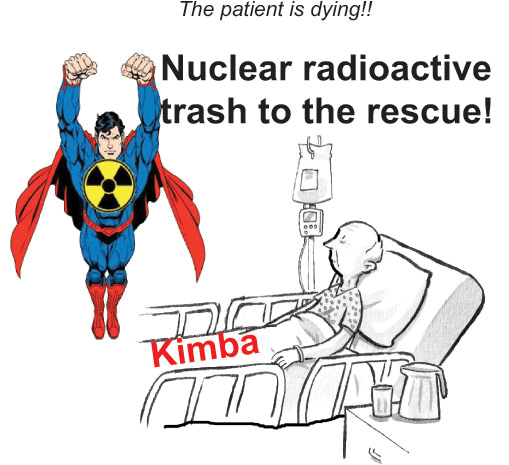
[Ed. According to some reports – “Woomera has nothing to worry about, Defence say no, so they are safe.”]
Nuclear waste push for Woomera over Kimba ‘fails pub test’, local mayor says , Michelle Etheridge, Regional Reporter, The Advertiser
A push to swap Kimba for Woomera as the site of a new radioactive waste storage site is disrespectful and “fails the pub test” following years of consultation, the local mayor says.
Kimba Mayor Dean Johnson on Monday told a Senate committee that after much debate, the district was “the best informed community in Australia when it comes to radioactive waste and how it’s handled”.
His comments follow Senator Patrick’s suggestion that the contentious storage facility, planned for farming property Napandee, near Kimba, be built at Woomera instead.
“Our community has engaged and invested in the process for a really long time and to throw it in another location now, like Woomera, is just disrespectful on so many levels,” Mr Johnson said.
“It’s a bad idea that fails the pub test and the common sense test.”
Senator Patrick has said Federal Parliament should be given a choice to build the dump in the remote and highly-secure Woomera Protection area, where low and intermediate level waste has been stored for decades. However, Defence has argued building the facility at Woomera would “not align with Australia’s strategic interests”.
Kimba stands to receive a $31 million funding package under the plans.
Mr Johnson said the facility would deliver a new industry for the Eyre Peninsula town, and help the area “not just survive, but thrive”.
The Barngarla Determination Aboriginal Corporation have opposed the legislation on the basis that it removes the organisation’s right to seek a judicial review of the Government’s decision to go ahead with the site.
Its chairman Jason Bilney asked the committee to consider the impacts of a decision to go ahead as planned, despite traditional landowners objecting.
“What does that say to indigenous people – we’ve won our country but we still don’t have a right to say what we need to about our country? It’s very disrespectful to the community and our elders,” he said.
Kimba Council last year ran a poll on whether locals supported the waste plan, but traditional landowners not living in the area were excluded.
Meantime, No Radioactive Waste on Agricultural Land in Kimba or SA president Peter Woolford said the waste site should be built somewhere it posed no risk to agriculture. “The sad thing that’s been forgotten here is the impact on people – people are thinking about whether they’re going to move out because of their mental health,” he said.
“We’re (also) trying to stand up for people outside of Kimba that have been denied a say.”
The Senate committee will report back by August 31.
Racism in nuclear bomb testing, bombing of Japanese people, and nuclear waste dumping
 Langston Hughes voiced the opinion that until racial injustice on home ground in the United States ceases, “it is going to be very hard for some Americans not to think the easiest way to settle the problems of Asia is simply dropping an atom bomb on colored heads there.”[25] While his statement was made in 1953, near the eighth anniversary of the Hiroshima and Nagasaki bombings, it remains equally relevant today, as we approach the 75th anniversary
Memorial Days: the racial underpinnings of the Hiroshima and Nagasaki bombings , Bulletin of the Atomic Scientists, Elaine Scarry, Elaine Scarry is the author of Thermonuclear Monarchy: Choosing between Democracy and Doom and The Body in Pain: the Making and Unmaking of the World. She is Cabot Profess… By Elaine Scarry, August 3, 2020
This past Memorial Day, a Minneapolis police officer knelt on the throat of an African-American, George Floyd, for 8 minutes and 46 seconds. Seventy-five years ago, an American pilot dropped an atomic bomb on the civilian population of Hiroshima. Worlds apart in time, space, and scale, the two events share three key features. Each was an act of state violence. Each was an act carried out against a defenseless opponent. Each was an act of naked racism. ……….
Self-defense was not an option for any one of the 300,000 civilian inhabitants of the city of Hiroshima, nor for any one of the 250,000 civilians in Nagasaki three days later. We know from John Hersey’s classic Hiroshima that as day dawned on that August morning, the city was full of courageous undertakings meant to increase the town’s collective capacity for self-defense against conventional warfare, such as the clearing of fire lanes by hundreds of young school girls, many of whom would instantly vanish in the 6,000° C temperature of the initial flash, and others of whom, more distant from the center, would retain their lives but lose their faces.[2] The bombing of Hiroshima and Nagasaki initiated an era in which—for the first time on Earth and now continuing for seven and a half decades—humankind collectively and summarily lost the right self-defense. No one on Earth—or almost no one on Earth[3]—has the means to outlive a blast that is four times the heat of the sun or withstand the hurricane winds and raging fires that follow………
Centuries of political philosophers have asked, “What kind of political arrangements will create a noble and generous people?” Surely such arrangements cannot be ones where a handful of men control the means for destroying at will everyone on Earth from whom the means of self-defense have been eliminated……..
When Americans first learned that the people of Hiroshima and Nagasaki had been collectively vaporized in less time than it takes for the heart to beat, many cheered. But not all. Black poet Langston Hughes at once recognized the moral depravity of executing 100,000 people and discerned racism as the phenomenon that had licensed the depravity: “How come we did not try them [atomic bombs] on Germany… . They just did not want to use them on white folks.”[4] Although the building of the weapon was completed only after Germany surrendered on May 7, 1945, Japan had been designated the target on September 18, 1944, and training for the mission had already been initiated in that same month.[5] Black journalist George Schuyler wrote: “The atom bomb puts the Anglo-Saxons definitely on top where they will remain for decades”; the country, in its “racial arrogance,” has “achieved the supreme triumph of being able to slaughter whole cities at a time.”[6]
Still within the first year (and still before John Hersey had begun to awaken Americans to the horrible aversiveness of the injuries), novelist and anthropologist Zora Neale Hurston denounced the US president as a “butcher” and scorned the public’s silent compliance, asking, “Is it that we are so devoted to a ‘good Massa’ that we feel we ought not to even protest such crimes?”[7] Silence—whether practiced by whites or people of color—was, she saw, a cowardly act of moral enslavement to a white supremacist. Continue reading
ROADS, RATES, RUBBISH AND … NUCLEAR DISARMAMENT?
The Advertiser, 3 Aug 20, An Adelaide Hills councillor is laser-focused on the threat posed by nuclear weapons. He wants his council to take immediate steps so it’s ready to provide local leadership in the event of a nuclear holocaust……. (subscribers only)
Links between Trump administration, Falun Gong, and Australia’s government
 Propaganda Wars: US state department funds anti-China news outlet in Australia https://www.michaelwest.com.au/propaganda-wars-us-state-department-funds-anti-china-news-outlet-in-australia/
by Marcus Reubenstein | Aug 4, 2020 Office bearers of US-backed Chinese language news service Decode China are linked with Falun Gong, the spiritual group that has spent millions backing Donald Trump through fake social media accounts. The same people are on the board of the National Foundation for Australia China Relations, raising scepticism about its ability to repair fractured relationships. Marcus Reubenstein investigates US state funding of anti-China media in Australia and links to global arms dealers via ASPI.
The US State Department is quietly funding a Chinese-language news service in Australia, a move more typically associated with China’s state media propagandists.
And two of the three office bearers of the news service, Decode China, are members of a taxpayer-funded independent board advising the Australian government on engagement with China.
Corporate records show Dr Wai Ling Yeung and Maree Ma became secretary and director, respectively, of Decode China Pty Ltd just eight weeks before Foreign Minister Marise Payne appointed them to the board of the National Foundation for Australia China Relations. The NFACR replaced the Australia China Council (ACC), which was set up by the Fraser government in 1978 and later chaired by former prime minister Gough Whitlam.
The retired Curtin University academic Dr Yeung is a vocal critic of the Chinese government, while Ma is the general manager of the Falun Gong-aligned, largely anti-Chinese government Vision Times newspaper. According to journalist and former Australian Falun Gong practitioner Ben Hurley, Vision Times is part of the apparatus of Falun Gong media in Australia, led by The Epoch Times and New Tang Dynasty Television.
The spiritual group Falun Gong is banned in China and there is substantial evidence that its mainland Chinese followers are harshly persecuted by the Chinese government.
However, former practitioners say it’s a dangerous cult, whose leaders claim to have the power of levitation and tell followers that aliens from other planets are responsible for interracial marriage and mixed-race children.
Falun Gong-aligned media affiliates in the US have been accused of pouring millions of dollars into fake social media accounts and Facebook advertising, since banned, supporting Donald Trump. A recent investigation by the ABC’s Foreign Correspondent and Background Briefing programs revealed Falun Gong-affiliated media in the US have spent more than US$11.5 million in social media advertising to promote Trump.
ASPI lurking in the background Continue reading
The nuclear bombing of Hiroshima and Nagasaki did NOT save lives and shorten World War 2
What Europeans believe about Hiroshima and Nagasaki—and why it matters , Bulletin of the Atomic Scientists Benoît Pelopidas Benoît Pelopidas is the founder of the Nuclear Knowledges program at the Center for International Studies at Sciences Po in Paris (formerly chair of excellence in security studies). Kjølv Egeland, Kjølv Egeland is Marie Skłodowska-Curie Postdoctoral Fellow in Security Studies at Sciences Po, focusing on strategic narratives and global nuclear order.
By Benoît Pelopidas, Kjølv Egeland, August 3, 2020 Did the atomic bombings of Hiroshima and Nagasaki shorten the war, and were they necessary to force the Japanese surrender? Many people believe the answer to both questions is yes: In dropping the Bomb, America chose the lesser of two evils.
Although historians have long challenged this narrative as wrong or misleading, a significant number of Europeans still believe it. That is the primary result of a recent survey of European views on nuclear affairs generally and the atomic bombings of Japan specifically. The survey, carried out in October 2019, involved approximately 7,000 respondents aged 18 and upward, carefully selected to ensure representative samples from Belgium, France, Germany, Italy, the Netherlands, Poland, Sweden, Turkey, and the United Kingdom.
The survey also shows that those who believe the bombings were necessary and effective at significantly shortening the war are more likely to harbor skepticism toward nuclear disarmament than those who do not. That being said, European publics remain on the whole staunch in their support for the elimination of nuclear weapons. Even in nuclear-armed France and the United Kingdom, large majorities reject the idea that nuclear weapons could ever be used morally. Although others across the world may hold similar views, to date there has been no broad survey posing these questions in the United States or elsewhere. Future surveys could investigate whether the same pattern exists beyond Europe…………
it does not appear that the US executive spent much time deliberating whether atomic weapons should be used or not. Discussions instead focused on how, when, and where they would be employed. ………….
According to declassified documents, the US military estimated in June 1945 that a full-scale invasion of the Japanese home islands, in the worst-case scenario, could be expected to incur up to 220,000 casualties—quite far from Stimson’s “over a million.” Moreover, of the 220,000 casualties, only 46,000 were projected as fatalities. The number of people killed in Hiroshima and Nagasaki, on the other hand, was probably at least twice as high as the “over a hundred thousand Japanese” reported by Stimson in 1947………
the idea that the US government was faced with only two options in August 1945—full invasion or atomic bombing of Japanese population centers—has little basis in reality. Alternative courses of action, not mutually exclusive, would have included negotiations, a demonstration of the atomic bomb in an uninhabited area, continued strategic bombing short of the use of atomic weapons, continued economic blockade, and waiting for the Soviets to declare war against the Japanese empire.
it is not clear that the atomic bombs were in fact responsible for the Japanese surrender. The Japanese war cabinet had over an extended period of time been divided between a “peace party,” which argued that Japan should seek an end to the war as quickly as possible, and a “war party,” which argued the war should be continued as Japan sought good offices from the Soviet Union to negotiate a peace deal with the United States and Britain. In the view of the acclaimed historian Tsuyoshi Hasegawa, who consulted primary sources in Japanese, it was the Soviet Union’s breach of the Soviet–Japanese Neutrality Pact and attack against Japan on August 9, 1945 that tipped the scale and forced the emperor’s decision to surrender the very next day (the final decision was formalized a few days later, following discussions within the Japanese executive). In the absence of the Soviet invasion, Hasegawa concludes, the two atomic bombs would “most likely not have prompted the Japanese to surrender, so long as they still had hope that Moscow would mediate.”
The historian John Dower concurs: The Soviet entry into war was more important than the atomic bombing in producing Japanese surrender. Once the Soviets intervened, the Japanese appear to have favored surrendering to Washington over allowing Moscow to conquer their country. At the same time, from the perspective of the Japanese government, the atomic bombings provided an opportunity to frame the Japanese military’s shattering defeat as a result not of its own incompetence, but as an outcome of the introduction of a new and revolutionary weapon by the enemy. In Dower’s words, the atomic bombings allowed the Japanese emperor to spin the capitulation as “nothing less than a magnanimous act that might save humanity itself from annihilation by an atrocious adversary.”
In fact, according to the US Air Force’s own review, finalized not long after the end of the war, Japan would likely have surrendered that same autumn even in the absence of atomic bombings or an invasion. Similarly, the Joint Chiefs of Staff expressed skepticism about the use of atomic bombs both before and after the fact.
In summary, many of the central claims on which the official story about Hiroshima and Nagasaki is founded—that the atomic bombings were necessary to end the war, that they ended a conflict that otherwise would have slogged on, and that they saved a large number of American soldiers’ lives—appear to rest on shaky ground. While certain aspects of the story stand up to scrutiny, others have been proven plain wrong, and others remain contested by scholarship. But have people caught up with the historiography?
European views on the atomic bombings of Japan. Asked to note their agreement or disagreement with the statement that “the atomic bombings of Japan in World War II shortened the war significantly,” 23 percent of respondents to the October 2019 survey “strongly” agreed, 29 percent “somewhat” agreed, 31 percent reported no opinion, 9 percent “somewhat” disagreed, and 8 percent “strongly” disagreed. In other words, while 52 percent of respondents expressed support for the idea that the war was significantly shortened by the atomic bombings, only 17 percent pushed back against that idea.
Regarding the question of whether “the atomic bombings of Japan in World War II were necessary to bring Japan to surrender,” the survey results were more balanced. 12 percent of respondents “strongly” agreed, 19 percent “somewhat” agreed, 33 percent reported no opinion, 15 percent “somewhat” disagreed, and 21 percent “strongly” disagreed.
On the statement, “The atomic bombings of Japan in World War II saved American soldiers’ lives,” 14 percent of respondents expressed that they “strongly” agreed, 25 percent that they “somewhat” agreed, 38 percent reported no opinion, 11 percent expressed that they “somewhat” disagreed, and 13 percent expressed that they “strongly” disagreed.
Finally, asked to note their agreement or disagreement with the statement that “the atomic bombings of Japan in World War II killed innocent civilians,” 71 percent of respondents to the 2019 survey “strongly” agreed, 14 percent “somewhat” agreed, 12 percent expressed no opinion, and less than 5 percent “strongly” or “somewhat” disagreed.
The results suggest that the Stimson narrative still holds sway among Europeans, but that support might be weakening over time. On each statement, older respondents were slightly more likely than younger respondents to express agreement with Stimson’s interpretation of the atomic bombings.
Finally, it bears mentioning that British respondents stand out among the nine European populations sampled as the greatest believers in the Stimson narrative. The results unfortunately do not give further insight into the causes of this tendency, but three mutually reinforcing hypotheses are plausible. First, the shared language of the United States and the United Kingdom allows narratives and talking points to travel relatively frictionless across borders. Second, the United Kingdom was directly involved in the building of the atomic bomb through the Manhattan Project and, by extension, partly responsible for the fates of the people of Hiroshima and Nagasaki……..
Attitudes toward nuclear disarmament. European publics have long offered strong support for arms control and the elimination of nuclear weapons. This pattern is further corroborated by the survey data, which show consistent support for nuclear disarmament. ……..
The support for disarmament is robust and consistent: 81 percent of respondents who strongly agreed with the goal of eliminating nuclear weapons within 25 years also offered strong support for an agreement to eliminate nuclear weapons. …….
However, there is clear relationship between degree of faith in the Stimson narrative and support for the abolition of nuclear weapons. Respondents who said the atomic bombings shortened the war significantly, were necessary to bring about the Japanese surrender, or saved American soldiers’ lives were significantly more likely to believe that the abolition of nuclear weapons would “make the world less safe” compared to those who did not express such views. ………..
However, there is clear relationship between degree of faith in the Stimson narrative and support for the abolition of nuclear weapons. Respondents who said the atomic bombings shortened the war significantly, were necessary to bring about the Japanese surrender, or saved American soldiers’ lives were significantly more likely to believe that the abolition of nuclear weapons would “make the world less safe” compared to those who did not express such views. ……….
It is the responsibility of scholars and educators to work against such epistemic vulnerability to expose citizens to the latest advances of knowledge so that they can independently form their political views. https://thebulletin.org/2020/08/what-europeans-believe-about-hiroshima-and-nagasaki-and-why-it-matters/?utm_source=Newsletter&utm_medium=Email&utm_campaign=MondayNewsletter08032020&utm_content=NuclearRisk_WhatEuropeansBelieve_08032020#
Global heating is causing ‘extreme’ melting in New Zealand glaciers

|
Human-induced climate change is causing ‘extreme’ melting in New Zealand glaciers, The study is only the second to draw a direct link between glacier melt and human-induced climate change. SBS NEWS 4 AUG 20 BY BIWA KWAN New analysis of data and photo records of melting glaciers in New Zealand has found human-induced climate change increased the likelihood of mass ice melt.
The new modelling techniques were applied to 10 glaciers in New Zealand to reveal a more detailed picture of what is driving the accelerating rates of ice melt in the region. Lead researcher Lauren Vargo said the analysis compared ice melt under pre-industrial greenhouse gas emissions and current-day emissions to uncover “a quite extreme result”. “Some of the glaciers were at least six times more likely to have experienced that high mass loss because of humans,” said Dr Vargo, who is based at the Victoria University of Wellington. “We’re really confident with that number because that is the low end. The high end is 350 times more likely. “But with the high ice mass loss event we saw [in 2018], it would not have happened at all without humans.” The first study to make a direct link between human-induced climate change and glacier melt focused on glaciers in the Northern Hemisphere where more robust data records exist. The study – published in the journal Science in 2014 – looked at records between 1851 and 2010 using a running mean over 20-year periods. Dr Vargo said the rate of ice melt has resulted in the loss of a quarter of New Zealand’s glaciers since the 1970s. Rapid melt events in 2011 and 2018 prompted the study. …… The study accounted for years like 2013 when some glaciers in New Zealand actually gained mass, but not at a rate to combat the overall decline. ……. HTTPS://WWW.SBS.COM.AU/NEWS/HUMAN-INDUCED-CLIMATE-CHANGE-IS-CAUSING-EXTREME-MELTING-IN-NEW-ZEALAND-GLACIERS |
|
How to build a nuclear warning for 10,000 years’ time,

How to build a nuclear warning for 10,000 years’ time, The nuclear waste buried far beneath the earth will be toxic for thousands of years. How do you build a warning now that can be understood in the far future?, BBC Future, 3 Aug 20
“This place is not a place of honor,” reads the text. “No highly esteemed dead is commemorated here… nothing valued is here. What is here was dangerous and repulsive to us. This message is a warning about danger.”
It sounds like the kind of curse that you half-expect to find at the entrance to an ancient burial mound. But this message is intended to help mark the site of the Waste Isolation Pilot Project (WIPP) that has been built over 2,000 feet (610m) down through stable rocks beneath the desert of New Mexico. The huge complex of tunnels and caverns is designed to contain the US military’s most dangerous nuclear waste.
This waste will remain lethal longer than the 300,000 years Homo sapiens has walked across the surface of the planet. WIPP is currently the only licensed deep geological disposal repository in operation in the world. A similar facility should also open in Finland in the mid-2020s.
When the facility is full sometime in the next 10 to 20 years, the caverns will be collapsed and sealed with concrete and soil. The sprawling complex of buildings that currently mark the site will be erased. In its place will be “our society’s largest conscious attempt to communicate across the abyss of deep time”.
vThe plan calls for huge 25ft (7.6m) tall granite columns marking the four-sq-mile (10 sq km) outer boundary of the entire site. Inside this perimeter, there is an earth berm 33ft (10m) tall and 100ft (30m) wide marking the repository’s actual footprint. Then inside the berm will be another square of granite columns.
At the centre of this monumental “Do Not Enter” sign will be a room containing information about the site. In case the information becomes unreadable, there will be another buried 20ft below, and another buried in the earth barrier itself. Detailed information about the WIPP will be stored in many archives around the world on special paper stamped with the instruction that it must be kept for 10,000 years, the rather arbitrary length of the site’s license.
The plan calls for huge 25ft (7.6m) tall granite columns marking the four-sq-mile (10 sq km) outer boundary of the entire site. Inside this perimeter, there is an earth berm 33ft (10m) tall and 100ft (30m) wide marking the repository’s actual footprint. Then inside the berm will be another square of granite columns.
Welcome to the world of nuclear semiotics. The vast landscape proposed for the WIPP is partly influenced by science fiction. Nuclear physicists, engineers, anthropologists, sci-fi writers, artists and others have come together in the very broad, esoteric field of research into the way that future humans – and anything that comes after us – might be warned of our deadly legacy
Sadly, the idea to cover the site with a forest of massive concrete thorns was not taken up, nor the idea to create a self-perpetuating atomic priesthood who would use legend and ritual to create a sense of fear around the site for generations. Linguist Thomas Sebok first used the phrase “nuclear priesthood” in 1981. ……. https://www.bbc.com/future/article/20200731-how-to-build-a-nuclear-warning-for-10000-years-time
1 This month.
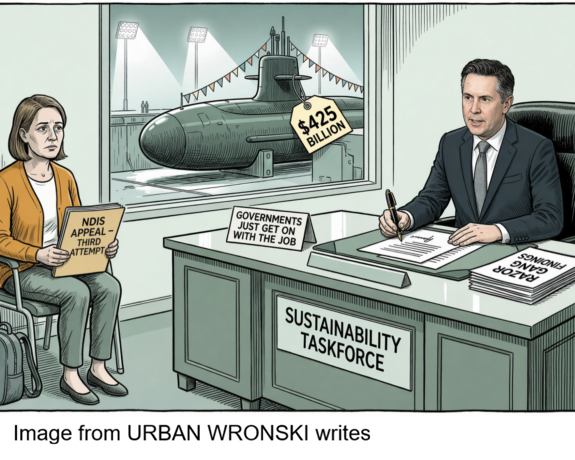

PETITION – To: Prime Minister Anthony Albanese and the Australian Labor Government
Chernobyl: The Lost Tapes – A good documentary on Chernobyl on SBS available On Demand for the next 3 weeks– https://www.sbs.com.au/ondemand/tv-program/chernobyl-the-lost-tapes/235274195556
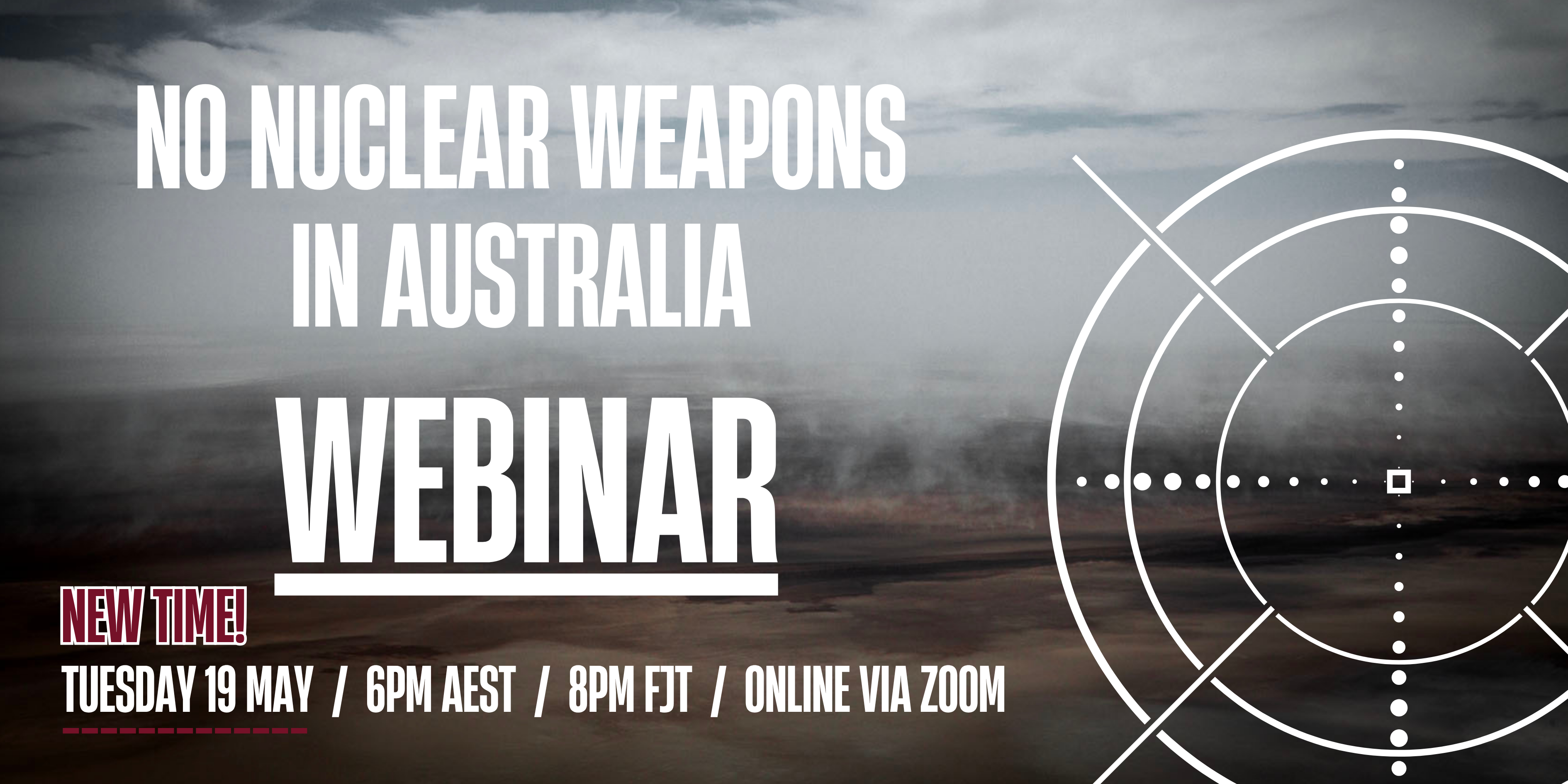
19 May – Webinar- Webinar: No Nuclear Weapons in Australia
Start: 2026-05-19 18:00:00 UTC Canberra, Melbourne, Sydney (GMT+10:00)
End: 2026-05-19 19:30:00 UTC Canberra, Melbourne, Sydney (GMT+10:00)
20 May – Webinar – The dangerous world of AUKUS, US, military occupation and suppression of dissent

National Webinar, 20th May, 2026, 6.30pm AEST. Confronting laws restricting/suppressing protest speech and action
Speakers: Former Sen. Rex Patrick, Lawyer Nick Hanna ,Arthur Rorris ,Jorgen Doyle, Sen David Shoebbridge,
Facilitator Kelley Tranter.

of the week – Australians for War Powers Reform (AWPR)
To see nuclear-related stories in greater depth and intensity
 Antinuclear