Four ways a smart government can create jobs and cut emissions — RenewEconomy
Done well, post-Covid government spending can make Australia’s economy more productive, improve quality of life and help the low-carbon transition. Here’s how. The post Four ways a smart government can create jobs and cut emissions appeared first on RenewEconomy.
via Four ways a smart government can create jobs and cut emissions — RenewEconomy
Adani news, June 2020 — John Quiggin
Amid the coronavirus pandemic, the climate crisis rolls on, slowed a bit by the economic impact of travel restrictions. The campaign to stop carbon dioxide emissions, including those from the Adani Carmichael project, has to continue as well.It’s now almost a year since Adani Mining gained the final environmental approvals for the construction of the…
Government -owned Woomera a better site than agricultural land, for nuclear waste dump

|
Senator pushes Woomera instead of Kimba for waste facility, Port Lincoln Times, Jarrad Delaney , 12 June 20, South Australian senator Rex Patrick will push for the Woomera Prohibited Area to be the location of the National Radioactive Waste Management Facility instead of land near Kimba. The Centre Alliance senator has announced he will move amendments to the National Radioactive Waste Management Facility Bill, which would allow the Minister for Defence to nominate a site in the prohibited area. This comes as the National Radioactive Waste Management Amendment (Site Specification, Community Fund and Other Measures) Bill passed through the House of Representatives on Thursday.
The bill was tabled in February to formally name Napandee, near Kimba as the site for the National Radioactive Waste Management Facility. Minister for Resources, Water and Northern Australia Keith Pitt said it was an important milestone for the establishment of the facility.
However Mr Patrick said the bill was now before the Senate Economics Committee which is expected to report on July 31, although this could be extended. He said the act was based on volunteerism, as no site could be considered as a potential location for a radioactive waste management facility without the voluntary nomination of that site and agreement of persons with relevant rights and interests. “The Federal Parliament will be given a choice on whether the site should be on prime agricultural land on the Eyre Peninsula in a community that is bitterly divided about it being built there, or in the remote and highly secure Woomera Prohibited Area where a significant amount of low and intermediate level radioactive waste has been stored for more than two decades,” he said. Mr Patrick has pointed to a 2002 study which identified sites for a low level and short-lived intermediate level radioactive waste repository at three sites. These are located within the prohibited area near Koolymilka, about 20km east of Woomera and about 50km northeast of Woomera. Mr Patrick said there were already two radioactive waste storage facilities inside the prohibited area, one CSIRO building (Hanger 5 at Evetts Field) and one defence bunker (Koolymilka). “My amendment will, instead of selecting Kimba as the site, allow the Minister for Defence to nominate a site in the Woomera Prohibited Area,” he said. “If the Minister can’t find a suitable site somewhere within that 12.7 million hectares of desert, then she’s not looking hard enough. “My proposed amendments will require the Minister to consult with affected parties, including First Nation’s people, before making her decision as to the preferred Woomera site.” Mr Patrick said he would not seek to amend the community funding being directed at Kimba by the bill. However Mr Pitt said suggestions of a site in the Woomera area could be used for the facility was not practical due to the increase in Defence Force training activities that would limit access to the area……https://www.portlincolntimes.com.au/story/6788596/senator-pushes-woomera-for-waste-facility/ |
|
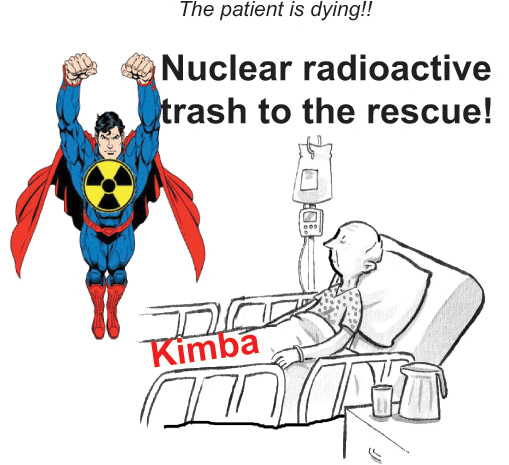
Town of Kimba depicted as failing, desperate to have nuclear waste dump for its survival
|
Waste dump gives bush town ‘secure future’ https://www.theleader.com.au/story/6789645/waste-dump-gives-bush-town-secure-future/?cs=9397 Finbar O’Mallon 11 June 20
A South Australian regional town desperately needs to become the site of a nuclear waste dump to stop the town’s decline, its federal MP says.
Government chief whip Rowan Ramsey’s dreams for his hometown on the Eyre Peninsula are one step closer to reality as the bill cementing the site passed the House of Representatives. “The project will be a game changer for Kimba. It will offer a secure future,” the Liberal MP told parliament on Thursday.
Native title holders have unsuccessfully gone to the courts to block the facility. Environmental advocates are concerned the bill has major holes, while Labor wanted the government to let a Senate committee review the proposal.
Government chief whip Rowan Ramsey’s dreams for his hometown on the Eyre Peninsula are one step closer to reality as the bill cementing the site passed the House of Representatives. “The project will be a game changer for Kimba. It will offer a secure future,” the Liberal MP told parliament on Thursday.
Native title holders have unsuccessfully gone to the courts to block the facility. Environmental advocates are concerned the bill has major holes, while Labor wanted the government to let a Senate committee review the proposal.
The local native title holders tried to have the proposal thrown out by the courts in March. Barngarla Determination Aboriginal Corporation claimed some votes on whether to support the facility had been excluded. The ballot returned about 62 per cent support for the dump. While native title rights don’t exist at the Napandee property site, the bill allows the government to override nearby rights holders and not seek permission to build access roads on their land. Under the bill, the Kimba farm would become Australia’s number one nuclear waste dump, with the facility expected to store radioactive refuse for 100 years. A one-off $20 million community fund would help establish and maintain the site. Mr Ramsey said it would create 33 local permanent jobs. He painted a picture of a town in decline, with a shrinking population, no permanent doctor and even the loss of three of its four footy clubs. “Survival of our towns will require something new, something outside the square,” Mr Ramsey said. “I’m convinced 100 other communities around Australia will look at Kimba and ask, ‘Why didn’t we put our hand up?'” |
|
Former weapons chief executive now South Australian Premier’s top advisor
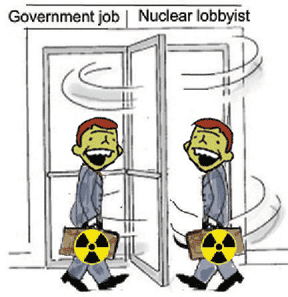

This could shed some light on the South Australian government’s silence on the Federal plan for a nuclear waste dump in South Australia. We can expect the South Australian government to now support the nuclear waste dump at Napandee, and to promote schemes to make south Australia a nuclear hub, especially with nuclear submarines production.
|
Weapons of Influence: BAE arms boss turns Premier’s right-hand man https://www.michaelwest.com.au/weapons-of-influence-bae-arms-boss-turns-premiers-right-hand-man/ Michael West Media, by Michelle Fahy | Jun 12, 2020 As part of her series of investigations into the close links between the military industry and politics, Michelle Fahy reports on former weapons chief executive for BAE, Jim McDowell, who is now at the centre of government in the Defence State, South Australia. Jim McDowell was employed in the weapons industry for 37 years. Born in Belfast, he studied law then spent 18 years with Northern Ireland firm Bombardier Shorts. After that, he joined British Aerospace (now BAE Systems) in Singapore and worked his way up through various positions in Asia. In 2001, McDowell was appointed CEO of BAE Systems Australia. During a decade in that role he oversaw BAE’s 2008 acquisition of Tenix Defence, a deal that doubled the size of the company and resulted in BAE becoming Australia’s largest weapons-maker at the time. It remains one of the largest today, mostly for building Australia’s warships, among other projects. In September 2011, Jim McDowell left Adelaide for Riyadh, where he ran BAE’s Saudi Arabian operation for a little over two years. Saudi Arabia is crucial to BAE’s business, its third largest market after the US and the UK (Australia is fourth). The company has been supplying combat aircraft to the Saudis since the 1960s. Several of its arms deals have been dogged by controversy (and continue to be due to the Saudi role in the humanitarian catastrophe in Yemen), and some by corruption. In the UK, a Serious Fraud Office investigation into BAE’s relationship with the Saudis was notoriously shut down in December 2006 following intense pressure from the Saudi government and the UK’s then prime minister Tony Blair, citing national security reasons. The capitulation of the Serious Fraud Office was later deemed “unlawful, an “abject surrender” and a “threat to the reputation of British justice” by the British High Court. By the time McDowell arrived, all that was in the past and it was back to business. In a media release describing a visit of the BAE Board to Saudi Arabia in March 2012, McDowell said, “Saudi Arabia is a key market for the company. We want to be considered as an industrial and a strategic partner for the Kingdom… The meeting was a wonderful way to strengthen relations.” Several multi-billion pound arms deals were concluded during the period McDowell was BAE’s chief executive in Saudi Arabia. Back to Australia with ANSTOIn December 2013, McDowell resigned from BAE and returned to Australia. He was immediately appointed to the board of the Australian Nuclear Science and Technology Organisation, as deputy chair. Then Industry Minister Ian Macfarlane said, “Mr McDowell’s business background coupled with his knowledge of international marketing and joint ventures will support the development of emerging business opportunities…” ANSTO’s chair, Dr Paul Greenfield, said, “This is a dynamic and exciting time for ANSTO and this is reflected in the overall contribution nuclear science and technology is now making across a range of key areas.” Earlier that year (in February 2013), ANSTO had signed a formal research cooperation agreement with the Defence Science and Technology (DST) Organisation. This was a period when DST, under Chief Defence Scientist Alex Zelinsky, signed a number of collaborative agreements with military industrial companies, including BAE in October 2013 and, as we have covered previously, Lockheed Martin in March 2014, among others. At the completion of Dr Greenfield’s term, in August 2014, McDowell was appointed chair of the ANSTO board, a position he held for the next four years. McDowell’s timely departure from the military industry created an influx of new opportunities for him from a government with a policy of recognising industry as a “fundamental input to capability”. Following his rapid appointment to the ANSTO board, over the next four years, McDowell was awarded lucrative contracts across six major areas by Defence (see table), which together totalled almost $1.5 million in consultancy fees. To supplement the government’s largesse, in the same four-year period, McDowell accepted appointments as Chancellor of the University of South Australia and to the Council of the Australian Strategic Policy Institute. He also joined the boards of eight public companies, most of which operate in the military industrial sector. In addition to those in the chart, McDowell was made chair of another two private companies, duMonde Group Pty Ltd and Total Construction Pty Ltd (dates of those appointments are not publicly available). In 2017, it appears McDowell was engaged simultaneously in at least 12 different roles. Continue reading |
Anne Wharton- appalled at exclusion of Barngarla from nuclear waste dump decision-making: a national issue, not just local
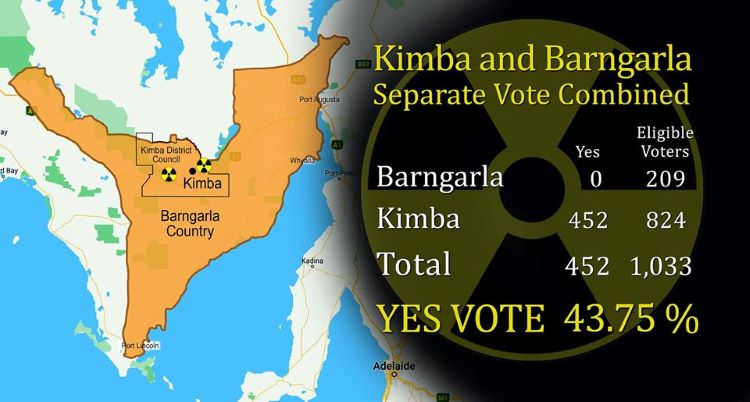
Kimba. I am especially appalled that the Barngarla Determination Aboriginal Corporation
were denied the right to vote in the community ballot and the Federal Court has now
dismissed their appeal. The people in these communities have never been asked what they
think about having a nuclear waste dump on their land, and they need to be listened to.
This is a huge transgression of their basic human rights.
established in SA (the “Nuclear Waste Storage Facility (Prohibition) Act 2000”).
Recently the Federal Morrison Government has introduced legislation to over-ride this
legislation. This is appalling – another violation of every citizen’s basic human rights.
As this affects every citizen of Australia, there should be a national inquiry into the need
for, and role of, a national nuclear waste dump in Australia.
Climate change is enhancing ocean waves – bigger ones, and more often
 EXTREME WAVES SET TO BE BIGGER AND MORE FREQUENT
As the planet warms, researchers are warning that the frequency and magnitude of extreme wave events may rise by around 10 per cent by the end of century, increasing flood risks. Pursuit, By Dr Alberto Meucci and Professor Ian Young University of Melbourne, 13 June 20
When most of us think about what climate change will do to our coastlines we tend to focus on how sea-levels are rising as the polar ice caps melt and the oceans warm. But that is only part of the story.
What many don’t realise is that at the same time as sea levels are rising, storms are increasing in magnitude and frequency, resulting in larger ocean waves. These waves increase coastal erosion and the risk of flooding.
Our new research suggests that by the end of the century the magnitude of extreme wave events will have increased by up to 10 per cent over extensive ocean regions, and the frequency of storms that generate extreme waves will have increased by five to 10 per year.
This may not sound like a big increase, but it means that almost 60 per cent of the world’s coastline will experience larger and more frequent extreme waves.
At a time when 290 million people already live below the 100-year flood level (that is, they live below levels where there is at least a one per cent probability of flooding every year), an increase in the risk of extreme wave events may be catastrophic, as larger and more frequent storms will cause more flooding and coastline erosion.
Extremes are defined as unexpected, unusual and sometimes unseasonal events. Like extreme floods, extreme waves are classified by the frequency with which they tend to occur, and this frequency drives the design requirements for ocean structures or coastal defences. For example, defences may be designed to cope with a 100-year wave event.
Extreme ocean waves generated by strong surface winds can reach heights of over 20 meters at the high latitudes of the globe – that’s as high as four double-decker buses stacked on top of each other.
But the surface winds that drive wave heights are in turn driven by the climate system, and so are subject to climate change. A warming planet is causing stronger and more frequent storm winds which in turn trigger larger and more frequent extreme waves, and the 100-year events may begin to occur every 50 or even 20 years.
Estimating the probability of occurrence of extreme waves is challenging, let alone estimating how their frequency and magnitude may change in the future. This is due to the small number of ocean observations available.
The buoys and offshore platforms scientists use to observe ocean movements are sparsely distributed, and satellite measurements are limited in how often they sample a single location.
But advances in computing technology and the modelling of data, allows us to simulate the Earth’s changing climate under different wind conditions, recreating thousands of simulated storms to evaluate the magnitude and frequency of extreme events.
Our research used a unique statistical ensemble approach, where we pooled data from an unprecedented collection of thousands of modelled ocean wave extremes to estimate future extreme events. These extremes were derived from global wave models based on wind forces generated from seven different global climate models.
The vast amount of modelled ocean extremes generated allowed us to apply an ensemble statistical analysis that reduces the uncertainty around the estimation of future projections of extremes. …….. Co-authors of the research are: Dr Mark Hemer, CSIRO, Oceans and Atmosphere, Hobart Australia; Professor Roshanka Ranasinghe, Department of Water Science and Engineering, IHE-Delft, Netherlands; and Ebru Kirezci, University of Melbourne
Australian Government’s Covid-19 advisory body – stacked with fossil fuel big-wigs, but their conflicts of interest kept secret
 Just one of six Covid commission members volunteers to release conflict-of-interest declaration Just one of six Covid commission members volunteers to release conflict-of-interest declaration
Federal government refuses to release disclosures, saying they were made ‘in confidence’, amid calls for greater transparency, Guardian, Christopher Knaus @knausc Fri 12 Jun 2020 Only one of the six commissioners on Scott Morrison’s Covid-19 commission has volunteered to release their conflicts of interest, prompting calls for greater transparency from the publicly funded body.The government has refused to release the conflict-of-interest declarations for members of its National Covid-19 Coordination Commission (NCCC), a prominent advisory body shaping non-health aspects of Australia’s Covid-19 strategy. There have been increasing concerns about a lack of proper governance structures around the taxpayer-funded commission, which operates with a broad remit and a budget of more than $5m. The commission is headed by Nev Power, the former head of Fortescue Metals, and other commissioners include the Industry Super chair Greg Combet, former health department secretary Jane Halton, rich-lister Paul Little, EnergyAustralia chair Catherine Tanna and CSIRO chair David Thodey Officials from the Department of Prime Minister and Cabinet said it could not release their conflict-of-interest declarations because they were provided “in confidence”. The Guardian approached each of the commissioners and asked whether they would release their interests of their own volition. Only Combet agreed to do so. A spokesman told the Guardian Combet’s “interests are already publicly available and widely known”, and provided a list including his chairmanship of Industry Super Australia and IFM Investors, as well as his membership of the Invest Victoria advisory board and occasional consulting roles. The interests he declared had already been published on the NCCC’s website, where others had also published their public directorships……. The Australia Institute’s climate and energy program director, Richie Merzian, said publicly disclosing conflicts was “the least the government commissioners” could do, given they had been handpicked to advise the government on spending billions of dollars taxpayer funds. “The roles of the NCCC commissioners are, by design, intended to influence government,” Merzian said. “It is clearly in the public interest for any conflicts of interest to be publicly declared. There is no excuse for any potential conflicts of interest to remain secret.” Crossbench senator Rex Patrick also urged “full disclosure” of the commissioners’ interests. “The commissioners are being paid from the public purse, are performing public activities and their output may have significant influence over the future expenditure of public money,” he said…….. https://www.theguardian.com/australia-news/2020/jun/12/just-one-of-six-covid-commission-members-volunteers-to-release-conflict-of-interest-declaration |
|
A housewife will run as candidate for Iwaki City Election 2020: “I want to protect Iwaki’s children” — Fukushima 311 Watchdogs
[Iwaki City Election 2020] “I want to protect Iwaki’s children” A housewife who has continued to measure radioactivity decides to run for a bid. Translated by Hervé Courtois June 11, 2020 A housewife working on the nuclear accident problem that has been going on since 2011 will run for the Iwaki City election […]
June 12 Energy News — geoharvey
Science and Technology: ¶ “Climate Crisis To Blame For $67 Billion Of Hurricane Harvey Damage – Study” • At least $67 billion of the damage caused by Hurricane Harvey in 2017 can be attributed directly to climate breakdown, a study published in the journal Climatic Change says. The finding could lead to a radical reassessment […]
South Australia – Citizens’ Jury rejected nuclear waste dump in 2016. Decision should not be made by a tiny community
Confidential to Senate Committee on National Radioactive Waste Management Amendment (Site Specification, Community  Fund and Other Measures) Bill 2020 [Provisions] Submission 31 We strongly oppose the proposal of a low and intermediate level radioactive waste storage facility at Kimba or anywhere in South Australia.We are concerned, saddened and offended that we need to write this letter.
In 2016 the South Australian State Government undertook and formed a citizens jury.The citizens jury marked the beginning of a state-wide consultation program to investigate the possible construction of a nuclear waste storage facility in South Australia.The jury members comprised 350 randomly selected South Australian residents. The jury met over six days (three weekends).The jury rejected the proposal of a nuclear waste storage facility in South Australia by an overwhelming two/thirds majority.
Why is the federal government ignoring the wishes of the South Australian residents following the citizens jury outcome?This is not a decision for only the Kimba community but for all South Australians and ultimately all Australians.We do not believe a small productive agricultural community should be placed in a position to make this decision which will have such long term and irreversible consequences for future generations.
Minister Pitt, we suggest you investigate and set up a citizens jury in your home state of Queensland.You may be able to find a suitable site for a nuclear waste storage facility in Queensland with wide community consent. You could ship and truck the radioactive waste in and out of Brisbane and offer the chosen community $32 million. Maybe the chosen Queensland community wouldn’t think thismoney is a bribe.We live on the Eyre Peninsula in South Australia and again advise we strongly oppose a low and intermediate level radioactive waste dump at Kimba in South Australia.
Australia’s govt rushes nuclear waste Bill through Lower House, but this story is not over.
The federal government’s radioactive waste laws the House of Representatives today, however they failed to win broad support or approval.
Importantly, Labor joined with Greens, Centre Alliance and independents to vote against the contested push to move Australia’s radioactive waste from ANSTO’s secure Lucas Heights facility in southern Sydney to a site near Kimba in regional South Australia.
While accepting the need for improved radioactive waste management, Labor MPs highlighted deep concerns with the government’s approach and called for further detail and review.
Concerns included:
- The double handling of problematic and long-lived Intermediate Level Waste (ILW) through the unnecessary transport from an above-ground extended interim storage facility at ANSTO to an above-ground extended interim storage at a less resourced regional facility.
- The continuing opposition of the region’s Barngarla Traditional Owners.
- The lack of a rationale for a new set of waste laws.
- The government’s decision not to de-couple consideration of the different waste streams (ILW and Low Level Waste). Labor urged the government to allow wider project consideration, including through a current Senate review.
The Greens spoke strongly against the plan – as did Zali Steggall. Andrew Wilkie and Centre Alliance’s Rebekah Sharkie also voted against the legislation – further details in the Hansard transcript and voting record attached fyi
From here – among other things – we need to work to highlight and detail the unresolved concerns via the Senate review (still tracking to report at the end of July) and the subsequent Senate consideration and vote on these laws.
Today the government has had a short-term political win at the expense of building consensus or credibility – we saw a political numbers exercise but we did not see agreement, evidence or responsibility. The government’s plan is deeply deficient and more people are seeing and acknowledging this – this story will grow and change the approach to radioactive waste management.
Australia’s House of Representatives passed the National Radioactive Waste Management Amendment Bill
 11 June 2020, Federal govt just passed the National Radioactive Waste Management Amendment Bill through the lower house of federal parliament, which sounds like bad news but could be good news, an own goal by the government and minister Keith Pitt
Labor voted against the Bill and spoke strongly against it (including the shadow minister Brendan O’Connor, SA MP Tony Zappia and others) … raising issues of Traditional Owner opposition, double-handling of intermediate-level waste, etc etc. I’m guessing Labor also pointed out that voting on the Bill before the Senate Inquiry is complete is poor form.
Zalia Steggall spoke strongly, linking the dump to BLM and raising numerous other issues.
Andrew Wilkie voted against.
Some recent lobbying by Maritime Union of Australia might have been useful in getting the ALP to show some decency, as well as lobbying by Dave Sweeney and David Noonan
The Senate Committee is meeting tomorrow to discuss the inquiry into the Bill.
The Maritime Union of Australia (SA branch) rejects Nuclear Waste Bill, discusses transport dangers
the proposal to move long-lived intermediate-level waste (ILW) from interim above-ground storage at Lucas Heights to interim above-ground storage at the Kimba site….exposes communities to unnecessary risks, and it exposes workers (including MUA members) to unnecessary risks. .. and raises “implications for security”… the considerable distances involved create a whole additional level of risk.
MUA policy is that our members will not be involved in moving nuclear waste. The toxicity
of the waste is severe.
The Maritime Union of Australia (SA branch) to Senate Committee on National Radioactive Waste Management Amendment (Site Specification, Community Fund and Other Measures) Bill 2020 [Provisions] Submission 19 The Maritime Union of Australia (SA branch) recommends that the Senate Committee rejects the National Radioactive Waste Management Amendment (Site Specification, Community Fund and Other Measures) Bill 2020 (hereafter the NRWM Amendment Bill).
The Bill is designed to advance a fundamentally flawed radioactive waste management process which should be put on hold until such time as a comprehensive independent inquiry is held to investigate all options for managing radioactive waste
powers to override Commonwealth and state laws.
in SA. The proposed nuclear waste facility is illegal under South Australia’s Nuclear Waste Facility (Prohibition) Act. Instead of respecting that state legislation, the Federal Government intends to override it and the NRWM Amendment Bill outlines a regulatory mechanism to override SA law and thus to undermine democratic rights.
Desmond Menz – Constitutional problems in Nuclear Waste Bill – could lead to High Court case?

why ultimately was South Australia the only state to contain the final three sites?
A tiny community poll seems to have informed the final decision, and contradicts the Minister’s stated position of “broad community support”. Just 0.037% of the voting public in SA have had a say.
why did South Australia become the only state to be chosen for the nuclear waste site, knowing that a Citizens Jury in 2016 had rejected a major nuclear waste storage industry in South Australia following the outcomes of the Nuclear Fuel Cycle Royal Commission? The Citizens Jury was substantially more representative of the views of the people of SA, in comparison with the very small poll of the eligible residents of the District Council of Kimba..
former Minister Canavan’s snap decision? The decision on site selection was announced on Saturday morning 1 February 2020, and by the afternoon Senator Canavan had resigned
Desmond Menz SUBMISSION TO ECONOMICS LEGISLATION COMMITTEE OF THE
AUSTRALIAN PARLIAMENT ON THE National Radioactive Waste Management Amendment (Site Specification, Community Fund and Other Measures) Bill 2020 Submission 13
In September 2019 ….I raised critical concerns about the validity of the National Radioactive Waste Management Act 2012 (NRWM Act) in relation to the Australian Constitution, and also the lawfulness of the process about site selection. I also raised concerns about breaches of South Australian law. It seems that my concerns were either ignored or dismissed. I again raise these critical matters for the attention of the Economics Legislation Committee. If they are not responded to, then it would not be too much a stretch of the imagination to have them resolved in a higher court of law, quite possibly the High Court of Australia. In my view, the Economics Legislation Committee should not make any decision on the Amendment Bill until all issues I have countenanced have been resolved.
Main Concerns
1.It is contended that inconsistency between the federal National Radioactive Waste Management Act 2012 (NRWM Act) and the South Australian Nuclear Waste Storage (Prohibition) Act 2000 (NWSP Act) (and other similar state/territory laws), has been manufactured by the Australian Parliament. This is a serious issue, and one that not even the Senate Standing Committee for the Scrutiny of Bills has acknowledged. It is incomprehensible why this matter was not addressed way back in 2010 during the establishment of the NRWM Act.
It is also contended that there are Constitutional matters that need to be resolved to affirm the safety of the federal law, including the Amendment Bill, because at the moment there are sufficient concerns relating to inconsistency between federal and state laws to inhibit the lawful and constitutional passage of the Amendment Bill. [here he gives an example from a previous High Court case]……… Continue reading
1 This month.
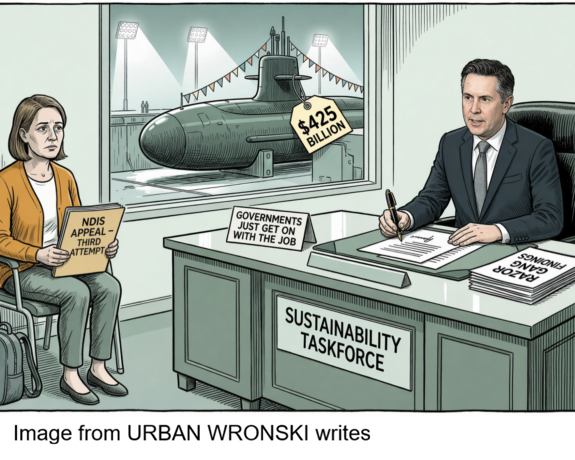

PETITION – To: Prime Minister Anthony Albanese and the Australian Labor Government
Chernobyl: The Lost Tapes – A good documentary on Chernobyl on SBS available On Demand for the next 3 weeks– https://www.sbs.com.au/ondemand/tv-program/chernobyl-the-lost-tapes/235274195556
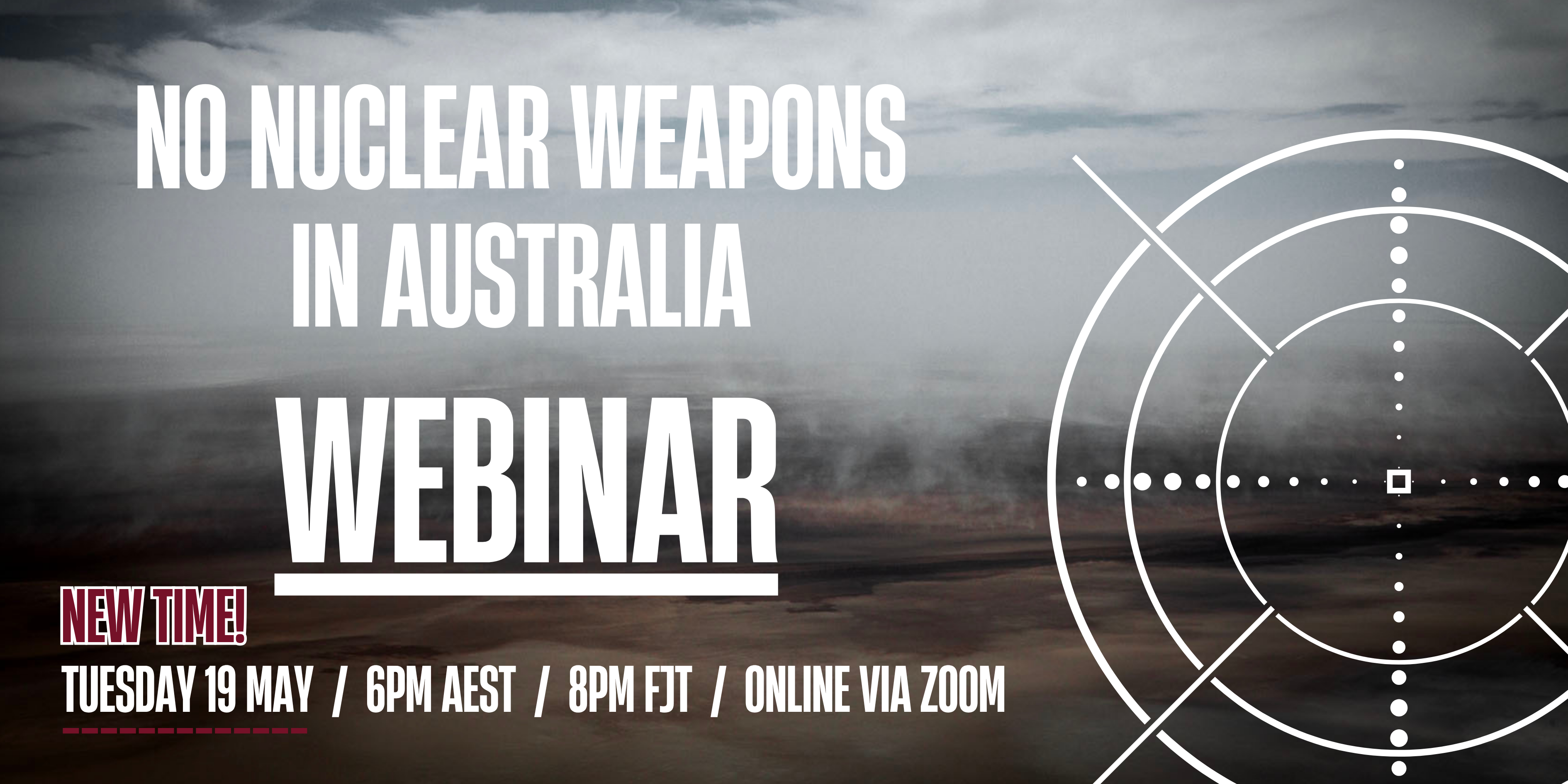
19 May – Webinar- Webinar: No Nuclear Weapons in Australia
Start: 2026-05-19 18:00:00 UTC Canberra, Melbourne, Sydney (GMT+10:00)
End: 2026-05-19 19:30:00 UTC Canberra, Melbourne, Sydney (GMT+10:00)
20 May – Webinar – The dangerous world of AUKUS, US, military occupation and suppression of dissent

National Webinar, 20th May, 2026, 6.30pm AEST. Confronting laws restricting/suppressing protest speech and action
Speakers: Former Sen. Rex Patrick, Lawyer Nick Hanna ,Arthur Rorris ,Jorgen Doyle, Sen David Shoebbridge,
Facilitator Kelley Tranter.

of the week – Australians for War Powers Reform (AWPR)
To see nuclear-related stories in greater depth and intensity
 Antinuclear