The Atlas Network talking about itself
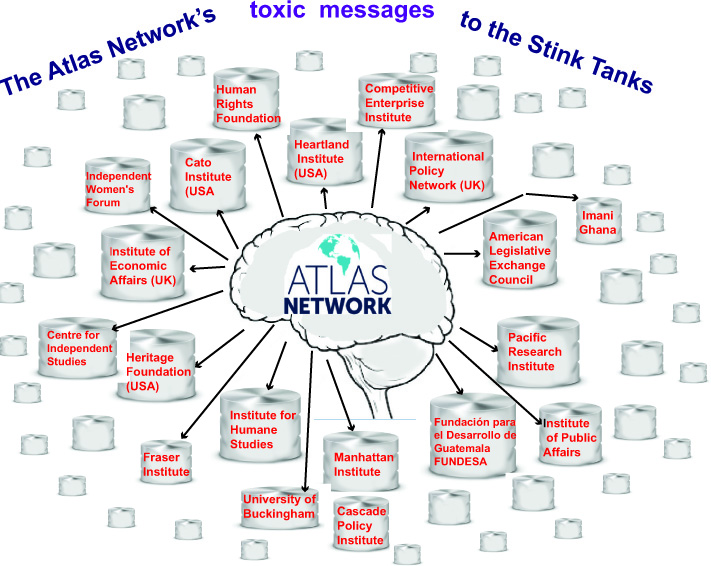
The MPS and its Atlas Network have conscientiously worked to change university campuses from places of free inquiry and critical thinking. Those beachheads in universities are matched by opportunities to find and promote “conservative” students. The idea is to shape them and potentially promote their careers in politics, the law, media, policy, academia and business.
January 26, 2025, Lucy Hamilton , https://theaimn.net/the-atlas-network-talking-about-itself/
There is much to learn about the Atlas Network from one of Ron Manners’ Mannkal Economic Education Foundation newsletters. This Mannkal newsletter was issued in April 2015. The project continues unabated.
The Atlas Network is a global interconnection of over 500 faux “thinktanks” (or junktanks), dedicated to reinforcing and propagandising the “free market” message. The Mont Pelerin Society (MPS) is considered its steering committee. The Atlas Network was designed from 1981 to metastasise similar bodies to sell “business” ideas. It finds local enthusiasts and donors around the world to eliminate obstructions to profit for American corporations and local fellow-travellers. The MPS is secretive: its membership is only rarely leaked.Ron Manners, with mining money, founded Mannkal in 1997. He is currently a life member and on the board of the MPS. He was appointed to the Advisory Council for the Atlas Economic Research Foundation in 2010. In 2020, he was awarded Atlas’s Sir Antony Fisher Achievement award. The newsletter explains that the name Mannkal originated in the cable/telex address of the company he inherited.
The Mannkal newsletter illustrates the connection to the MPS which first met in 1947. It brought together Austrian School economists such as Friedrich von Hayek and Ludwig von Mises together with the Chicago School’s Milton Friedman. The MPS, through Hayek, began the process of creating plutocrat-serving law and economics institutes in universities around America.
It also took the model provided by bodies such as the Foundation for Economic Education (FEE), founded in 1946, to create the mirage that a chorus of genuine policy experts supported the political economy that the donors desired. Friedman did much of the public relations for the project before the junktanks became more organised.
In the 1950s, Brit Antony Fisher, inspired by The Road to Serfdom, visited Hayek for advice. One of the UK junktanks in the Network explains that Hayek “told him bluntly to forget politics. Politicians just follow prevailing opinions. If you want to change events, change ideas.” He instructed Fisher to found thinktanks to help shift the prevailing mood away from the consensus that government, labour and capital all had a say in how society should operate towards a world where capital could dictate all including directing the government for its own ends.
When the co-founder of the Atlas Network Heritage Foundation, Ed Feulner, visited Australia in 1985 to conduct a workshop, he contrasted Friedman’s role marketing supply side economics, privatisation and the flat tax with the need for bodies to “set the terms and agenda of public policy.” The intent was to propagandise or “market an idea.” There must be “permanent saturation campaigns with multi-pronged, longterm strategies.” Proctor and Gamble, he explained, sell Crest toothpaste by “keeping the product fresh in the consumers’ minds.” That was to be the junktanks’ role. (These are a combination of Dr Jeremy Walker’s summaries and Feulner’s own words. The essay is well worth your time to see the history and people of Atlas in Australia.)
That Adam Smith Institute essay continues to boast that the Atlas Network had grown at the time of writing to 450 bodies. Now, the essay boasts, “They are changing events all over the world – from land reform in Peru, through privatization in Britain, public debt control in Pakistan, to low-cost education in India. And spreading the ideas of liberty in even the most unlikely places, in the Muslim world from Morocco through Turkey to Yemen and Kazakhstan; in Africa from Mali and Ivory Coast to Ethiopia; in Europe and the Far East.”
The MPS and its Atlas Network have conscientiously worked to change university campuses from places of free inquiry and critical thinking. Those beachheads in universities are matched by opportunities to find and promote “conservative” students. The idea is to shape them and potentially promote their careers in politics, the law, media, policy, academia and business.
One of Mannkal’s primary roles is the selecting of libertarian students in Western Australia for scholarships to Atlas Network junktanks around the world. In this edition of the newsletter, two report back on attending an MPS conference. One celebrated attending “networking events with prominent intellectuals and businesspeople from around the world.” Another was dazzled by, “Having dinner alongside a mining magnate, the chairman of a prominent think-tank, a famous TV presenter and an ex-CIA agent”. He continued, “I was exposed to a network rich in knowledge and influence, including a plethora of world-class academics, Nobel laureates and senior political figures.” (Nafeez Ahmed’s Alt Reich shows the significance of the CIA – and their former Nazis – in the shaping of the Atlas Network.)
Melbourne’s Institute of Public Affairs (IPA), a 1943 creation, was absorbed into the Atlas Network in the era of the Liberal Party’s battle between the Wets and the Dries. It was reportedly “hijacked” by “radicals” after people senior in the body attended an MPS conference.

The newsletter report of a third scholarship holder illustrates the Cold War dread of communism that continues to motivate the MPS and its Atlas junktanks. Former Czech president Vaklav Klaus, then a member of the MPS for 25 years, spoke at a lunch. People who have suffered under communist and socialist governments are often rolled out to warn audiences of the continuing threat of authoritarianism. The offspring of refugees who have had awful experiences in such countries provide some of the enthusiastic recruits for Mannkal.
Neoliberalism was always a bunk economics that trumpeted itself as superior because it was driven by theory and rejected evidence. In fact it was an ideology – and a network of activists – that functioned to serve the rich donors. As the project became our new normal, it created ever more dramatic inequalities, resulting in the fury and pain that drives sadopopulism. Youthful interest in social democracies has been a more productive response. In 2024, the IPA was sharing American Atlas junktank Cold War 2.0 propaganda to address the risk that youth might turn away from the “freedom” they sell.
Those of us watching the Atlas Network’s Heritage Foundation plans come to fruition in the first week of Trump’s second term see where authoritarianism lurks right now. Heritage’s Mandate for Leadershiphas come a long way since its first iteration set out the Ronald Reagan economic revolution’s steps. Now it combines its ultra-libertarian positions with authoritarian social policy and autocratic governance.
In this newsletter, Mannkal boasts of 154 scholarships available. Many are to conferences. Fifteen are “midyear internships abroad.” Another 45 are “3-month internships abroad.” The students are sent to Atlas junktanks around the world with 12 partners in particular listed. They include the inspiration for Mannkal, the FEE in Atlanta mentioned above. The Institute of Economic Affairs in London is another. That’s the body that helped create Maggie Thatcher’s economics after she was inspired by The Road to Serfdom. She co-founded another Atlas junktank, the Centre for Policy Studies.
One of the interns celebrates Maggie Thatcher’s certainty of the importance of Atlas: “It started with Sir Keith and me, with the Centre for Policy Studies, and Lord Harris at the Institute of Economic Affairs. Yes, it started with ideas, with beliefs. That’s it. You must start with beliefs. Yes, always beliefs.” Thatcher and Reagan make repeat appearances as Atlas heroes in the newsletter.
Another intern went to the New Zealand Institute, where the Chief Economist is Eric Crampton, MPS director.
The intern who was sent to Atlas headquarters in Washington was delighted to attend events at several of the Atlas junktanks including the Cato Institute (where Rupert Murdoch was a board member in the 1990s) and the Leadership Institute (party to Project 2025 and, like Heritage, to the Christian Nationalist Council for National Policy). She was impressed by Tom Palmer: Atlas’s Executive Director for International Programs. His patronising speeches at the Friedman Conference over the years can be found online.
Another of the interns was deeply grateful to spend time in Melbourne at the IPA with John Roskam. Two went to the Menzies Research Centre (MRC). One was thrilled to sit in on “meetings with high-level politicians and policy-advisors.” Mathias Corman, then Finance Minister, spoke at an MRC event about “shrinking government” in New Zealand and Australia. The Atlas Network’s Project 2025 shows how brutal the cuts to government are ultimately intended to be.
The Executive Director of the Liberal Party-affiliated MRC Nick Cater has just spent the European summer with Viktor Orbán’s junktanks in Budapest.
Scholarship donors are listed in the newsletter as Manners, Gina Rinehart, Willy Packer and Toby Nichols.
One public figure who shows the path and now models the Atlas policy influence is David Seymour, Deputy Prime Minister of New Zealand/Aotearoa. He was recruited on his university campus by the Atlas Association of Consumers and Taxpayers (ACT). The ACT is the now the political party that he leads. Seymour was awarded an Atlas “MBA” after a fortnight’s training at Atlas headquarters. He went on to work in the Canadian Atlas Frontier Center before returning to Atlas work in NZ. He is far from the only political leader with deep Atlas Network ties.
Austrian School economics is largely dead these days, although Atlas partners continue to try to resuscitate them. One of the intern reports in the newsletter says the “highlight of my experience was learning about Austrian economics, a stream of economics that is not taught in Australian high schools or universities.” There is a cogent reason why she was freshly discovering the contribution from “economists such as Ludwig von Mises, Friedrich Hayek, Joseph Schumpeter and Frederic Bastiat – important economists whose ideas or names have never once been mentioned in my four years of studying economics.” Several interns mention this inculcation of Austrian School truthiness as part of their experience.
One of the most ebullient floggers of Austrian thought in America has been Rand Paul. The intern sent to Canada’s Fraser Institute was excited to report that he met the man.
The newsletter discusses its links to the then highlight of the Atlas Network calendar in Australasian region, the Friedman Conference. In 2024, the conference was reduced to a rabble-rousing event called the Triple Conference that gave a day to libertarianism, a day to Christian Nationalism and a day to conspiracy theory nonsense.
The Mannkal newsletter also links to the History of Economic Thought Society Australia (HETSA), which hosts a Young Scholars Initiative (YSI) conference. HETSA is, anecdotally, a host to MPS figures. In 2024, this event took place at the Alphacrucis University College in NSW. Alphacrucis is the official training college of the Pentecostal Assemblies of God network, Australian Christian Churches reshaped under Hillsong’s Brian Houston. Notre Dame University, also a Catholic force in reactionary politicking and culture wars, provided the YSI organiser.
A third conference series mentioned is the “Freedom to Choose” conference, hosted by Notre Dame University and “supported” by Mannkal. The 2024 conference focused as its theme on the “enduring relevance” of Hayek’s Road to Serfdom, the book that inspired so many of the big money donors in the early history of neoliberalism.
Ron Manners pontificates on Public Choice Theory in the newsletter. This is a core aspect of Atlas’s history.
One of the key details to be gleaned from the newsletter is that this project is lifelong and often intergenerational for the donors. One of the interns at the IEA considered herself lucky to meet Hayek’s daughter who allowed the interns to “gain insight into the workings of her father first-hand!” Antony Fisher’s daughter, Linda Whetstone, was president of the MPS, chair of the Atlas Network and on the board at the IEA. Rupert Murdoch’s father Keith co-founded the IPA with Charles Kemp. Rupert was an official board member at Cato, and an unofficial conduit of the IPA, Centre of Independent Studies and MRC, whose people are regularly found on his platforms. The Kemp sons, Rod and David, were key figures in the thinktanks and the Atlas Americanisation of Australian politics.
Charles Koch has been a prime force financially and strategically at Atlas for decades.
It is hard to know how much of the change from Keynesian balanced economy to neoliberal brutality is attributable to the MPS and the Atlas Network, compared to how much might be due to the general impact of the donors and ideologues. Industry lobbies and the direct power of the plutocrats intermix with the marketing of the Atlas Network and its soft power impact for American corporations around the world.
The plutocrats ventriloquised through Atlas operations, but do not seem to feel the same compulsion to separate their goals from their faces any longer. Whether it’s Elon Musk or Gina Rinehart, they seem to feel comfortable now dictating oligarch policy for themselves.
Regardless, it’s worth watching Atlas talking about itself: the freedom it declares it fights for was always anti-democratic.
Destroyed Assange Files: Why Judge’s Rebuke Against Crown Prosecution Service Was So Significant.
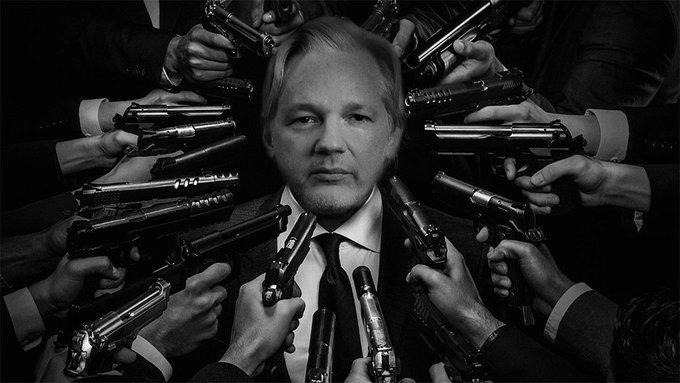
“This is a significant victory in a long battle to get the truth out on the involvement of CPS in keeping Julian in arbitrary detention that later turned into political imprisonment, according to UN bodies and the Parliamentary Assembly of the Council of Europe.”
An unknown number of emails were apparently deleted after one of the U.K.’s lead prosecutor in the case, Paul Close, retired from the CPS. The deletions occurred despite the fact that the case against the award-winning journalist and publisher of the news and transparency website WikiLeaks was still active.
the dissenter, Mohamed Elmaazi, 14 Jan 2025,
A British judge issued an unusually critical rebuke against the Crown Prosecution Service of England and Wales.
A British judge issued an unusually critical rebuke against the Crown Prosecution Service of England and Wales (CPS) for its handling of freedom of information requests related to Sweden’s failed attempt to extradite WikiLeaks founder Julian Assange.
The decision by the United Kingdom’s information rights tribunal was made public on January 10. It followed an appeal by Italian investigative journalist Stefania Maurizi, who argued that the CPS failed in its duty to properly explain why a senior prosecutor’s emails were allegedly deleted or destroyed.
In writing the decision for the three-member tribunal, First-Tier Tribunal (FTT) Judge Penrose Foss pierced the veil of deference that is often shown to governmental bodies in England and Wales by the U.K.’s data protection regulator, the Information Commissioner’s Office (ICO). Foss was quite blunt in her criticism of the CPS’s handling of multiple Freedom of Information Act (FOIA) requests that Maurizi had submitted as early as 2015.
It is uncommon for the CPS to be a respondent in FOIA appeals. A review of FTT decisions regarding information rights cases since 2009 shows the CPS as a respondent in 16 out of 3,167 cases (0.5 percent). This includes two appeals filed by Maurizi.
The decision establishes a precedent that may make it easier for future FOIA requests to be successful in the long run, according to Estelle Dehon KC of London’s Cornerstone Barristers, who represented Maurizi.
When the information rights tribunal comes across instances of a public authority’s failure to comply with FOIA obligations it “has been known to be quite trenchant in its criticism,” Dehon, told The Dissenter. But it is “unusual in the run of cases that are specific to Stefania’s FOIA requests” for the tribunal to be as critical as it was last week, she added.
“What we can do now is say to the ICO, look at the quality of the search process [conducted by a public body when a FOIA request is made]. If the search process was poor, then that is an indication that the information is being, or might be, held despite the public authority’s claims to the contrary,” Dehon said.
Kristinn Hrafnsson, WikiLeaks’ editor-in-chief, told The Dissenter, “This is a significant victory in a long battle to get the truth out on the involvement of CPS in keeping Julian in arbitrary detention that later turned into political imprisonment, according to UN bodies and the Parliamentary Assembly of the Council of Europe.”
The tribunal ordered the CPS to confirm whether it holds information as to “when, how and why” it destroyed or deleted any “hard or electronic copies of emails” with the Swedish Prosecution Authority by February 21 at 4 p.m. If they have any such information they must provide it to Maurizi or otherwise explain why they are exempt from doing so.
‘Unfounded’ Assumptions Prevented Adequate Search For Records
“Overall, based on the evidence before us, our concern is that over a number of years the CPS has not properly addressed itself at least to recording, if not undertaking, adequate searches in relation to the CPS lawyer’s emails, with the result that, in 2023, when it has purported to answer [Maurizi’s] 2019 [FOIA] Request, it has not been able to give a clear and complete account,” the Tribunal stated in its decision.
The tribunal noted that the CPS’s approach “appears to have been informed by a combination of unfounded and incorrect assumptions or speculation, flawed corporate memory, and unreliable anecdotal instruction, much, but not all, of that resting inevitably in the natural succession of employees through the organisation over time.”
“The cumulative effect of those things, taken together with what we find to be (1) imprecisely worded questions and a failure to drill down into answers, and (2) the absence of any clear and complete audit trail of enquiries and responses at each stage, has very likely prevented adequate searches and has certainly prevented a full and satisfactory account of matters.”
An unknown number of emails were apparently deleted after one of the U.K.’s lead prosecutor in the case, Paul Close, retired from the CPS. The deletions occurred despite the fact that the case against the award-winning journalist and publisher of the news and transparency website WikiLeaks was still active.
…………………………………………………………………….. Taking Aim At the UK’s Data Protection Regulator
The tribunal was quite critical of the ICO for its willingness to accept that every reasonable step had been taken by the prosecution to search for the information Maurizi requested.
…………………………………………………………………. The tribunal found that claims made by the government were contradictory and lacking in evidence to support them and even found “no evidence as to what searches were undertaken” in relation to Maurizi’s earlier FOIA requests.
……………………………………….The tribunal’s decision represents the latest victory for Maurizi who has filed multiple FOIA requests and appeals over the U.K. and Swedish governments’ handling of Assange’s extradition case. Dehon summarized the decision succinctly, “The tribunal concluded the CPS likely still holds some information explaining what took place. Hopefully that will finally be disclosed.”
“So far we have learned that the CPS overstepped and dictated how the Swedish prosecutor’s office handled the case with the obvious intent to keep Julian in limbo and maintain for years his unlawful detention,” Hrafnsson said. “The world needs to know who dictated CPS staff to handle the case in this manner both inside the U.K. establishment at its initiative and with input from other governments. It is unacceptable that government files in the U.K. are disappeared in an effort to hide the truth from the public.”
Hrafnsson believes that the missing files, or “at least their fate,” will ultimately “shed light on the real story behind the political persecution of Julian Assange.”
………………………………………………………………………………………. more https://thedissenter.org/destroyed-assange-files-why-judges-rebuke-against-crown-prosecution-service-was-so-significant/
The continual cover up – Jenny Hocking on the strange disappearance of Gough Whitlam’s ASIO file
January 5, 2025 , Australian Independent Media, By Jenny Hocking
And it is not just Gough Whitlam’s ASIO file that has been “culled” by the National Archives of Australia. The relevant Government House Guest Books at the time of the Dismissal have disappeared and the entire archive of Kerr’s prominent supporters, including Lord Mountbatten, was accidentally burnt in the Yarralumla incinerator.
I was made sharply aware of the conceptual and physical fragility of archives as historical representation 20 years ago through a chance encounter, or more precisely a lost encounter, with Gough Whitlam’s Australian Security Intelligence Organisation (ASIO) file. I had stumbled onto Whitlam’s security file quite unexpectedly through a reference to it in another, unrelated, file. Clearly, any file maintained by the domestic security service on Gough Whitlam would be a critically important historical record in itself, and even more so given the Whitlam government’s fractious relationship with the security services and the well-known surveillance excesses of ASIO and the state Special Branches at that time.
To find evidence of the existence of an ASIO file on Whitlam that I had never expected was a rare moment of archival anticipation. That anticipation was dashed four months later when the Archives informed me that, having maintained this security file for nearly 40 years, it had been destroyed in a routine culling, just weeks before I requested it. Although Archives assured me that, according to ASIO’s records, the now destroyed file “contained material of a vetting nature only”, this is now impossible to verify. A request for access to the ASIO documents referred to in this response and on which this claim about the nature of the file was based, went unanswered.
As a former Prime Minister, Whitlam was a recognised “Commonwealth Person”, for the purposes of the Archives management systems. These are “individuals who have had a close association with the Commonwealth” and whose records are therefore expressly collected and preserved for history. Notwithstanding that acknowledged significance, the Archives had issued an authorisation for ASIO to destroy Whitlam’s security file within weeks of my request to view it. It brings to mind Blouin’s arch observation that “a historian working in state archives, particularly on topics related to the recent past, is constantly engaged in some way in a struggle with the politics of state-protected knowledge”.
The misplaced destruction of Whitlam’s security file compounds the unsettled history of the dismissal by allowing the circulation of competing speculations over its coincident erasure: was this a vetting file as ASIO stated, did the file identify agents or surveillance methods, would its release have led to files on other members of the Whitlam government? This latter is no idle speculation. ASIO was already monitoring deputy Prime Minister Dr Jim Cairns, whose ASIO “dossier” was sensationally leaked to The Bulletin in 1974, causing immense damage to the Whitlam government and to Cairns personally. The possibility of security files on other ministers and even on Whitlam himself is only stirred by the deliberate destruction of ASIO’s vetting file. In the absence of the file itself an already clouded history becomes further compromised.
It was this episode that introduced me to the force of what Elkins terms “archival scepticism” in archive-based research. Whatever the reason for its apparent destruction, the Archives had successfully removed Whitlam’s ASIO file from public view and therefore from the consideration of history. In doing so it had played an important role in the construction of the dismissal in history, in which a security file on Gough Whitlam does not and cannot now feature. This underscores precisely, if there were any doubt about this, that archives are not neutral replicators of documented history, but politicised re-creators of it.
The Lost Archive: Government House Guest Books
In 2010, I first requested access to the Government House guest books held by the Archives, which provide the details of visits and visitors to “their Excellencies” at Yarralumla………………………….. The guest books appear regularly from July 1961 until July 1974, before stopping altogether until December 1982.
…………………………………………. The guest books for 1975 are now officially lost.
These missing guest books add fuel to the longstanding speculation that security and defence officials, notably the Chief Defence Scientist Dr John Farrands as the recognised authority on Pine Gap and the Joint Facilities, had briefed Kerr in the week before the dismissal about mounting security and defence concerns over Whitlam’s exposure of CIA agents working at Pine Gap, and his planned Prime Ministerial statement on this in the House of Representatives on the afternoon of 11 November 1975. ……………………………………….
The Burnt Archive: Sir John Kerr’s Prominent Supporters
In 1978, soon after Kerr left office, a cache of letters “of outstanding value” to Kerr was accidentally reduced to ashes in the Yarralumla incinerator………………………………
Kerr had sought these congratulatory letters for use in his forthcoming autobiography Matters for Judgement. Among his correspondents was the Queen’s second cousin, Lord Louis Mountbatten, Prince Philip’s uncle and King Charles III’s great mentor; the former Governor-General and distant royal relation, Viscount De L’Isle; and other prominent individuals supporting Kerr’s dismissal of Whitlam. These names alone indicate that these burnt letters were as important to history as they were to Kerr. Were it not for this secondary file of correspondence between Smith and Kerr detailing the saga of the “burnt letters”, the existence and apparent inflammatory end of Kerr’s correspondence with his minor aristocratic supporters would never have come to light. The letters themselves now never will.
Philip Ziegler’s authorised biography of Mountbatten, however, gives just a glimpse of this story. Ziegler recounts that Mountbatten wrote to Kerr days after the dismissal, congratulating him on his “courageous and correct action” in dismissing Whitlam. It was a remarkably partisan royal intercession, and Mountbatten was not alone among Kerr’s royal supporters. We now know, thanks to letters released in 2020 following the High Court’s decision in my legal action, that King Charles also fully supported Kerr’s actions. Charles’s letter to Kerr, written in starkly similar terms to Mountbatten’s weeks after the dismissal, leaves no doubt of Charles’s support for Kerr; “What you did […] was right and the courageous thing to do.”
As Kerr later wrote to the South Australian lieutenant-governor, Sir Walter Crocker, “I never had any doubt as to what the Palace’s attitude was on this important point.”
*************************
These are extracts from Professor Jenny Hocking’s essay ‘Critical Archival Encounters and the Evolving Historiography of the Dismissal of the Whitlam Government’, Australian Journal of Politics and History, 11 April 2024.
Open access publishing facilitated by Monash University, as part of the Wiley – Monash University agreement via the Council of Australian University Librarians. This article was originally published on Pearls and Irritations and has been republished with permission. https://theaimn.net/the-continual-cover-up-jenny-hocking-on-the-strange-disappearance-of-gough-whitlams-asio-file/
Dangerous Tribunal decision paves way for Dutton to keep nuclear blow-outs secret

by Rex Patrick | Dec 27, 2024, https://michaelwest.com.au/art-tribunal-secret-snowy-decision-dangerous-for-dutton-nuclear/
The new Administrative Review Tribunal (ART) just ruled the $2B, no $6B, no $12B Snowy 2.0 project immune from public scrutiny. The decision paves the way for secrecy over Peter Dutton’s nuclear ambitions. Rex Patrick reports.
In April 2023, I made a Freedom of Information (FOI) application for access to Snowy Hydro Limited project reports about Snowy 2.0 pumped storage power scheme to the Minister of Climate Change and Energy, Chris Bowen. I also asked for the briefs on Snowy 2.0 prepared by the Department of Climate Change, Energy, the Environment and Water (DCCEEW) for the Minister.
Suspecting things were off the rails, I wanted to see what Snowy Hydro was saying to the DCCEEW in relation to Snowy 2.0’s progress, or lack thereof, and what DCCEEW was then saying to Minister Chris Bowen.
In August 2023 the Government announced a Snowy 2.0 ‘reset’; a marketing label for a massive cost blowout and schedule delay. That caused me to made a further request for the Snowy Hydro Corporate Plan update sent to Bowen and Finance Minister Katy Gallagher to convince them to back the project cost doubling from $6B to $12B.
Access to the project reports and ministerial briefs was flatly refused and so I appealed the matter to the Administrative Appeals Tribunal, now repackaged by Attorney-General Mark Dreyfus as the Administrative Review Tribunal (ART).
Tribunal rejects transparency
In a decision made by Deputy President Peter Britton-Jones, the Tribunal has affirmed the access refusal decisions, effectively shutting down any FOI scrutiny of Snowy 2.0. This mega-project, which has blown out by $10B, is now shrouded in secrecy, blocking the gaze of members of the public, who are paying for the project.
The ART decision has blown a huge hole in government transparency and accountability because it creates a model that could, and almost certainly will, be used to exempt Opposition Leader Peter Dutton’s $331B nuclear power program from any future public scrutiny. It’s a secrecy barn door that’s big enough to drive a nuclear reactor through.
Protecting business information
How did this happen?
The FOI Act has some reasonable protections in it to ensure sensitive business information is protected from release.
Section 47 of the FOI Act protects trade secrets or commercially valuable information from being disclosed; a company’s ‘11 secret herbs and spices’ stays just that, secret. No other consideration; it’s a full stop exemption from the requirement to disclose.
Section 47G of the FOI Act protects more general business information which, if released, could adversely affect the business in some way. But this particular disclosure exemption clause is conditional on whether the disclosure would be contrary the public interest.
And that’s fair enough – when a company starts taking money from the public for public purposes, if there’s public interest in disclosing the information (like project cost and schedule blowouts), that just sits as a cost of doing business with the Government.
These are important provisions in our FOI law. Last year eighty-three thousand businesses provided their services or products in exchange for $99.6B of public money.
Removing the public interest
There’s another FOI exemption, Section 45, inserted into Act to prevent a “breach of confidence”; that is a promise to keep information confidential – like Aboriginal tribal secrets provided to government in native title matters; artistic assessments by experts of works of art under consideration for purchase – things that need confidentiality but are not business information.
That’s how the Section 45 exemption was presented to the Parliament way back in 1982 when our FOI law was first debated and legislated. In past decisions of the Tribunal Deputy President Britten-Jones has decided not to give that presentation any weight. Instead, Section 45 is interpreted as an unbreakable secrecy clause whenever government and a business agree that it should apply to information that the business has provided to government.
The end result is that now, despite the Parliament determining that business information should be disclosed if that disclosure is not contrary to the public interest, that legislated provision should not be honoured.
Section 45 is, as a result of past Tribunal decisions, the ‘go to’ exemption from departments trying to protect their projects from any scrutiny.
Quacking like a duck
The only reason I actually challenged DCCEEW and the Minister’s FOI decision in this instance is because there’s a carve out in the FOI Act that says Section 45 does not apply if the disclosure of the document would constitute a ‘breach of confidence’ owed to the Commonwealth.
So, one question before the Tribunal was, is Snowy Hydro ‘the Commonwealth’?
To me, the answer was clear.
While Snowy Hydro is a distinct legal entity, it is an 100% government-owned corporation, and is largely funded by the public (the Snowy 2.0 ‘basket case’ project is funded by the taxpayer to the tune of $7B and the rest of the money comes from electricity customers – you).
project is funded by the taxpayer to the tune of $7B and the rest of the money comes from electricity customers – you).
Snowy Hydro has its board appointed by shareholder ministers and remunerated in accordance with a determination of the Commonwealth’s Remuneration Tribunal.
Snowy Hydro is subject to control by the Commonwealth, is obliged to surrender information (unfettered by any confidentiality obligations) requested by a shareholder minister or the Auditor-General or the Senate.
I summarised this legal situation in my submissions to the Tribunal, stating, “If it walks like a duck, looks like a duck and quacks like a duck – it’s a duck!”
The lawyers arguing the government’s case insisted none of that mattered. It might look like a duck, it might even be a government duck but it somehow wasn’t a Commonwealth duck.
Britton-Jones decided it was an elusive night owl, declaring that Snowy Hydro Limited is not the Commonwealth.
Dutton’s Nuclear Power Limited
If the ART decision stands, Snowy Hydro will be effectively excluded from FOI scrutiny. That means an impenetrable wall of secrecy, barring investigation of this government owned and controlled company’s mismanagement of the Snowy 2.0 project and its huge cost to taxpayers.
But that may well be only the beginning of things.
The pieces are all in place for the Coalition’s nuclear power plans to be shrouded in secrecy – thanks in large measure to arguments presented by the Albanese government’s lawyers.
Here’s how Dutton will do it. He just has to follow the Snowy Hydro model and he can ensure than no project reports will ever make it into the hands of the public. The steps are as follows:
- Legislate to set up ‘Nuclear Power Limited’ by way of statute – the ‘Nuclear Power Limited’ Act – with two Ministers to be shareholders in behalf of government.
2. Include the following words in the Act – “‘Nuclear Power Limited’ is not, and does not represent, the Crown”.
3. Subject ‘Nuclear Power limited’ to a policy requirement to report project status to the shareholder ministers (so they at least know what’s going on).
4. Enter into an agreement between Nuclear Power Limited and the government that states “each party agrees to keep the confidential Information confidential and not to disclose it to anyone without the consent of the other party” provided the information is marked as “confidential” (the actual confidentiality of the information does not matter – the key is that the pages are marked “confidential”
Boom! Secrecy heaven
Financial meltdowns can be secret
Nuclear Power Limited will be Snowy Hydro Limited on radioactive steroids. If the similar magnitude $2B to $12 billion blowout to Snowy 2.0 were to occur with Dutton’s (already understated) $331B Nuclear Power Program, the blowout could amount to trillions of public money burned up building reactors that may never be economically viable.
In that regard, ART Deputy President Britten-Jones may have made the most dangerous decision ever made by an administrative review body (even without reference to Dutton’s plans, it casts a secrecy blanket over $100B of annual government procurement).
As such, I’ve put my hand into my pocket and spent $6K initiating a Federal Court Appeal. This secrecy decision can’t be allowed to stand.
And in the meanwhile, we can all just wonder how many more billions Snowy 2.0 will cost us.
Rex Patrick
Rex Patrick is a former Senator for South Australia and earlier a submariner in the armed forces. Best known as an anti-corruption and transparency crusader, Rex is running for the Senate on the Lambie Network ticket next year – www.transparencywarrior.com.au.
‘Nothing to see here’ says Australia as third Thales corruption case starts globally
the NACC did not appear to have placed sufficient weight on the seriousness of the matter, particularly as Thales is linked to several international corruption matters, operates in one of the most corrupt industries in the world, and currently manages Australian Government contracts worth billions of dollars.
the Defence Department hired an external negotiator with a conflict of interest to lead its billion-dollar negotiations with Thales……………………………………Defence’s two lead negotiators together owned 55% of Scotwork, and would benefit financially.
Defence Industry Minister Pat Conroy turns a blind eye to “unethical conduct” between Thales and the Defence Department despite national audit office warning of “capture” by weapons giants
Michelle Fahy, Dec 08, 2024, https://undueinfluence.substack.com/p/nothing-to-see-here-says-australia?utm_source=post-email-title&publication_id=297295&post_id=152750589&utm_campaign=email-post-title&isFreemail=true&r=1ise1&triedRedirect=true&utm_medium=email
Part 3 of 3 (read part 1 and part 2)
The number of corruption investigations into the Thales Group continues to mount internationally with another announced two weeks ago.
The UK’s Serious Fraud Office and its French equivalent, Parquet National Financier, are jointly investigating suspected bribery and corruption by Thales on a contract in Asia. Thales has denied the allegations.
This followed news in June that police in France, the Netherlands and Spain had raided Thales’ offices in those countries as part of two separate additional corruption investigations into arms deals involving the Thales Group, as we reported in part 2.
In Australia, however, the Albanese government has swept aside a key integrity agency’s reports of “unethical conduct” between Thales and the Defence Department, appointing Thales as the fourth “strategic partner” in the new domestic missile-making enterprise.
Minister for Defence Industry Pat Conroy dismissed as an “unsubstantiated allegation” that was “flying around” the documented concerns of the Australian National Audit Office about a former defence official sharing confidential information with Thales and later soliciting a bottle of champagne from the company.
In a televised address at the National Press Club on October 30, where Conroy announced the government’s appointment of Thales as a Guided Weapons and Explosive Ordnance (GWEO) “Strategic Partner”, the minister was asked whether he remained confident in Thales and its integrity.
Said Conroy: “Let’s be very frank about this thing that’s flying around. There’s an allegation of an incident that occurred in 2017. 2017 – seven years ago – under the last government.
“Defence has thoroughly investigated it and I’m advised that’s there’s been no evidence to substantiate the allegation. It’s important to note that there is one allegation, unsubstantiated.”
But Conroy was wrong to claim the Thales deal has been “thoroughly investigated”, said Chris Douglas, a Perth-based international financial crime consultant.
“It has not been. The Defence Department does not have the capability to investigate allegations that could involve corruption.”
Douglas said that a thorough investigation could only be undertaken by a law enforcement agency, particularly the National Anti-Corruption Commission, “using a full suite of investigation powers including electronic evidence gathering”.
“There might be evidence at the person’s home, Defence isn’t going to find that, or in premises occupied by Thales, Defence won’t find that either. That is why we have a NACC.”
Following the audit office’s scathing June report on the 2020 Thales munitions deal, the Defence Department referred the matter to the NACC.
According to the ABC, after receiving the referral the NACC instructed the Defence Department to conduct the preliminary investigation. The department later said it was unable to substantiate the allegation. (See part 1.)
Douglas said the NACC did not appear to have placed sufficient weight on the seriousness of the matter, particularly as Thales is linked to several international corruption matters, operates in one of the most corrupt industries in the world, and currently manages Australian Government contracts worth billions of dollars.
He added that if Thales was an individual, “based on its past behaviour it would not be given a security clearance, and therefore no employment”.
Following the ABC’s report, Minister Conroy was asked whether he was concerned that the investigation into the unethical conduct appeared “to have hit a dead‑end, with the Anti‑Corruption Commission referring it back to the department, which then found no evidence”.
Conroy responded: “I think the important thing there is all due process was followed… All the organisations involved have investigated this matter.”
GWEO Chief, Air Marshal Leon Phillips, added: “The department has investigated that matter and cannot substantiate what was alleged. So we’ve concluded those matters.”
It is a long way from Defence Minister Richard Marles’ promise on 30 June that the matter would be “fully investigated” in a way which is “completely robust, which people have total confidence in”.
Champagne bottle “least of the concerns” about Defence probity
At a hearing of the parliament’s powerful Joint Committee on Public Accounts and Audit in November, Senator Linda Reynolds, deputy chair of the committee and a former defence minister, raised strong concerns about the 2020 Thales munitions deal.
Reynolds alluded to discrepancies between what she had been told as minister in briefings by the Defence Department and the facts contained in the report.
“When I read this audit report and remembered what had actually come up to me in the [ministerial] brief, it almost made me feel ill … and that is very consistent with the advice that is in this report that went to a different minister in 2017.”
Reynolds’ remarks corroborated the auditor-general’s report: “Defence’s advice to ministers on the tender and contract negotiations did not inform them of the extent of tender non-compliance [by Thales], [the] basis of the decision to proceed to negotiations, or [the] ‘very high risk’ nature of the negotiation schedule.” (p9)
The report also said the department’s advice in mid-2017 to then minister for defence industry Christopher Pyne was incomplete regarding the Department’s decision to proceed with Thales as sole tenderer: “The advice did not address the legal basis for the procurement method, the risks associated with a sole source procurement approach, or value for money issues — including how Defence expected to achieve value for money and maintain commercial leverage in the context of a sole source procurement.” (p10)
We’ve had a history of ANAO reports and [Defence Department] mea culpas… It’s like groundhog day
Reynolds told defence officials at the hearing: “These are not the first appalling findings by the ANAO… We’ve had a history of ANAO reports and [Defence Department] mea culpas… It’s like groundhog day… I think the bottle of champagne was the least of the concerns in relation to probity.”
She said the fact that the government was continuing to award new contracts to Thales was a concern: “You’ve inherited a smell, a big smell.”
Defence appointed a lead negotiator that was providing training to Thales at the same time
In a repeat of the future frigate contract negotiation with BAE Systems (see our Sinking Billions series), the audit report revealed (p87) that the Defence Department hired an external negotiator with a conflict of interest to lead its billion-dollar negotiations with Thales.
The joint negotiation training was provided by Scotwork to both the Thales and the Commonwealth negotiation teams at the same time and location, with no segregation. It was fully paid for by Defence.
Furthermore, in November 2019, Defence was advised by one of its lead negotiators that Thales had engaged Scotwork to deliver a negotiation course (separate to the above training). Defence’s two lead negotiators together owned 55% of Scotwork, and would benefit financially. They said they were not involved with that Thales training, that Scotwork had strict ethical walls in place, and that the revenue was “not material”. Defence accepted this and did not enquire into the dollar value of the revenue.
Defence conducted its contract negotiations with Thales from 5 December 2019 to 19 February 2020.
These are just a few of the many serious issues documented in the audit report.
“Strategic partners” or state capture?
Thales Australia’s CEO, Jeff Connolly, said the announcement of its appointment as Guided Weapons and Explosive Ordnance “Strategic Partner” was “proof of the enduring trust between Thales Australia and the Commonwealth”.
In her evidence to the audit committee, deputy auditor-general Rona Mellor was forthright about the use of such language by government and industry: “One of the big issues is this…nomenclature of ‘strategic partnership’. You’re actually not in partnership. You have a contract… you need to hold them to account.”
On the Thales deal, Mellor told the committee that while big international weapons contractors did “important heavy lifting in defence specialist military equipment and munitions”, keeping an “appropriate distance in our relationships” was important.
She said the audit office had “ongoing concern” about the implementation of the recommendations it issued to Defence, particularly for long-term contracts involving “strategic partners”.
The current report focused on the munitions group, “but next week we’ll go into the shipbuilding group and we’ll see the same thing, or the week after we’ll go into the Air Force and see the same thing”, Mellor said.
“There’s a really big challenge ahead for Defence. The biggest challenge, [as] this one shows, is that there is a culture in these very long-term contracts… There’s a real risk that you get captured by the provider, whether it’s in incumbency in turning contracts over, or in the nature of relationships that you form.”
Thales Australia has managed the Mulwala and Benalla munitions factories for the Commonwealth since the late 1990s. The company has consistently ranked in the Defence Department’s top three contractors, earning more than $1 billion a year from taxpayers. It has $7 billion in current contracts with the department, Austender shows.
Senator Reynolds was defence minister for the final year of the more than decade-long procurement process for the management of the munitions factories. She was the last of seven ministers to oversee the process, which began in 2009. Reynolds became defence minister in May 2019. She approved the deal, along with then finance minister Mathias Cormann, in May 2020. The now $1.4 billion contract expires in 2030.
The 101 ways Google serves up Australians to known scammers

Using the world’s biggest search platform to find information on scams can deliver victims straight into the arms of criminals.
The Age, ByAisha Dow and Charlotte Grieve, November 18, 2024
oogle searches are delivering Australians into the arms of fraudsters, as websites and advertisements belonging to scammers are prominently served up to users on the world’s most popular search engine.
In some instances, Google searches provide some scam victims false reassurance that they are investing in legitimate companies.
Once they’ve lost their money, scam victims searching for help on Google are then being shown ads that direct them to a new set of criminals, known as recovery scammers, who claim they can retrieve people’s lost money for a fee, but instead disappear with the cash.
The findings are part of a months-long investigation into how investment scammers use some of the world’s biggest tech companies to find victims.
This masthead found that Google presents scam sites to users, even after those scams were the subject of explicit government warnings.
One example is the scam platform Bitcoin Evolution, which was blacklisted by the UK’s Financial Conduct Authority in 2020. In March, Australian authorities placed it on an investor alert list, declaring it “not to be trusted”.
But this month, when this masthead used Google to search for Bitcoin Evolution, the first result that came up was not an official notification, but two Bitcoin Evolution scam websites.
Registering a phone number with one of the websites resulted in a near-immediate call from a scammer. Invest just $300 and make daily profits of 10 to 15 per cent, the fraudster promised.
Fleeced of $700,000
Based on a Google search alone, it can be difficult for Australians to tell if potential investment companies are real or a scam. Results are sometimes muddied by the presence of scam platforms, fake reviews and fake news articles or blogs promoting scams.
Fleeced of $700,000
Based on a Google search alone, it can be difficult for Australians to tell if potential investment companies are real or a scam. Results are sometimes muddied by the presence of scam platforms, fake reviews and fake news articles or blogs promoting scams.
Swav, a Melbourne man who didn’t want to use his last name for privacy reasons, was connected to overseas criminals through an advertisement that appeared on his Facebook feed in spring 2020.
Although he didn’t realise it at the time, the celebrities who appeared in the ad providing endorsements were fakes, computer-modified replicas of the famous person.
This masthead revealed on Saturday that Meta, owner of Facebook, takes money for these “celeb-bait” scam ads, despite the ads promoting notorious fraudulent investment platforms and coming from accounts that were clearly not legitimate investment companies.
Swav was just one day into the con, and had only handed over $1500, when he noticed a contradiction in the scammer’s sales pitch. It piqued his suspicion, and when he hung up, he began doing a bit more research.
“I started to search intensively about this company to verify if they are legit,” he recalled. “I searched on Google … but most of the reviews were positive.”
Over the following nine months, the fraudster from a platform called StocksCM stole close to $700,000 from him.
This masthead tested Google results based on searches for 100 entities recently added to the Australian Securities and Investment Commission’s (ASIC) investor alert list.
The list includes the names of known scam platforms and businesses targeting Australian consumers without holding the appropriate licences.
It showed that Google was failing to block websites for even these publicised rorts.
In the first page of results, Google returned 101 links to websites for platforms using the same names as the blacklisted entities.
The search results also featured 10 Google ads directly promoting scam brands named in ASIC’s warning list.
Google was accepting money to run ads for the Immediate Connect, Immediate Edge and Immediate Vortex scam platforms, all on ASIC’s alert list.
Ten out of the top 14 Google results that appeared in a search for “Immediate Connect” were likely scam platforms, including the top four results, which were all sponsored links for the scam…………………………………………………………………………………………………………………………..
Simon Smith, a cybersecurity expert with Scam Assist, said many of his clients who had lost their savings were originally connected to scammers by Google ads, including through fraudulent AI auto-trading platforms.
He said the public had high levels of trust in Google, and many assumed that the results served up first would be most relevant to them.
“The fact that you can pay your money to have a scam ad is just, in itself, unbelievable,” he said…………………. more https://www.theage.com.au/business/consumer-affairs/the-101-ways-google-serves-up-australians-to-known-scammers-20241113-p5kqew.html
FBI Sued For Withholding Files On Assange And WikiLeaks

Kevin Gosztola, Sep 12, 2024, https://thedissenter.org/fbi-sued-for-withholding-files-on-assange-and-wikileaks/
“With the legal persecution of Julian Assange finally over, the FBI must come clean to the American people,” Chip Gibbons, policy director for Defending Rights & Dissent.
The civil liberties organization Defending Rights and Dissent sued the FBI and United States Justice Department for withholding records on WikiLeaks and its founder Julian Assange.
“For nearly a decade and a half, we’ve been trying to get at the truth about the U.S. government’s war on WikiLeaks,” declared Chip Gibbons, the policy director for Defending Rights and Dissent.
Gibbons added, “With the legal persecution of Julian Assange finally over, the FBI must come clean to the American people.”
On June 25, 2024, U.S. government attorneys submitted a plea agreement [PDF] in the U.S. District Court for the Northern Mariana Islands after Assange agreed to plead guilty to one conspiracy charge under the U.S. Espionage Act.
Assange was released on bail from London’s Belmarsh prison, where he had been jailed for over five years while fighting a U.S. extradition request. He flew on a charter flight to the Northern Mariana Islands, a U.S. territory where a plea hearing was held.
The plea agreement marked the end of a U.S. campaign to target and suppress Assange and WikiLeaks that spanned 14 years and first intensified after WikiLeaks published documents from U.S. Army whistleblower Chelsea Manning that exposed crimes committed in U.S. wars in Iraq and Afghanistan as well as U.S. complicity in human rights abuses in dozens of countries around the world.
“As soon as we began publishing newsworthy stories about US war crimes in 2010, we know the US government responded to what was one of most consequential journalistic revelations of the 21st century by spying on and trying to criminalize First Amendment-protected journalism,” stated WikiLeaks editor-in-chief Kristinn Hrafnsson.
Hrafnsson continued, “While WikiLeaks has fought for transparency, the U.S. government has cloaked its war on journalism in secrecy. That’s why Defending Rights & Dissent’s lawsuit is so important, as it will help unmask the FBI’s efforts to criminalize journalism.”
On June 27, Defending Rights and Dissent requested [PDF] “all records created, maintained, or in the custody of the FBI that mention or reference: WikiLeaks; Julian Assange.”
The FBI separated the request into two requests—one for files mentioning “WikiLeaks,” one for files mentioning Julian Assange. And by August 19, the organization was informed by the FBI that it would take around five and a half years (2,010 days) to “complete action.”
Previously, on June 22, 2021, Defending Rights and Dissent submitted a nearly identical request. It took the FBI two years to respond and notify the organization that the documents could not be provided because there was a “law enforcement” proceeding that was pending against Assange.
The FBI became involved in pursuing an investigation against Assange and WikiLeaks in December 2010.
In 2011, FBI agents and prosecutors flew to Iceland to investigate what they claimed was a cyber attack against Iceland’s government systems. But as Iceland Interior Minister Ögmundur Jónasson told the Associated Press in 2013, it became clear that the FBI agents and prosecutors came to Iceland to “frame” Assange and WikiLeaks.
The FBI was interested in interviewing Sigurdur Thordarson, a serial liar and sociopath who embezzled funds from the WikiLeaks store and sexually preyed on underage boys. As I recount in my book “Guilty of Journalism: The Political Case Against Julian Assange,” Thordarson subsequently became an FBI informant or cooperating witness.
“When I learned about it, I demanded that Icelandic police cease all cooperation and made it clear that people interviewed or interrogated in Iceland should be interrogated by Icelandic police,” Jónasson added.
A little more than a year before the U.S. government’s prosecution against Assange collapsed, the FBI approached three journalists who had worked with Assange but had a falling-out with him. Each refused to help U.S. prosecutors further their attack on journalism.
“The decision to respond to reporting on U.S. war crimes with foreign counterintelligence investigations, criminal prosecutions, and dirty tricks continues to cast a dark shadow over our First Amendment right to press freedom,” Gibbons said.
Gibbons concluded, “We will work tirelessly to see that all files documenting how the FBI criminalized and investigated journalism are made available to the public.”
Award-winning Australian film-maker David Bradbury detained in India (he exposed India’s repression of its peaceful anti-nuclear activists).
The police used riot tactics and baton charges, mace and teargas to bludgeon the good people of Indinthakarai into submission. Which is the situation today. They are too scared to come out of their homes in mass protest. The Government of India, of Prime Minister Modi has become a terrorising state of its own people.

David Bradbury 14 September 24
I flew from Bangkok to Chennai Tuesday night with my two children – Nakeita Bradbury (21) and Omar Bradbury (14).
We all have visas issued by the Indian Govt in Australia before we left Sydney, last Saturday, Sept 7th.
After three days in Bangkok we flew to Chennai to begin what was to be a family holiday to remember: five major tourist destinations in two weeks.
Accommodation and internal flights (non refundable…) booked in advance in several locations.
(In Bangkok I showed my latest doco – a tribute to Neil Davis who was tragically killed in a 24 hour coup in Bangkok 39 years ago. Death is a Lady was shown at the Foreign Correspondents Club and we raised $Aust407 for the children of Gaza).
Arriving at Immigration counter at Chennai airport, my two children got their passports stamped and were able to go through no problem. When it came my turn, the perplexed official had to call for help as he laboured over his computer terminal.
Putting in my details had obviously triggered alarm bells. He called for his Supervisor who similarly winced as he looked over his shoulder. It was
2am in the morning. My kids waited patiently on the ot her side of the glass barrier between us.
Eventually I was told it would not be possible for me to enter India. I asked why not? I had a legitimate visa I told them.
And my kids were on the other side of the barrier separating us.
We were here on a family holiday we’d planned and saved for many months. With the usual Indian courtesy of avoiding the question:
‘Why not? What is wrong with my visa..?’
My kids were on one side of the border…and I was on this side. I could not join them. As they waved sadly, reluctantly Goodbye to me, I was led off down a corridor to a small room with high ceilings. Pretty disgusting room with papers and rubbish on the floor under a bed which had a filthy mattress on it, no sheets. A metal grill window that looked out to a blank corridor wall.
Occasionally a guard would come and stare through it at me.
During the course of the rest of the day and into the night various Immigration
Plainclothes police would come and interrogate me. What was I doing in India? What did I do here before in previous visit in 2012? Who did I know here in India and who have you been talking to before I came to India this time. Can you open up your phone and give it to us, please? Can we have their phone number?
I was cold and asked for my long trousers and socks which were in my suitcase and some medication I was taking for an enlarged prostrate. They never got them for me, only an hour before they forced me back onto the flight to Bangkok. My bag still hasn’t arrived here in Bangkok.
I asked if I could make a phone call to the Australian embassy in Delhi but that request was ignored.
As the plane took off from Chennai yesterday morning for Bangkok at 1.30am, it hurt my world weary heart to accept being separated from my kids and our plans to have a grand tour of the Indian subcontinent which included going to Varanasi to show my Omar how Hindus deal with death and farewelling their loved ones into the next life.(Omar lost his mum, my wife to breast cancer five months ago. We both feel strongly attached to each other).
What had caused the cancellation of my Indian Visa? Over the course of the afternoon and being interrogated by Indian Immigration plainclothes, I quickly concluded the Indian Govt had not forgiven me for writing an article for my local newspaper back in Australia and daring to enter a ‘No-go’ zone for both Indian national press and foreign media like myself in 2012.
Back then after I’d done my duties on the jury of the Mumbai International film festival, with wife Treena (Lenthall) and son Omar, then aged 3, we went and stayed in a small fishing village on the southern most tip of India. At a village called Indinthakarai where thousands of locals led by Dr Udayakamur, Catholic priests and nuns. Since the 1980’s the good fisherfolk of Indinthakarai had maintained a David and Goliath struggle against the pro-nuclear designs of the central Govt in far away New Delhi.
These people embraced Treena, Omar and I because we felt for them in their struggle against the central Government 3,000kms away in New Delhi who had run roughshod over their rights and their community. We lived in the village for the next two weeks and filmed their everyday lifestyle, their fishing in the ocean which their livelihood depended upon. I interviewed their leaders on why they were so upset with the Government. One of them, a wonderful man called Dr Udayakamur stood out. He told me why they were determined to keep on with their struggle.
It was because their Government had signed a very dodgy deal with the Russians to build six nuclear powers plants on top of a major earthquake fault line. That faultline right where a cabal of corrupt senior Indian politicians and senior bureaucrats had signed the contract with the Russians had seen 1,000 villagers swept to their deaths when the 2004 Boxing Day tsunami hit.
He told me on camera how the humble fisherfolk of Idinthakarai
whose ancestors had ploughed the ocean for millennia;
How the Delhi Govt refused to have any community consultation and refused repeated requests by the people of Indinthakarai to be given access to environmental assessment reports.
Dr Udayakamur is an earnest practitioner of Gandhi’s non violent protest actions to effect Change.
The locals under Dr Uday staged sit-down protests where they buried their bodies in the sand up to their necks on the foreshore where the nuclear plants were being built. Thousands of people marched into the sea out front of the power plants defying police orders.
In the end their actions were in vain. The police used riot tactics and baton charges, mace and teargas to bludgeon the good people of Indinthakarai into submission. Which is the situation today. They are too scared to come out of their homes in mass protest. The Government of India, of Prime Minister Modi has become a terrorising state of its own people.
Dr Uday faces 58 criminal charges which includes ’Sedition’. He faces many years in gaol and long years before that in drawn out court proceedings. It has taken its toll on his health and his family.
All this happening out of sight of reporter’s notebooks and cameras in the world’s largest ‘Democracy’.
The lucrative charity, yes CHARITY, running the Land Forces weapons expo

by Michael West | Sep 14, 2024, https://michaelwest.com.au/the-lucrative-charity-yes-charity-running-the-land-forces-weapons-fair/
The promoters behind the Land Forces weapons expo are registered as a charity. This charity, AMDA, pays no tax but does pay high salaries and just tripled its income to $35m. Michael West
It was rubber bullets and tear gas for peace protestors but special police mollycoddling and a Victorian Government sponsorship for the merchants of death.
What do we know about the promoters of the Land Forces weapons fair which the Victorian government so avidly protected from anti-war protestors this week with a $15m police presence, stun grenades, pepper spray and batons?
We know from regulatory filings the promoter behind Land Forces is a charity called AMDA Foundation. We know from AMDA’s financial disclosures that this charity is highly profitable. Its income shot up from $13m in 2022 to $34.6m last year
That was for the year to June; at which point it was sitting on a financial investment portfolio of $43m in cash, stocks and bonds. AMDA even gets government grants – grant revenue is booked at $6.6m over the past 2 years. The principal sponsor for Land Forces expo this year was none other than the Victorian Government, which went to extraordinary lengths to protect and promote its investment.
The mainstream media was bizarrely strident in its anti-protest coverage, running the story (not disavowed by the government and Victoria Police) that protestors sprayed police with acid. That was later downgraded to ‘irritants’ and ‘low-level acid’ bringing speculation it might have been orange juice (citric acid) or maybe the chemicals in the bubble liquid from the bubble machine with which the outnumbered protestors entertained the police blockade at one point.
It’s all a rort on the public, on the very taxpayers and citizens the Victorian government had its police assaulting this week, because weapons companies – the likes of AMDA’s exhibitors BAE, Lockheed Martin, Thales and Boeing – are funded by governments globally.
In Australia, the Defence budget is soaring amid rising weapons sales; so it is a fair bet that the income of AMDA will be higher in 2024.
AMDA’s $30m in expenses last year included $8m in pay for its 31 employees (FTE equivalent), which averages out at almost $260k per employee. The 5 KMP – the crew at the top of the charity – shared $1.5m or almost $300k apiece in ‘charity pay’.
Too big to fail? Who cares if there’s no accountability – the Nuclear Lie

How is it that political parties can get away promising huge projects that won’t eventuate for 10 to 20 years; that’s four to eight election cycles in the future.
Even if the current opposition leader, Peter Dutton, manages to sell the nuclear dream at the next election, he won’t be around to see his promises are kept. He simply isn’t accountable for the claims he’s making today.
by David Salt | Aug 21, 2024 https://sustainabilitybites.com/too-big-to-fail-who-cares-if-theres-no-accountability/
Building big on big promises of endless clean energy ignores the limits of our institutions. It’s something rarely considered in the febrile, volatile environment of contemporary politics. We pull our leaders up on the smallest of inconsistencies but let them get away with the biggest of lies. When you next cast your vote, keep in mind that extraordinary promises require extraordinary accountability.
The nuclear lie
Australia is currently contesting a future based on nuclear energy vs renewables.
The conservative opposition Coalition has put forward a ‘plan’ to build seven government-owned nuclear plants across Australia that will come online around 2035. The promise is that these plants will provide cheap, reliable carbon free electricity and help our nation achieve ‘net zero’ by 2050. It’s a strange policy requiring massive government investment and control from a party the stands for smaller government. But that’s just the beginning of strangeness around this thinking.
To call it a ‘plan’ is drawing a long bow because the proposal comes with no costings or modelling attached; existing legislation prevents the construction of nuclear power plants; and Australia currently lacks the necessary capacity to develop a nuclear power network (something the nuclear loving coalition did nothing about while in government for most of the last decade). Experts from across Australia don’t believe it would be possible to build the plants by 2035, or that they can produce electricity at anything close to what can be produced by renewables.
However, if the electorate was to buy the proposal and vote in the conservatives, it would result in the extension of coal power (to fill the gap till nuclear comes online), the expansion of gas energy and a redirection of investment away from renewables, which don’t really complement nuclear anyway.
While questions are being asked about all of these uncertainties, I think a more fundamental issue relates to governance and scales of time.
How is it that political parties can get away promising huge projects that won’t eventuate for 10 to 20 years; that’s four to eight election cycles in the future. Even if the current opposition leader, Peter Dutton, manages to sell the nuclear dream at the next election, he won’t be around to see his promises are kept. He simply isn’t accountable for the claims he’s making today.
Flawed accountability
Clearly this is a weakness of our democratic system of governance. We vote someone in to represent us for a number of years, three to six years in most electorates around the world, and we hold these representatives to account for the how they perform in delivering what they promised at election time. This tends to have voters actively reflecting on day-to-day business (taxes, health care delivery, education etc), while simply ignoring the hundreds of billions of dollars of commitments made for promises that sit well over the electoral horizon (promises like nuclear submarine fleets and nuclear power plants).
This weakness in accountability appears to be increasingly exploited by all sides of politics. Voters are collapsing under the ‘cost of living’, holding their breaths with every quarterly inflation announcement, and quick to pull down any politician who seems insensitive to the needs of ‘working families’.
Yet, at the same time, voters seem oblivious to the consequences of political leaders making a $100 billion dollar pledge to be delivered in 3-4 election’s time (though I note critics say this plan could easily end up costing as much as $600 billion). Consequently, we’re seeing more of these big announcements because the pollies know the electorate is not going to hold them to account. They simply don’t have the capacity to take it in, they are too absorbed by the day-to-day stuff.
Extraordinary accountability
The late, great astronomer Carl Sagan once said that “extraordinary claims require extraordinary evidence”. He was referring to the possibility of UFOs and extra-terrestrial life, but the same principle should apply to extraordinary political promises. If a political leader makes an extraordinary promise that can’t be delivered in one to two electoral cycles and commits vast quantities of (scarce) resources, then they need to put up a corresponding level of ‘extraordinary accountability’ before their case should be considered seriously by the broader electorate.
It’s not just the money involved and skills needed, it’s also how such a goal might be met over several electoral cycles. Bipartisan support, you would think, would have to be a basic first step.
A couple of decades ago Prime Minister John Howard passed the Charter of Budget Honesty Act in an effort to make political parties more accountable for the spending they promised. Many claim it has achieved little however, at the very least, it was an effort to show the electorate that politicians were aware that they needed to demonstrate greater accountability for the promises they make.
In the case of Dutton’s nuclear plan, this accountability is completely missing. However, rather than acknowledging this and attempting to build a stronger case, the Coalition has instead been attacking the institutions that have been examining the proposal (like CSIRO and the Australian Academy of Technological Sciences and Engineering). The conservatives have simply written them off when they question the validity of the proposal. (“I’m not interested in the fanatics,” says Dutton.) This doubling down is doubly dumb because it involves both extraordinary promises with no proof and the politicisation of independent experts.
Beyond nuclear
But this tendency to aim extraordinarily big without extraordinary accountability goes way beyond Australia’s future nuclear energy ambitions. Consider the quest for fusion energy.

Europe is chasing the holy grail of clean energy by investing in fusion power. The multi-country International Thermonuclear Experimental Reactor (ITER) project was dreamt up in the 1980s and took over 25 years to come together as a formal collaboration between China, the European Union, India, Japan, South Korea, Russia, and the United States. Construction began in 2010 with operations expected to start about a decade later. But manufacturing faults, the COVID-19 pandemic, and the complexity of a first-of-a-kind machine (one of the most complex machines in the world) have all slowed progress and now ITER will not turn on until 2034, 9 years later than currently scheduled. Energy producing fusion reactions—the goal of the project—won’t come online until 2039!
ITER is a doughnut-shaped reactor, called a tokamak, in which magnetic fields contain a plasma of hydrogen nuclei hot enough to fuse and release energy. The technocrats running the project will gleefully explain that particle beams and microwaves heat the plasma to 150 million degrees Celsius—10 times the temperature of the Sun’s core—while a few meters away the superconducting magnets must be cooled to minus 269°C, a few degrees above absolute zero. Amazing as that sounds, it’s possibly less challenging than coordinating the actions and investment choices of the world’s superpowers decades into the future; Russia, China and the US are not exactly buddies at the moment. How strong do the ‘particle beams’ have to be to hold this agreement together for 20-30 years.
And even if ITER never eventuates, the possibility of ‘unlimited, clean energy’ over the horizon impacts investment decisions today. We’re seeing this even with the nuclear fission debate today in Australia as investors become wary of putting their money into renewables with the opposition promising nuclear powerplants just down the road.
And then there’s growing talk about implementing geoengineering solutions to fix humanity’s existential overheating problem (‘global boiling’). We’re talking pumping sulphates into the stratosphere, giant mirrors in space and fertilising the ocean to draw down carbon in the atmosphere. Playing God by ‘controlling’ the Earth system is going to be as big a governance issue as it is a technical challenge. And, given we’re doing so poorly on energy solutions using technology that’s relatively well understood, we’d be wise to demand extraordinary accountability before swallowing any promises in this domain.
Going thermonuclear
Which is not to say that ‘thermonuclear’ is not potentially a big part of a possible energy solution, just not the man-made kind. That big ball of energy in the sky called the Sun is driven by thermonuclear fusion, and this energy is there for the harvesting via photovoltaic cells (and indirectly by wind turbines).
And the accountability on these renewable sources of power doesn’t need the same level of extraordinary accountability that nuclear and thermonuclear demands because it can be delivered now, in the same electoral cycle as the promise to deliver it.
Renewables are not without their own set of issues but in terms of cost, feasibility AND accountability, it’s a solution that Australia (and the world) should be implementing now. Renewables are not ‘too big to fail’ but waiting twenty years before switching to them is simply too little too late.
Australia is still finding out what it doesn’t know about its secretive AUKUS deal
7.30 / By Laura Tingle, Sat 10 Aug 2024
When US President Joe Biden announced he would not be standing for another term, Australia’s political leaders expressed their gratitude for his contribution to public life. But this week, Australian voters had something else for which to be grateful to Biden.
For it was only as a result of a letter the US president wrote to the US Congress, that we found that there had been an update to the AUKUS agreement which will allow naval nuclear propulsion plants, rather than just nuclear propulsion “information”, to be transferred to Australia.
But it is not this part of the letter that has raised eyebrows and hackles even if, as usual, we find out about such deals from the Americans before we find out about them from our own government. The formal part of the deal will be exposed when it is submitted to the Treaties committee of our own parliament.
It is a side agreement, between the US, the UK and Australia that is of considerable concern: a non-legally binding “understanding” that includes “additional related political commitments”.
What are these? Well, they are secret.
The AUKUS saga moves on without much scrutiny
Critics argue that the “understanding” and “additional related political commitments” could include how and where these vessels are used. That is, what conflicts Australia would be expected to show up for, and how.
Some speculate on the possibility that it involves Australia agreeing to accept nuclear waste from the US and the UK, something the government has denied.
The idea that any of these such undertakings may have been made, but we aren’t allowed to know, is simply outrageous.
A quick recap of the AUKUS deal reveals that we are still expecting to receive two second-hand US Virginia class submarines, before embarking on building an entirely new, and so far unseen, British submarine in Adelaide.
Of course, we get a bit of a say in the design and plans for that new sub, don’t we?
Well the UK announced in October 2023 that it had selected BAE Systems for the SSN-AUKUS submarine. That month, Greens senator David Shoebridge asked officials about what involvement Australia had in the selection of the company that would build both the UK and Australian submarines.
The Australian Submarine Agency’s Alexandra Kelton told the Senate that “we had, through our high commission, some notification that an announcement would be made and some context around that but not of the content in great detail”.
The AUKUS submarine saga moves on with not much scrutiny in Australia, let alone apparently much input from Australia, given its cost and its huge strategic investment in one particular idea.
The second-hand Virginia class subs and later the AUKUS-class subs to be built in Adelaide are supposedly “sovereign Australian assets operating under the complete control of the Australian government”.
The Greens’ Shoebridge is one critic who warns the secret undertakings could include commitments on how the subs are used.
And this is a position which seems to be backed in by the authoritative papers written for the US Congressional Research Service.
Voters likely to be the last to know
In its latest update on the Virginia-class submarines, dated August 5, the Service’s analysts once again outline the relative benefits costs and risks of an “alternative division-of-labor approach”.
That’s technical talk for an alternative plan in which “up to eight additional Virginia-class SSNs would be procured and retained in US Navy service and operated out of Australia along with the US and UK SSNs that are already planned to be operated out of Australia … while Australia invested in military capabilities (such as, for example, long-range anti-ship missiles, drones, loitering munitions, B-21 long-range bombers, or other long-range strike aircraft)”.
That is, we don’t get any submarines, the Americans (and Brits) just run theirs out of here. Along with an expansion of bomber visits, personnel and troop rotations.
The “deterrence and warfighting cost-effectiveness” arguments for doing this “include [the fact that] Australian Defence Minister Richard Marles in March 2023 reportedly confirmed that in exchange for the Virginia-class boats, Australia’s government made no promises to the United States that Australia would support the United States in a future conflict over Taiwan.”
“Selling three to five Virginia-class SSNs to Australia would thus convert those SSNs from boats that would be available for use in a US-China crisis or conflict into boats that might not be available for use in a US-China crisis or conflict. This could weaken rather than strengthen deterrence and warfighting capability in connection with a US-China crisis or conflict.”
There’s a lot more like that.
Riled on Friday by the prime minister’s dismissal of his observations on AUKUS, Albanese’s predecessor Paul Keating warned that “the strength and scale of the United States’s basing in Australia will eclipse Australia’s own military capability such that Australia will be viewed in the United States as a continental extension of American power akin to that which it enjoys in Hawaii, Alaska and more limitedly in places like Guam”.
“Such an outcome is likely to turn the Australian government, in defence and security terms, into simply the national administrator of what would be broadly viewed in Asia as a US protectorate,” he said.
If that happens, voters are likely to be the last to know about it.
Laura Tingle is 7.30’s chief political correspondent
Australian Conservation Foundation’s X account suspended after apparent ‘report bombing’

‘I do believe we are being targeted and they are trying to silence us out of this space,’ ACF spokesperson says
Graham Readfearn, Mon 5 Aug 2024 https://www.theguardian.com/australia-news/article/2024/aug/05/australian-conservation-foundation-acf-x-account-suspended-report-bombing
The X account of the Australian Conservation Foundation was suspended for more than 24 hours with the charity saying it believes it is being “report bombed by pro-nuclear groups” seeking to remove negative commentary.
The environment charity’s X account @AusConservation was suspended on Sunday morning, sparking outrage among supporters. The account was reinstated late on Monday, but without the charity’s 32,000 followers.
An explanatory note on its account had said that “after careful review” the account had been suspended for breaking “X Rules”.
The founder of one Australian pro-nuclear group, Nuclear for Australia, celebrated the suspension on X – the social media company owned by free speech advocate and US billionaire Elon Musk.
Major companies last year suspended their advertising on the platform, formerly known as Twitter, after Musk said he agreed with an antisemitic tweet on the platform.
Musk later apologised and called the post his “dumbest”
The ACF’s director of engagement, Jane Gardner, said the organisation had been posting more nuclear content since the Coalition revealed it wanted to lift the country’s ban on nuclear reactors and build seven nuclear plants.
She said: “We have noticed on our posts [about nuclear] there’s plenty of people disagreeing with us, with people threatening to report our content. I do believe we are being targeted and they are trying to silence us out of this space.”
ACF has received another suspension on X for no reason. I believe we’re being report bombed by pro-nuclear groups.
This is not isolated: factual nuclear info from @renew_economy & @climatecouncil has also been removed from Facebook and TikTok recently.On X, Gardner wrote: “As Australia’s largest and oldest environment advocacy group, our content is always evidence based and never in breach of any platform’s rules.
“It’s no coincidence that pro-nuclear proponents are today publicly boasting about these repeated attempts to silence us.”
Conservation charity Friends of the Earth said on X the suspension was “ridiculous” and that “no environmental group is safe from censorship here”.
An economist at The Australia Institute, Greg Jericho, said the suspension was “an absolute disgrace”.
Gardner said after the account was reinstated: “I hope our followers will be re-instated, but we are still to hear from X about why our account was withdrawn, We’ve had no explanation.
“We are worried this could happen again and, if it does, we will have to make some decisions about whether we want to be on the platform.”
ACF’s X account was also suspended briefly last month, again after posting nuclear content. The account was reinstated, without explanation, within a day of that suspension.
Guardian Australia asked X in an email why ACF’s account was suspended and if the suspension related to complaints about particular content. An automated reply said: “Busy now, please check back later.”
Last month the not-for-profit Climate Council had a video critical of nuclear energy temporarily removed from the social media platform TikTok.
The renewable energy media outlet RenewEconomy last month had an opinion article written by the University of Queensland economics professor John Quiggin on the costs of nuclear removed from Facebook.
Israel lobby ramps up scare campaigns in fear of truth
By Bilal Cleland | 1 August 2024, https://independentaustralia.net/politics/politics-display/israel-lobby-ramps-up-scare-campaigns-in-fear-of-truth,18826
Israel lobby groups have increased efforts to silence those accusing the nation of genocide in Gaza, writes Bilal Cleland.
SHAIMA FARWANEH, 16, in the coastal displacement camp in al-Mawasi, west of Khan Younis, was preparing to make breakfast for her family on 13 July when the Israeli bombs fell.
Ninety people, mainly women and children, were killed and over 300 injured.
Shaima told Mondoweiss:
There is no country in all the world that does this to children, women, and civilians. This isn’t how wars are.
A leg hit me and I saw dismembered bodies a few metres away. I saw a young child screaming. He lost his lower limbs and was crawling on his hands and screaming. The bombs didn’t stop and suddenly the boy disappeared. I saw how he vanished before me while we ran and lowered our eyes to the ground, unable to do anything but run.
Israel in trouble
Following 7 October, by the end of 2023, from over 4,000 immigrants a month only about 1,000 a month were arriving in Israel. A 70 per cent decline.
In that same couple of months, about 470,000 Israelis fled.
As reported in Anadolu Ajansi:
‘Therefore, there is a negative migration of about half a million people, and this does not include thousands of foreign workers, refugees and diplomats who left the country.’
Despite the support given to Israeli Prime Minister Benjamin Netanyahu by the ruling parties across North America, much of Europe and Australia, one in four Israeli Jews and four in ten Arab Israelis would like to leave Israel according to a new survey. This reflects ‘a steady distrust with Israel’s political and military leadership’.
International institutions closing in
Haaretz published the stunning International Court of Justice (ICJ) findings on the Israeli occupation of Palestinian territory:
- Israel must end its presence in the occupied territories as soon as possible.
- Israel should immediately cease settlement expansion and evacuate all settlers from the occupied areas.
- Israel is required to make reparations for the damage caused to the local and lawful population in the Palestinian territories.
- The international community and organisations have a duty not to recognise the Israeli presence in the territories as legal and to avoid supporting its maintenance.
- The UN should consider what actions are necessary to end the Israeli presence in the territories as soon as possible.
The International Criminal Court (ICC) in The Hague is expected to issue arrest warrants for Netanyahu and Defence Minister Yoav Gallant within a fortnight.
Conflating opposition to genocide with anti-Semitism
The United States makes much of the role of the Iranian Council of Guardians selecting acceptable candidates for political office but ignores the role of its own Council of Guardians, AIPAC, which decides on suitable candidates for office.
U.S. Congressman Jamaal Bowman, once a recipient of lobby largesse, after seeing reality in Palestine on a J Street-funded excursion, called Gaza a genocide and said boycotts were legitimate.
Israeli lobby groups spent $9.9 million in a Democrat primary to get rid of him in favour of a supporter of Israel.
The scare campaign around rising anti-Semitism, which conflates criticism of Israel’s mass atrocities with prejudice against Jews, is a feature of most of the old colonial countries.
Mary Kostakidis, one of Australia’s most respected journalists, who speaks truth to power, has written regarding the Israeli genocide in Gaza:
‘In an effort to silence me, the Zionist Federation have filed a complaint with the [Australian Human Rights Commission] for racial vilification, aided by a reporter who can’t do his own research.’
The lobby levelled another case of harassment and suspicious accusations against a Palestinian Australian engaged in anti-genocide activity.
Hash Tayeh, who had to present himself to the police over alleged anti-Semitic comments, was not charged and his matter has been referred to the Office of Public Prosecutions.
His Caulfield Burgertory outlet was set on fire, allegedly by two men, on 10 November, an attack he claimed was linked to his involvement in a pro-Palestine rally and thus a hate crime.
Then we witnessed the arrest of a Palestinian activist in the Prime Minister’s electoral office.
Sarah Shaweesh, who was asking about the delay in visas for her family in Gaza, was arrested.
The office refused to help her.
She is a key organiser of the 24/7 Gaza sit-in protest in front of the PM’s office.
Complicity in genocide
In early March, Sydney law firm Birchgrove Legal lodged a communiqué to the ICC prosecutor claiming that the Australian PM and a number of other high-level local politicians are complicit in the Gaza genocide.
On Tuesday this week, it announced that the Office of the Prosecutor of the ICC had added the document:
‘“…to the evidence gathered as part of the ICC’s investigation into the Situation in the State of Palestine,” as well as having been transmitted “to relevant staff members for further review”.’
Meanwhile, Muslim Votes Matter is mobilising the anti-genocide vote in preparation for the next federal election.
Clean Energy Sector Rallies Against Nuclear ‘Mistruths’
by News Of The Area – Modern Media –
THE clean energy industry has accused nuclear energy proponents of threatening the nation’s fragile hold on vital economic reform with “mistruths and outright disinformation”.
“The Australian public are being confused and misled,” Clean Energy Council chief executive Kane Thornton told the industry’s annual summit in Sydney on Tuesday.
“We need to remember the vast majority want wind and solar and hydro to be central to our energy future,” he told business leaders and investors.
He accused “bad faith actors” of preying on anxious communities who feared uncertainty after an energy crisis and amid ongoing cost-of-living pressures, which could be alleviated by cheaper renewable power.
“Vested interests are stepping up to tell their story and peppering it with mistruths and outright disinformation,” Mr Thornton said.
Nuclear power was the “battering ram of bad faith actors” despite it being more expensive and two decades away at best, he said.
Australia has doubled its amount of renewable energy in the past five years and must again by 2030, as coal-fired power plants are phased out and new electrified industries grow.
Coalition energy spokesman Keith Pitt, who says nuclear is the “only option” to achieve net zero emissions and keep the lights on, is due to address the summit on Wednesday.

Dismissing the nuclear debate as a “distraction”, Assistant Minister for Climate Change and Energy Jenny McAllister said it would leave “a pretty big gap” if the coalition pressed pause on renewables now to install nuclear power in the 2040s.
Announcing the fast-tracking of a certification scheme for new exports, Senator McAllister said it would become increasingly important for businesses to be able to account for their products’ emissions intensity to retain access to major markets.
“The guarantee of origin scheme will give Australian companies a competitive advantage by providing government-backed certification of the carbon intensity of key green products,” she said.
A crucial component of the $22.7 billion Future Made in Australia program, the scheme begins with renewable hydrogen in 2025 before expanding to sustainable aviation fuel, green steel and aluminium, and biomethane and biogas.
As the climate-accounting backbone of new green industries, it is designed to allow producers, exporters and users to prove where a product was made and the emissions associated with its production and transport.
Digital certificates, backed by proof of renewable energy use, will be used to establish eligibility for tax credits under the $6.7 billion Hydrogen Production Tax Credit announced in the May budget, and trigger the development of other new industries.
As almost all of Australia’s trading partners have net-zero commitments, official proof of emissions could avoid costly tariffs or trade bans on hydrogen or ammonia production that relies on coal or gas-fired electricity rather than renewable energy.
“Guarantee of origin is a key to new market opportunities for Australian energy exporters in the race to net-zero,” Senator McAllister said.
The first Australia-India renewable energy dialogue was held alongside the Australian Clean Energy Summit, with India aiming for 50 percent renewable energy by 2030.
Despite being big coal and gas exporters and users, the two countries say they share a net zero commitment.
Australia’s secret support for the Israeli assault on Gaza, through Pine Gap.
DECLASSIFIED AUSTRALIA by Peter Cronau | 3 Nov, 2023
The Pine Gap US surveillance base located outside of Alice Springs in Australia is collecting an enormous range of communications and electronic intelligence from the brutal Gaza-Israel battlefield – and this data is being provided to the Israel Defence Forces.
Two large Orion geosynchronous signals intelligence satellites, belonging to the US and operated from Pine Gap, are located 36,000 kms above the equator over the Indian Ocean. From there, they look down on the Middle East, Europe and Africa, and gather huge amounts of intelligence data to beam back to the Pine Gap base.
After collecting and analysing the communications and intelligence data for the USA’s National Security Agency (NSA), Pine Gap’s data is provided to the Israel Defence Forces, as it steps up its brutal assault on Palestinians in the Gaza enclave.
“Pine Gap facility is monitoring the Gaza Strip and surrounding areas with all its resources, and gathering intelligence assessed to be useful to Israel,” a former Pine Gap employee has told Declassified Australia.
David Rosenberg worked inside Pine Gap as ‘team leader of weapon signals analysis’ for 18 years until 2008. He is a 23-year veteran of the National Security Agency (NSA).
“Pine Gap has satellites overhead. Every one of those assets would be on those locations, looking for anything that could help them.”
“Pine Gap facility is monitoring the Gaza Strip and surrounding areas with all its resources, and gathering intelligence assessed to be useful to Israel.”
Rosenberg says the personnel at Pine Gap are tasked to collect signals such as ‘command and control’ centres in Gaza, with Hamas headquarters often located near hospitals, schools, and other civilian structures. “The aim would be to minimise casualties to non-combatants in achieving their objective of destroying Hamas.”……………………………………
Pine Gap base’s global role in fighting wars for US and allies
The sprawling satellite ground station outside Alice Springs, officially titled Joint Defence Facility Pine Gap (JDFPG), has been described as the United States’ second most important surveillance base globally.
About half the 800 personnel working at the Central Australian base are American, with Australian government employees making up fewer than 100 of the increasingly privatised staff.
The base is no mere passive communication collector. Personnel at the Pine Gap base provide vital detailed analysis and reporting on SIGINT (signals intelligence) and ELINT (electronic intelligence) it collects.
As well as surveillance of civilian, commercial, and military communications, it provides detailed geolocation intelligence to the US military that can be used to locate with precision targets in the battlefield.
This was first conclusively documented with concrete evidence in a secret NSA document, titled “Site Profile”, leaked from the Edward Snowden archive to this writer and first published by Australia’s ABC Radio ‘Background Briefing’ program in 2017:
“RAINFALL [Pine Gap’s NSA codename] detects, collects, records, processes, analyses and reports on PROFORMA signals collected from tasked target entities.”
These PROFORMA signals are the communications data of radar and weapon systems collected in near real-time – they likely would include remote launch signals for Hamas rockets, as well as any threatened missile launches from Lebanon or Iran.
This present war in Gaza is not the first time the dishes of Pine Gap have assisted Israel’s military with intelligence, including the detecting of incoming missiles, according to this previous report.
“During the [1991] Gulf War, Israeli reports praised Australia for relaying Scud missile launch warnings from the Nurrungar joint US-Australian facility in South Australia, a task now assigned to Pine Gap.”
During the early stages of the 2003 US invasion of Iraq, the NSA installed a data link to send early warning of any Iraqi missile launches detected directly to Israel’s Air Force headquarters at Tel Nof airbase, south of Tel Aviv.
Israel’s access to the jewels of the Five Eye global surveillance network
The NSA “maintains a far-reaching technical and analytic relationship with the Israeli SIGINT National Unit (ISNU),” according to documents published by The Intercept in 2014. The documents show the NSA and ISNU are “sharing information on access, intercept, targeting, language, analysis and reporting”.
“This SIGINT relationship has increasingly been the catalyst for a broader intelligence relationship between the United States and Israel.
It’s thanks to the Pine Gap base, with its satellites so strategically positioned to monitor the Middle East region, along with its targeting and analysis capability, that Israel is able to make use of these benefits.
………………….This wide intelligence sharing arrangement potentially opens up to the Israelis the ‘jewels’ of the Five Eye global surveillance system collected by the NSA global surveillance network, including by Australia’s Pine Gap base.
Declassified Australia asked a series of questions of the Australian Defence Department about the role of the Pine Gap base in the Israel-Gaza war, and about the legal protections that may be in place to defend personnel of the base should legal charges of war crimes be laid. No response was received by deadline. https://declassifiedaus.org/2023/11/03/targeting-palestine/
1 This month
7 April – WEBINAR – Australia and the Doomsday Clock – Preventing nuclear war through NoFirstUse and other policies
Online | Tuesday April 7, 4:00-5:30pm, Australian Eastern Time / 8:00-9:30am Central Europe Time
– Access the registration link
15 April – Zoom –Nuclear Power is Not the Solution
Apr 15, 2026 01:00 AM in Canberra, Melbourne, Sydney

Join the International Physicians for the Prevention of Nuclear War (IPPNW) on Tuesday, April 14th for a timely webinar exploring the risks associated with nuclear power and challenging the myth that it offers a simple, safe, carbon-free solution to the climate crisis

21 April Webinar: No Nuclear Weapons in Australia
Start: 2026-04-21 18:00:00 UTC Canberra, Melbourne, Sydney (GMT+10:00)
End: 2026-04-21 19:30:00 UTC Canberra, Melbourne, Sydney (GMT+10:00)
Event Type: Virtual
A virtual link will be communicated before the event.
Host Contact Info: australia@icanw.org

of the week – Australians for War Powers Reform (AWPR)
To see nuclear-related stories in greater depth and intensity
 Antinuclear