Under the radar – the real news on Australia’s uranium industry
 This week has seen some interesting revelations about BHP Billiton, and about Australia’s uranium mining industry. Wikileaks revealed the influence of BHP over the Australian government. How BHP sank Rio deal
BHP’s draft environmental impact statement update on the expansion of Olympic Dam mine went to government – but without any consideration of the (quite practical) option of Olympic Dam mine becoming a copper industry project, without need for uranium industry.
Also, the Australian government quietly approved US-owned and privately held Heathgate to develop its Beverley North uranium project in South Australia. Heathgate is owned by General Atomics, with its controversial CEO Neal Blue. General Atomics main business is in weapons manufacture, especially the predator drones currently used in Afghanistan. General Atomics is also notorious for its environmental misdeeds. At its uranium processing plant on an Indian reservation in Oklahoma, General Atomics for years covered up radioactive water and gas leaks.
Heathgate is not required to clean up its existing Four Mile uranium mine in South Australia
The approval for this new uranium project is the result of years of General Atomic spending $thousands’ lobbying and ferrying of USA politicians to Australia, , and Australian federal and state politicians to USA . Controversies involving Healthgate and General Atomics — Friends of the Earth Australia
When it comes to decisions on uranium mining in Australia, money talks much louder than ethics. – Christina Macpherson
Olympic Dam copper mine would be a goer without uranium recovery
expanding the project without uranium recovery was “clearly a realistic and technically feasible development option” but was not considered in BHP’s draft environmental impact statement for the upgrade.

Olympic Dam ‘viable without uranium’, Sydney Morning Herald, Chalpat Sonti, December 13, 2010 – The expansion of one of Australia’s largest resources projects will be viable without mining for uranium, according to a leading academic. Continue reading

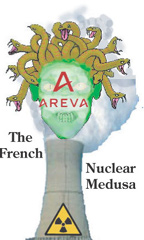
Nuclear company AREVA in a financial mess
It had net debt of €5.2 billion as of June 30, equivalent to 10 times this year’s forecast earnings before interest, taxes, depreciation and amortization, or Ebitda………..there are good industrial reasons why even long-term investors are wary of Areva.
(France) Areva Capital Raise Is Just a Stopgap – WSJ.com,
By MATTHEW CURTIN
14 Dec 10, Selling 15% of Areva to strategic investors was supposed to herald a fresh start for France’s state-owned nuclear-technology champion after years of dithering. Instead, the government has come up with a temporary fix Continue reading
Sunshine Coast Council takes positive action on Climate Change
“The Energy Transition Plan—which supports the Sunshine Coast Climate Change and Peak Oil Strategy—maps out the path to get there and sets energy conservation, low carbon energy generation, demand management and fuel reduction targets not only for council, but for the whole Sunshine Coast.”….
Report highlights Australia’s opportunity for renewable energy
View the full report: Global Clean Power: A $2.3 Trillion Opportunity (PDF)
1 This month
7 April – WEBINAR – Australia and the Doomsday Clock – Preventing nuclear war through NoFirstUse and other policies
Online | Tuesday April 7, 4:00-5:30pm, Australian Eastern Time / 8:00-9:30am Central Europe Time
– Access the registration link
15 April – Zoom –Nuclear Power is Not the Solution
Apr 15, 2026 01:00 AM in Canberra, Melbourne, Sydney

Join the International Physicians for the Prevention of Nuclear War (IPPNW) on Tuesday, April 14th for a timely webinar exploring the risks associated with nuclear power and challenging the myth that it offers a simple, safe, carbon-free solution to the climate crisis

21 April Webinar: No Nuclear Weapons in Australia
Start: 2026-04-21 18:00:00 UTC Canberra, Melbourne, Sydney (GMT+10:00)
End: 2026-04-21 19:30:00 UTC Canberra, Melbourne, Sydney (GMT+10:00)
Event Type: Virtual
A virtual link will be communicated before the event.
Host Contact Info: australia@icanw.org

of the week – Australians for War Powers Reform (AWPR)
To see nuclear-related stories in greater depth and intensity
 Antinuclear