Olympic Damn Uranium Mine – Premier Rann’s Toxic ECONOMIC Legacy?
 BHP Billiton’s expanded Olympic Dam uranium mine – if it does eventuate – will leave a toxic radioactive legacy. But that’s not all. What about its economic legacy?
It’s going to cost a heap to get it started. They are going to need to move a million tonnes of rock per day for four years, that is, a billion tonnes of rock, just because of the overburden, because the ore body is far underground. So they are moving a million tonnes a day for four years before they even get to the ore body. This is going to cost $billions.
The energy cost, in drawing huge amounts of water from the proposed desalination plant in Spencer Gulf, will be massive.
All this – at a time when the market for uranium continues to slump, when nuclear power is becoming prohibitively expensive – seems like an economic folly.
South Australian Premier Rann initially rose to fame within the Labor party with a strong anti-uranium and anti-Roxby Downs push. But, once in power as Premier, he did a complete about face. Now Rann is poised to let BHP Billiton dictate the terms for the expansion of the mine.
This means renegotiating the Indenture Act 1982, which makes BHP Billiton exempt from the laws of the country. This legislation allows the mine to operate with wide-ranging exemptions from the Aboriginal Heritage Protection Act, the Environment Protection Act, the Natural Resources Act and the Freedom of Information Act.
Mike Rann’s goal is to make Mike Rann look big in history – to be the one that gave BHP Billiton free rein with its big misguided adventure. He has to do this in a hurry, before his Labor colleagues give him the boot. Here’s hoping that more thoughtful minds in South Australian politics will see that he doesn’t get away with this.
Against a bad nuclear cycle – Japanese for Peace
My Voice: Kazuyo Preston Melbourne Weekly, 2 August 11, Kazuyo Preston grew up in Japan knowing little of the devastation at Hiroshima and Nagasaki .People in Australia might think what’s happening with the Fukushima disaster in Japan has nothing to do with them, but 30 per cent of uranium used in Japanese nuclear power plants comes from Australia. Mining that uranium is also causing radiation leaks in the Australian desert. We’re at the start of a bad nuclear cycle…..
Anti uranium, pro uranium – South Australian Premier ‘s personal ambitions
Premier Rann agrees to step down – but only after mine expansion, SMH, Phillip Coorey, August 1, 2011THE South Australian Labor Premier, Mike Rann, has agreed to quit but will not cut short a trade trip to India or stand down immediately as his party had demanded.
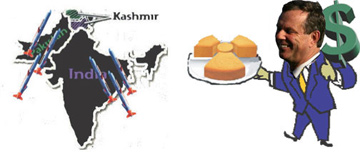
In a statement from Delhi, Mr Rann offered a compromise of a bloodless transition to his Education Minister, Jay Weatherill, but only after he had concluded some items of business, especially the expansion of the massive Olympic Dam uranium mine. Mr Rann made a name for himself decades ago as a political aide when he drove Labor’s opposition to uranium mining.…http://www.smh.com.au/national/premier-rann-agrees-to-step-down–but-only-after-mine-expansion-20110731-1i6il.html
Highest radiation levels found within Fukushima nuclear plant
 Fatal Radiation Level Found at Fukushima Daiichi Plant, New York Times, By MARTIN FACKLER, August 1, 2011 TOKYO — The operator of the Fukushima Daiichi nuclear plant said Monday that it measured the highest radiation levels within the plant since it was crippled by a devastating earthquake.
Australian uranium companies exploit workers in Africa
 Anglo-Australian group Rio Tinto is the majority shareholder in Rossing Uranium, the world’s oldest and largest open-pit uranium mine operation, which is in Namibia.
 Australia’s Paladin Energy wholly owns Langer Heinrich uranium mine and French nuclear utility Areva is developing the Trekkopje uranium mine, both in Namibia.
Extract Uranium is developing Husab uranium deposit, which could become one of the world’s largest and Canadian Forsys Metals Corp, Australian firm Bannermann resources are developing Valencia and Etango uranium projects in Namibia.
Uranium mining – the grim realities The Southern Times, South Africa, By Felix Njini 01-08-2011“……Windhoek – Namibia and South Africa are amongst African countries that lack regulatory capacity and technical knowledge to monitor environmental impact and radiation poisoning on workers and communities due to uranium mining. A study that delved into the environmental impact of uranium mining in Central African Republic (CAR), Namibia and South Africa concluded that mining operations’ health consequences on workers and the environment are severe. Continue reading
Daylesford shows the way, for Australian community owned wind power
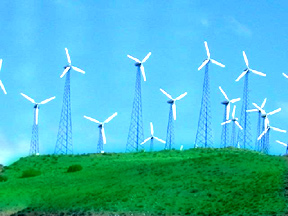 Community-owned wind powers up, ABC Environment | 2 AUG 2011 BY SUE WHITE With profits to be made from the provision of renewable electricity, an increasing number of savvy community groups around the world are pooling their resources to get in on the action.
The newly-installed turbines started generating on June 22, as Hepburn Wind begins its quest to create 12,200 megawatt hours (MWh) over the next 12 months – the equivalent of powering 2,300 homes. Hepburn Wind’s journey began in 2005….. Continue reading
Nuclear power is just too costly
Nuclear: too hot to handle Climate Spectator, Giles Parkinson, 2 August 11, Recent reports about the potential of BHP Billiton to delay uranium production from its massive Olympic Dam project, and Resource Minister Martin Ferguson’s urging of the NSW coalition government to overturn the state’s ban on uranium mining, suggests differing views about the outlook for the nuclear industry.
That the much anticipated “nuclear renaissance” has been stalled – at least in western democracies – appears to be beyond doubt, at least in the short term.

But the medium- to long-term outlook is subject to much conjecture, and seems to depend on how you answer two questions: Who is going to want it? And who is going to pay for it? Continue reading
1 This month

of the week – Australians for War Powers Reform (AWPR)
To see nuclear-related stories in greater depth and intensity
 Antinuclear