India’s nuclear future now shaky – might not need Australia’s uranium
In the shadow of increasingly fierce grassroots opposition, India’s nuclear ambitions – and Australia’s future uranium cash cow – are looking decidedly less promising.
 India’s nuclear ambitions come up against people power, BY:AMANDA HODGE, IDINTHAKARAI, TAMIL NADU :The Australian . November 26, 2011 1 India’s Koodankulam nuclear power project is like the proverbial cockroach in an atomic storm. It has survived the fall of the Soviet Union, the assassination of an Indian prime minister and the Boxing Day tsunami, when waves surged over the site where it now stands.
The first of six reactors to be built on the shore of India’s southernmost tip in Tamil Nadu was to have been switched on next month, 23 years after Mikhail Gorbachev and the slain Rajiv Gandhi signed off on the friendship project.
Instead it has hit another obstacle – an emerging national anti-nuclear campaign that has gained serious momentum since Japan’s Fukushima meltdown in March.
Fukushima drove home the dangers of nuclear power in a way millions of poor Indians can understand – loss of livelihood.
In the shadow of increasingly fierce grassroots opposition, India’s nuclear ambitions – and Australia’s future uranium cash cow – are looking decidedly less promising.
Barely a kilometre from the blinking red lights of the Koodankulam reactor, the tiny fishing village of Idinthakarai is the heart of the country’s anti-nuclear protest.
“There should be no houses within 1.6km of a nuclear plant and only low-density for 5km,” says villager Justin Amalraj Leon. “There are 40,000 people living within 5km and yet they say we can stay? They’re breaking all their own rules.”
Far from the one-day wonders of previous Indian anti-nuclear protests, the Koodankulam campaign has attracted thousands of protest pilgrims since September, when 127 villagers staged a 12-day hunger strike, forcing the state government to defer plant operations.
Jandra, 48, a paunchy, grizzled fisherman whose family has been fishing off Idinthakarai for generations, says he joined the hunger strike because he fears what will happen to his village and his job.
“Our fishing will be spoilt and our children will get diseases,” he says. “Yes we need power but we can take from windmills or solar. We will develop with or without this plant.
“But if a rich country like Japan can’t save their people from radiation up to 200 miles away, how will India save us?”
Campaign leader SP Udayakumar says this has become one of the biggest questions in people’s minds post-Fukushima, when the Japanese government fumbled its emergency response.
He says the next demonstration will be a letter in a bottle addressed to Julia Gillard, urging her not to reverse the ban on uranium sales to India.
“Julia Gillard says it will create jobs in Australia and would be good for the economy. She’s doing the right thing for her country but someone needs to think about us.”
No comments yet.
1 This month
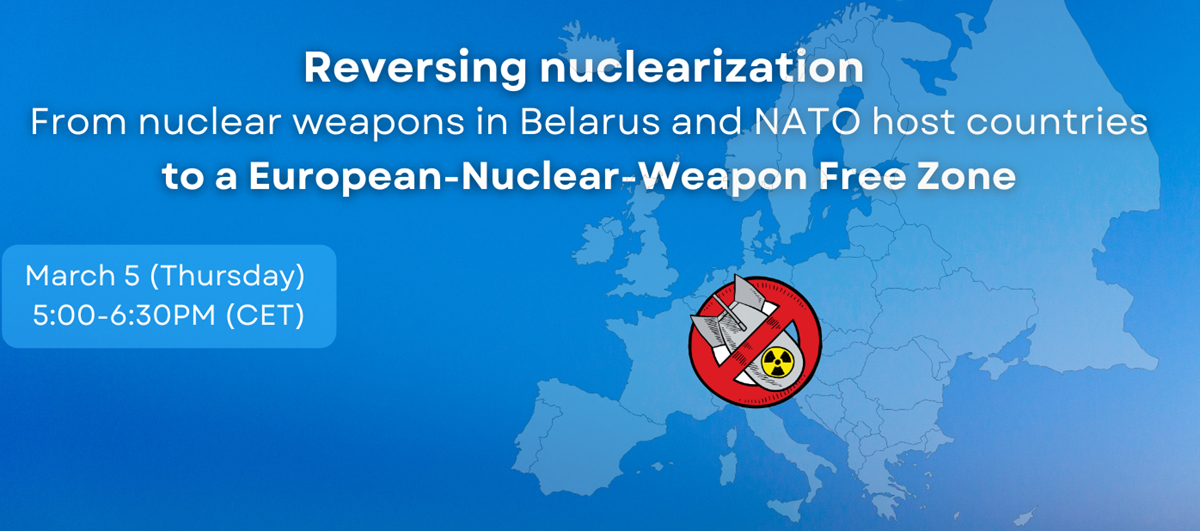
6 March -Online – Reversing nuclearization:
From nuclear weapons in Belarus and NATO host countries to a European-Nuclear-Weapon Free Zone
Mar 6, 2026 03:00 AM in Canberra, Melbourne, Sydney

of the week – Australians for War Powers Reform (AWPR)
To see nuclear-related stories in greater depth and intensity
 Antinuclear
Leave a comment