Prominent Labor politicians will vote against uranium sales to India

 Conroy to vote against uranium sales, The Age, 1 Dec 11VICTORIAN right-wing cabinet minister Stephen Conroy will break with his faction and with the Prime Minister by opposing uranium sales to India when the issue is debated this weekend. Senator Conroy told The Age yesterday he could not in good conscience support a change in the party’s platform at the national conference, despite Julia Gillard’s strong public call for reform. ”I won’t be supporting uranium sales to India,” the Communications Minister said. ”I have a long-standing position opposing the nuclear industry based on family experience.” Senator Conroy joins his cabinet colleague, the Left’s Anthony Albanese, in publicly breaking ranks with the Prime Minister’s position in support of uranium sales to India.
The controversial policy change – sought by energy-hungry India – is supported almost uniformly by the Labor Party’s Right faction, which has a majority at the national conference. It is opposed strongly by a majority of the party’s Left, which historically has been opposed to the uranium and nuclear industries, and concerned about proliferation risks.
Even though the majority of the Left faction is strongly opposed, the push for liberalising Labor’s uranium policy in recent years has been spear-headed by Martin Ferguson, Labor’s left-wing Resources Minister – a strong supporter of the uranium industry throughout his trade union and parliamentary careers.
The party platform prohibits uranium sales to countries outside the Nuclear Non-Proliferation Treaty. Given the ways the  numbers are trending, Labor’s national conference will make an exception for India. Right-wing powerbroker and union official Paul Howes – another long-time supporter of Australia’s uranium industry – said yesterday he expected a heated debate, but believed the Prime Minister’s position would prevail……
In 2007, former prime minister John Howard agreed to export Australian uranium to India, despite the fact it was outside the NPT. Kevin Rudd reversed that position when he took office later that year.
Indian officials have lobbied consistently for Labor to reinstate the Howard policy, and follow the United States, which is among a number of powerful nuclear countries to negotiate in recent years a bilateral nuclear co-operation agreement with Delhi. http://www.theage.com.au/national/conroy-to-vote-against-uranium-sales-20111130-1o76t.html#ixzz1fJVUtCG5
Evangelical religions in USA come out against nuclear weapons
 Evangelicals rethink nuclear weapons, Washington Post, By Leith Anderson, Dennis Hollinger, John Jenkins and Jo Anne Lyon, 29 Nov 11 ”……….the very existence of nuclear weapons may be more of a liability than an asset. Christians hold that all people bear God’s image (Genesis 1:27).Therefore, human life and freedom are precious and should be defended from injustice and tyranny. Nuclear weapons, with their capacity for terror as well as for destruction of human life, raise profound spiritual, moral and ethical concerns.
We question the acceptability of nuclear weapons as part of a just national defense. The just war tradition admonishes against indiscriminate violence and requires proportionality and limited collateral damage. New scientific studies reveal that even a limited nuclear exchange between India and Pakistan would have profound global consequences, harming billions of innocents. The very weapons meant to restrain evil could potentially destroy all that they were intended to protect. Continue reading
Australia to join USA-India defence pact – antagonising China
 U.S. officials have been particularly pushing Canberra to commit additionally to construction of a new fleet of 12 powerful missile submarines — possibly of U.S. design — in what would be the country’s largest sole defence acquisition.
URANIUM SALES TO INDIA…Rudd told the Australian Financial Review that a looming weekend vote and expected approval by Australia’s ruling Labor Party to drop a longstanding ban on uranium sales to non-Nuclear Proliferation Treaty countries like India could help clear the way for formation of a new pact.
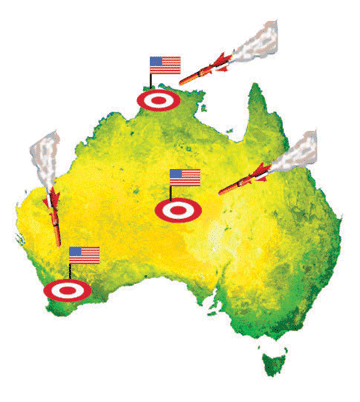 Australia backs security pact with U.S., India, By Rob Taylor, Additional reporting by Sui-Lee Wee in Beijing, Editing by Ed Davies and Jonathan Thatcher), CANBERRA | Wed Nov 30, 2011 (Reuters) – Australia’s foreign minister on Wednesday backed the formation of a security pact with India and the United States, a tie-up that could fuel China’s worries of being fenced in by wary neighbors.
It is the latest move by Australia to take a bigger role in the region’s security. Earlier this month, it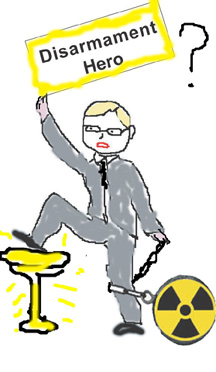 agreed to host a de facto U.S. base in the north of the country which would provide military reach into southeast Asia and the South China Sea, where China has disputes with several other states over sovereignty…..
It was unclear why Rudd, a Mandarin-speaking Sinophile, would risk irritating Australia’s top trade partner China which is already nervous that Obama’s latest diplomatic push into the Asia-Pacific is part of broader U.S. policy to encircle it…..
prominent Chinese military commentator, People’s Liberation Army Major General Luo Yuan, said this week that Washington was clearly trying to fence in Beijing. Continue reading
Lawyers press for revealing secrets of Maralinga’s baby deaths after nuclear bomb testing
 the medical records of those 23 stillborn babies remain sealed and held by the National Archives of Australia.
Now, as British lawyers search for others to join the class action against the British Ministry of Defence, they will also push for the secrets of the Woomera baby graves to be revealed.
Secrecy surrounding the disturbing rate of baby deaths and research suggesting fallout from tests blanketed the town despite being more than 600km from the Maralinga testing sites, warrants those families investigating claims as part of the class act
The Children’s Graveyard at Woomera South Australia. Paul Langley’s Nuclear History Blog, 1 Dec 11 What was known and when?. SECRET records detailing the fate of dozens of babies born in the shadow of Maralinga’s nuclear testing hold the key to a case building as the state’s largest class action. More than 100 South Australians have joined a class action against the British Ministry of Defence over deaths and disabilities they believe were caused by nuclear testing at Maralinga more than 50 years ago.
Among them are families of the Woomera babies – more than 60 lives lost, many without explanation, during the decade of nuclear testing, up to 600km away. Lawyers running the case say it is “just the tip of the iceberg”. They have heard only from people who are “very confident” they have a case for compensation. Already, families of some of the stillborn children, hours-old babies and toddlers who account for more than half the plots in Woomera Cemetery for the 1950s and 1960s, have come forward….. Continue reading
Australian government policies force Aborigines off homelands (convenient for the nuclear industry)
 As Amnesty International has noted, the Government has decided to direct virtually all funding and investment in the Northern Territory to 21 “growth towns”. Thus, the 500 communities, which have about 35 per cent of the NT’s Indigenous population, were allocated $7.1 million out of the $672 million housing program. They note that “the Commonwealth Government has transferred the responsibility for homelands to the Northern Territory Government, whose own policy
clearly states no new homes on homelands in the Northern Territory”.
The result will be to force Indigenous communities from the land that has “social, cultural and economic significance to them”.
Destroying Indigenous communities and cultures, The Drum, Michael Brull , 1 Dec 11, Jenny Macklin has just delivered her second reading speech for the new intervention legislation. She had sought to soften the ground for this by announcing the new “evidence” which she claimed vindicated her measures, in the absence of any evidence of improving socio-economic conditions. Continue reading
As renewable energy costs go down, Australia should be partnering China in solar development
 wind is already cheaper than new-built coal in the US, and solar thermal with storage, and used as a peaking plant, will be competitive with peaking gas.
Australia should be pursuing a more strategic partnerships with China – like that between UNSW and Suntech, the world’s biggest solar PV maker
Why we don’t need coal, Climate Spectator, Giles Parkinson, 1 Dec 11 Last month, the International Energy Agency released a stunning report that suggested that the future of thermal coal exports could be threatened if the world ever decides to implement the policies to limit global warming to an average 2°C, rather than just merely talking about it, as they are doing in Durban this fortnight.
The coal industry laughed, suggesting such a scenario was highly unlikely. But what if technology took the decision out of the hands of politicians, as seems increasingly likely with the plunging costs of renewables, particularly solar PV, across the globe? And what does that mean also for Australia’s energy infrastructure, and the tens of billions of dollars that will be invested in the coming decade on the basis that business will continue as usual?
New forecasts from China suggest the cost of solar PV in that country will fall below that of coal-fired generation within 10 years. From that point, or even before, says Wu Dacheng, the vice chairman and secretary general of the China Photovoltaic Society, the country’s energy build out will be dominated by cheaper renewables. Continue reading
Australia’s role in the militarisation of Asia
an Australia hosting Marines may come to look like a juicier target for Chinese defense planners….The next question will be, if North Korea and China have nuclear weapons, why not us?
Global Zero may quickly turn to Global Many.
1 This month
7 April – WEBINAR – Australia and the Doomsday Clock – Preventing nuclear war through NoFirstUse and other policies
Online | Tuesday April 7, 4:00-5:30pm, Australian Eastern Time / 8:00-9:30am Central Europe Time
– Access the registration link
15 April – Zoom –Nuclear Power is Not the Solution
Apr 15, 2026 01:00 AM in Canberra, Melbourne, Sydney

Join the International Physicians for the Prevention of Nuclear War (IPPNW) on Tuesday, April 14th for a timely webinar exploring the risks associated with nuclear power and challenging the myth that it offers a simple, safe, carbon-free solution to the climate crisis

21 April Webinar: No Nuclear Weapons in Australia
Start: 2026-04-21 18:00:00 UTC Canberra, Melbourne, Sydney (GMT+10:00)
End: 2026-04-21 19:30:00 UTC Canberra, Melbourne, Sydney (GMT+10:00)
Event Type: Virtual
A virtual link will be communicated before the event.
Host Contact Info: australia@icanw.org

of the week – Australians for War Powers Reform (AWPR)
To see nuclear-related stories in greater depth and intensity
 Antinuclear