Salute to the passing of Australia’s champion for the rights of nuclear veterans
Ric entered hot [i.e. radioactive] zones shortly after bomb detonations, to recover target response vehicles. His duties included steamcleaning of contaminated vehicles, and for many years was the sole survivor of his squad. The direct memory of the futility of steam cleaning vehicles – forcing hot particles deeper into cracks, creases and crevices of vehicles and machines, some of which were later sold to the general public, remained with him..
.. A person of deep conviction, he was fearless in his expression of his views. Though rendered a civilian by nuclear service induced illness, he conducted himself over many years with the bearing any serving soldier would be expected to display. This standard of discipline marks both the standard of the Association he headed and the policies it pursued in the fight for justice.
The Passing of Ric Johnstone, President of the Australian Nuclear Veterans Association, Christmas Day, 2011 Paul Langley’s Nuclear History Blog, 27 Dec 11, Ric presented the case for nuclear veterans and victims without fear and with endless energy and great emotional and rational investment.
Though he was one of the very few veterans in Australia to attain some justice through successful action, he did not rest upon his own favour. Rather, he invested his life to the welfare of others, increasingly widows of veterans and their children. He never ceased explaining the case for the veterans and the case against the authorities.
Though Australia is a large country, with veterans thinly spread far and wide, and possessing diverse views, all will miss Ric badly for his total dedication to the cause. A cause made more urgent by the day.
Until nuclear veterans are fully acknowledged, the decisions of government will be made upon a false premise. Continue reading
“Fukushima nuclear disaster is far from over” – new report
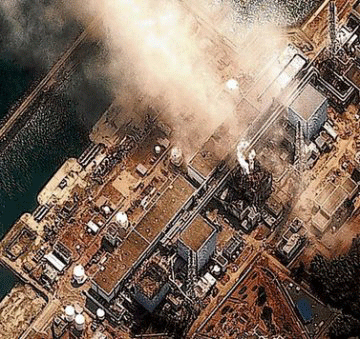 Nuclear disaster response failed: report 9 News Dec 26 2011 Yuri Kageyama Japan’s response to the nuclear crisis that followed the March 11 tsunami was confused and riddled with problems, a report revealed on Monday. The response included an erroneous assumption that an emergency cooling system was working and a delay in disclosing dangerous radiation leaks.
The disturbing picture of harried and bumbling workers and government officials scrambling to respond to the problems at Fukushima Dai-ichi nuclear power plant was depicted in the report detailing a government investigation……
Sadder still was how the government dallied in relaying information to the public, such as using evasive language to avoid admitting serious meltdowns at the reactors, the report said.
The government also delayed disclosure of radiation data in the area, unnecessarily exposing entire towns to radiation when they could have evacuated, the report found.
The government recommended changes so utilities will respond properly to serious accidents.
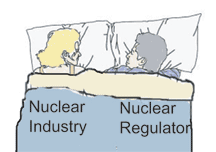
It recommended separating the nuclear regulators from the unit that promotes atomic energy, echoing frequent criticism since the disaster, which left 20,000 people dead or missing.
Japan’s nuclear regulators were in the same ministry that promotes the industry, but they will be moved to the environment ministry next year to ensure more independence.
The report acknowledged people were still living in fear of radiation spewed into the air and water, as well as radiation in the food they eat. Thousands have been forced to evacuate and have suffered monetary damage from radiation contamination, it said.
“The nuclear disaster is far from over,” the report said.
http://news.ninemsn.com.au/world/8395190/japan-probe-finds-nuclear-disaster-respons
1 This month
7 April – WEBINAR – Australia and the Doomsday Clock – Preventing nuclear war through NoFirstUse and other policies
Online | Tuesday April 7, 4:00-5:30pm, Australian Eastern Time / 8:00-9:30am Central Europe Time
– Access the registration link
15 April – Zoom –Nuclear Power is Not the Solution
Apr 15, 2026 01:00 AM in Canberra, Melbourne, Sydney

Join the International Physicians for the Prevention of Nuclear War (IPPNW) on Tuesday, April 14th for a timely webinar exploring the risks associated with nuclear power and challenging the myth that it offers a simple, safe, carbon-free solution to the climate crisis

21 April Webinar: No Nuclear Weapons in Australia
Start: 2026-04-21 18:00:00 UTC Canberra, Melbourne, Sydney (GMT+10:00)
End: 2026-04-21 19:30:00 UTC Canberra, Melbourne, Sydney (GMT+10:00)
Event Type: Virtual
A virtual link will be communicated before the event.
Host Contact Info: australia@icanw.org

of the week – Australians for War Powers Reform (AWPR)
To see nuclear-related stories in greater depth and intensity
 Antinuclear