Giles Parkinson questions Grattan Institute’s pro nuclear spin
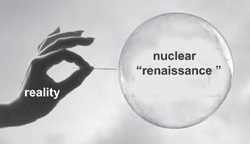 No easy choices, but a strong case for energy action, REneweconomy, By Giles Parkinson on 6 February 2012 “……..There are several glaring omissions from the report: it does not adequately take into account energy efficiency and the impact that that will have on future energy demand, nor does it adequately address the prospects that large scale renewables and small scale distributed energy will have a dramatic change on the function of the grid– it assumes that it will continue to be defined by baseload and peaking sources, when studies in Europe and elsewhere suggest a more dynamic change.
It’s right, though, that renewables will be limited to their scope without cost-effective storage, and the technologies for these are promising but uncertain. And it’s put off the highly contentious discussion about which policies and how to a later report…. the Grattan Institute’s energy program director Tony Wood, also seems un-necessarily pessimistic about costs. The report recognizes that the costs of incumbent technologies will rise to $100-$150/MWh – up from
around $40-$60/MWh – which it uses as its benchmark. Wood, says, however, that if CCS fails to deliver and nuclear is not deployed, then the price of energy could go “through the roof.”
That’s not the view, however, of the EU, which believes that the transition to renewables will cost no more than continuing with fossil fuels, or the IEA, which notes in its “high renewable scenario” that the increased use of renewables – up to 75 per cent – in the event that nuclear is not deployed as widely as some may hope and CCS fails to deliver – may be less than 10 per cent more than otherwise. http://reneweconomy.com.au/2012/no-easy-choices-but-a-strong-case-for-energy-action-98145
No comments yet.
1 This month

of the week – Australians for War Powers Reform (AWPR)
To see nuclear-related stories in greater depth and intensity
 Antinuclear
Leave a comment