Reflections on the past week in nuclear news
 It has been a week of protests – so intense that the mainstream media has felt obliged to actually cover them. In Australia, the Lizards Revenge http://lizardsrevenge.net/ brought hundreds of protestors for a festival of music, entertainment and information to the very heart of the uranium industry – BHP’s Olympic Dam mine in South Australia. A massive police and security presence did not bring about the violence (that the media might have enjoyed).
The Anti-Nuclear Alliance of Western Australia led the protest in Fremantle, targeting the Australian uranium conference, an particularly, Toro Energy.
In Japan, in the sweltering heat, 170,000 people rallied outside Prime Minister Noda’s residence peacefully voicing their protest at the restart of one nuclear reactor. As in Australia, this protest was peaceful.
In other developments, the rise of thyroid abnormalities in Fukushima children indicates the continuing seriousness of the health effects of Fukushima. The nuclear lobby continues to push the completely unproven and scientifically unaccepted theories of low doses of radiation being “good for you”, or at least harmless. The USA’s nuclear revival well and truly stalled, due to the growing recognition that “new nuclear” can’t go ahead without a real plan for waste disposal. Meanwhile Britain struggles with the unacceptable costs of its planned nuclear expansion, and even more, with its dilemma over what to do with its huge plutonium waste pile at Sellafield.
Battery storage of energy poised to increase renewable energy systems, especially in remote areas
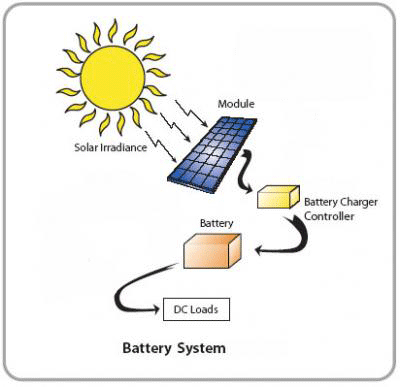 the way the world generates electricity and delivers it to customers is undergoing fundamental change, be it towards smart grids or green grids, and scalable energy storage solutions, such as batteries, will be a key part of the industry in the future.
Redflow is one of only a handful of manufacturers of “flow” batteries, which Winter says are better able to manage long-term storage than lithium ion or other battery standards…..
Energy storage group Redflow works to recharge batteries BY: GILES PARKINSON The Australian July 20, 2012 WHEN Brisbane-based battery storage developer Redflow listed on the Australian Stock Exchange in November 2010, it quickly became a market darling: the prospect of a cost-effective battery in a market increasingly hungry for storage capacity to manage demand peaks and the influx of renewables seemed irresistible.
Redflow shares quickly jumped to a peak of $1.70 for a market capitalisation of well more than $100 million before enthusiasm began to wane. Earlier this year, the bottom fell out when the company admitted its business plan was overly optimistic and any manufacturing deals would have to be put on hold……Chris Winter, who co-invented the company’s key product, a zinc-bromine “flow” battery in a Brisbane back yard in 2001, took the reins again. Continue reading
Protest continues at Olympic Dam uranium mine: 5 more arrests
 Protests flare again at Olympic Dam news.com.au 19 July 12, FIVE people have been arrested after renewed protest action at the Olympic Dam uranium and copper mine in South Australia’s north.
The arrests on Thursday brought to 18 the number of people taken into police custody since about 350 anti-nuclear activists converged on the area on Saturday.
The official protest was scheduled to conclude on Wednesday but up to 100 people remained in the area. Police said about 40 people blocked Olympic Way, just south of the declared protected area, on Thursday morning. They pushed a car onto the road, let down its tyres and locked the steering.
The action forced a truck to stop on the road and two men then chained themselves to the underside. They were arrested and charged with illegal interference. Three other people were charged with refusing to follow police direction.
Warning on over optimism about Australia’s uranium industry
 Toro boss says analysts overestimate uranium industry Australian Mining 19 July, 2012 Andrew Duffy Toro Energy managing director Greg Hall, who is leading the development of WA’s first export uranium mine, says analysts have overestimated future uranium production….
new projects must pass technical, regulatory and finance hurdles, often uniquely specific to the uranium sector, before construction and ultimately production can come online,” he said.
“In this regard Toro believes the market and a number of uranium analysts are being overly optimistic on supply timelines for new uranium projects and that as a result future production is overestimated.”
Toro Energy now postponing decision on whether to go ahead with Wiluna uranium mine
WA’s first uranium mine delayed Business Spectator, 19 Jul 2012 The timeline for Western Australia’s first uranium mine has slipped after a rigorous environmental assessment. Toro Energy Ltd announced a revised target date for a final board decision on whether to proceed with its Wiluna project in central WA, moving it back to the first half of 2013.
The company had previously expected to make a final decision by the end of 2012.
The project was approved by the state’s Environmental Protection Authority (EPA) in May and appeals are being reviewed before a final decision by WA environment minister Bill Marmion. Managing director Greg Hall said yesterday the company hoped Mr Marmion would make a decision by the end of September….
…. In 2008, the Liberal state government lifted a six-year ban on uranium mining that was imposed by the previous Labor government. WA’s Labor opposition remains has not changed its stance on uranium mining, but says it will not stand in the way of any planned uranium mine that has received approvals if the party wins state elections in March.
There are no other uranium projects in WA that would be fullyenvironmentally approved by the time of the election.
ww.businessspectator.com.au/bs.nsf/Article/Timeline-for-WAs-first-uranium-mine-slips-WC4P8?OpenDocument
Japan’s politicians getting worried about growing anti-nuclear protest
as numbers swell there are indications the country’s usually inflexible politicians are getting worried and just might start paying attention.
they [protestors] are very ordered: protesters stick to the anti-nuclear message and go home in an orderly fashion at the appointed time.
But the demonstrations’ regularity and sheer size – — is giving the government pause for thought in a country where for decades the political elite has largely ignored popular opinion…..

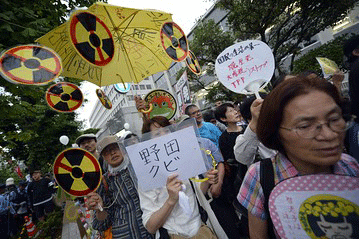 Nuclear fears galvanise Japan’s sedate society Channel News Asia: 20 July 2012 TOKYO: Japan’s usually sedate societyis angry and getting organised against nuclear power, with the kind of snowballing protest movement not seen for decades. Weekly demonstrations outside the prime minister’s residence attract tens of thousands of people and a rally in west Tokyo this week drew a crowd organisers claimed at 170,000, demanding an end to atomic power in post-Fukushima Japan. Continue reading
High rates of abnormal thyroid growths in Fukushima children
We also spoke with Dr. Bryan Haugen, president-elect of the American Thyroid Association and head of endocrinology at the University of Colorado School of Medicine, who hadn’t heard of the report before we contacted him.
Haugen agreed with the Caldicott’s assessment that it is surprising for kids to “have this many nodules and cysts seen, especially this soon after the accident,” and the fact that “this something that is not more widely known.”
The New York Academy of Sciences estimates that nearly one million people around the world have died from exposure to radiation released by the 1986 nuclear disaster at the Chernobyl reactor.
 CONFIRMED: 36 Percent Of Fukushima Kids Have Abnormal Thyroid Growths And Doctors Have Been Left In The Dark : http://www.businessinsider.com/fukushima-children-have-abnormal-thyroid-growths-2012-7#ixzz21CwegRH8 Michael Kelley | Jul. 19, 2012 A few days ago we reported that 36 percent of Fukushima children have abnormal thyroid growths likely from radiation exposure, based on the “Fukushima Prefecture Health Management Survey.”
We got in touch with Australian pediatrician Dr. Helen Caldicott, who has spoken about the growths, to ask her about the  implications of the study.
After confirming the validity of the report, Caldicott reinforced the alarming nature of the findings:
1. “It is extremely rare to find cysts and thyroid nodules in children.”
2. “This is an extremely large number of abnormalities to find in children.”
3. “You would not expect abnormalities to appear so early — within the first year or so — therefore one can assume that they must have received a high dose of [radiation].”
4. “It is impossible to know, from what [officials in Japan] are saying, what these lesions are.”
Doctors worry about these abnormal growths because even though thyroid nodules are relatively common, they are not common in children and some of them could become cancerous. Continue reading
3 earthquakes hit Fukushima in the last 24 hours
M4.5 quake hits Fukushima — Third M4 in last 24 hours July 19th, 2012 By ENENews Title: : Earthquake Information
Source: Japan Meteorological Agency Date: July 20, 2012 http://enenews.com/m4-5-quake-hits-fukushima-third-m4-in-last-24-hours
Japan’s one functioning nuclear reactor positioned over an active fault line
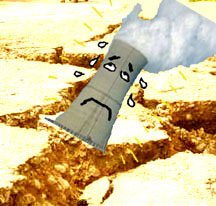
 Japan nuclear watchdog probes claims that country’s only working reactor sits on active fault line Warning comes just 18 months after tsunami wiped out Fukushima plant DAILY MAIL, 19 July 2012 Japan’s nuclear safety watchdog has ordered an investigation into claims the country’s only active nuclear power station is positioned above a tectonic fault line.
Geologists believe the Oi plant in Fukui Prefecture is at real risk of earthquake if the tectonic plates it sits on suddenly shift.
The news comes at a sensitive time for the Japanese nuclear industry – less than 18 months after a tsunami struck the nuclear power station at Fukushima, causing a meltdown…
The first reactor was fired up a few weeks ago and a second is planned to restart later in July. The power company insists it won’t alter its schedule, despite the order to examine the earth under the huge plant…. Experts reporting to the safety watchdog have also recommended tests are carried out at the nearby Shika plant, claiming both sites could be sitting on active fault lines. http://www.dailymail.co.uk/news/article-2176062/Japan-nuclear-watchdog-probes-claims-countrys-working-reactor-sits-active-fault-line.html#ixzz21C4tdqr4
BHP tightlipped about whether or not the big new Olympic Dam uranium mine will actually go ahead
 For all the hype about its planned “biggest uranium mine in the world” at Olympic Dam, BHP is experiencing some jitters, as shareholders are not so keen on seeing the company blow $30 billion on this behemoth, before there’s a sign of any profit from this geewhiz dream of CEO Marius Kloppers.
BHP Seeks Friends in Volatile Times, Wall Street Journal, 19 July 12“…..fuel for volatility in BHP’s shares is the question of BHP’s spending discipline. Commonwealth Bank has said it remains concerned by the company’s capital allocation policy, and believes the market would rather see windfall cashflow returned to shareholders via dividends or share buybacks…
BHP has declined to comment on the progress of the multibillion dollar projects, including the expansion of the OlympicDam copper-uranium mine in South Australia …“Cuts to capex [capital expenditure] and growth profile are…likely if commodity prices weaken further than expected,” Citi analysts said.
Australia top in solar radiation, may soon be top in solar energy market.
Yingli Green Energy, a Chinese solar panel manufacturer, believes that the potential for solar energy in Australia is so high that it may become the leader of the photovoltaic mass market by the end of the year.

Yingli notes the number of solar energy projects that are taking root in the country. Some researchers and solar energy market analysts have suggested that Australia may be the first to reach grid-parity with its solar energy initiatives. If this is accomplished within the next five years, the country could be home to the most active solar energy markets in the world.
Australia poised to take the lead in solar energy market http://www.hydrogenfuelnews.com/australia-poised-to-take-the-lead-in-solar-energy-market/854766/ BY ANGIE BERGENSON – JULY 16, 2012 ingli Green Energy notes the solar energy potential of the country
Over the past decade, Australia has shown modest support for alternative energy. In recent years, this support has been growing at a rapid pace, with the country now showing major interest in solar energy. Because of Australia’s exposure to solar radiation, it is one of the most attractive locations in terms of a solar energy market. Continue reading
1 This month

of the week – Australians for War Powers Reform (AWPR)
To see nuclear-related stories in greater depth and intensity
 Antinuclear