Australia: the week in nuclear news
 NATIONAL As two of Port Augusta’s coal-fired power stations are shuttering, a rally on Sunday 30/9 will highlight a strong community push for solar energy, encouraged by Greens senator Hanson Young
Australian government continues to feign ignorance, as newly released US Air Force documents prove that the USA govt classifies Julian Assange as an enemy of the State, in the same category as al Qaeda and Taliban terrorists.
In New York, Prime Minister Julia Gillard had quiet talks with Indian representatives. When she visits India soon, she will be signing Australia up to the first Australian country-to-country agreement to sell the yellow cake to a country outside the Nuclear Non-Proliferation Treaty.
Former Liberal Prime Minister Malcolm Fraser strongly criticises the Australian Government’s subservience to USA, and warns of the danger as Australia becomes locked in to USA’s militaristic policies of “containing China” in the Pacific region.
South Australia: Olympic Dam uranium mine. BHP wants to extend the South Australian government’s approval for the mine expansion for another 46 months. There’s absolutely no improvement in sight for uranium prices, or copper either. Is this all done to keep BHP’s “foot in door” and sweeten up SA govt for even more concessions whenever BHP wants them?
Wind energy causing a little windstorm, as one man finds he can set up a small (6 metre high) wind turbine at his home, without needing Council consent. The fossil fuel lobby’s favourite political Party, Family First, has sprung to the rescue, with an effort to prevent this.
Western Australia Aboriginal leaders of Western Australians Nuclear-Free Alliance (WANFA) gear up for a determined battle to stop uranium mining at Wiluna and Yeelirrie.
Queensland The Federal Government’s Climate Change Commission reports on Queensland’s special vulnerability to climate change, but that does not affect the Newman government’s war on renewable energy.
Port Augusta this Sunday – Rally for a solar South Australia
 Rally For Solar in South Australia This Sunday http://www.energymatters.com.au/index.php?main_page=news_article&article_id=3398 by Energy Matters A GetUp! supported rally is scheduled for this weekend to draw attention to the opportunity that exists in Port Augusta to help further reduce South Australia’s reliance on fossil fuel based electricity generation with solar power. Two of Port Augusta’s coal-fired power stations are shuttering and solar energy is being heavily favoured to replace them – not just by the community but also local government and business. Continue reading
Fossil fuel industries losing revenue with the success of the Renewable Energy Target.

 Putting wind up generators BY: GILES PARKINSON The Australian September 28, 2012 BERNIE Fraser built up an enviable record of responsible economic reform as head of Treasury, governor of the Reserve Bank, and as chairman of two prominent superannuation funds. …
He is a shrewd analyst with a special interest in consumer equity. He is not likely to be easily fooled by the subtleties of the campaign against renewables when the Climate Change Authority, which he heads, sits down to its first major task working through the submissions to its review of the Renewable Energy Target.
First, Fraser will want to cut through the numbers, and in doing so may well wonder if there has ever been such a concerted campaign by big business to act in what they describe as the “public interest”, and to lobby so aggressively for a change in key public policy that they say will save householders 14c a day
….. the real number that concerns the incumbents [fossil fuel energy generators] is not the purported saving to consumers, it is the loss of revenue from the fall in wholesale energy prices.
It is not 1c or 14c a day, or $840 over 18 years, it is $2.7bn a year. That is the potential loss of revenue for the incumbent coal and gas-fired generators if the RET continues as a fixed target of 41,000GWh. Continue reading
Civil liberties trampled, as Australian govt ignores plight of Julian Assange
‘Enemy’ tag poses fresh test of citizens’ rights, The Age editorial September 28, 2012 The law must be the same for Assange as for everyone else. THE designation of WikiLeaks and its co-founder, Julian Assange, as enemies of the US adds to the gravity of the consequences for releasing classified embassy cables two years ago.
The development, revealed in newly released US Air Force documents, puts Assange in the same category as al-Qaeda terrorists and the Taliban. Personnel who contact him risk being charged with crimes that may carry the death penalty.
Senior US politicians have called Assange a terrorist and demanded he be charged with espionage, hunted down or assassinated.
The Age has refuted Australian government claims of ignorance of US plans to pursue Assange. When coupled with public denunciations – Prime Minister Julia Gillard declared Assange to be a criminal – this government inspires little confidence that it would be any more diligent than the Howard government was in standing up for its citizens’ rights.
A member of the military charged with a military offence can expect to be tried in a military court. US Army private Bradley Manning faces a court martial charged with aiding the enemy by transmitting information that became available to the enemy via WikiLeaks. However, as a result of being deemed ”enemy combatants” – an expedient but legally dubious categorisation – Australians David Hicks and Mamdouh Habib endured long detentions without charge at Guantanamo Bay until a special military tribunal was set up to try detainees.
That points to the risks for anyone declared an ”enemy” of the US military. Assange, though, is not a combatant; as WikiLeaks editor-in-chief, he sees himself as a journalist. The Age published excerpts from the cables by arrangement with WikiLeaks, as did The New York Times in the US and The Guardian in the UK. This information exposed the truth
about the conduct of governments involved in wars in Afghanistan and Iraq.
Publication was based on the conviction that citizens have a right to know about glaring differences between what governments say in public and what they say and do in private. We had no compunction about making public the secret business of governments and their militaries when the public had been deceived about grave decisions of state,
which went to the justifications for and progress of two wars. At the time, The Age cited an obvious historical precedent. Four decades ago, the Pentagon papers, also illegally copied and provided to The New York Times, showed the Johnson administration had deceived Congress and the public about the Vietnam War.
It is hard to mount a credible argument that exposing deceptive conduct and collusion by elected governments is against the public interest. If governments are embarrassed, lose credibility and are politically damaged, they deserve to be……. http://www.theage.com.au/opinion/editorial/enemy-tag-poses-fresh-test-of-citizens-rights-20120927-26o6e.html#ixzz27o1kr02U
Family First Party tries to stop wind energy for homes
 Push to close turbine loophole before 10m-high structures are erected
http://www.adelaidenow.com.au/news/south-australia/push-to-close-turbine-loophole-before-10m-high-structures-are-erected/story-e6frea83-1226482927714 Emma Altschwager The Advertiser September 27, HOUSEHOLDERS can cash in on wind power by erecting turbines up to 10m high in their backyard that could transform suburban skylines.
But the window of opportunity could be slammed shut by Family First, which wants to change development regulations and allow neighbours to have a say in the erection of any wind turbines in their street. Continue reading
South Australia’s history of small and effective wind turbines
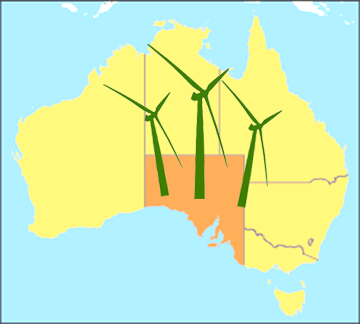 KJBeinke of ADELAIDE September 27, 2012 I grew up in rural SA and we generated all of our own power as there
was no grid available. When it did become available in the late 1960’s it was cost prohibitive to pay for the poles and transformer to the farm house. The wind power was used to charge a bank of batteries and we used them in lieu of 240 volts.
Now days batteries are much cheaper, more efficient and inverters are more efficient and cheaper. For those who don’t understand, you can become self sufficient on solar and wind power with battery back up to store un-used energy. It
has nothing to do with base load and that argument is irrelevant.
The problem with some of the wind-turbines is they can be noisy. Bird strikes are almost non-existent as in my 17 years relying on wind power, never once did I see a dead bird at the base of the tower. – comment at http://www.adelaidenow.com.au/news/south-australia/wattle-park-mans-development-application-shows-10m-high-wind-turbines-are-allowed-in-adelaides-suburbs/story-e6frea83-1226481983640
Small home wind turbines allowable in South Australia, without Council consent
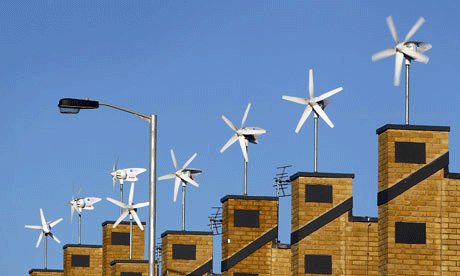 Wattle Park man’s development application shows 10m-high wind turbines are allowed in Adelaide’s suburbs
(picture shows home wind turbines in England – so it’s not really a new idea) http://www.adelaidenow.com.au/news/south-australia/wattle-park-mans-development-application-shows-10m-high-wind-turbines-are-allowed-in-adelaides-suburbs/story-e6frea83-1226481983640
A WATTLE Park man’s bid to build a 6m-high wind turbine in his
backyard has revealed a loophole that could transform suburban skylines. Continue reading
Senator Sarah Hanson-Young calls for South Australia to lead on renewable energy
While our nation as a whole has committed to reaching a target of 20 per cent baseload power generation from renewable sources by the year 2020, SA has already achieved better than that with a 21 per cent renewable power supply.
SA is already leading the way in renewable energies Australia-wide. The question we have to answer now is: Do we want to lead the world?
Let’s lead the way again in green energy, says Greens Senator for South Australia  Sarah Hanson-Young Herald Sun 28 Sept 12 AUSTRALIA is rich in natural energy resources that a clean and green. Greens Senator Sarah Hanson-Young wants South Australia to lead the way.
AS we know, Australia is rich in natural resources. We’ve been exploiting our mineral reserves for more than a century now.
But there is a catch these resources are both finite and dirty. The good news is that we in South Australia have a plentiful supply of alternative natural resources to call upon in the form of solar power and wind energy.
Our state is perfectly poised to make hay while the sun shines and, when it comes to renewable energy alternatives, the economic sun is certainly breaking through the clouds in SA. Continue reading
Long term slump in uranium prices – no sign of recovery
 Short-term dip in uranium prices now a long-term slump Peter Koven | Sep 26, 2012 “……..Eighteen months after the incident, uranium prices continue to hit new lows. The spot price sunk US50¢ to US$46.50 a pound this week, which is the lowest level since 2010, according to Ux Consulting. Investors briefly drove the spot price above US$135 in 2007.
The long-term price has also declined, though it is higher at US$60, reflecting the fact buyers will pay more for material delivered mid-decade or later.
TD Securities analyst Greg Barnes noted that September is usually buying season in the uranium market, so the current weakness is not a good sign.
Although sales volumes in the spot market have been very weak, there is more than enough uranium around to supply utilities, so any investing bet on the commodity is really a bet that nuclear power demand will substantially grow in the years to come….
.. questions about the future of nuclear continue to linger. Japan recently pushed reactor re-starts further into the future, while maintaining plans to phase out all nuclear power by the 2030s. And French President François Hollande reaffirmed his campaign promise to reduce the share of nuclear power in France’s energy mix to 50% from 75% currently.
“With two of the world’s most important nuclear markets questioning the longer-term outlook for nuclear power, we expect [the] uranium price to be in for another 12 months of lacklustre performance,” Mr. Barnes wrote in a note.
That view is widely shared by investors .
Very informative video about Julian Assange
 Exposed: U.S. May Have Designated Julian Assange and WikiLeaks an “Enemy of the State http://www.democracynow.org/2012/9/27/exposed_us_may_have_designated_julian#.UGTIboIEhrU.twitter Documents obtained under the Freedom of Information Act show WikiLeaks founder
  Julian Assange may have been designated an “enemy of the state” by the United States. U.S. Air Force counterintelligence documents show military personnel who contact WikiLeaks or its supporters may be at risk of being charged with “communicating with the enemy” — a military crime that carries a
maximum sentence of death.
We speak to attorney Michael Ratner, president emeritus of the Center for Constitutional Rights and a legal adviser to Assange and WikiLeaks. [includes rush transcript] GUEST: Michael Ratner, president emeritus of the Center for Constitutional Rights and a legal adviser to Assange and WikiLeaks.
Australia: $11 billion for energy infrastructure that is rarely used
$11B Spent On Electricity Infrastructure Used Only 4 Days A Year http://www.energymatters.com.au/index.php?main_page=news_article&article_id=3400 by Energy Matters, 27 Sept 12, A survey carried out by consumer group Choice shows electricity price rises are one of the biggest concerns of Australian households.
Massive power rises have occurred throughout Australia in recent years, but in New South Wales the hikes have hit particularly hard. “Since 2007, the average NSW household’s electricity bill has more than doubled to around $2,200, and the main driver of that – over $650 a year – is the multi-billion dollar price tag of electricity poles and wires,” says Choice head of campaigns, Matt Levey.
Choice states $11 billion has been spent on energy infrastructure that is only used four days out of every year. Continue reading
VIDEO: busting the myths against solar energy
 Energy Matters Video News – Episode 74 – September 26, 2012 http://www.energymatters.com.au/index.php?main_page=news_article&article_id=3397 by Energy Matters This week, Virginia reports on more solar myths busted, the Solar Credits subsidy threatened by big business and the importance of stable renewable energy policy for Australia.
On radiation and health, World Health Organisation toes the nuclear lobby’s line
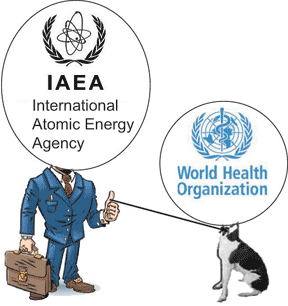 Margaret Chan VERSUS World Health Organisation http://tekknorg.wordpress com/2012/05/27/margaret-chan-versus-world-health-organisation/
May 27, 2012 by Mikkai “……THE AGREEMENT WHA 12 – 40 between IAEA and WHO: http://independentwho.org/en/who-and-aiea-aggreement/ QUOTE:
“Since the signing of this agreement, WHO has shown no autonomy of action towards achieving its stated objectives in the field of radiation protection.
On the contrary it has shown its capacity for misinforming the public about the health consequences of radioactive contamination caused by the civil and military nuclear industries.
WHO waited five years before visiting those territories that had been heavily contaminated by the accident at Chernobyl. They gave no instructions for evacuation or for the provision of clean food to the affected populations.
WHO has kept hidden the health consequences of this catastrophe, especially by not publishing the proceedings of the 1995 and 2001 conferences.
WHO still estimates the number of deaths caused by Chernobyl at less than fifty and attributes the health problems of populations of Belarus, Ukraine and Russia to fear of radiation.
WHO does not recognise the validity of the work published in 2009 by the Academy of Sciences of New York which estimates the number of deaths caused by Chernobyl to be nearly one million.
With Fukushima, WHO has the same attitude as for Chernobyl.
The World Health Organisation (WHO) does not respect its constitution which lays down the following principle:
“Informed opinion and active cooperation from the public are of paramount importance for improving the health of people …”
In the first chapter, Article 1:
“The goal of the World Health Organization shall be the attainment by all peoples of the highest possible level of health.”
In chapter 2 – FUNCTIONS of WHO:
a) to act as the directing and co-ordinating Authority on International Health Work.”
“The WHO experts had also rejected any relation between radiation and the significant increase in the morbidity in many somatic diseases established in the affected areas of Belarus, Russia and the Ukraine soon after the accident. / the international radiation community practically played a role of an advocate of the USSR government that tried to play down the consequences of this accident from the very beginning.”http://www.rri.kyoto-u.ac.jp/NSRG/reports/1998/kr-21/Malko96-1.html. http://tekknorg.wordpress.com/2012/05/27/margaret-chan-versus-world-health-organisation/
The much promised recovery in uranium price is nowhere in sight
The continued weakness in both spot and term uranium prices resulted in TD pulling back its price forecasts for the commodity for the next several years.
Cameco hit with downgrade as hopes for uranium rebound fade
http://www.theglobeandmail.com/globe-investor/markets/market-blog/cameco-downgraded-amid-relentless-decline-in-uranium-price/article4570023/ DARCY KEITH The Globe and Mail, Sep. 26 2012, The rebound in the uranium market some speculated would surely follow the big-time drubbing the sector experienced in the aftermath of the Japanese Fukushima nuclear disaster isn’t exactly materializing. Continue reading
First ever uranium sales pact outside Nuclear Non-Proliferation Treaty – Australia to India
Despite resistance from opponents, the landmark policy change was carried out, paving the way for the first Australian
country-to-country agreement to sell the yellow cake to a country outside the Nuclear Non-Proliferation Treaty.
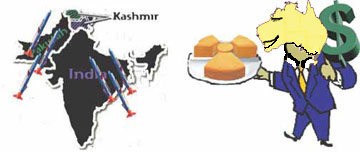
India, Australia nuclear pact likely to be inked during Australia PM’s visit EConomic Times, 26 Sept 12 NEW DELHI: India and Australia are likely to ink a civil nuclear pact during the visit of Australian Prime Minister Julia Gillard here from October 15, within months of a positive reversal of the policy by ruling Labour party on supply of uranium to New Delhi. Continue reading
1 This month

of the week – Australians for War Powers Reform (AWPR)
To see nuclear-related stories in greater depth and intensity
 Antinuclear