New, safe production of medical isotopes – no need for nuclear reactor
 “…..At the annual meeting of the American Association for the Advancement of Science (which publishesScienceNOW) in Vancouver, Canada, Paul Schaffer, head of nuclear medicine at TRIUMF, a nuclear and particle physics laboratory in Vancouver, reported that his team may be nearing a solution. The group previously used a high-energy medical cyclotron to produce Tc-99 from a stable isotope of molybdenum, known as Mo-100. And at the meeting, Schaffer reported that the group has now had success with a GE cyclotron that is the most popular one on the market. Hospitals use medical cyclotrons to generate radioisotopes for medical scans, including fluorine-18 and carbon-11. In the new test, Schaffer’s team used a GE cyclotron to fire protons at a Mo-100 target, ejecting a pair of neutrons and generating Tc-99. The demonstration holds out the hope that existing medical cyclotrons could generate enough Tc-99 to fulfill Canada’s entire demand, Schaffer says. The group is now working to maximize the amount of Tc-99 produced with this method.
“This is wonderful for Canada,” says Robert Atcher, director of the National Isotope Development Center at the Los Alamos National Laboratory in New Mexico. …
upgrading cyclotrons is less expensive than building a new nuclear facility, and outlying hospitals already receive regular supplies of fluorine-18 and other short-lived compounds.
Atcher adds that several other groups are exploring alternative non-reactor-based methods for producing Tc-99. It’s still too early to say which option will come out ahead, he says. No matter which one does, it should lead to a more stable—and safer—supply of a compound that has become essential to modern medicine. http://news.sciencemag.org/sciencenow/2012/02/nuclear-reactors-not-needed-to-m.html?ref=hp
No 21st Century medical isotope production for Australia: it’s “On with the nuclear!”
 Australia to expand isotope production World Nuclear News 03
 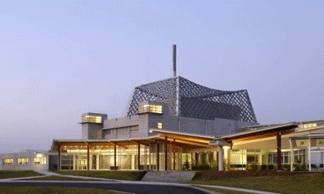 October 2012 The Australian government is expanding the country’s production of medical radioisotopes and constructing a demonstration waste treatment plant for managing the subsequent radioactive by-products.
Minister for science and research Chris Evans recently announced a A$168 million ($172 million) investment plan to construct a nuclear medicine manufacturing plant at the Australian Nuclear Science and Technology Organisation’s (Ansto’s) Lucas Heights site near Sydney, where the low-enriched uranium Open Pool Australian Lightwater (Opal) reactor is in operation.
The nuclear medicine manufacturing plant will mainly produce molybdenum-99 (Mo-99), the source of technetium-99 (Tc-99), which is used for diagnosis of heart disease, cancers, and kidney and gastrointestinal tract disorders…… Continue reading
Cancer in Australia’s soldier witnesses of Monte Bello atomic bomb tests
 AUDIO: Atom bomb veterans mark anniversary (PM)
Atom bomb veterans remember life-changing blast ABC News Radio 4 Oct 12, PM By Brendan  Trembath Sixty years since Britain tested its first atom bomb in Australia, those who witnessed the blast – many who now have cancer – have reunited to talk about how it changed their lives. The veterans are still seeking an apology from the Federal Government and appropriate health care for them and their children.
Official records say those serving on the HMAS Murchison on October 3, 1952, were 70 miles away when Britain successfully detonated an atomic bomb on the Monte Bello islands, off the coast of the Pilbara in Western Australia.
But to this day, many who were there say they were much closer.
Michael Rowe was on board the ship and remembers the moment the bomb went off.
“We were told to face east, which we did, and then we were told we could turn around and face west and we saw the first British atom bomb go off,” he said…… “We were clothed to protect ourselves in a pair of shorts and sandals. That’s all,” he said.
Mr Rowe is also among those who say they were much closer to ground zero than what is officially recorded and he has photos which he says proves it. “There’s been big arguments over the years about how far away the Murchison was from the actual bomb site, but I had a little tiny camera that I had hidden down inside my shorts and I took a photograph of that bomb going off, a very clear photograph of the bomb going off,” he said.
“All the records show that we were 70 miles away and there was no way in the world you could’ve taken this photograph from 70 miles.”
Mr Rowe says he and others onboard the ship think they were about 12 to 15 nautical miles east of the blast site. I’ve had a great life. Done lots of things, been lots of places but I always seem to have something wrong with me and it was only on September 19 that I was diagnosed with multiple cancers, terminal cancers. He is one of the 23 known surviving national servicemen from HMAS Murchison.
But like many who were there that day, Mr Rowe now has cancer. “I’ve had a great life. Done lots of things, been lots of places but I always seem to have something wrong with me and it was only on September 19 that I was diagnosed with multiple cancers, terminal cancers,” he said.
Fellow crew member Ken Palmer was not well enough to attend the lunch but his wife Robyn came in his place.
“He has secondaries from thyroid cancer as a result of the blast. They were exposed to the radiation, but he’s doing well, yes, he’s doing well,” she said….. http://www.abc.net.au/news/2012-10-03/atom-bomb-veterans-remember-blast-that-changed-lives/4294276
South Australian govt to strengthen mining companies’ power over Aboriginals

 Mine project appeals set to be scrapped BY:MICHAEL OWEN The Australian October 04, 2012 MINING companies are being promised speedy Aboriginal heritage approvals on new projects under a plan by the South Australian Labor government.
Mineral Resources Minister Tom Koutsantonis said the Aboriginal Heritage Act needed to be “freshened up” because red tape and legal challenges by indigenous groups were delaying important mining projects…. subscription only
Gillard to India, to QUIETLY arrange uranium sale deal: uranium industry to lobby opponents
Uranium controls point to India deal, Financial Review, 4 Oct 12 “…..When she visits India in a fortnight, Prime Minister Julia Gillard will hold top level discussions that are expected to open the way to a uranium safeguards agreement that would contain strict requirements on the safe use of the fuel.
The strategy is intended to neutralise opponents who highlight that India has not signed the Nuclear Non-Proliferation Treaty.

 The final safeguards agreement will take some time but sources close to the negotiations said it was expected to boast the same regulations as the NNPT as well as strict rules on access to nuclear facilities in the world’s biggest democracy…….
Australia has previously refused to sell the nuclear fuel to India because the South Asian country hasn’t signed the treaty. Resource Minister Martin Ferguson in February 2011 opened up political debate on India uranium sales, saying Australia should be able to negotiate on a country by country basis rather than have a blanket ban on those who hadn’t signed the treaty.
That paved the way for Ms Gillard to prevail at Labor’s December national conference to overturn the party ban, amid opposition from cabinet ministers, including Communications Minister Stephen Conroy, Schools Minister Peter Garrett and Transport Minister Anthony Albanese…..
Ms Gillard will travel to India from October 15-17 and is expected to meet the government’s most senior officials about energy, trade and economic ties. Australia is going into its fourth round of negotiations on the Closer Economic Cooperation Trade Agreement…..
A final uranium safeguards agreement with India would first be analysed by the Joint Standing Committee on Treaties, which can make recommendations to the government. “Once the government puts the treaty to parliament the Joint Standing Committee on Treaties will have a certain amount of time look at it,” said committee chair and Labor MP Kelvin Thomson.
“On a contentious issue like this there would be public hearings before we make recommendations to the government and  the parliament.
“Generally, I think it is important we promote the nuclear non proliferation treaty, Australia is of course a signatory to that.”….
Mr Angwin said. “I think the implication between any agreement between Australia and India is to put pressure on those governments and political parties which have so far have not given their support to the expansion of the uranium industry.”
City of Sydney acting to develop locally produced energy
City Of Sydney: Locally Produced Energy The Smartest Investment http://www.energymatters.com.au/index.php?main_page=news_article&article_id=3408 by Energy Matters, 3 Oct 12 Regulation should be reformed to encourage locally produced energy says the City of Sydney. The City has lodged a submission to the Australian Energy Regulator (AER) review of electricity network companies.
Lord Mayor Clover Moore points out consumers were bearing the brunt of costly upgrades to aging and inefficient network infrastructure that transmits coal-fired electricity all the way from the Hunter Valley to the middle of Sydney.
“The smartest investment we can make is in generating electricity close to where it is used,” said the Lord Mayor.

The City of Sydney is demonstrating leadership on this issue with a plan to boost the energy efficiency of its buildings and produce energy locally with solar, wind and trigeneration technology; which will drive down costs and environmental impact.
“But to make them a reality we need the government to get the regulation right,” says Lord Mayor Moore.
A media statement issued by the City of Sydney says network charges make up the lion’s share of electricity bills and are expected to account for 60 per cent of the average bill by 2014. In 2009. the AER approved spending of $17.4 billion on electricity network infrastructure in NSW over five years, representing $2,400 per person. The City says average electricity prices in the Sydney electricity distribution network area are expected to increase by a massive 83 per cent during this period.
According to a study from the University of Technology, Sydney, the City’s proposed $440 million trigeneration network could save electricity consumers $1.5 billion in avoided spending on network upgrades and new power stations by 2030.
The City has also called for electricity bills clearly detail the costs for peak, shoulder and off-peak, network and retail charges so consumers can see the contribution of each component and adjust their consumption to reduce costs.
According to solar solutions provider Energy Matters, households don’t have to wait for government to act in order to rein in electricity bills. A 4kW solar panel system installed in Sydney can generate electricity bill savings of over $1,000 a year. Factoring in the cost of a system from the company, such a system will produce electricity at a cost as little as 5.5c per kilowatt hour.
Cairns to host renewable energy session on report on Queensland’s Far North energy potential
 a renewable energy information session would be held in Cairns within weeks to discuss the report, plan and the next steps.
Far North could be capital for renewable energy http://www.cairns.com.au/article/2012/10/03/234605_local-news.html Nick Dalton October 3, 2012, The Cairns Post A MOVE to make the Far North the renewable energy capital of Australia has been backed by a new State Government report which shows the sector has the potential to be worth $750 million a year and employ more than 2500 people within 10 years.
The report and a development plan commissioned by the State Government showed the industry, which includes solar, wind, biomasse and biodiesel, is currently worth $100 million a year involving 108 businesses which employed 700 people. The detailed strategy and action plan called for the employment of a full-time project officer to
implement the recommendations to grow the industry.
Report authors David Smyth and Grant Behrendorff, of Evolve Energy in Cairns, said a steering committee involving more than 12 people from the industry as well as Cairns Regional Council, Advance Cairns, Ergon Energy, the State and Federal governments was already working to implement the recommendations. Continue reading
Rural Australia taking to small solar energy in a big way
 Regions hungry for Solar power http://www.thesatellite.com.au/story/2012/10/03/regions-hungry-solar-power/ 3rd October 2012 MORE than half of all solar panels and hot water heaters are being installed in homes in rural and regional Australia, an analysis of renewable energy data revealed on Tuesday.
The analysis of data from the Clean Energy Regulator was completed by the REC Agents Association, an industry group which links solar providers and installers. It revealed 53% of all solar photovoltaic (PV) panels and solar hot
water systems were installed in rural and regional areas. Continue reading
South Australia energy prices cut by renewable energy

Wind, solar force energy price cuts in South Australia REneweconomy, By Giles Parkinson 3 October 2012 The rules of Australia’s energy markets continue to be redrawn after the South Australian pricing regulator on Tuesday cut its calculation of wholesale energy costs and recommended that retail electricity prices be cut by 8.1 per cent. Continue reading
Glencore, world’s most notorious compnay, taking over Xstrata ?
 Analyst says Xstrata could lose control of Australian operations http://www.abc.net.au/rural/news/content/201210/s3603009.htm By Virginia Tapp 03/10/2012 A resource analyst says the merger of commodity trading house Glencore with global mining company Xstrata could put the control of its Australian operations at risk.
Matthew Trivett, of Patersons Securities, says the new company, valued at around $70 billion, would become one of the largest and most powerful in the mining industry.
Xstrata backed the merger on Monday, and the deal is now waiting for approval from 75 per cent of shareholders.
Mr Trivett says the new company would review all of its Australian operations, which means some could be held back.
“The real risk for Xstrata shareholders is that Xstrata are widely held as some of the best mining operators globally and it’s the way they can treat each country and each operation by its own particulars, so they’re not overly controlled,” he said.
“It would be a shame if that changed for Xstrata operations.”
South Australian government CLAIMS it will not kow tow to BHP Billiton
Weatherill again sounds BHP mine caution http://www.abc.net.au/news/2012-09-28/weatherill-again-sounds-bhp-mine-caution/4285794 South Australian Premier Jay Weatherill has given a guarded response on whether the SA Government will be prepared to extend BHP Billiton’s indenture agreement for mining expansion.
He said the Government was yet to be persuaded of the merits of granting an extension to the current indenture, which expires in mid-December.
BHP Billiton has written to the SA Government seeking to extend the agreement until October 2016, after shelving its current Olympic Dam mine expansion plans recently, citing economic conditions.
Mr Weatherill said the company disappointed many people when it delayed the proposed expansion of underground mining to an open pit operation.
He again made it clear the Government would take its time to consider the request.
1 This month
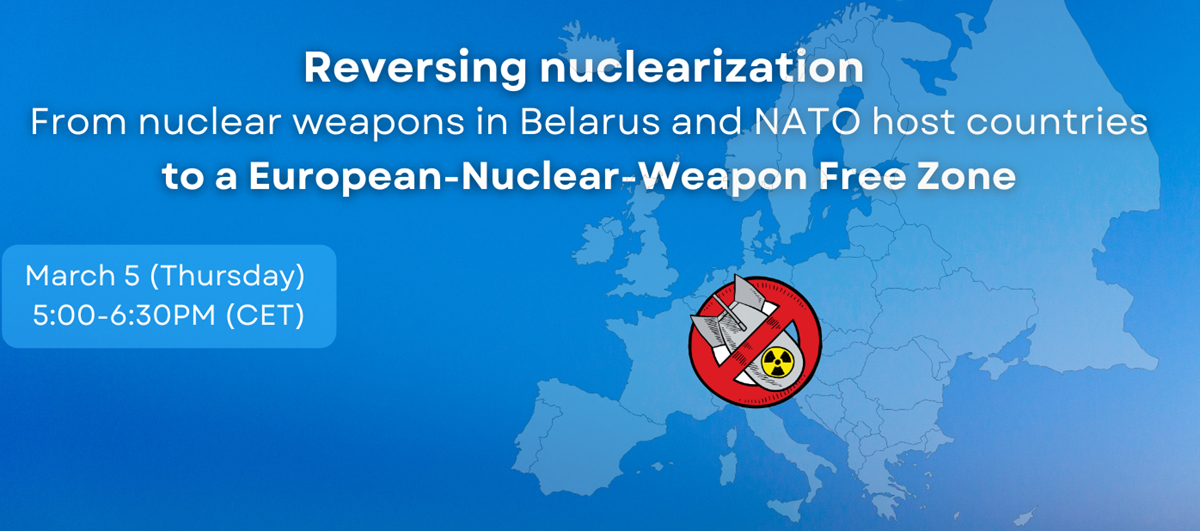
6 March -Online – Reversing nuclearization:
From nuclear weapons in Belarus and NATO host countries to a European-Nuclear-Weapon Free Zone
Mar 6, 2026 03:00 AM in Canberra, Melbourne, Sydney

of the week – Australians for War Powers Reform (AWPR)
To see nuclear-related stories in greater depth and intensity
 Antinuclear