Free energy fuel- sun and wind- brings down cost of electricity for South Australians
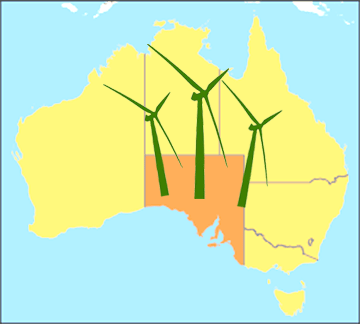 Renewables typically have no fuel costs (free sun and wind), and thus have the lowest short run marginal cost of production.
Renewables ‘lowering SA electricity bills’ SBS WORLD NEWS, 8 OCT 2012, Renewable energy sources such as wind and solar power appear to be the impetus behind a South Australian proposal to substantially drop electricity prices, By Dylan McConnell , University of Melbourne
Renewable energy sources such as wind and solar power appear to be the impetus behind a South Australian proposal to substantially drop electricity prices, just as other states are hiking theirs.
The Essential Service Commission of South Australian (ESCOSA), which regulates retail electricity prices, has released a draft price determination that proposes an 8.1% reduction in the electricity standing offer, (that is, the default retail price that must be offered to South Australians, at a minimum).
The proposal, which follows an ESCOSA investigation into the wholesale energy costs, translates to a reduction of $27.19/MWh, potentially lowering South Australian electricity bills by an average of $160 per household.
And while it is not specifically acknowledged in the determination, this may be the first time the “merit order effect ” of renewable energy sources can conclusively be seen flowing through to consumers in Australia. The Merit Order Effect
There is nothing special about the “merit order effect”. Quite simply, if you introduce more of a product into a market (that is, increase supply) then prices fall.
The introduction of new capacity upsets the prevailing merit order (the order in which electricity is dispatched, from lowest to highest cost) lowering market prices.
Historically this has been observed when new coal power plants have been added to the market. But the Renewable Energy Target (RET) and other schemes such as the state based feed-in tariffs, are introducing more renewable electricity (supply) to the national electricity market.
Renewables typically have no fuel costs (free sun and wind), and thus have the lowest short run marginal cost of production. This ensures they are lower in the merit order and dispatched prior to anything else in the market. Like a new coal plant, this additional (and low marginal cost) supply also lowers wholesale prices.
This merit order effect has been well documented internationally , and is now widely recognised in South Australia, which has both the highest installed capacity of wind (1203 MW) in Australia, and the highest per capita installation of rooftop Photo Voltaic (PV) solar power.
The volume weighted wholesale prices in SA have reduced from $70-$80 /MWh between 2008-10, to around $45 in 2011, in parallel to the installation of wind and solar capacity (and the flat-lining of demand).
The Australian Energy Market Operator (AEMO) has noted that the South Australian wholesale prices are lower than they have been since the start of the national electricity market, and that the wind “tends to depress the South Australian regional prices”.
A UNSW study demonstrated that periods of high wind output are in general associated with lower market prices, and also appear to contribute to extreme negative price events, while the impact of solar power in South Australia is “blindingly obvious” …… http://www.sbs.com.au/news/article/1699637/Renewables-lowering-SA-electricity-bills
No comments yet.
1 This month

of the week – Australians for War Powers Reform (AWPR)
To see nuclear-related stories in greater depth and intensity
 Antinuclear
Leave a comment