Nuclear economics – reactors too expensive to build, too expensive to run
 The industry’s renewed glimpse of its mortality comes as the Nuclear Regulatory Commission is working on the question of whether the existing plants can get a second 20-year extension, to age 80. But license extension may not be the problem. Wider economic circumstances may be instead.
Aging and Expensive, Reactors Face Mothballs NYT, Matthew Wald , 23 Oct 12 THE conventional wisdom about nuclear reactors is that they are expensive to build but cheap to run.
On Monday, Dominion, which is based in Richmond, Va., announced it would close its plant in Kewaunee, Wis., which it had been trying, unsuccessfully, to sell for about a year. It had intended to buy more units in the Midwest and gain efficiencies by operating a fleet there, but found it could not do so.
When Dominion bought the plant, in 2005, it signed agreements to sell the plant’s output at rates reflecting a strong market for electricity. As those agreements expire, with a projection for continued lower prices, it is “uneconomic for Kewaunee to continue operations,” the company said.
That could be a harbinger of more closings, but it is not the only trouble sign for the industry.
Some plants, like Indian Point in New York and Vermont Yankee, face determined political challenges to their continued operation. But plain old economics could affect a lot more plants, including Crystal River, north of Tampa on Florida’s Gulf Coast, which has not run since September 2009, when it shut down for replacement of major components. The installation job may have damaged the containment building , which may not be worth the $1.3 billion or so it would take to fix.
In New Jersey, Exelon agreed in late 2010 to shut down the Oyster Creek reactor, the nation’s oldest operating commercial plant, by 2019 rather than rebuild its cooling system to meet environmental rules. In California, the San Onofre reactors closed in 2012 after apparently flawed new heat exchangers developed leaks.
Even plants with no pressing repair problems are feeling the pinch, especially in places where wholesale prices are set in competitive markets. According to an internal industry document from the Electric Utility Cost Group, for the period 2008 to 2010, maintenance and fuel costs for the one-fourth of the reactor fleet with the highest costs averaged $51.42 per megawatt hour.
That is perilously close to wholesale electricity costs these days…… Christopher Crane, the chief executive of Exelon, the nation’s largest nuclear operator, said his company’s reactors sometimes found themselves selling electricity at hours when the market price was negative, driven below zero by a surplus of wind energy…..
The industry’s renewed glimpse of its mortality comes as the Nuclear Regulatory Commission is working on the question of whether the existing plants can get a second 20-year extension, to age 80. But license extension may not be the problem. Wider economic circumstances may be instead. http://www.nytimes.com/2012/10/24/business/energy-environment/economics-forcing-some-nuclear-plants-into-retirement.html?_r=0
No comments yet.
1 This month
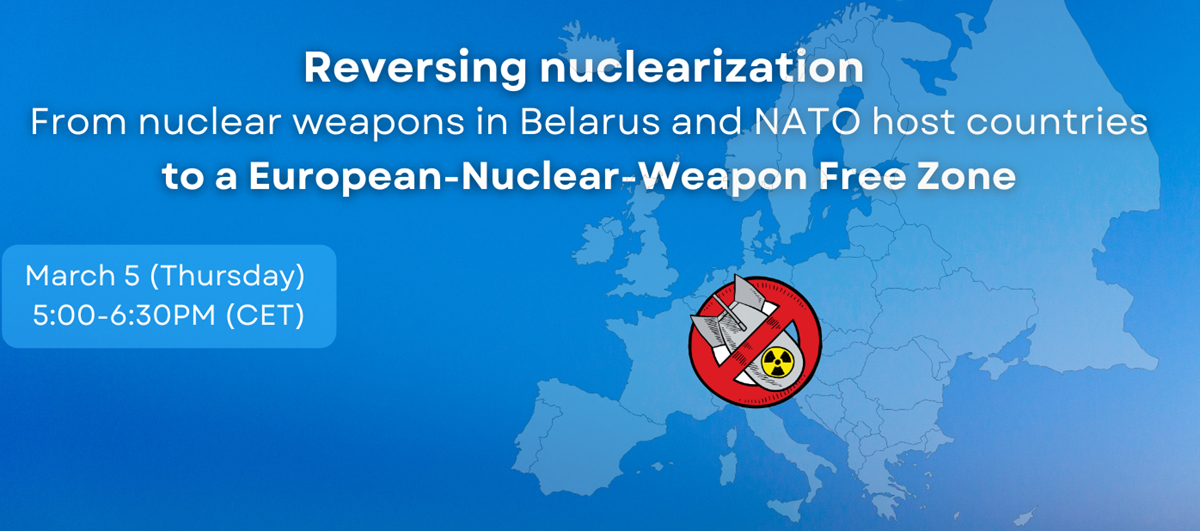
6 March -Online – Reversing nuclearization:
From nuclear weapons in Belarus and NATO host countries to a European-Nuclear-Weapon Free Zone
Mar 6, 2026 03:00 AM in Canberra, Melbourne, Sydney

of the week – Australians for War Powers Reform (AWPR)
To see nuclear-related stories in greater depth and intensity
 Antinuclear
Leave a comment