Sri Lanka’s concerns about nuclear safety – too close to Kudankulam nuclear plant
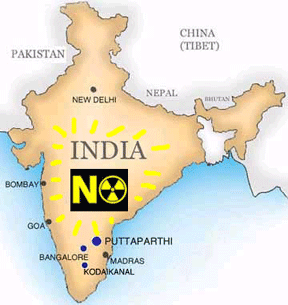 India’s nuclear fallout: Raise the bar to political level, The Sunday Times, 28 Oct 12 The Indian Government’s plans to expand its nuclear energy programme by establishing 48 new reactors throughout the sub-continent, more
than double of what it has, is already causing ripples within that country.
It will also be cause for concern for Sri Lanka whose population is less than 160 kms from India’s southern-most plant at Kudankulam and not too far away from the Kalpakkam plant. For reasons
best known to the Sri Lankan Government, there is hardly a murmur of
protest about the impending dangers of a fallout from a nuclear
disaster at either of these plants.
The Power & Energy Minister is a pro-nuclear energy politician who
speaks of “vast opportunities” from exploiting nuclear energy. He
speaks of benefits that will accrue to agriculture, power generation,
medicine etc., and advocates its use in Sri Lanka as well. Whether
this is government policy is unclear in the absence of any definitive
statement, but even the minister admitted in Parliament this week that
India has not given Sri Lanka its ‘safety analysis report’ on the twin
nuclear reactors and conceded that “there was no 100% guarantee that
an accident would not happen”.
The Environment Ministry is ominously silent on the issue as is the
External Affairs Ministry which has surrendered Indo-Lanka relations
to the President’s Office. The ball is largely with the officials from
the Atomic Energy Authority and a few environmentalists ringing alarm
bells – so far to no avail……
The ever alert Indian Supreme Court, which keeps a check on the Indian Government has now stepped in to question the developers of the Indian plants as to how the nuclear waste is going to be stored, transported and disposed of without having the environment and the health of the local populace in the plant’s vicinity exposed to danger. Several
Indian activist groups are being heard by the Supreme Court even
though the Tamil Nadu Chief Minister, Jayaram Jayalalithaa, first
opposed and then somersaulted to support the commissioning of these
plants in her state.
Sri Lanka went into talks with the Indians at an official level
raising concerns, but as this newspaper has pointed out over the past
fortnight, only assurances and early warning systems were forthcoming
from across the Palk Straits. What can be done even after an early
warning system alerts the local populace no one knows. For good
measure India even offered compensation if things were to go awry.
This reminds one of the British firm that was awarded a controversial
tender to provide bulletproof vests for our fighting soldiers saying
they would provide compensation if their vests couldn’t stop a bullet.
Why the nuclear fallout issue cannot be elevated to a political level
remains an unanswered question, and it could be seen as the Government
in Colombo being too timid to pitch it at a higher level. Back in
August last year we asked the same question. In the inter-connected
world in which we live, a nuclear disaster in south India can have its
repercussions on Sri Lankan citizens. Needless to say, it is the duty
of the State to ensure their safety and security, and to speak up on
their behalf when the need arises, as it has now. It is still better
late than never…..http://www.sundaytimes.lk/121028/editorial/save-lanka-from-indias-nuclear-fallout-18316.html
No comments yet.
1 This month
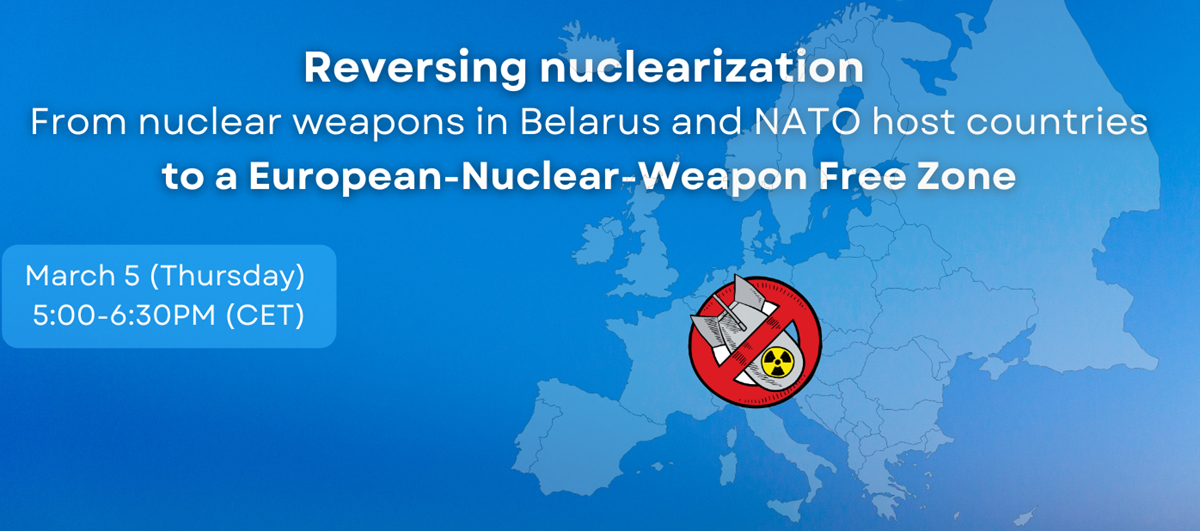
6 March -Online – Reversing nuclearization:
From nuclear weapons in Belarus and NATO host countries to a European-Nuclear-Weapon Free Zone
Mar 6, 2026 03:00 AM in Canberra, Melbourne, Sydney

of the week – Australians for War Powers Reform (AWPR)
To see nuclear-related stories in greater depth and intensity
 Antinuclear
Leave a comment