The week in Nuclear News – Australia
 The focus this week has been on The Renewable Energy Target, (RET) currently under review by the Climate Change Authority. The RET has been very successful, facilitating $18 billion in investment in clean energy, bringing down wholesale energy prices, and enabling Australia to meet its Kyoto emission-reduction goals.
Predictably, utility companies and the media’s fossil fuel lobby mouthpieces are bleating loudly that the RET should be dumped, or weakened. A Senate committee found that high electricity prices are mainly the result of the utilities over-investment in poles and wires (gold-plating), but the right-wing ( including Labor’s Joel Fitzgibbon) blames the RET. It’s probably the fossil fuel lobby’s last ditch fight against the RET.
Meanwhile, decentralised energy, solar rooftops, grows apace, and along with energy efficiency, reduces demand for coal-fired energy. Wind power in South Australia, being a free fuel source, is pushing coal energy out of competition,
Prestigious Australian film-maker David Bradbury was arrested in India, and barred from visiting the Tamil Nadu are of anti-nuclear protest. Senator Scott Ludlam is pursuing the matter with India’s Ambassador.
Queensland. Warnings on the likely impact of uranium mining on Aborigines – following the pattern of restricting Aboriginal rights in other uranium States and Territory. Sad to see the uranium industry’s Aboriginal poster boy, Warren Mundine, being drawn into the charade of hyping the industry. Warnings also on the very real possibility of uranium being transported through the Great Barrier Reef. Opposition to uranium mining is alive and well in Queensland, including from the Electrical Trades Union, and the the Mayor of Rockhampton. Premier Campbell Newman advises critics to “Vote Green” – (first sensible thing I’ve heard him say) Caloundra’s privately funded solar array is up and running.
Uranium market. As one market analyst after another warns on the plummeting price of uranium, one has to admire the touching religious fervour of uranium company spokesmen, and Premiers of the uranium mining States. They keep banging on about the long-term prospects, but these are in serious doubt now.
Australian uranium company Paladin just can’t seem to stay out of trouble. As if losing $squillions wasn’t enough, Paladin has made itself extremely unpopular in Malawi, with not keeping to the agreed conditions at the Kayerekera Uranium Mine.
Launching of Robert Drewe’s new book “Montebello” reveals the shameful history of atomic bombing of the Montebello Islands.
USA solar PV sales set to grow in Australia
 Mixed Greens: USA solar giants target Australia and Asia, REneweconomy, 2 November 2012 The two largest US solar PV manufacturing companies, First Solar and SunPower, said they will target growth in “sustainable” markets such as Australia as part of a new focus on the Asia-Pacific and the Middle East markets. SunPower CEO Tom Werner said Asia-Pacific is offering the best opportunity for growth, with shipments to Japan up 30 per cent and growth expected in Australia, China and India, he told Bloomberg in an interview. First Solar CEO Jim Hughes said his company will be looking to expand in the same regions, along with the Gulf region, where the company has selected the company to build its first solar farm, a 13MW project in the first step of a $US3.3 billion initiative
Australia’s Renewable Energy Target on track to stay
Shrinking the cost of renewables, CLIMATE SPECTATOR: Daniel Palmer , 2 Nov 2012 On Wednesday, the front page of The Australian and the third page of The Australian Financial Review carried stories of complaints about the renewable energy target. It was followed up today by an editorial in The Australian and one suspects many more similar pieces in coming weeks. It represents the last roll of the dice for those critical of the scheme to influence the Climate Change Authority on the RET Review, but it will probably come to nothing…..
Given the Climate Change Authority has come to a preliminary conclusion that the benefits outweigh the costs based on the original modelling that overstated costs, surely its opinion on the worth of the scheme has only gone up in light of this development.
Those against the large-scale scheme in its current form are going to have to shout mighty hard to get through now given the costs have been shown to be so moderate. In fact, their chances of getting the CCA to
alter its mindset in the next few weeks appear remote…… Continue reading
Uranium industry looking more and more like a long term casualty
 Blind to a uranium fallout
  Business Spectator, by Robert Gottliebsen , 2 Nov 2012 I have to keep pinching myself. I see this enormous change ahead for world energy yet people keep acting as though nothing is happening.
The latest long-term casualty looks like being uranium and the already delayed BHP Olympic Dam big pit along with Campbell Newman’s hopes to resume Queensland uranium exports…
.. Last night Dundee Capital Markets cut its near-term uranium price forecast. Given that the uranium price has fallen from $US65 per pound to around $42 this was miserable news for the uranium industry and further fallout from the Fukushima disaster.
But Dundee still forecasts a return to $US65 in the long term. They may be right but as the US becomes a low-cost energy country once again – and one that is slashing its carbon output – and steaming coal prices remain low it’s going to be harder and harder to justify higher uranium prices…..
http://www.businessspectator.com.au/bs.nsf/Article/shale-gas-BHP-Olympic-Dam-Newman-Queensland-uraniu-pd20121102-ZMRF7?opendocument&src=rss
Decentralised solar power is the answer to India’s energy problems
 The solar-powered success of the Malankara Tea Plantation has national implications.
India’s most recent power outages demonstrate how important it is for the country and its peers to pursue the sustainable, onsite generation of renewable energy and move away from the fossil fuels and fragile power grids that left millions in the sweltering dark this summer.
Solar Energy Could Solve Developing Nations’ Infrastructure Problems Aol Energy ,  By Mark Cerasuolo November 1, 2012 The challenges with India’s public electricity grids last summer showed the world what happens when a country’s growth rapidly outpaces its energy delivery infrastructure and diversity of sources. When three of India’s electricity grids failed and more than half a billion people suffered two days of blackouts at the height of summer, the global media reminded us that even on the country’s best day, there is still an enormous portion of the population with no access to power. Solar energy is one way to solve this problem….
Today, India gets only one gigawatt of power from solar energy, a mere 0.5 percent of its total power consumption according to BusinessWeek . But the country’s solar capacity is growing, and the government is encouraging state utilities to tap into that capacity by offering companies the chance to trade renewable energy credits……
The Malankara Tea Plantation took advantage of the Indian government’s incentives on solar photovoltaic installations; it used capital subsidies of 90 rupees per watt up to a maximum of 30 percent of the project cost. It installed solar arrays and charge controllers that gave the company independence from the unreliable grid and made it one of India’s first net-zero energy buildings. The organization has also reduced its annual carbon emissions by 47 tons. Continue reading
Another market analyst foresees further falls in uranium price
 Nuclear bearishness sinks claws into uranium price, demand forecasts Dundee Capital Markets drops its near term uranium price forecasts : Kip Keen , 01 Nov 2012 (MINEWEB) – With post-Fukushima anti-nuclear sentiment continuing to weigh, Dundee Capital Markets cut its near-term uranium price forecast.
“A cloud still hangs over the uranium sector as we approach the second anniversary of the Fukushima Daiichi disaster,” Dundee’s David Talbot wrote in a recent note to clients. “The impact has been felt on the spot market, with prices now dipping below post-Fukushima lows of US$49.00/lb U3O8, to a range of around $42 to $43 per pound ).” In cutting forecasts Talbot focused heavily on dour near term demand for uranium and issues of public perception for nuclear power, particularly in developed nations following the Fukushima nuclear disaster in Japan last year. Dundee dropped its spot uranium forecast in the near term to $49 per pound from $60 a pound and its term (contract) price to $61 from $65 a pound…..
Dundee’s change in outlook came a day after Cameco, a leading uranium producer, put a damper on its long term production outlook, cutting back growth plans from 40 million pounds uranium to 36 million pounds uranium in production a year by 2018(covered in these pages by Dorothy Kosich here)..
Award-winning book on Aboriginal land management
 Gammage wins Vic Premier’s book award http://news.ninemsn.com.au/entertainment/2012/10/16/23/00/gammage-wins-vic-premier-s-book-award 9 news, October 16, 2012 Bill Gammage hopes that winning the Victorian Premier’s Literary Award will mean more Australians learn about the Aboriginal land management techniques before white settlement.
Gammage’s book The Biggest Estate on Earth: How Aborigines Made Australia has just earned him $100,000 – Australia’s richest single literary prize. “If this means more people will read it, I’m delighted about that of
course,” Gammage told AAP. “It took a long while and a lot of hard effort, 12 years (to write)
… 30 or 40 years of thinking before that, so the more people who read it the happier I am.”
The Canberra historian’s novel uses observation, historical accounts, botanical information and anthropology to argue Aboriginal people across Australia managed the land to encourage particular plants and landscapes in certain areas and attract animals for hunting. He also won the $25,000 award for non-fiction.
Energy efficiency company moving overseas, as fossil fuel influence too strong in Australia
power consumers were at the mercy of the dominant power generators and retailers such as Origin, Energy Australia and AGL, which had little incentive to innovate or improve energy efficiency.
Australia ‘too difficult’ for high-tech energy company http://www.smh.com.au/environment/australia-too-difficult-for-hightech-energy-company-20121101-28mqy.html#ixzz2B6WBSMBO November 2, 2012 Peter Hannam A HIGH-TECHNOLOGY energy company spun off from the CSIRO two decades ago says entrenched power companies and shifting government policy are forcing it to all but abandon Australia.
Ceramic Fuel Cells, which makes small fuel cells that generate power and heat from gas or renewable energy, has shed 60 of its 110 local staff since July, and expects 98 per cent of sales to come from overseas this year. The company will retain its research and development at Noble Park but will shift the bulk of its operations to Germany. Continue reading
For once, Queensland Premier Campbell Newman makes a wise statement
 Premier Campbell Newman claims Queenslanders against uranium mining should vote for the Greensby:Sarah Vogler The Courier-Mail November 01, 2012 IF YOU do not want uranium mining in Queensland, vote for the Greens at the next election. That was the message from Premier Campbell Newman yesterday as he defended the government’s decision to overturn Queensland’s uranium mining ban.
“If you do not support uranium mining, vote for the Greens,” Mr Newman told State Parliament during question time…..
At last, America is waking up to global warming
On Oct. 17 the giant German reinsurance company Munich Re issued a prescient report titled Severe Weather in North America. Globally, the rate of extreme weather events is rising, and “nowhere in the world is the rising number of natural catastrophes more evident than in North America.” From 1980 through 2011, weather disasters caused losses totaling $1.06 trillion. Munich Re found “a nearly quintupled number of weather-related loss events in North America for the past three decades.”
 It’s Global Warming, Stupid Bloomberg Business WeekBy Paul M. Barrett November 01, 2012 Yes, yes, it’s unsophisticated to blame any given storm on climate change. Men and women in white lab coats tell us—and they’re right—that many factors contribute to each severe weather episode. Climate deniers exploit scientific complexity to avoid any discussion at all.
Clarity, however, is not beyond reach. Hurricane Sandy demands it: At least 40 U.S. deaths. Economic losses expected to climb as high as $50 billion. Eight million homes without power. Hundreds of thousands of people evacuated. More than 15,000 flights grounded. Factories, stores, and hospitals shut. Lower Manhattan dark, silent, and underwater.
An unscientific survey of the social networking literature on Sandy reveals an illuminating tweet (you read that correctly) from Jonathan Foley, director of the Institute on the Environment at the University of Minnesota. On Oct. 29, Foley thumbed thusly: “Would this kind of storm happen without climate change? Yes. Fueled by many factors. Is storm stronger because of climate change? Yes.” Eric Pooley, senior vice president of the Environmental Defense Fund (and former deputy editor of Bloomberg Businessweek), offers a baseball analogy: “We can’t say that steroids caused any one home run by Barry Bonds, but steroids sure helped him hit more and hit them farther. Now we have weather on steroids.” Continue reading
Cameco cuts plans for future uranium production, due to market uncertainty
Expected nuclear construction cuts, prompts Cameco project paring Recent developments in the nuclear industry, specifically in Japan, have caused more uncertainty over the growth rate of nuclear power globally, prompting Cameco to adjust its production forecasts. Mineweb Dorothy Kosich , 01 Nov 2012 Ongoing market uncertainty in the near term has prompted mega-uranium miner Cameco to seriously tighten its project portfolio and drop four million pounds of future targeted uranium production….. In its analysis, Cameco noted that recent developments in the nuclear industry, primarily in Japan, have caused more uncertainty in the growth rate of nuclear power globally…… Cameco’s uranium production volumes remained flat for the third quarter of the year at 5.3 million pounds. However, the company also recorded a 29% decrease in sales.
Production for the first nine months of this year were also lower at 15.4 million pounds, down from 15.8 million pounds for the same period of 2011. The lower output as attributed to lower production at Smith Ranch-Highland and Inkai.
Uranium revenues also dropped 5% during the first three quarters of this year, due to a 5% decrease in sales volumes. “Our $US realized prices were lower than the first nine months of 2011 mainly due to lower prices under market-related contracts being offset by a more favorable exchange rate,” said the company….. FINANCIALS
For the first nine months of this year, Cameco reported adjusted net earnings of $210 million or 53-cents per share, down from adjusted net earnings of $259 million or 66-cents per share. The change was due to lower earnings from the uranium business based on lower sales volumes, lower realized prices and higher costs; a $30 million contract termination change, as well as higher exploration and administration costs.
Review of Richard Broinowski’s new book “Fallout From Fukushima”
 New book reveals Fukushima disaster no accident, Green Left , November 1, 2012 By Phil Shannon Fallout From Fukushima By Richard Broinowski Scribe, 2012 The Fukushima nuclear disaster in Japan last year was no accident, says Richard Broinowski in Fallout from Fukushima. Sitting a nuclear reactor on an “active geological fault line where two of the earth’s tectonic plates collide” was courting catastrophe from an earthquake and tsunami like the one that duly hit the Pacific in March last year.
The powerful Japanese nuclear industry, immunised from critical scrutiny by the “cozy ranks of politicians, bureaucrats, academics, corporate players and their media acolytes”, ensured the Fukushima plant was under-prepared for foreseeable risks. Continue reading
Toro borrows up big from Macquarie Bank for uranium venture
Toro raises $12m in debt , Yahoo News, 2 Nov 12 Toro Energy has raised $12 million through a convertible debt facility with Macquarie Bank.
Toro said the raising would boost its coffers to $19.5 million, which would be used to fund the completion of a definitive feasibility study for the Wiluna uranium project and finalise negotiations with potential joint venture or funding partners.
Managing director Greg Hall welcomed Macquarie Bank as a significant new stakeholder in Toro and said he looked forward to working with the investment bank in moving the Wiluna project through to financing phase… http://au.news.yahoo.com/thewest/business/a/-/wa/15274840/toro-raises-12m-in-debt/
Australian labor Party’s right wing opposing renewable energy?
 Whip Joel Fitzgibbon told to fall in line on renewable energy targets BY: LANAI VASEK The Australian October 31, THE Greens say Labor’s chief whip and former cabinet minister Joel Fitzgibbon should “back off” from his calls for the renewable energy target to be cut.
In a heated defence of the RET, Greens MP Adam Bandt said Labor needed to unite and decide if it was for or against the scheme. “The right-wing factional power brokers within the Labor party are beginning a campaign against renewable energy,” Mr Bandt said.
“This will be a litmus test for the Labor party to decide whether they have got their foot on the accelerator or the brake when it comes to Australia’s transition to a clean energy economy.”Joel Fitzgibbonneeds to back off. If Labor is serious about a renewable energy future, with the hundreds of thousands of jobs that will come with that as Australia plays its part to tackle global warming, then Joel Fitzgibbon needs to back off from his campaign to wind back the
renewable energy target.”….
Parliamentary Secretary Richard Marles said the RET was bipartisan policy and Labor had no plans to make
changes to it. “This is bipartisan policy, this was policy of the Howard government … it’s been bipartisan policy for 10 years,” Mr Marles said. “We are not talking about changing the RET.”
Liberal backbencher Alan Tudge said the Coalition was also not considering making any changes to the RET.
King Island switches from diesel to renewables – with large battery energy storage system
Australia’s largest battery-based renewable energy storage system to be built on Tasmanian island Process and Control Engineering 1 November, 2012 Kevin Gomez Australian energy storage company Ecoult has been awarded the Hydro Tasmania contract to supply the largest battery based renewable energy storage system in Australia for the King Island Renewable Energy Integration Project (KIREIP).
Ecoult CEO John Wood said the UltraBattery storage system would shift and smooth renewable energy generated on King Island and will help maintain stability of the power grid.
“Ecoult’s UltraBattery solutions support the utilisation of renewable energy by storing energy in periods where there is excess generation and making it available when it is needed to better match demand,” Wood said…… http://www.pacetoday.com.au/news/australia-s-largest-battery-based-renewable-energy

1 This month
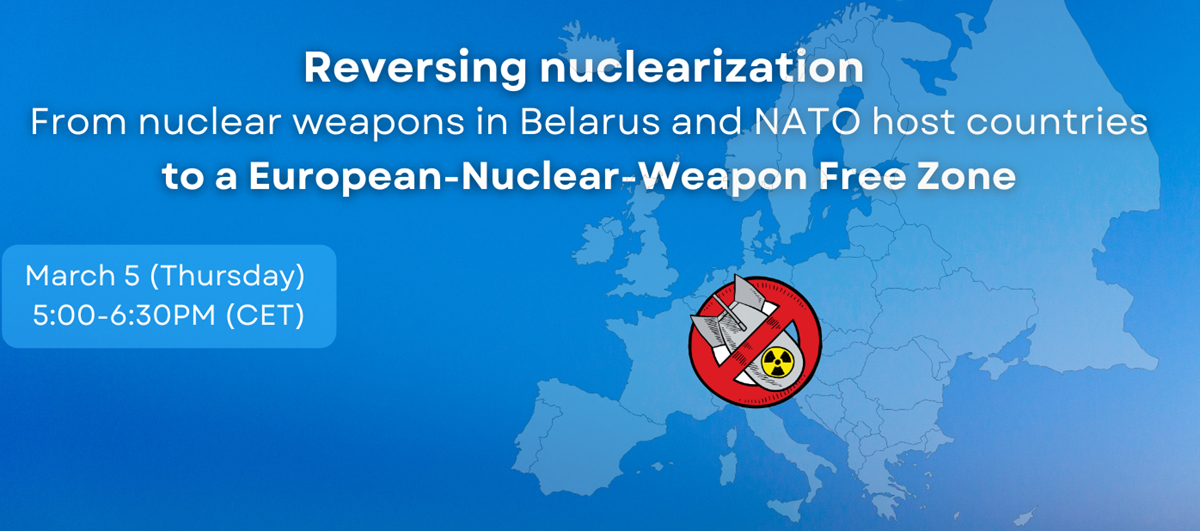
6 March -Online – Reversing nuclearization:
From nuclear weapons in Belarus and NATO host countries to a European-Nuclear-Weapon Free Zone
Mar 6, 2026 03:00 AM in Canberra, Melbourne, Sydney

of the week – Australians for War Powers Reform (AWPR)
To see nuclear-related stories in greater depth and intensity
 Antinuclear