Red Cross expert speaks out on nuclear weapons
 Nuclear weapons are a threat to humanity, expert tells conference http://www.adelaidenow.com.au/news/south-australia/nuclear-weapons-are-a-threat-to-humanity-expert-tells-conference/story-e6frea83-1226510200063 Katrina Stokes adelaidenow November 04, 2012 GOVERNMENTS must work towards eliminating nuclear weapons for the sake of humanity or risk devastating effects in the future, a leading expert says.
Australian Red Cross international law expert Dr Helen Durham cited the dangers of immediate and long-term radiation damage to people and the environment, saying nuclear weapons were uniquely destructive weapons. Continue reading
Hurricane Sandy and Global Warming
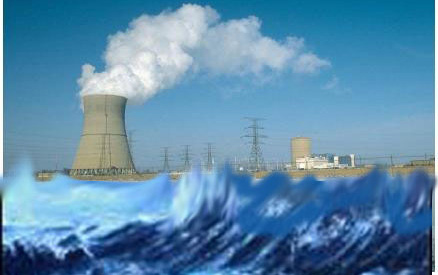 What Does Hurricane Sandy Show us about Shoreline Change? http://www.enn.com/climate/article/45168 5 Nov 12 Contrarians argue that Hurricane Sandy isn’t proof of climate change. But local scientists say the recent storm offers more damning evidence that Rhode Island’s weather and landscape are undergoing a long-term transformation — one with a steep cost in dollars and human health.
Perhaps the most significant and indisputable fact is that the Atlantic Ocean is warmer, so much so that a late-October storm didn’t lose steam over what should have been a colder sea. Instead, Sandy gained speed and strength as it headed north and became an enormous force of destruction.
Sea surface temperature is one of the most important variables, Continue reading
Shutting down of USA nuclear reactor highlights the unsolved nuclear waste problem
 According to that report, about 3,000 metric tons of spent nuclear fuel is in storage at nine sites across the country where commercial reactors have been shuttered.
“This all came as an awful surprise,” said Paplham. “That waste may be sitting there for 200 years.”
In the meantime, the residents around the Kewaunee plant are preparing for life without one of the area’s biggest employers and an indeterminate number of years living next to an impromptu nuclear waste storage facility.
“They were going to bury those rods under a mountain,” said Hardtke. “And yet now they are just going to let them sit there. I have kids here and grandkids, and we’re leaving them a mess.”
 WSJ Nov 4 Residents who live near the Kewaunee Power Station with its 556-megawatt nuclear reactor still are absorbing the recent news that the plant will shut down in May, taking with it 655 jobs and leaving behind — possibly for decades — scores of concrete canisters filled with spent nuclear waste.
The loss of the jobs as well as the hundreds of thousands of dollars Dominion Resources pays locally in lieu of property taxes is unsettling enough, local officials say. More disturbing, they say, are the 42 containers of nuclear waste that will remain sitting just off the shore of Lake Michigan.
“We’ve been lied to for 35 years,” Dave Hardtke, chairman of the town of Carlton, said of the waste. “When they built that plant, the federal government said they were going to move the waste. That was 35 years ago, and look where it is sitting.”
The impending shutdown of the plant renewed attention on the national impasse over the disposal of spent nuclear fuel. And it is not just an issue at Kewaunee. More than 300 assemblies of spent nuclear fuel rods are submerged in a cooling pool on the site of the now-closed nuclear reactor at the Genoa Generating Station on the banks of the Mississippi River near La Crosse. The small reactor, adjacent to a traditional coal plant, was closed in 1987 but the fuel rods, with no central federal storage available, remain. Continue reading
1 This month

of the week – Australians for War Powers Reform (AWPR)
To see nuclear-related stories in greater depth and intensity
 Antinuclear