Western Australian govt making some strangely anti-commercial decisions on energy
Dumb and dumber energy choices in the wild West, REneweconomy, By Giles Parkinson on 7 November 2012 The Western Australia energy system can proudly lay claim to some notable firsts for Australia. In 1986, it opened the nation’s first commercial wind energy plant near Esperance. Just last month, the state government formally opened the nation’s first utility-scale solar farm near Geraldton.
Now it may have a new but less admired “first” – a power plant that is built, but doesn’t operate, and is paid for by a state-sponsored tariff imposed on consumers. The Perth-based company Merredin Energy is in the throes of completing an 82MW peaking plant near the wheat-belt town of the same name. It is being built at an estimated cost of $95 million and proposes to use expensive and highly polluting diesel fuel, but it may never be switched on.
And if it isn’t, its owners might not care – under WA’s capacity payments system, they’ll likely make enough money simply for being there – around $15 million in its first year. In fact, they might prefer if the plant wasn’t used. Some analysts suggest it would difficult to run the diesel plant at a profit – even during critical peak periods – given the sky-high cost of diesel and the fact that WA power prices rarely jump to more than $300/MWh.
A couple of hundred kilometers away, WA state-owned generator Verve
Energy is about to take a leap into the past with the reopening of the
highly polluting Muja A and B coal-fired generators near Collie. Is
being criticized as a knee-jerk reaction to the disruption to gas
supplies at Varanus in 2008. The company says it is an interim measure
that is cheaper – and less long lasting – than building a new
coal-fired power station. But critics say it is a another example of
overkill – again encouraged by the state’s capacity market system.
“We have a long history of strange decisions,” says Peter Newman,
professor of sustainability at Curtin University, …
The company SolarHart began in WA in the late 1950s when a bunch of
plumbers, frustrated with the expensive and dirty coal fired
generation based in the south west of the state, decided that heating
water with the sun was a lot more efficient, and cheaper than with
coal.
By the late 1970s nearly one third of new houses were installed with
solar hot water heaters. That figure plunged to less than 1 per cent
once the government started to flog subsidized gas. Now that gas
supplies have reached international parity price, that is a millstone
around the government’s neck – one apparently, that the Newman
government is keen to repeat in Queensland…..
But even when renewable energy development has occurred, there is an
air of tokenism. After the construction of the first Esperance wind
farm, little was built in following decades. And on the same day that
Energy Minister Peter Collier travelled to Geraldton to open the 10MW
Greenough River solar farm built by First Solar, GE and Verve Energy,
he and premier Colin Barnett said they wanted the federal government
to get rid of the renewable energy target – a move that would surely
mean that no more solar plants of that type would be built for the
foreseeable future.
The irony is that WA is home to the best wind and solar resources.
Across town from the Merredin diesel peaking plant is the 200MW
Collgar wind farm, the largest in the country when it was built. When
it opened last year, it stunned even its operators by producing energy
at a capacity factor of nearly 50 per cent. (Just for comparison,
black coal generators in Queensland operated at a capacity factor of
55 per cent in the last year). Collgar is believed to be still
operating in the mid to high 40s, and much of the wind comes during
the day.
Peter Newman says WA should now return to wind and especially solar,
and use its natural resources to advantage. (Even the Saudis have
figured this out, reasoning that its cheaper to build solar and then
reallocate subsidised fossil fuels for the more lucrative
international market).
Numerous solar farms, including an expansion of Greenough River, are
also on the drawing board, particularly in the mid-west region near
Geraldton. Some of these could be brought into production once the
transmission line to the area is upgraded. Developers think it could
be the first solar plants to be built in the country without the need
for any support beyond renewable energy certificates, simply because
they make more financial sense, and deliver a more predictable
financial outcome, than gas-fired generation…….
While capacity markets exist only in WA in Australia, the decisions
being made in that state are important to the eastern seaboard,
because as renewable energy continues to be deployed, forcing down the
price of wholesale energy because its fuel cost is zero, attention
will one day need to turn to how enough fossil fuel capacity can be
encouraged to stay on line to fill the gaps.
This is what is occurring now in Germany, where it is admitted by the
biggest generators that the future of coal and gas generators, and the
government has implemented a “please don’t go anywhere until we sort
out the market” hiatus to its plans. The challenge is how to design a
market that supports a system whose focus is no longer on meeting the
peaks. Capacity markets are cited as one solution, but research
suggests that they will not be flexible enough to deal with the new
“paradigm” of increased wind and solar, and the push to decarbonise
energy system.
What is now emerging is a proposed system called a “capabilities”
markets, that reflects not just a plant’s ability to respond, but also
it’s environmental and other credentials. It’s a complex system, that
breaks down the market requirements, but its proponents, such as
Regulatory Assistance Project, say it will help energy market
regulators design wholesale markets to ensure supply security without
undermining competitive markets, without locking in all the wrong
resources, without creating excessive windfall profits for existing
generators, and without prohibitively high renewables integration
costs. But more on that another day.
http://reneweconomy.com.au/2012/dumb-and-dumber-energy-choices-in-the-wild-west-64327
No comments yet.
1 This month
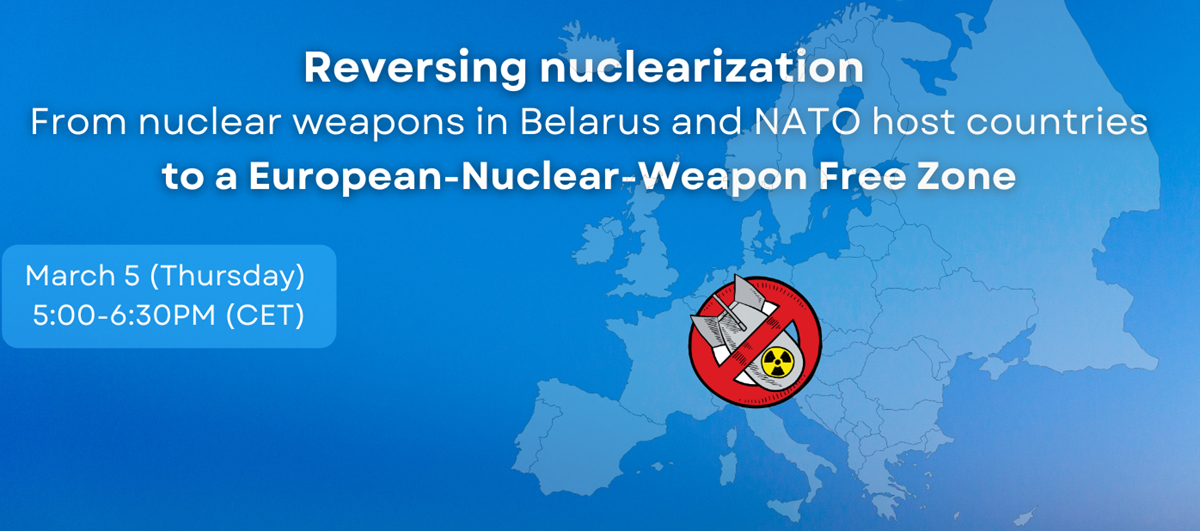
6 March -Online – Reversing nuclearization:
From nuclear weapons in Belarus and NATO host countries to a European-Nuclear-Weapon Free Zone
Mar 6, 2026 03:00 AM in Canberra, Melbourne, Sydney

of the week – Australians for War Powers Reform (AWPR)
To see nuclear-related stories in greater depth and intensity
 Antinuclear
Leave a comment