With friends like Martin Ferguson, renewable energy doesn’t need enemies
Call on our nuclear path looms http://www.theaustralian.com.au/national-affairs/call-on-our-nuclear-path-looms/story-fn59niix-1226513326556 BY: SID MAHER, POLITICAL CORRESPONDENT The Australian November 09, 2012 AUSTRALIA may have to decide whether to proceed with nuclear power by the end of the decade if global and national progress on renewable energy technologies fails to develop at the expected pace.
 The energy white paper says the Australian government does not support the adoption of nuclear power. However, it says nuclear may enter consideration if new low-emissions baseload energy technology cannot be commercialised in time to meet emissions reduction targets.
Given the long lead times, this would force Australia to make a choice on nuclear energy by late this decade, the paper says.
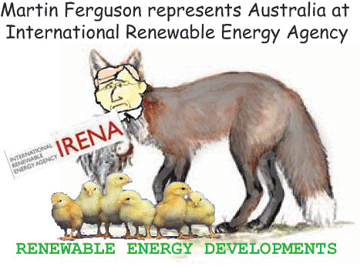
Energy Minister Martin Ferguson said the government did not support the use of nuclear energy, but it could not produce an energy white paper without acknowledging its existence. “If we get to a point in the future where the community comes to a conclusion that, to achieve baseload clean energy at the lowest possible cost, nuclear is competitive then the community will make that decision in the future,” he said.
The white paper says estimates of future costs for nuclear suggest it could be an economically competitive backstop energy option.
But international experience suggests the establishment of a commercially based nuclear energy industry in Australia would require some initial government support.
The development of the industry would need a lead time of 10-15 years, making the end of this decade the cut-off if the  technology is to be deployed by 2030-35, which would allow emissions reductions in line with clean energy policies.
The white paper cites carbon capture and storage as critical to meeting long-term global emissions reduction targets, given the planned expansion of coal-fired power in China and India. Continue reading
Slash and burn time for Paladin Energy with collapse of the uranium market
Paladin freezes expansion Financial Review 08 NOV 2012 Uranium miner Paladin Energy will slash costs by up to $US80 million ($76.97 million) after putting a freeze on development due to the weak uranium price.
Paladin will cuts costs by between $US60 million and $US80 million in fiscal 2013 and 2014, after undertaking an extensive review of costs and production.
The “optimisation exercise” had now become even more relevant due to the spot price, the company said in a statement on Wednesday. But the company did not reveal whether significant job losses would be forthcoming. Continue reading
CSIRO’s “eFuture”.- new online modelling tool to design Australia’s energy market
How to design your own clean energy future, REneweconomy, By Giles Parkinson 8 November 2012 Do you want to design your own energy market for Australia? Keen to know what a low emissions network might look like. What sort of grid are we looking at if solar is cheap and solar thermal with storage reduces its costs?
Punters, experts, and even those with vested interests of their own are invited to find out with a new online modeling tool released today by the CSIRO called “eFuture”. It is the latest in a series of online tools released by the CSIRO, which is looking for new ways of communicating the science. Continue reading
Anti Lynas campaign gearing up in Australia and Malaysia
 On the 5th of November a Green ban petition on rare earths exports out of WA, with over 12,000 signatures was delivered to Mines and Petroleum Minister Norman Moore’s office in Perth
Lynas will now try and begin shipping its rare earths ore, that has been stock piled in Bibra Lakes WA to Malaysia to test run its controversial Rare earths plant – Lynas applied material plant (LAMP). Rare earths processing is one of the most polluting industries involving concentrated acids and other toxic substances in the process.
After September 5th when the Australian company Lynas Corporation were granted a 2 year temporary operation license (TOL), by the Malaysian atomic energy licensing board. The Save Malaysia, Stop Lynas group had blocked operation of LAMP through a temporary suspension of the TOL by the Kuantan High Court on the 10th of October, whilst two judicial review cases on the issuing of the TOL were pending.
Future Events & Actions: Continue reading
Court decision for Lynas rare earths plant, but the legal fight will continue
 The federal opposition MP for Kuantan, Fuziah Salleh, who has led protests against Lynas for over two years, says the fight is far from over
The hearing of an application for a judicial review into the granting of the licence is expected in a few months.
Malaysian court approves Lynas rare earths plant
http://www.abc.net.au/news/2012-11-08/an-lynas-gets-go-ahead-for-rare-earths-mining-in-malaysia/4361554 Kate Arnott, 9 Nov 12, A court in Malaysia has paved the way for an Australian company to fire up its controversial rare earths plant in eastern Malaysia. Continue reading
Queensland’s Premier Newman wants sole power to speed up new mines
 Campbell Newman says state should have sole power to approve new mines by: Sarah Vogler The Courier-Mail November 08, 2012 THE power to approve new mines should be handled solely by the State, Premier Campbell Newman has told a business forum in Brisbane.
Answering questions on everything from casinos to asset sales and his decision to raise mining royalties, Mr Newman said the State should be in charge of approving mines in a move he believed would mean new
mines could be approved within two years…. He said his government was ‘unashamedly’ pro development and intent on creating the best environment for business.
http://www.couriermail.com.au/news/queensland/campbell-newman-says-state-should-have-sole-power-to-approve-new-mines/story-e6freoof-1226513201669
Australia’s Energy White Paper – Martin Ferguson has to admit -“No Nuclear “
Mr Ferguson said clean energy sources could expand to provide more than 40 per cent of electricity needs by 2035 and potentially as much as 85 per cent by 2050.
 The energy generation forecasts go out to 2050 in the report, and do not include nuclear energy as part of the supply mix.
Ferguson calls for ‘non-political’ energy debate, SMH, November 8, 2012 Peter Hannam Carbon economy editor Australia’s energy policies must be driven by competitive markets that operate in the long-term interests of consumers and are guided by “a constructive, non-political debate”, according to the federal government’s long-awaited energy white paper.
The wide-ranging policy update, aimed at guiding energy markets for years to come, is the first for the sector since 2004. – a delay criticised by the opposition.
It comes as consumers battle rising electricity costs prompted by excessive investment in networks, particularly by state-owned companies, and the recent introduction of the carbon tax. Power prices rose 15 per cent in the September quarter alone, the Australian Bureau of Statistics reported last month.
Launching the white paper in Melbourne, federal Resources Minister Martin Ferguson said the rapid rise in electricity prices in recent years has prompted a response from consumers that had been “much higher than expected”. The falling demand, driven also by a restructuring of the economy away from manufacturing, meant that the requirement for additional gas-fired peaking power had all but disappeared, he said. Continue reading
Move to cleanup radioactive water at Ranger uranium mine
Mine equipment transport to disrupt weekend travellers ABC Radio 105.7 Darwin, By Clare Rawlinson , 8 Nov 12 Energy Resources Australia has asked for motorists’ patience as the uranium miner prepares to transport heavy equipment from Darwin to Jabiru at speeds of 30kmph this weekend.
ERA chief executive Rob Atkinson said the company would use police escort down the Stuart Hwy and Kakadu Hwy over two days of travel. The equipment will be used in a new $220m “brine concentrator” – a machine being built at the Jabiru Ranger Uranium Mine to treat 30 years of contaminated waste water… Continue reading
New South Wales government’s wishy washy approach to renewable energy
We’ll leave it to the market to determine what the best proposals are,
Rob Stokes on clean energy in New South Wales EcoGeneration — November/December 2012
The New South Wales Government recently released a draft of its Renewable Energy Action Plan, which outlines 28 actions to help the state achieve its target of 20 per cent clean energy by 2020. New South Wales Parliamentary Secretary for Renewable Energy Rob Stokes spoke with EcoGeneration’s Melanie Ryan about the development of the plan, its implementation and general activities for attracting clean energy investment to the state. Continue reading
Australia to sign up to new Kyoto Treaty (in a rather cautious way)
 Australia ready to join ‘Kyoto 2’ climate agreement, Tom Arup Nov 09, 2012. The Age AUSTRALIA will sign up to a second round of the Kyoto Protocol, joining the European Union and just a handful of other major
greenhouse gas emitters in recommitting to the world’s only climate treaty.
Climate Change Minister Greg Combet will announce the decision on Friday in Melbourne, saying there has been sufficient progress in international talks to make the commitment, with some conditions.
It is understood he will also say the decision ensures business has access to cheap international offset credits (mainly created through clean energy projects in developing countries) to help meet domestic greenhouse targets.
The Kyoto Protocol was first negotiated by countries in 1997 and required wealthy nations to limit their emission of greenhouse gases. It is due to expire at the end of this year. Through UN climate change negotiations, countries have agreed to work on a replacement treaty. If successful, it would be agreed by 2015 and take effect in 2020. Unlike Kyoto, it would include emissions targets for wealthy nations and developing nations such as China and India.
At climate negotiations in South Africa last year, countries also agreed to a second round of the Kyoto Protocol until a new treaty takes effect. The European Union and a handful of small wealthy countries have committed to a second Kyoto, but some major wealthy nations including the US, Russia and Japan are refusing to sign
on…..
Australia’s support for a second Kyoto round comes with conditions, including progress on a post-2020 deal and a desire that the second round last until 2020, rather than 2017 as some developing nations proposed.
Canberra also wants rules letting it carry over some or all of about 80 million tonnes of surplus carbon permits under the protocol’s first round, which let it increase emissions by 8 per cent between 1990 and 2012. The carry-over permits could then count towards Australia’s 2020 emissions target.
http://www.theage.com.au/opinion/political-news/australia-ready-to-join-kyoto-2-climate-agreement-20121108-290×6.html#ixzz2Bkm3ObOr
Climate change likely to be hotter than previously predicted

Future warming likely to be on high side of climate projections, analysis finds , Eureka Alert 8 Nov 12
BOULDER—Climate model projections showing a greater rise in global temperature are likely to prove more accurate than those showing a lesser rise, according to a new analysis by scientists at the National Center for Atmospheric Research (NCAR). The findings, published in this week’s issue of Science, could provide a breakthrough in the longstanding quest to narrow the range of global warming expected in coming decades and beyond. Continue reading
AUDIO: The Malaysian fight will continue against Lynas rare earths processing plant
 Malaysian opponents of Lynas rare earths plant vow to fight on
http://www.radioaustralia.net.au/international/radio/program/asia-pacific/malaysian-opponents-of-lynas-rare-earths-plant-vow-to-fight-on/1043440 8 November 2012, Australian mining company Lynas has won a court battle against activists, to begin production at an $800 million rare earths facility in Malaysia, despite public concerns.
Malaysian opponents of Lynas rare earths plant vow to fight on (Credit: ABC) Lynas secured the operating licence in early September but the High Court in Pahang state, where the plant is based, put production on hold after an appeal by activists.
Malaysian opponents to the plant say the processing of rare earth ore imported from Australia, would release radioactive gases and waste like thorium and leak into the environment. The federal opposition MP for Kuantan has led protests against Lynas for over two years. Fuziah Salleh says the fight’s not over.
Presenter: Sen Lam @SLamEsq
Speaker: Fuziah Salleh, Parti Keadilan MP, Kuantan and opponent of Lynas rare earths plant
Superstorms – not a good weather forecast for nuclear power
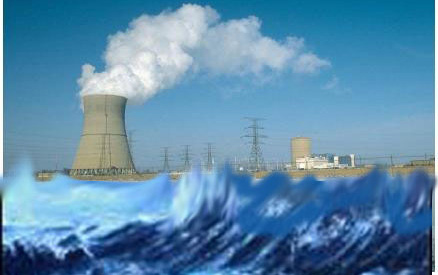 Nuclear Power and Superstorms Don’t Mix, Time, By Lucy Birmingham Nov. 07, 2012 Superstorm Sandy’s unexpected wrath makes a powerful case for revisiting Fukushima and the dangers to nuclear energy from natural disasters. As Sandy made landfall on Atlantic City, Oyster Creek nuclear power plant nearby was fortunately on a scheduled outage. But Indian Point 3 in Buchanan, N.Y., Nine Mile Point 1 in Scriba, N.Y., and Salem Unit 1 in Hancocks Bridge, N.J., all experienced shutdowns because of high water levels or electrical disruption. Last year, the dangerous Fukushima nuclear power plant meltdown was caused by similar conditions after tsunami waves flooded the plant and short-circuited both the regular and back-up electrical systems.
Equally dangerous are drought and record heat conditions the U.S. experienced last summer. In August, one of two reactors at the Millstone nuclear power plant near New London, Conn., not far from where I grew up, was shut down because water in Long Island Sound needed to cool the reactors got too warm. Cool water is necessary to produce electricity.
((MORE: Will We Be Seeing More Superstorms?)
Fukushima has been a worldwide wakeup call, particularly for the United States, the country with the largest number of reactors — 104. The lesson is glaringly obvious: when nature and nuclear energy collide the consequences can be lethal. Unfortunately, Japan is not offering an inspiring example of how to handle this threat. While all but two of the country’s 50 reactors remain offline, government and nuclear industry are proposing plant restarts and construction projects. This muddled move stands against the majority of Japanese citizens who have turned against nuclear power. As we face an increasingly volatile climate, the United States could conceivably lead the way in reducing dependence on nuclear energy.
(MORE: Is Post-Fukushima Japan Safe for Tourists?)
It’s estimated that superstorm Sandy will affect more than one fifth of Americans and cost up to $20 billion in damages. Imagine the addition of a major nuclear accident, potentially more lethal than Three Mile Island. The health, environmental and economic costs would be, simply put, insurmountable. It’s time to face the facts: Mother Nature rules. The best we can do is try to lessen the damage from her wrath. Phasing out nuclear power is the safe answer. : http://ideas.time.com/2012/11/07/nuclear-power-and-superstorms-dont-mix/#ixzz2Bgeqyigt
Unconvincing AUDIO about Queensland Government’s uranium implementation committee
Qld uranium chairman defends committee AUDIO http://www.abc.net.au/news/2012-11-02/uranium-chairman-defends-committee/4350974 ABC News Nov 2, 2012 Central Highlands Councillor Paul Bell will chair the Queensland Government’s uranium implementation committee, saying it will be balanced and thorough.Jessica van Vonderen Source: 7.30 Queensland | Duration: 5min 21sec
“I haven’t had any experience or knowledge prior to this role.in uranium mining, but I have worked in coal.and other areas of mining in Central Queensland.
Fukushima cleanup will take decades, cost over $125 billion – says TEPCO
The clean-up is expected to take decades, with scientists warning that some settlements may have to be abandoned.
The company said it would need more government help to meet the colossal figure
Fukushima operator warns clean-up ‘may cost $125 bn’ By Kyoko Hasegawa (AFP) 7 Nov 12 TOKYO — The cost of the clean-up and compensation after Japan’s Fukushima nuclear power plant disaster may double to $125 billion, the plant’s operator warned Wednesday. Tokyo Electric Power Company (TEPCO) said decontamination of irradiated areas and compensating those whose jobs or home lives have been affected would cost much more than the five trillion yen it
estimated in April. Continue reading
1 This month

of the week – Australians for War Powers Reform (AWPR)
To see nuclear-related stories in greater depth and intensity
 Antinuclear