Lucas Heights nuclear reactor shut down. Fire has been brought under control
 “The OPAL reactor is shut down and is safe.
Some sources say that the fire broke out as the city sweltered through a heat wave, which has caused dozens of bushfires, but the ANSTO saidthe incident was not related to the current weather conditions.
Fire has broken out at a nuclear research facility in Sydney, but its
operators say the blaze has been brought under
control.http://www.presstv.ir/detail/2013/01/08/282384/fire-breaks-out-at-sydney-nfacility/
The fire broke out at the Lucas Heights nuclear plant in southern
Sydney on Tuesday (local time)
The Australian Nuclear Science and Technology Organization (ANSTO)
raised the alarm at 10.36 a.m. local time (12.36 p.m. NZT) after smoke
was detected in an electrical substation at the rear of the facility,
which contains two nuclear reactors. Continue reading
Lucas Heights nuclear reactor has fire in two rooms
 Fire burning at Lucas Heights nuclear reactor http://www.abc.net.au/news/2013-01-08/fire-burning-at-lucas-heights-nuclear-reactor/4456538 MAP: Lucas Heights 2234
A fire has broken out in an electrical substation building at the Lucas Heights nuclear reactor in Sydney’s south.
Fire crews are attending the scene.
A Fire Brigade spokesman says smoke has been reported in two rooms.
The fire is believed to have been started by an electrical failure.
Rupert Murdoch’s limited understanding of climate change
 Murdoch right on carbon and trees, were it that simple, The Age, Tom
Arup. January 8, 2013 Media mogul Rupert Murdoch was right to say the
world’s forests are growing faster and thicker because there is more
carbon dioxide in the atmosphere, a leading climate scientist says.
But it does not mean the world is better off for rising greenhouse gas
emissions.
Mr Murdoch tweeted to 388,000 followers on Monday: ”World growing
greener with increased carbon. Thirty years of satellite evidence.
Forests growing faster and thicker.”
Mr Murdoch then referred followers to an article on the topic in The
Wall Street Journal last week by Matt Ridley, a prominent climate
change sceptic.
CSIRO’s Pep Canadell, also executive director of the Global Carbon
Project, said it was correct to say that increased concentration of
carbon dioxide in the atmosphere meant vegetation is becoming
greener….. But Dr Canadell said it did not mean the proportion of
total human greenhouse gases being absorbed by forests and other
terrestrial carbon sinks had increased as forests had become greener.
Studies by the Global Carbon Project have found the accumulation of
carbon dioxide in the atmosphere is faster than the growth of
terrestrial carbon sinks such as forests…… Forests can also only
absorb so much carbon dioxide, and will reach a saturation point. That
saturation point could be reached within the century, he said.
Nor does the increased ”greening” of forests due to higher carbon
dioxide emissions mean the loss of global forests has stopped.
A 2010 study by the UN Food and Agriculture Organisation found that
between 2000 and 2010 5.2 million hectares of forest a year was lost
globally, an area about the size of Costa Rica.
http://www.theage.com.au/environment/climate-change/murdoch-right-on-carbon-and-trees-were-it-that-simple-20130107-2ccuu.html#ixzz2HQFV2V6e
Japan’s pro nuclear government risks future climate/nuclear disaster
 Japan’s Pro-Nuclear Cabinet Fight Future Disaster With Reformed
Policies, The International, By Abbie Saunders JANUARY 07,
2013“……..The American Nuclear Society suggests that “one of the
most effective ways to reduce global carbon-dioxide emissions in the
future is by making increasing use of nuclear energy to replace fossil
fuels”. But Kurt Kleiner for Nature Reports maintains a different
stance.
 Kleiner suggests that while the operation of a nuclear power plant
itself has “near-zero carbon emissions”, it is the initial
construction of these plants that damages their eco-friendly
reputation. He points to the sources of nuclear energy as the problem:
“uranium has to be mined, processed and transported, waste has to be
stored, and eventually the plant has to be decommissioned. All these
actions produce carbon emissions.”
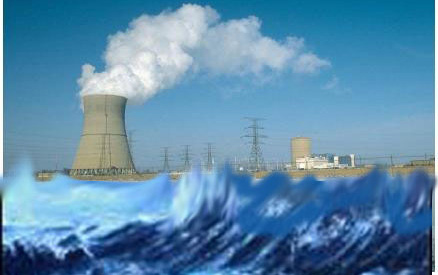 Whilst nuclear energy itself may be considered more eco-friendly than
exhaustible energy sources, renowned Japan correspondent Lucy
Birmingham points to the country’s history of natural disasters as a
potential danger. In November 2012, following the destruction of
Hurricane Sandy, she poignantly remarked that “nuclear power and
superstorms don’t mix”. She suggests that both floods and droughts can
severely damage nuclear reactors, causing them to release potentially
fatal radioactive materials.
It is this reality that prompts the Japanese population to protest.
Since Fukushima, the citizens of Japan have become increasingly
concerned about the dangers of nuclear energy. If the government’s
primary responsibility is the security of its citizens, is Shinzo
Abe’s attempt to bolster the economy and Japan’s carbon footprint one
risk too far for the environment and the welfare of the people
residing in potential risk areas?….”
Australia’s fossil fuel plants mostly built by governments: wind energy deserves a helpful start, too
 Wind energy tax credit
http://www.theaustralian.com.au/opinion/letters/wind-energy-tax-credit/story-fn558imw-1226549122040
Russell Marsh, Clean Energy Council, The Australian January 08, 2013
CONTRARY to Graham Lloyd’s article, the US production tax credit for
wind energy was extended as part of the fiscal cliff deal passed on
January 1 (“Blow to big wind in the power-market stakes”, 5-6/1).
Given that most major fossil fuel power plants in Australia were built
and funded by governments – and many are still owned by governments –
it is not unreasonable that renewable energy is provided with a modest
level of support until it becomes more established. The cost of wind
energy, for example, makes up less than 2 per cent of power bills.
While world markets have proven volatile over the last 12 months due
to the stop-start nature of government support in some countries,
Australia’s 20 per cent Renewable Energy Target has been a consistent
and relatively low-cost policy that has provided enough stability to
attract financiers and investors.
Australia is well-positioned to substantially increase the share of
renewable energy in our generation mix between here and the end of the
decade, creating tens of thousands of jobs and unlocking billions of
dollars of investment in the process.
India’s nuclear reactors, unreliable, unsafe, but human life is cheaper
Most of India’s 20 reactors are on the list of the most unreliable 50 in the world and are being monitored by the IAEA,
When life is cheaper than nuclear power, ” Jan 7, 2013, By Dilnaz Boga | Place: Mumbai | Agency: DNAPoonam Hambire, a resident of Ghivali village, 12km from Boisar in Thane district, is at the forefront of the anti-nuclear agitation against the Tarapur Atomic Power Station (TAPS). “Women have to come forward as false cases are slapped against the male protesters in Tarapur,” she alleges.
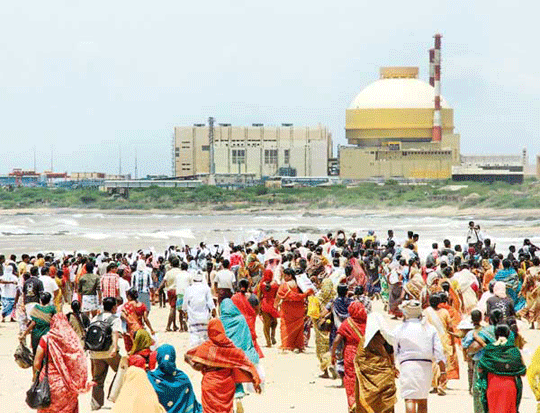
Her village lies within the 1.6km radius around one the country’s oldest nuclear reactors built by General Electric in the 1960s. It’s the same model as Japan’s Fukushima reactor. The effects of radiation are obvious in every home not only in Ghivali but also in the neighbouring villages.
At Hambire’s home, her eight-year-old nephew’s garlanded photo adorns the wall. “He died of lung cancer, but we couldn’t get his medical reports from the government heath centre. It’s hard to talk about it as his father who is employed at the plant will lose his job. None of the sick villagers get their medical papers,” she claims.
Grievances galore Continue reading
Aboriginal people need to be aware of their rights, about Native Title Trusts
Native title trusts outline the rights of these people to own certain
assets within the country. Remain up-to-date on the developments to
prevent misunderstandings regarding Australian Aboriginals’ native
title
 Why Native Title Trusts are Important for Australian Aboriginals by
Icezen January 3, 2013 Native title trusts are important to
Australian aboriginals because the trusts establish land rights of
indigenous people. These trusts also entitle the indigenous people to
compensation in the event of extinguishment. Continue reading
1 This month

of the week – Australians for War Powers Reform (AWPR)
To see nuclear-related stories in greater depth and intensity
 Antinuclear