The nuclear week that was, in Australia
 Aboriginal issues to the fore this week. Yesterday an deal was announced between the Mirrar Aboriginal and Energy Resources of Australia, (ERA) after 14 years of negotiations, over the Ranger uranium mine. Highly respected senior traditional owner Ms Yvonne Margarula, has welcomed the agreements, and that’s good enough for me.
Still, this could herald the start of a persuasion process, by ERA, leading into their planned new underground mine, “Ranger 3 Deeps”. This project is not covered by the new agreements. Mining companies have been known to mine underground, in order to avoid the responsibility of native title issues on the surface.
Julia Gillard parachuted Aboriginal sports star Nova Peris-Kneebone into pre-selection for the Northern Territory Senate seat. Ms Peris joine dthe Labor Party only on Wednesday. Overlooked was a real Aboriginal fighter for Territory Aboriginal rights, Marion Scrymgour. The suspicion remains that Julia is expecting Peris to toe the Party line, while giving Labor a good “Aboriginal look”
Maralinga veterans and Aboriginal victims of the atomic tests have now been told that they have no case for compensation, in British courts. Yet there Is evidence of radiation harm, much of it covered up by teh Australian and British governments. Paul Langley has covered this extensively in his Nuclear History blog – http://nuclearhistory.wordpress.com/
Cyber Security was a big theme of Gillard’s latest speech. While there are certainly legitimate concerns for national security on the Internet, Senator Ludlam warned about “overkill” – the implications for privacy, copyright, and freedom of communication
Uranium to India. Bob Carr announced progress in these negotiations, as usual, oblivious to the way that India is ramping up its nuclear weapons, and cracking down on the thousands of rural anti nuclear protestors.
Victoria. Mildura area is to get two solar farms at Koorlong an Carwarp.
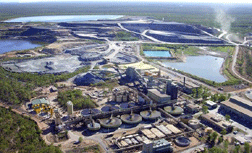
ERA’s uranium plan: Ranger 3 Deeps deposit beneath Pit 3 – could they diddle the Aborigines?
 Christina Macpherson 25 Jan 13, It all looks good, that the Mirrar Aboriginal people people have at last got a fairer deal with ERA concerning their long struggle, first against, uranium mining at the Ranger site, and then to get a better deal.
The senior traditional owner of the Mirarr clan, the very highly respected Ms Yvonne Margarula, has welcomed the agreements.
These agreements do not include ERA’s new project , underground mining at Ranger 3 Deeps deposit beneath Pit 3.
This situation needs careful watching. Is the new agreement part of a softening up process by the uranium mining company, as they plan to get acquiescence from the Aboriginal people for the this next project.
It has been done before – that uranium miners have chosen to mine underground, in order to avoid the responsibility of native title issues on the surface. When they do a big shaft entry, they expand underground without involving the native title holders. a big shaft entry, they expand underground without involving the native title holders. They have been able to convince the Aboriginal owners that “the crown owns the minerals”.
ERA has recently been dealing with 30 years accumulation of radioactive waste water, at Ranger.
ERA could be a bit desperate – as recent economic history has not been kind to them In 2012 “From a share price of $18.22 in May 2009, the stock lost more than 90 per cent of its value to be languishing at $1.15 earlier this year, with the company’s future being seriously questioned. …. The goal of turning ERA into an underground miner won’t come to fruition before late 2015, and there will be myriad environmental, indigenous, government and company approvals to satisfy before then. ” http://www.smh.com.au/business/kakadus-miner-for-all-seasons-20120427-1xqg2.html#ixzz1tNGNVJGh
TAKE ACTION: Ranger 3 Deeps uranium mine.
 Take action on plans for further uranium mining in the Kakadu region. Last week Energy Resources of Australia referred their plans for Ranger 3 Deeps to the Federal Government, which signals the formal start of the environmental assessment process. This initial period will decide at what level the mine will be assessed. We believe that this serious development must be assessed at a very high level, we want to ensure a full Environmental Impact Statement is required. You must make your submission by January 30 2013.
Mirrar Aboriginal agreement on Ranger uranium mine does not include new underground mine
Ranger uranium mine agreement updated, Gundjeihmi Aboriginal Corporation, 25 Jan 13,
The Mirarr traditional Aboriginal owners of the Ranger uranium mine area welcome the
settlement today of the long-running renegotiation of the 1978 Ranger mining agreement.
The execution today of a number of agreements and associated correspondence between
the Gundjeihmi Aboriginal Corporation (GAC), the Australian Government, miner Energy
Resources of Australia (ERA) and the Northern Land Council signals the formal conclusion of
a 14-year process of renegotiation.
Importantly, the agreements cover existing operations on the Ranger Project Area. They do
not deal with future mining beyond the existing Ranger Authority or underground mining at
the so-called Ranger 3 Deeps deposit beneath Pit 3.
The senior traditional owner of the Mirarr clan, Ms Yvonne Margarula, welcomed the end of
negotiations about the original Ranger mine. “We Mirarr are happy that today, after so long,
we have a fairer agreement for mining at Ranger,” she said. “My father never agreed to
Ranger. Our right to stop the mine was taken away by the government. It is good that after all
these years we have a better agreement for Mirarr. This will help all Bininj [Aboriginal people]
in the region.” Continue reading
Fracking for uranium permitted by USA’s Environment Protection Agency (EPA)
 Goliad skeptics have been fighting UEC’s plans for five years. At Goliad the uranium ore is located just 400 feet deep within the same rock as a groundwater reservoir that ranchers tap for drinking water, both for themselves and their livestock. Water, not oil, is the region’s long-term liquid gold. “We are running out of water; I don’t want mine ruined,” said one rancher who asked not to be named. “When you’re out of water, you’re out of everything.”….
A 2009 study of Texas in situ mines by the U.S. Geological Survey … found no instance in which there wasn’t more selenium and uranium in the water than before mining.
Energy’s Latest Battleground: Fracking For Uranium This story appears in the February 11, 2013 issue 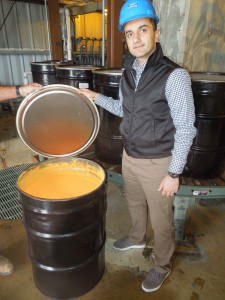 of Forbes. No tour of Uranium Energy Corp.’s processing plant in Hobson, Tex. is complete until CEO Amir Adnani pries the top off a big black steel drum and invites you to peer inside. There, filled nearly to the brim, is an orange-yellow powder that UEC mined out of the South Texas countryside. It’s uranium oxide, U3O8, otherwise known as yellowcake. This is the stuff that atomic bombs and nuclear reactor fuel are made from. The 55-gallon drum weighs about 1,000 pounds and fetches about $50,000 at market. But when Adnani looks in, he says, he sees more than just money. He sees America’s future.
“The U.S. is more reliant upon foreign sources of uranium than on foreign sources of oil,” says Adnani,……
Adnani insists that he can close the yellowcake gap through a technology that is similar to the hydraulic fracturing, or fracking, that has created the South Texas energy boom. Fracking for uranium isn’t vastly different from fracking for natural gas. UEC bores under ranchland into layers of highly porous rock that not only contain uranium ore but also hold precious groundwater. Then it injects oxygenated water down into the sand to dissolve out the uranium. The resulting solution is slurped out with pumps, then processed and dried at the company’s Hobson plant. Continue reading
Solar photovoltaic plant for Mildura region, in Victoria
 Green light for solar farm near Koorlong http://www.abc.net.au/news/2013-01-24/green-light-for-solar-farm-near-koorlong/4481736
Jan 24, 2013 A planning application has been approved for another solar farm in north-west Victoria.The Mildura council has given German company Belectric the nod to build a five-megawatt photovoltaic plant near Koorlong.
A similar project, Solar Systems’ 1.5-megawatt station, is also being built at Carwarp.
The Mildura Development Corporation’s Anne Mansell says it is an important project for the region.
“This is classed as medium scale, five megawatts is classed as medium scale,” she said.
“It’s still quite significant for the area, one thing I would add, it certainly complements the solar systems development at Carwarp and it shows we’re developing into a solar hub in this region.”
French army to protect AREVA’s uranium mines in Niger
 France orders special forces to protect Niger uranium: source PARIS Jan 24, 2013 (Reuters) – France has ordered special forces to protect uranium sites run by state-owned Areva in Niger as the threat of attacks on its interests rises after its intervention against rebels in Mali, a military source said on Thursday
  Reporting by John Irish, Geert de Clercq, Muriel Boselli, Michel Rose in Paris and Abdoulaye Massalatchi in Niamey; …….
The military source confirmed a report in weekly magazine Le Point that special forces and equipment would be sent to Areva’s uranium production sites in Imouraren and Arlit very quickly, but declined to go into further details.
Defense ministry officials declined to comment on the report and Areva said it did not talk about security issues….
Areva, Niger’s biggest single investor, has about 2,700 workers in Niger and is planning to start up a third mine in Imouraren.
The planned startup of production in Imouraren was delayed to 2013 or 2014 from 2012, following the kidnappings and a labor dispute.
A Niger army officer said that there were already security arrangements agreed with France since 2011 after the kidnappings in Arlit and they had been reinforced over time.
“We also have our counter-terrorism units in the Agadez region,” he said. “For now, I don’t know of a decision by the Nigerien government to allow French special forces to base themselves in the north.”
An Areva spokeswoman said this month the French government had not asked the company to reduce staffing in Niger. She added Areva has an extensive security plan for its employees and that the plan has been reviewed by the French authorities.
Areva has been mining uranium in Niger for more than five decades and the country provides one third of the group’s uranium supplies.
According to a parliamentary committee enquiring into France’s supplies of uranium, about 18 percent of the raw material used to power France’s 58 nuclear reactors came from Niger in 2008…. http://www.reuters.com/article/2013/01/24/us-mali-rebels-niger-areva-idUSBRE90N0OD20130124
A first hand witness of nuclear submarine tragedy in Kara sea
The crew of 144 were poisoned – nine died of radiation sickness soon after the emergency, and the others were ill for years before their premature deaths
K-27 officers were later warned they should not have children for five years and were given regular check-ups, but there was no proper medical follow-up for the ordinary submariners, according to CWO Mazurenko. Many of them were declared “healthy” by military doctors, despite their illnesses, he added.
Eyewitness: Tragedy of Soviet nuclear submarine K-27BBC News, By Yaroslava Kiryukhina, 24 Jan 13 BBC Russian reporter The Russian authorities are investigating whether a sunken Soviet nuclear-powered submarine, the K-27, can be safely raised so that the uranium in its reactors may be removed.
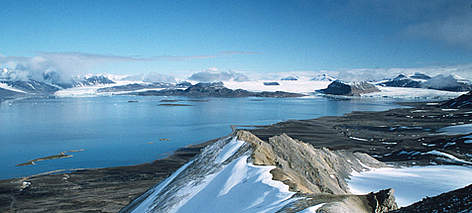
At the height of the Cold War, in 1968, the K-27 met with disaster when radiation escaped from one of its reactors during a voyage in the Arctic.
Vyacheslav Mazurenko, then 22, was serving as a chief warrant officer (CWO) on the vessel, which now lies abandoned in the Arctic’s Kara Sea. Today he lives in Ukraine and he told BBC Russian what happened Continue reading
Germany going really well without nuclear energy
 Germany Thrives Without Nuclear http://www.greenchipstocks.com/articles/
 german-renewable-energy-impresses/2179 By Jeff Siegel January 24th, 2013
Freezing temperatures in both Belgium and Germany have put both countries’ power systems to the test this week, but neither country has experienced electricity blackouts despite the lack of nuclear power.
Two of Belgium’s seven nuclear reactors – Doel 3 and Tihange 2 – were switched off this summer, following the discovery of cracks, cutting 2,000 MW of electricity-generating capacity from Belgium’s electricity network. Even without this nuclear capacity online, the network survived this winter’s peak electricity demand of 13,166 MW on 17 January, L’Echo, a Belgian newspaper, reported.
Belgium’s electricity supply is guaranteed by a small amount of energy imports – including gas from the Netherlands and solar and wind from Germany – and a diverse energy portfolio, one in which renewable energy has a rising share, the paper said.
Belgium’s electricity portfolio is currently: 39% gas, 36% nuclear, 9% hydro, 4% wind, 4.5% coal, 1.5% oil, 6% solar.
Similar news emerged from Germany: Reuters reported that the country’s electricity supply is adequate this winter, despite the nuclear switch off which started in 2011 following the Fukushima nuclear accident.
Meanwhile, Greenpeace Germany has reported that more than half of the coal-power projects planned in 2006 have since been abandoned thanks to Germany’s energy policies which have seen a shift to renewable energy.
An article in French daily Le Monde noted that not only is coal one of the most polluting sources of energy, in particular lignite – of which there is plenty in Germany – but coal is facing economic problems. Coal-fired electricity plants are the oldest in Germany’s electricity portfolio and they cannot provide power on a flexible basis – it takes a long time to put out a coal fire.
Le Monde reported that the rising share of renewables in Germany’s energy mix requires more flexibility – when the sun shines and the wind blows more electricity is produced than needed meaning that renewable electricity is available at prices that threaten the profitability of coal. A lignite coal-powered station coming online in 2015 will make an overall loss over its 40 year lifetime, according to Christian von Hirsch-hausen, Research Director at the German Institute for economic research (DIW). In a system with a rising share of renewables, lignite does not have any economic benefits, he added.
1 This month
To see nuclear-related stories in greater depth and intensity
– go to https://nuclearinformation.wordpress.com/


 Antinuclear