UK, USA, Japan must face up to the need for deep burial of nuclear wastes
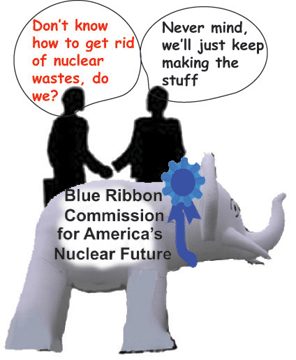 In the United States, efforts to build a repository are in the doldrums
At the Fukushima Daiichi nuclear plant in Japan, spent fuel stored above ground at reactors is likely to have been a major source of contamination following the earthquake and tsunami in 2011. At the last count, the clean-up there is expected to cost trillions of yen, or hundreds of billions of dollars.
In a hole It is in Britain’s best interests to keep looking for a site for a deep nuclear-waste repository. Nature, 05 February 2013 The best way to dispose of nuclear waste is to bury it deep underground. With the right mixture of geology and engineering, researchers think, it should be possible to contain highly radioactive material safely for the many thousands of years that it will take to decay.
Scientists agree on this. The industry thinks the same way, and so do regulators, politicians and most environmental groups. Yet despite the expert endorsement, plans for a deep geological repository in Britain effectively ground to a halt last week, after a local council voted against plans to look for a suitable site…….
why has the process come up empty again? The answer is a lack of political will at almost every level of government. Critics say that the Nuclear Decommissioning Authority, the body responsible for the repository, never did much to try to sell the facility to local residents or to address their concerns about what it might do to property prices or tourism. At a national level, politicians offered only the vaguest promise of ‘economic development’ in exchange for taking the waste. Meanwhile, local politicians advocated an alternative plan: to build more short-term storage at Sellafield, thereby creating jobs in the near-term without making long-term commitments.
“There are moral, financial and environmental reasons to make deep geological disposal work.” Continue reading
Eye-opening documentary about Chernobyl nuclear catastrophe
 VIDEO http://topdocumentaryfilms.com/the-battle-of-chernobyl/#disqus_thread The Battle of Chernobyl
It’s a documentary which analyzes the Thursday 26th April 1986 that became a momentous date in modern history, when one of the reactors at the Chernobyl nuclear power station in northern Ukraine, exploded. It was the most significant reactor failure 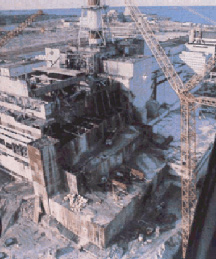 in the history of nuclear power, a Maximum Credible Accident (MCA). The plant, just 20 km away from the town center, was made up of four reactor units each generating an output of 1,000 megawatts. The reactor in question exploded due to operational errors and inadequate safety measures and the meltdown was directly linked to routine testing on the reactor unit’s turbine generators.
The test required reactor activity and the thermal reactor output to be run down to a lower level. During the procedure, however, the reactor plummeted to an unexpectedly low and unstable level of activity. At this point, it should have been shut down; as the operators chose to continue with the test, the events subsequently proved to be catastrophic.
More than 200 people died or were seriously injured by radiation exposure immediately after the explosion. 161,000 people had to be evacuated from a 30 kilometer radius of the reactor and 25,000 square km of land were contaminated. As time went on millions of people suffered radiation related health problems such as leukemia and thyroid cancer and around 4,000 people have died as a result of the long-term effects of the accident.
Nobody was prepared for such a crisis. For the next seven months, 500,000 men will wage hand-to-hand combat with an invisible enemy – a ruthless battle that has gone unsung, which claimed thousands of unnamed and now almost forgotten heroes. Yet, it is thanks to these men that the worst was avoided; a second explosion, ten times more powerful than Hiroshima which would have wiped out more than half of Europe. This was kept secret for twenty years by the Soviets and the West alike.
Methinks Australia’s mining industry protests too much about corruption
 Here is a strange headline.from The Australian Miners fear ‘dirt’ will hurt industry” Australia’s mining industry becoming very righteous about corruption in the NSW mining licences issue. They say it damages their international reputation.
Especially as regards Africa – one would wonder “What international reputation”.?
So many allegations, so many organisations critical of the way Australian companies do business in Africa. Especially Paladin uranium in Malawi, and Rio Tinto uranium in Namibia http://www.theaustralian.com.au/national-affairs/state-politics/miners-fear-dirt-will-hurt-industry/story-e6frgczx-1226574973649 (subscription only)
1 This month
To see nuclear-related stories in greater depth and intensity
– go to https://nuclearinformation.wordpress.com/


 Antinuclear