The secret history of Chernobyl nuclear disaster, on video
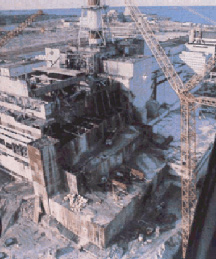 it is thanks to these men that the worst was avoided; a second explosion, ten times more powerful than Hiroshima which would have wiped out more than half of Europe. This was kept secret for twenty years by the Soviets and the West alike.
As time went on millions of people suffered radiation related health problems such as leukemia and thyroid cancer and around 4,000 people have died as a result of the long-term effects of the accident.
 VIDEO http://topdocumentaryfilms.com/the-battle-of-chernobyl/#disqus_thread The Battle of Chernobyl It’s a documentary which analyzes the Thursday 26th April 1986 that became a momentous date in modern history, when one of the reactors at the Chernobyl nuclear power station in northern Ukraine, exploded. It was the most significant reactor failure in the history of nuclear power, a Maximum Credible Accident (MCA). The plant, just 20 km away from the town center, was made up of four reactor units each generating an output of 1,000 megawatts. The reactor in question exploded due to operational errors and inadequate safety measures and the meltdown was directly linked to routine testing on the reactor unit’s turbine generators.
The test required reactor activity and the thermal reactor output to be run down to a lower level. During the procedure, however, the reactor plummeted to an unexpectedly low and unstable level of activity. At this point, it should have been shut down; as the operators chose to continue with the test, the events subsequently proved to be catastrophic.
More than 200 people died or were seriously injured by radiation exposure immediately after the explosion. 161,000 people had to be evacuated from a 30 kilometer radius of the reactor and 25,000 square km of land were contaminated. As time went on millions of people suffered radiation related health problems such as leukemia and thyroid cancer and around 4,000 people have died as a result of the long-term effects of the accident.
Nobody was prepared for such a crisis. For the next seven months, 500,000 men will wage hand-to-hand combat with an invisible enemy – a ruthless battle that has gone unsung, which claimed thousands of unnamed and now almost forgotten heroes. Yet, it is thanks to these men that the worst was avoided; a second explosion, ten times more powerful than Hiroshima which would have wiped out more than half of Europe. This was kept secret for twenty years by the Soviets and the West alike.
See these interesting pictures and stories of abandoned nuclear power projects
iPctures: Gone Fission: 11 Unfinished Nuclear Power Plants http://weburbanist.com/2013/02/10/gone-fission-11-unfinished-nuclear-power-plants/ These 11 unfinished, abandoned, canceled, mothballed and/or suspended nuclear power plants will, for better or worse, never know the warmth of split atoms.
 Lemoniz Nuclear Power Plant, Spain Construction of the Lemóniz Nuclear Power Plant, located on the Bay of Biscay on Spain’s northern coast, began in the mid-1970s but was dogged from its inception by violent opposition from ETA, the terrorist organization dedicated to the independence of Spain’s Basque country. The group managed to smuggle bombs into the facility on several occasions in 1978 and 1979 resulting in a number of fatalities and delaying the plant’s construction……
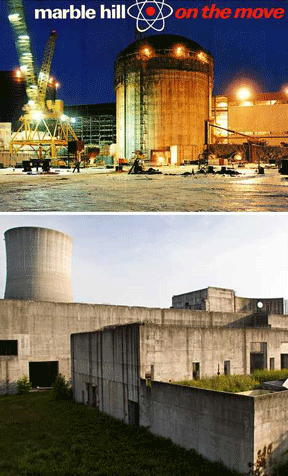
Marble Hill Nuclear Power Station, Indiana, USA (at left)From 1977 to 1984, Public Service Company of Indiana (PSI) spent approximately $2.5 billion to build the Marble Hill Nuclear Power Station near Hanover, Indiana, and by the time the financial tap ran dry it was only half-finished! The political and environmental landscape had changed quite a bit over those 7 years with the biggest speed bump being the Three Mile Island crisis in 1979. With costs spiraling out of control and the state government reluctant to provide funding, PSI abandoned the project and auctioned off most of the salvageable material for a mere pittance.
Equipment and parts from the Marble Hill Nuclear Power Station continued to be sold off in the early to mid-1990s but by the year 2000 everything of value had been sold. Since 2008, slow and steady demolition under the auspices of MCM Management Corp. has seen first the fuel-handling building and then the twin reactor containment buildings gradually reduced to mounds of scrap. The bright side, if any, is that none of the demolished material is radioactive.
Bataan Nuclear Power Plant, Philippines Continue reading
Renewable energy is happening. Nuclear energy is not.
 I think that I really ought to change the names of my websites (to Renewable Energy News). These websites are supposed to reflect the news – what is happening.
Well, nuclear power and uranium markets are just not happening. There’s a sorry sort of 21st Century colonialism going on. The over-developed countries, such as Australia, are trying to rip every resource, such as uranium, out of the ground in Africa, at the least benefit to the Africans that they can get away with. With France sending troops in, and Australia pondering on this – it’s a bit like the 19th Century “scramble for Africa”. Not that the uranium market is actually much good, anyway.
But the over-developed nations are pinning their hopes on selling nuclear reactors to the “developing” world – a colonial sort of version of Not In My Backyard. For all the hype – not much is actually happening there either. But then perhaps oil-rich, sun- rich United Arab Emirates figure that they might like to have nuclear weapons one day .
What is really happening globally is rapid growth in solar and wind energy, both centralised and decentralised. Worldwide surge in renewable energy, with costs falling http://nuclear-news.net/2013/01/25/worldwide-surge-in- renewable-energy-with-costs-falling/
160 nations to double use of renewable energy http://nuclear-news.net/2013/01/19/160-nations-endorse-doubling-of-renewable-energy-irena/
Extraordinary that Australia, with its fawning subservience to America, is slow to pick up on what’s happening there in renewable energy USA: In 2012 49% of new energy capacity was renewable http://nuclear-news.net/2013/01/21/usa-in-2012-49-of-new-energy-capacity-was-renewable/
U.S. Establishes Renewable-Energy Zone on Public Land in Arizona http://nuclear-news.net/2013/01/19/renewable-energy192000-acres-of-government-owned-land-in-arizona/
While renewable energy grows in USA, Germany – in a big way, it’s also growing in many less powerful countries, especially in the use of small-scale power. http://nuclear-news.net/2013/02/09/local-solar-energy-making-a-huge-difference-in-rural-argentina/
Western Australia’s opportunity to lead in renewable energy
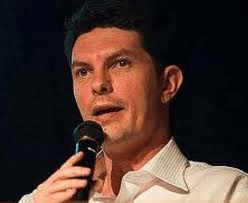 Greens’ plan for clean power by 2029 http://www.watoday.com.au/wa-news/state-election-2013/greens-plan-for-clean-power-by-2029-20130210-2e6in.html#ixzz2KclQE7OS February 11, 2013 Robyn Preston Switching over to 100 per cent renewable energy by 2029 is not only achievable, it will save the average family money, according to Greens’ party leader Scott Ludham. WA Greens’ party leader Scott Ludham launched the Green Energy 2029 proposal on Sunday and said Western Australia cannot afford to wait decades to make the change to renewable energy sources.
The Greens say that with WA’s abundance of sunlight, wind and geothermal resources, changing to renewable energy over the next 16 years will not cost anymore than what has been proposed by the Liberal-National Government he said.
“The state government is actually proposing to spend a quarter of a billion dollars refurbishing the obselete Muja coal-fired power station and that for me is all you need to know about how wrong this government’s prorities are,” said Mr Ludham. Continue reading
Manuwangku, Under the Nuclear Cloud – photographic exhibition Adelaide 14 February
Manuwangku, Under the Nuclear CloudThursday February 14, 2013
Light Gallery, 138 Richmond Road, Marleston, 5033
Artist Talk 5pm, Exhibition Opening 6-8pm
A photo exhibition profiling the Northern Territory community and country targeted for a federal nuclear waste dump is opening next Thursday evening February 14 at the Light Gallery in Marleston.
Manuwangku, Under the Nuclear Cloud is a series of photographs by Jagath Dheerasekara and presents a unique window into the daily lives of the affected community as well presenting the area under threat.
Manuwangku, also known as Muckaty, is 120 kilometres north of Tennant Creek in the NT and has been the focus of federal government pressure as a site to dump radioactive waste for over five years. The federal plan is deeply unpopular and is being actively opposed by the community and supporters across the country.
The Muckaty campaign acknowledges and hopes to build on ten years of organising in South Australia, led by the Kupa Piti Kungka Tjuta, that stopped a waste dump being foisted there.
Natalie Wasley from the Beyond Nuclear Initiative is coordinating the exhibition’s national tour and will also speak at the event. There will also be an artist’s talk by Jagath Dheerasekara prior to the exhibition opening.
Concentrated solar power for Australia- costs will be halved by 2020
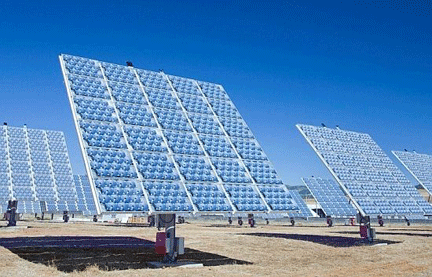 New Solar Czar Predicts CSP Costs Halved By 2020 http://www.energymatters.com.au/index.php?main_page=news_article&article_id=3586 11 Feb 13 The new chief of the Australian Solar Thermal Research Initiative (ASTRI) says the cost of producing solar thermal power in Australia could be halved by 2020. Solar scientist and former chair of the International Energy Agency’s SolarPACES executive committee, Dr Manuel J. Blanco, was last week appointed Director of ASTRI – an $87 million initiative announced in December last year.
The Initiative’s aim is to bring the cost of solar thermal power down from 25 cents per kilowatt hour to around 10 cents over eight years, bringing it into line with other major sources of renewable energy such as photovoltaic (PV) solar and wind power; with an ultimate goal of achieving grid parity with fossil fuels.
The CSIRO-led project comes under the umbrella of The Australian Solar Institute and Australian Renewable Energy Agency, in collaboration with six national universities and the United States’ Department of Energy’s National Renewable Energy Laboratory (NREL), Sandia National Laboratories and Arizona State University. Continue reading
Decentralised solar energy transforming lives in rural Ghana
 Solar energy to power rural electricity launched, Ghana Business News, February 10, 2013 A new life changing solar energy system aimed at augmenting rural electricity power generation using the sun’s direct energy has been launched in Accra.
Dubbed Solar2Africa400, the system consists of a portable folding solar panel, a cable, a connector and a 400-watt power inverter. Continue reading
Germany blazing the trail for solar energy storage
Germany To Announce Energy Storage Subsidy? http://www.energymatters.com.au/index.php?main_page=news_article&article_id=3584 Germany blazed the trail for solar PV uptake and it appears the nation may be about to do the same for energy storage. Continue reading
1 This month

of the week – Australians for War Powers Reform (AWPR)
To see nuclear-related stories in greater depth and intensity
 Antinuclear