Muckaty was never selected scientifically as a nuclear waste dump site
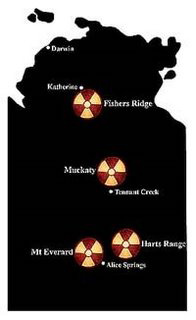 15 July 2005 The Minister for Education, Science and Training, the Hon Dr Brendan Nelson MP, announces three potential locations to be investigated for the Commonwealth Radioactive Waste Management Facility. The three locations are properties located near Katherine and Alice Springs in the Northern Territory: Fishers Ridge, Department of Defence property, southeast of RAAF Base Tindal; Mt Everard, Department of Defence property, northwest of Alice Springs; and Harts Range, Department of Defence property, northeast of Alice Springs. The new facility will co-locate low-level and intermediate-level radioactive wastes.
http://www.aph.gov.au/About_Parliament/Parliamentary_Departments/Parliamentary_Library/Publications_Archive/online/RadioactiveWaste#radio
Christina Macpherson 19 April 13. It’s hard to discover exactly what sites were recommended by Bureau of Resource Sciences in the 1990’s, but Muckaty wasn’t one of them.
NRIC, A Radioactive Waste Repository for Australia: Methods for Choosing the Right Site, DPIE, Canberra, 1992.The Commonwealth releases its report National Radioactive Waste Repository Site Selection Study, Phase 1 for public comment by December 1992. The Phase 1 report is prepared by the National Resource Information Centre (NRIC), a science unit within the Department of Primary Industries and Energy (DPIE). The report:
describes the nature of radioactive wastes
briefly describes the criteria for assessing the suitability of sites for hosting a waste repository
outlines a Geographic Information Systembased system for applying the criteria, and
describes the way a repository would be constructed.
Of the eight regions identified by this study, five were selected entirely by using ASSESS. These were the
Tanami, Bloods Range, Everard, Billa Kalina and Olary regions. Continue reading
Nuclear waste dump: other sites more suitable than Muckaty
Proposed new nuclear waste dump site nomination, Natalie Wasley 19 April 13 How Australia should responsibly manage its nuclear waste
 A RESPONSIBLE APPROACH TO RADIOACTIVE WASTE MANAGEMENT, Jim Green, Feb 2011, – 1. Waste minimisation – 2. All options for radioactive waste management should be considered -3. Site selection processes must be fair and transparent.
 1. Waste minimisation
Nuclear waste dump: where do New NT Chief Minister Giles and Federal Resources Minister Gray, stand?
New NT Chief Minister and Federal Resources Minister , by Natalie Wasley, 19 April 13 approached to meet with Traditional Owners opposed to the waste dump and we hope this meeting will be advanced soon to allow grassroots voices of opposition to be heard and represented.
A 50 year old story of radioactive poisoning of a community
Soviet radiation biology took a different trajectory from science in the United States. American researchers at that time were working with the highly politicized medical studies of Japanese bomb survivors. They narrowed the list of radiation-related illnesses to leukemia, a few cancers, and thyroid disease. Soviet doctors in formulating chronic radiation syndrome had grasped the effects of radiation on the body more holistically. They determined that radiation illness is not a specific, stand-alone disorder, but that its indications relate to other illnesses. They determined that radioactive isotopes weaken immune systems and damage organ tissue and arteries, causing illnesses of the circulation and digestive tracts and making people susceptible to conventional diseases long before they succumb to radiation-related cancers.
Strange illnesses in one of the most contaminated towns in the world challenge what we think we know about the dangers of radioactivity. Slate, By Kate Brown, April 18, 2013, “…… the sad fact is that there are irradiated zones that are fully inhabited, and have been since the first years of the nuclear arms race. Despite a media culture enthralled with nuclear accidents, the cameras generally turn off after the first clouds of radioactive vapors dissipate.
“………..For Soviet leaders, the river dwellers were a unique opportunity in the history of health physics—what scientists call “a natural experiment” that promised to answer an important civil defense question about how to survive a nuclear attack. In 1962, the Cheliabinsk branch of the Soviet Institute of Bio-Physics, called FIB-4, started conducting regular medical exams of the Muslumovo population. FIB-4 doctors invited village children playing on the streets to a clinic room to take blood samples. In Cheliabinsk, they set up a repository of irradiated body parts: hearts, lungs, livers, bones. They started a collection of genetically malformed babies who died soon after birth, each infant preserved in a two-quart glass jar. A Dutch photographer, Robert Knoth, visited the repository and saw hundreds of babies in jars. He photographed one infant with skin like patched, rough burlap. Another boy had eyes on top of his head like a frog. During the examinations, doctors did not inform the villagers of their exposures or of diagnoses of radiation-related illness.
In 1986, soon after the Chernobyl disaster, Glufarida Galimova, working as chief doctor at a pediatric clinic in Muslumovo, her native town, was puzzled by the saturation of illness in her community. The illnesses were rare, strange, complex, and often genetic: hydrocephalic children, children with cerebral palsy, missing kidneys, extra fingers, anemia, fatigue, and weak immune systems. Many kids were orphaned or had invalid parents. Continue reading
New book “Plutopia” exposes the history of secret nuclear disasters
 Plutopia: Nuclear Families, Atomic Cities, and the Great Soviet and American Plutonium Disasters Kate Brown http://www.amazon.com/gp/product/0199855765/ref=as_li_ss_tl?ie=UTF8&camp=1789&creative=390957&creativeASIN=0199855765&linkCode=as2&tag=slatmaga-20 While many transnational histories of the nuclear arms race have been written, Kate Brown provides the first definitive account of the great plutonium disasters of the United States and the Soviet Union.
In Plutopia, Brown draws on official records and dozens of interviews to tell the extraordinary stories of Richland, Washington and Ozersk, Russia-the first two cities in the world to produce plutonium. To contain secrets, American and Soviet leaders created plutopias–communities of nuclear families living in highly-subsidized, limited-access atomic cities. Fully employed and medically monitored, the residents of Richland and Ozersk enjoyed all the pleasures of consumer society, while nearby, migrants, prisoners, and soldiers were banned from plutopia–they lived in temporary “staging grounds” and often performed the most dangerous work at the plant.
Brown shows that the plants’ segregation of permanent and temporary workers and of nuclear and non-nuclear zones created a bubble of immunity, where dumps and accidents were glossed over and plant managers freely embezzled and polluted. In four decades, the Hanford plant near Richland and the Maiak plant near Ozersk each issued at least 200 million curies of radioactive isotopes into the surrounding environment–equaling four Chernobyls–laying waste to hundreds of square miles and contaminating rivers, fields, forests, and food supplies.
Because of the decades of secrecy, downwind and downriver neighbors of the plutonium plants had difficulty proving what they suspected, that the rash of illnesses, cancers, and birth defects in their communities were caused by the plants’ radioactive emissions. Plutopia was successful because in its zoned-off isolation it appeared to deliver the promises of the American dream and Soviet communism; in reality, it concealed disasters that remain highly unstable and threatening today.
Renewable energy storage for Australia
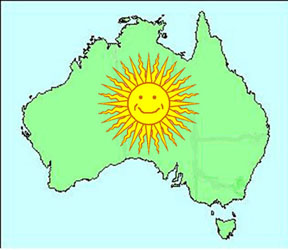 BYD Expanding Renewable Energy Storage into Australia The Green Optimistic Benji Jerew on April 15, 2013“….Chinese electric vehicle manufacturer BYD has noted their overseas neighbor’s increase in solar power installations, and is moving in to help with renewable energy storage, both on grid- and home-scale. Australia is abundant in sunshine and becoming more abundant in solar panel installations. Combined with BYD and Fe Batteries, consumers can save money by saving their renewable energy for the next night or the next week, instead of just letting it go to waste…..http://www.greenoptimistic.com/2013/04/15/byd-expanding-renewable-energy-storage-into-australia/#.UXG0X6JwpLs
Strong gains expected in renewable energy in Asia
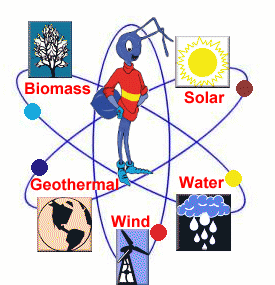 Renewable Energy Capacity in Asia to Reach 535.2 GW by 2020 http://designbuildsource.com.au/renewable-energy-capacity-in-asia-to-reach-535-2-gw-by-2020 by Mark Howe, 19 April 13 The total amount of renewable energy capacity installed in the Asia-Pacific region excluding hydropower is set to hit 535.2 gigawatts by the end of the decade according to the latest research from GlobalData.
According to GlobalData’s Renewable Energy Market in Asia-Pacific to 2020 report, these strong gains in renewable energy in the region will be driven by the rapid growth of the region’s late developing economies. China, expected to become the world’s largest economy on a purchasing power parity basis in under a decade, will lead capacity increases.
The Middle Kingdom is pushing hard to expand its usage of clean, renewable energy sources as the area’s dependence on coal-fired plants for electricity has already created severe air pollution problems in its major cities, while its net power demand is sure to increase as the area continues to experience economic growth.By the end of China’s 12th Five Year Plan, covering the period from 2011 – 2015, China will hit 130 gigawatts in renewable energy capacity. China hopes that 15 per cent of the country’s electricity will be generated from renewable sources by the 2020, and in 2013 alone plans to add a total of 49 gigawatts in renewable energy capacity, of which 18 gigawatts will be derived from wind power and 10 gigawatts from solar power.
GlobalData expects the cumulative renewable installed capacity for China, India, Japan, Australia, Thailand, Indonesia and the Philippines to rise at a compound annual growth rate of 12.2 per cent during the period from 2012 and 2020.
Throughout the region as a whole, the percentage of power generated by renewable energysources is seen by GlobalData as rising from 12.1 per cent in 2011 to nearly 20 per cent in 2020.
1 This month

of the week – Australians for War Powers Reform (AWPR)
To see nuclear-related stories in greater depth and intensity
 Antinuclear