Tony Abbott’s program for killing renewable energy in Australia
 here are the five ways that an Abbott Government could kill renewables:
- Can the Carbon price:…… taking away the carbon price also increases the risk around investment in any sort of generation – be it fossil fuel or renewable. So, perversely, it will probably help increase the cost of electricity.
- Can or dilute the Renewable Energy Target …
- Can the Climate Change Authority…..
- Can the Clean Energy Finance Corporation….
- Cut funding to the Australian Renewable Energy Agency….. It would be an appalling step backwards.
Five ways Abbott could kill renewables in Australia, REneweconomy, By Giles Parkinson 21 June 2013 Apparently, one of the few areas of bipartisan agreement in the heated politics of this country is in the area of renewables. Both major parties – Labor and the Coalition – say they support the 20 per cent renewable target, but it doesn’t actually mean what it says.
Indeed, Tony Abbott may well want to have his photo taken next to a wind farm (well, maybe not), or a solar array in the lead up to the election. Behind the scenes, however, he is under intense pressure to pull them down. Continue reading
AUDIO: Obstacles in the way for Toro Energy’s Wiluna uranium project
Wiluna uranium mine not officially protested http://www.abc.net.au/local/stories/2013/06/19/3785317.htm By Glenn  Barndon, Sarah Taillier, Chloe Papas
ABC’s Sarah Taillier spoke to Mia Pepper from the Conservation Council of WA. Have a listen to the interview
Toro Energy’s potential uranium mine at Wiluna has been the subject of much controversy – but was not officially appealed during the required period. So, what happens next?
Toro Energy’s plans to build a uranium mine in Wiluna have been the subject of considerable controversy since the $269 million project was proposed last year. Recently, the company announced that no appeals were launched during the four-week protest period allowed by the Federal government.
Though this takes the company one step closer to putting plans into action, Mia Pepper from the Conservation Council of WA told ABC’s Sarah Taillier that a formal appeal was not the only avenue of protest.
“The fight against the Wiluna uranium mine is definitely not over just because of not lodging one out of many possible appeals.” Pepper told the ABC that not only are there other ways to attempt to stop the mine, but the company may have bigger issues than a formal protest. “They’ve been trying to take it to market for a long time and haven’t been successful, and I think they’re using this event or non-event as a platform to try and fundraise for the project – which is and has been their main problem for a long time.”
Radiation weapon – “to kill Muslims” planned by USA white supremacists
 New York men accused of plotting to build radiation weapon By T.G. Branfalt Jr. ALBANY, New York Jun 19, 13 (Reuters) – Two New York men are accused of plotting to produce a lethal radiation weapon and trying to sell it to a Jewish group and the Ku Klux Klan, according to a federal complaint unsealed on Wednesday…..Crawford, who claimed to belong to the white supremacist Klan, described the device as able to emit lethal doses of radiation but that victims would be unaware they were poisoned until several days later, according to the complaint.
The two also used the phrase “disposing of medical waste” to describe killing Muslims, it said.
They were charged with conspiring to provide material support for use in preparation for a weapon of mass destruction. If convicted, they each face the possibility of up to 15 years in prison.
They appeared in U.S. District Court on Wednesday where they were deemed flight risks and ordered held in custody.http://www.reuters.com/article/2013/06/19/us-usa-crime-radiation-idUSBRE95I1KN20130619
Daily radiation leaks from Fukushima to Northern Hemisphere
 Fukushima Daiichi nuclear plant daily spewing radiation across northern hemisphere Natural News, June 20, 2013 by: Zach C. Miller The Fukushima Daiichi disaster continues “…….The amount of radioactivity released from Fukushima from other points of comparison yields cause for concern. The release of radioactivity from Fukushima is estimated to be the equivalent of 168 of the atomic bombs dropped on Hiroshima, Japan during World War II. More troubling still is the fact that the Fukushima plant continues to spew out radiation across the northern hemisphere every single day because the reactors have not stabilized. Continuously, leaks in the reactors are being reported, Fukushima children are being diagnosed with thyroid cancer, fish are being found to be contaminated with radiation, and U.S. water supply samples are testing positive for radioactive components Iodine-131, Cesium-134 and Cesium -137……”
Australian governments manufactured shocking lies about Aboriginal people
THE WAY AHEAD: The new land grab Tracker, BY JEFF MCMULLEN, JUNE 21, 2013“……The Howard Government and the Labor Opposition rushed with obscene haste to pass the Northern Territory Emergency Response Act (2007) because of a manufactured crisis over child sexual abuse. The radicalism of the Intervention was concealed by the government’s media manipulation of the scandalising, shaming issue of sexual abuse.
No matter how much Mick Gooda, the Aboriginal and Torres Strait Islander Social Justice Commissioner, may protest on national
television programs that the Australian Crimes Commission found no paedophile rings in these remote communities, the extraordinary
collective smearing of Aboriginal parents everywhere disguised the neo-liberal assault aimed at controlling Aboriginal lands.
Canada’s best-selling author, Naomi Klein, wrote in her book, The Shock Doctrine: The Rise of Disaster Capitalism, how neo-liberal
governments exploit shock therapy in a brazen campaign “of erasing and remaking the world”.
The Intervention exploited a national shock over the state of Aboriginal children to introduce harsh social management of families
and a clamp on Aboriginal organisations that further undermined their control over their destiny……”.http://tracker.org.au/2013/06/the-way-ahead-the-new-land-grab-2/
G8 becoming aware of corporate land grabs from indigenous peoples
Ultimately, the most affected aren’t the [indigenous] leaders who are comfortable in their palaces –most of them for more than two decades in power. The real losers in this are ordinary people in African countries.
As the G8 meet in Northern Ireland, the spotlight has been brought back to taxes and role of multi-nationals in developing countries. It is not just tax evasion and tax holidays that governments provide them that hurt developing economies but land grabbing has also become an every day reality in most African countries. Some companies involved are from these G8 countries.
More work on the ground needs to be done for local communities to have their rights to land well kept as governments push in favour of foreign companies

Push for transparency at G8 alone will not solve land grabs in Africa Rose Bell’s blog JUNE 17, 2013 In 2012, a few months before he passed away, Ethiopian Prime Minister Meles Zenawi while attending the World Economic Forum on Africa was asked a question that intrigues most African citizens. Why do African leaders- revolutionaries turn to looting their own countries once in power? The brainy later leader of Ethiopia responded by highlighting foreign corporations’ role in impoverishing Africa. He hinted that African leaders, in their quest to find jobs for an increasing unemployed population, were being held hostage by corporations that come in to invest. Continue reading
Solar panels on barn rooftops benefit Japan’s farmers
Japan’s Farmers To Benefit From Rooftop Solar Power http://www.energymatters.com.au/index.php?main_page=news_article&article_id=3802 21 June 13, Japan’s farming sector is making the switch to solar power, with the nation’s agricultural body announcing plans to spend AU$93 million installing 30 megawatts of solar on the rooftops of livestock barns and distribution centres.

The project is the initial phase of a plan by Japan’s National Federation of Agricultural Cooperative Associations (or Zen-Noh, for short), and Mitsubishi, to ultimately provide 200 megawatts of solar power capacity on farming facilities nationwide by the middle of 2015. Continue reading
Africa’s renewable energy boom
 Renewables offer least-cost option for energy shortages in Africa REneweconomy, By Jon Walter 20 June 2013Africa is undergoing a renewable energy boom, led by South Africa and Morocco, and renewables are offering the least-cost option to reduce a chronic power shortage and lack of access to electricity across the continent.
A report from the energy team at global law firm Baker & McKenzie, suggests solar PV has the most potential throughout Africa, while solar concentrated solar power (CSP), onshore wind and solar CPV are also tipped to make a significant contribution to the energy mix. Hydro and biomass are viewed as the most obvious complements to solar PV in Sub-Saharan Africa.
The report found that renewables can play a major role in the electrification of Africa because they can compete with conventional energy sources, particularly away from the limited transmission networks or developed fuel transportation hubs, but they are also cheaper than new coal-fired generators.
Much electricity generation in Africa relies on diesel fuel. With limited refining capacity on the continent, and few pipeline networks, the cost of diesel-powered electricity generation is high.
Removing fuel costs from the equation gives renewable energy a comparative cost advantage.South Africa intends to bring 6.9 gigawatts (GW) of renewables capacity online by 2020 and has already awarded 2.4 GW of contracts through the first two windows of its procurement programme. The first phase of 1.4 GW comprises $5.4 billion of contracts.
Renewables were competitive with new-build coal in South Africa’s second procurement…….. http://reneweconomy.com.au/2013/renewables-offer-least-cost-option-for-energy-shortages-in-africa-87419
All-Energy Australia Conference to further clean energy for remote areas
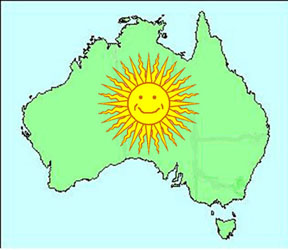 Remote Australia reliant upon clean energy push BY ALEX FIRST, ALL-ENERGY AUSTRALIA 2013 EXHIBITION AND CONFERENCE , 18 June 2013 One of the hot topics to be covered at the upcoming All-Energy Australia 2013 Exhibition and Conference is the crucial need for clean energy infrastructure in Australia’s rural regions. In this excerpt from the soon-to-be-released July/August 2013 edition of EcoGeneration magazine, several case studies show the success of such investments.
Australia’s Gulf region is on the verge of a boom that can be facilitated by greater investment in renewable energy, according to the Chief Executive of Cairns-based development agency Gulf Savannah Development.
Rob Macalister – one of the keynote speakers at All-Energy Australia 2013, being held at the Melbourne Convention and Exhibition Centre from 9–10 October – is optimistic about the future in the area, which covers nearly 200,000 km from Queensland’s Atherton Tablelands through to the Northern Territory border……http://ecogeneration.com.au/news/remote_australia_reliant_upon_clean_energy_push/082029/
Australia’s “Solar Citizens” now has nearly 10,000 members
 Energy Matters Supporting Solar Citizens http://www.energymatters.com.au/index.php?main_page=news_article&article_id=3803 21 June 13 Australian grassroots group Solar Citizens is gaining a helping hand in its important work from national solar provider Energy Matters.
Solar Citizens is bringing together existing and future solar owners, with goals of seeing the clean energy technology installed on every suitable rooftop in the nation and to ensure the efforts of solar households are fairly rewarded.
Officially launched in May, the ranks of Solar Citizens have quickly swelled; reaching nearly 9,500 registered members so far.
More than 4,700 individuals have taken online action for two Solar Citizens campaigns relating to Queensland and Tasmania. Continue reading
Nugget Coombs, an economist who understood Aboriginal society
 THE WAY AHEAD: The new land grab Tracker, BY JEFF MCMULLEN, JUNE 21, 2013“……..Even in the Labor Party, some like Dr Gary Johns and Aboriginal businessman, Warren Mundine, then National Vice President of the ALP, jeered at what they saw as the old ’Nugget Coombs’ model of communal Aboriginal society and they cheered for private land ownership, arguing that “communal land holding was retarding Aboriginal people.
While neo-liberalism was beginning to shape the views of some prominent Aboriginal operators like Warren Mundine, Noel Pearson and
Marcia Langton, the biggest influence on John Howard’s inner circle of advisers and parts of the bureaucracy in Canberra came from the poison pen of Professor Helen Hughes, a Senior Fellow at the right-wing Centre for Independent Studies,
Hughes painted what I consider a grossly distorted picture of the Aboriginal policy of self-determination by attacking the vision of the
former Reserve Bank head, Nugget Coombs. She derided Coombs for his remote community “experiment that was to give Aborigines and Torres Strait Islanders a socialist utopia, leading to the establishment of a separate nation.”
Nugget Coombs had and still has many bitter and twisted ideological opponents, but the truth is he was an establishment economist with a
good grasp of animist attachment to land. He advocated autonomy for remote Aboriginal homelands based on traditional Cultural divisions, the kind of Indigenous control that I have seen bring rapid improvement to the wellbeing of many First Nations societies in the
United States and on the Saami lands of Norway, Finland and Sweden…..
But Helen Hughes and other neo-liberals do not seem to be influenced by history or evidence.
The striking difference between this vision of self-determination and the neo-liberal approach to developing Aboriginal lands is that
neo-liberalism involves dispossessing people of communal lands through dubious promises of payoffs if they sign long leases and chase the great Aussie Dream of a mortgage and “private home ownership”…….http://tracker.org.au/2013/06/the-way-ahead-the-new-land-grab-2/http://tracker.org.au/2013/06/the-way-ahead-the-new-land-grab-2/
1 This month

of the week – Australians for War Powers Reform (AWPR)
To see nuclear-related stories in greater depth and intensity
 Antinuclear