Nuclear executives facing the unpalatable reality of the industry’s decline
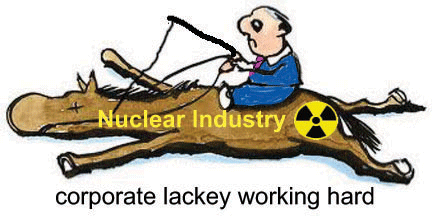 Nuclear power faces uncertain future The shifting economics of energy and Japan’s Fukushima disaster may have squashed the industry’s attempted comeback. Jonathon Berr, MSN Money, 7 July 13, About a decade or so ago, many Americans were talking about a “Nuclear Renaissance.” The public’s unease about the industry, which dated at least as far back as the 1979 Three Mile Island accident, had begun to fade and new nuclear power plants were being proposed in the U.S. for the first time in decades…..Now, though, optimism surrounding nuclear energy is slipping away, even as President Obama has vowed that 80% of America’s electricity will come from renewable resources by 2035 to reduce greenhouse gas emissions…….
“There were expectations that (a new nuclear plant) might come, but the combination of the recession and the development of shale gas practically nipped it in the bud,” says John Rowe, the former chief executive of Exelon(EXC -1.13%, news), one of the biggest operators of nuclear power plants, in an interview. “You just don’t have an economic space for new nuclear anymore.”
Exelon, which is based in Chicago, looked into building new reactors in Texas but scrapped the idea in 2007 when it realized the project was economically unfeasible, he said. Merchant power plant operator NRG Energy (NRG -0.46%, news) also abandoned a reactor project in the Lone Star State in 2011. Duke Energy (DUK -0.18%, news) shelved plans for reactors in North Carolina earlier this year…..
In the U.S., about 30 new nuclear plants have been announced, but construction has actually begun on only five. All of these projects are behind schedule and over-budget, according to Jim Riccio of Greenpeace, a longtime critic of the industry…….
Southern Co. (SO -0.60%, news) is at least 14 months late in its $14 billion project to add two reactors at its Alvin W. Vogtle nuclear power plant near Augusta, Ga., according to The New York Times……. “In the face of escalating nuclear construction costs, cheap natural gas, rising competition from increasingly inexpensive wind and other renewables, falling consumer demand, and a heightened focus on energy efficiency, the economics of these new nuclear reactor projects could not be more abysmal for ratepayers,” said the Vermont Law School Institute for Energy and the Environment earlier this year in a report critical of the industry.
Indeed, as the economy faced its worst slowdown since the Great Depression, demand for electricity plunged, and it still hasn’t returned to 2007 levels, according to Richard Myers, vice president for policy at the Nuclear Energy Institute (NEI), an industry trade group. He added that most of the new generating power now under construction will be natural gas-fired plants.,,,,,,
Earlier this month, Edison International’s (EIX -1.18%, news) Southern California Edison announced it was going to retire the two reactors at its San Onofre plant (pictured) near San Diego, which had been idle since last year. While Myers said that plant’s situation was unique, former Exelon CEO Rowe said it might be a harbinger of things to come.
“I think some additional plants will have curtailed lives,” he said.
One issue that needs to be resolved is the long-term disposal of radioactive waste. President Obama canceled the Yucca Mountain, Nev., storage project earlier this year. And Nevada political officials such as Senate Majority Leader Harry Reid (D-Nev.) have fiercely opposed the facility for years.
No comments yet.
1 This month
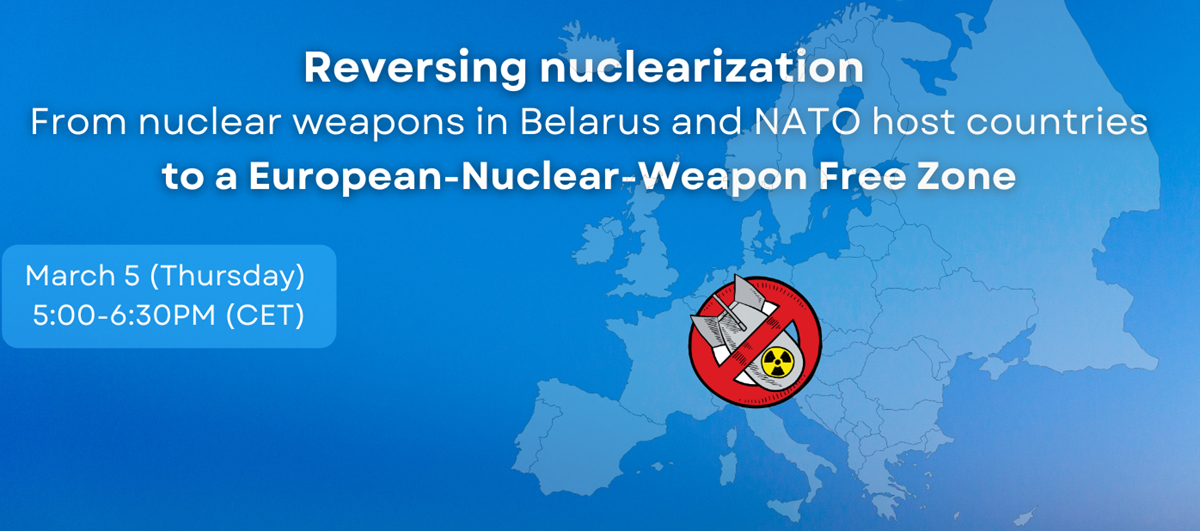
6 March -Online – Reversing nuclearization:
From nuclear weapons in Belarus and NATO host countries to a European-Nuclear-Weapon Free Zone
Mar 6, 2026 03:00 AM in Canberra, Melbourne, Sydney

of the week – Australians for War Powers Reform (AWPR)
To see nuclear-related stories in greater depth and intensity
 Antinuclear
Leave a comment