Australian Silex laser technology brings danger of nuclear weapons proliferation
DAVID BRADBURY: I went to the children’s hospital in Basra, I went to the General Hospital in Fallujah where there was a baby being born with a twisted cleft palette, spin bifida, with organs that were displaced in its body and the likelihood of autism according to the English-speaking doctor who’s been through this nightmare for the last 10 or 15 years. They can’t cope with it.
Even advocates of nuclear energy like Paul Barratt are concerned about the increasing use of depleted uranium munitions.
PAUL BARRATT: It is a toxic metal. It’ll be there in the environment, kids playing in the dust, people growing vegies, who knows. There is controversy about the extent of the health effects, but there seems to be good reason to believe there are long-term genetic effects, birth defects and what have you.
 http://www.abc.net.au/7.30/content/2013/s3816411.htm Australian Broadcasting Corporation Nuclear enrichment revolution meets weapon fears Broadcast: 01/08/2013 Reporter: Greg Hoy An Australian nuclear physicist has developed a new enrichment process and been granted approval by US regulators to develop it commercially, despite fears it could promote the proliferation of nuclear weapons.
Transcript……………..
TV REPORTER: Earlier this week the GE Hitachi facility in Castlemaine received federal approval to enrich uranium using laser technology, but what exactly does that mean and what are the implications to our community?
GREG HOY: The global implications are profound according to the American physicists’ society and non-proliferation groups who fear the Silex technology will promote the spread of nuclear weapons. Continue reading
AUDIO: how Aboriginals managed the Australian landscape

 AUDIO: Bill Gammage on how Australia was the Biggest Estate on Earth Radio 702 ABC Sydney , 1 August, 2013 http://www.abc.net.au/local/stories/2013/08/01/3816338.htm?site=sydney
Richard Glover talks to author and historian Bill Gammage about how Aboriginal people cultivated Australia. Before white settlement Indigenous people had managed the Australian landscape to the point that it resembled an English estate, according to historian Bill Gammage.
Richard spoke about how Australia looked before settlement with the author of one his favourite books, ‘The Biggest Estate on Earth’, Professor Gammage, who also features in the ABC Mini-series, First Footprints.
Contrary to the belief that the Indigenous people of the period maintained Australia’s wilderness through “stepping lightly,” Professor Gammage argues “they were active interveners in the land.”
“If you let land go, sooner or later most of it is going to revert to trees and then thick trees and then impenetrable trees and bush, and that doesn’t suit animals that don’t like that country and it certainly doesn’t suit people, so they were constantly burning,” he says.
The title of Professor Gammage’s book comes from his discovery that English settlers all over Australia likened the land to the manicured estates of the mother country.
“There’s [a] painting in my book in which… people looking at it now would say, ‘well that’s open forest’, but the artist John Glover said ‘this typifies the thickly wooded part of the country, and yet for us it’s open. So if that was the thickly wooded; you’d imagine what the open and grassy country was like.”
Click on audio to listen to the interview in full.

The four part documentary series, First Footprints, wraps up this Sunday on ABC1.
Malawi losing $millions due to its poor uranium deal with Paladin Energy
Malawian dies on duty at Kayelekera Uranium Mine in Karonga, By Nyasa Times Reporter July 31, 2013
| “………The tragic incident has cast a shadow over the company which is already facing mounting criticism following reports the country was losing out from the favourable tax regime agreed with the company by the former administration of late President Bingu wa Mutharika. |
Last week, the United Nations’ Special Rapporteur on the Right to Food, Olivier de Schutter, also reiterated that Malawi was losing out due to tax incentives given to Paladin……..
As a result of tax incentives, one estimate suggests that Malawi may lose between US$ 205 million and US$ 281 million over the 13 years of the project.
But the current government of Joyce Banda has indicated it has started negotiations with the company to have the agreement reviewed. http://www.nyasatimes.com/2013/07/31/malawian-dies-on-duty-at-kayelekera-uranium-mine-in-karonga/
Eisenhower, and Truman’s Chief of Staff knew that atomic bombing of Hiroshima was wrong
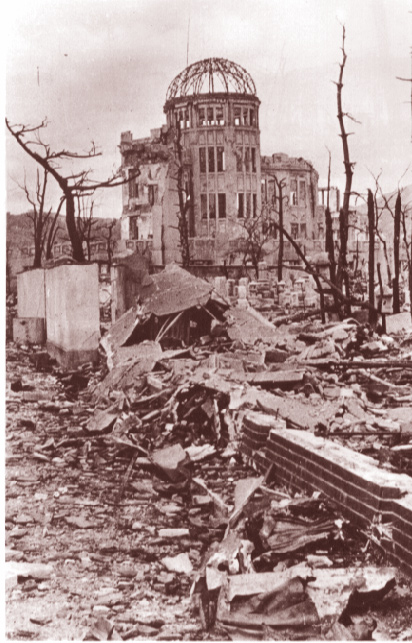 In a Newsweek interview, Ike would add: “…the Japanese were ready to surrender and it wasn’t necessary to hit them with that awful thing.”
Countdown to Hiroshima, for July 31, 1945: Top Truman Aide Opposes Use of Bomb Greg Mitchell, HUFFINGTON POST, : 07/31/2013 For the past several days here, and for more to come, I am counting down the days to the atomic bombing of Japan (August 6 and August 9, 1945), marking events from the same day in 1945. I’ve written hundreds of article and three books on the subject: Hiroshima in America (with Robert Jay Lifton), Atomic Cover-Up (on the decades-long suppression of shocking film shot in the atomic cities by the U.S. military) and Hollywood Bomb (the wild story of how an MGM 1947 drama was censored by the military and Truman himself).
Here are previous daily pieces this month in this unique series.
July 31, 1945: The assembly of Little Boy is completed. It is ready for use the next day. But a typhoon approaching Japan will likely prevent launching an attack. Several days might be required for weather to clear.
- In Germany, Admiral William D. Leahy, chief of staff to Truman–and the highest-ranking U.S. military officer during the war–continues to privately express doubts about the bomb, that it may not work and is not needed, in any case. He would later write in his memoirs:
“It is my opinion that the use of this barbarous weapon at Hiroshima and Nagasaki was of no material assistance in our war against Japan. The Japanese were already defeated and ready to surrender because of the effective sea blockade and the successful bombing with conventional weapons.”The lethal possibilities of atomic warfare in the future are frightening. My own feeling was that in being the first to use it, we had adopted an ethical standard common to the barbarians of the Dark Ages. I was not taught to make war in that fashion, and wars cannot be won by destroying women and children.”…………… Continue reading
Labor’s “captain’s pick” Northern Territory candidate opposes Muckaty nuclear waste dump
 Nova happy to spoil the party, NT News XAVIER LA CANNA | August 1st, 2013 LABOR’S “captain’s pick” Senate candidate Nova Peris said she would have crossed the floor to oppose the Muckaty nuclear waste dump – and would vote against her party if she felt strongly about other issues.
Ms Peris said the Muckaty nuclear waste dump – planned to be built near Tennant Creek – was one area where she would go against Labor Party policy.
“I met with the anti-nuclear campaign people and I also met with the NT environment mob, and I have met with the Tennant Creek residents, I have met with the unions and I have met with three of the traditional owner groups,” Ms Peris told the NT News .
“In my view I do stand with them in opposing that (nuclear dump).” Continue reading
Australian company Paladin’s uranium contract with Malawi -the “worst possible swindle”

 Malawi gov’t and Paladin: Act on Kayelekera uranium raw deal now! By Veronica Maele-Magombe Nyasa Times, By Veronica Maele-Magombe July 30, 2013 Since last week’s stinging observation by UnitedNations (UN) Special Raportuer on the Right to Food Olivier De Schutter regarding Malawi’s Kayelekera Uranium Mine deal, two elusive culprits remain pretty much intact in their hard shells. It is as if the country’s most guarded contract between government and Australiancompany, Paladin Africa Ltd has not been unravelled as the worst possible swindle. Continue reading
Low demand, low prices, poor outlook, as Ranger uranium mine loses $54 million
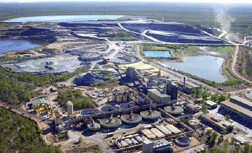 ERA boss steps down amid bleak short-term outlook The Motley Fool by Owen Raskiewicz, Thursday, August 1, 2013 Energy Resources Australia (ASX: ERA) chief executive, Rob Atkinson, has quit his position after nearly five years at the helm of the Rio Tinto (ASX: RIO) subsidiary.
ERA has struggled with massively reduced demand and prices for the past seven years. In the wake of the Fukushima nuclear disaster in
Japan, the spot price of uranium hit a low of slightly less than $US 40 per pound, its lowest point in seven-and-a-half years but it’s not
getting better…….
The one positive ERA shareholders can take away from a difficult short-term outlook is the knowledge that few new producers will come online in the near future. There was no dividend declared by ERA…
Boss of ERA bales out as Ranger uranium mine loss reported
 ERA reports Ranger uranium loss of $21m and boss ABC News, By Rick Hind 1 August 13 The company that runs the Ranger uranium mine in the Northern Territory has announced a $54 million loss and the departure of its chief executive.
In its half-yearly results, Energy Resources of Australia (ERA) said losses booked up included $21 million spent on an underground exploration decline.
It said chief executive Rob Atkinson will move to Rio Tinto after five years running ERA.
ERA is majority owned by Rio Tinto….. The underground exploration decline is part of establishing the viability of future operations.
Draft EIS guidelines for the underground mining proposal are in the hands of the Northern Territory Environmental Protection Authority.
The Federal Government is expected to release environmental guidelines for the proposed expansion within weeks….. http://www.abc.net.au/news/2013-08-01/era-ranger-uranium-loss-report-ceo-goes-to-rio-tinto/4858824
Western Australian wind farm will benefit farmers across twp shires
 Conditional Approval For Western Australian Wind Farm http://www.energymatters.com.au/index.php?main_page=news_article&article_id=3866 1 Aug 13, The Great Southern Joint Development Assessment Panel has given Moonies Hill Energy conditional approval for a stage of the proposed Flat Rocks Wind Farm.
Moonies Hill Energy director Sarah Rankin saysconstruction of the wind farm could commence in late 2014, early 2015. Construction had originally been intended to commence in 2012/13.
If fully developed, the Flat Rocks Wind Farm will be a 150 MW project. Situated 25km south east of Kojonup, in the Great Southern region of Western Australia, the facility will produce 562,000 GWh of electricity annually – enough to power 90,000 homes – and avoid up to 451,000 tonnes of carbon dioxide equivalent each year. Moonies Hill Energy says the project would inject $130 million into the local community over its lifespan – $30 million during construction and $5 million a year during operation.
The Flat Rocks Wind Farm will host 74 wind turbines perched on 84m towers and will be compatible with existing agricultural activities such as stock grazing and broadacre crops. After construction, the facility will occupy less than 1% of productive farmland.
The wind farm will spread over 6 farming operations and across two shires. The five landowners involved will all be financial beneficiaries of the project. The wind farm will be patched into the South West Interconnected System (SWIS) via the proposed 330kV Muja-Wellstead transmission line, construction of a 132kW line into the Kojonup substation or via the existing 132kV line that traverse the southern part of the project area.
Electricity produced by the Flat Rocks wind farm will be sold into the SWIS under a commercial agreement.
As part of the project, Moonies Hill Energy will establish a Sustainable Communities Fund to operate during the life of the wind farm that will provide support for surrounding community programs.
China to spend $323 billion to reduce greenhouse gas emissions

 China outlines renewable energy splurge July 30, 2013 http://www.smh.com.au/business/carbon-economy/china-outlines-renewable-energy-splurge-20130730-2qx92.html#ixzz2amhMZ8XK
China may invest another 2.3 trillion yuan in key energy- aving and emission-reducing projects, Xie Zhenhua, vice chairman of the National Development and Reform Commission, said Tuesday at a conference in Beijing. China stands by its pledge to cut carbon emissions per unit of economic output by as much as 45 per cent before 2020 from 2005 levels, he said.
The increased reliance on renewable sources of energy fits with efforts by China, the world’s biggest carbon emitter, to help mitigate the effects of pollution blanketing its major cities. Along with renewables investments, the environment ministry is considering stricter controls on vehicle and industry pollution.
The government aims to have 100 gigawatts of wind-power installed capacity and more than 35 gigawatts of solar power by 2015, Xie reiterated today. China’s targets have encouraged companies including China Petrochemical Corp., also known as Sinopec Group, to strengthen their commitment to protect the environment.Sinopec Monday said it will invest 22.9 billion yuan on an environmental protection plan.
China asked seven cities and provinces last year to put in place regional caps and pilot programs for trading emission rights.
The country will gradually expand the regions falling under its carbon trading pilot program starting from 2015 in order to explore the potential for a national system, Xie said.
125 acres radioactively contaminated by Hanford nuclear site, near Columbia River
Radio: Uranium-contaminated plume covers 125 acres at U.S. nuclear site — Over 300 lbs. of uranium a year flowing into Columbia River (AUDIO) #Hanford http://enenews.com/radio-uranium-tainted-plume-of-groundwater-stretches-across-125-acres-at-u-s-nuclear-site-over-300-lbs-of-uranium-a-year-released-into-columbia-river-audio-hanford
Northwest News Network (NPR),, July 29, 2013: Cleanup Options For Hanford’s 300 Area Going Public […] Federal officials are trying to figure out what to do about radioactive materials that remain at a place near the Columbia River known as the 300 Area. […] The 300 Area was where workers milled uranium rods and tested ways to process plutonium during WWII and the Cold War. They poured about 2 million gallons of radioactive liquid waste a day into sandy ponds and trenches right next to the Columbia River. […] One of the remaining jobs is to work on a 125-acre groundwater plume contaminated with uranium. […]
Uranium-contaminated groundwater plume at Hanford (SOURCE: Proposed Cleanup Plan for Hanford’s 300 Area)
Tri-City Herald,, July 29, 2013: […] The 300 Area was used for fabricating uranium into fuel pieces for the Hanford reactors that produced plutonium for the nation’s nuclear weapons program. It also was used for research, including testing processes for chemically removing plutonium from irradiated uranium fuel. […] About 330 pounds of uranium per year is released to the Columbia River from the Hanford 300 Area, according to DOE. […] The public may comment at a meeting at 6:30 p.m. today at the Richland Public Library, 955 Northgate Drive, Richland. An open house will start an hour earlier. Additional public meetings will be held Wednesday in Seattle and Aug. 8 in Hood River.
Listen to the broadcast here http://www.nwnewsnetwork.org/post/cleanup-options-hanfords-300-area-going-public
1 This month

of the week – Australians for War Powers Reform (AWPR)
To see nuclear-related stories in greater depth and intensity
 Antinuclear