AUDIO: Commentary on Energy Minister’s visit to planned nuclear waste dump area
 AUDIO Federal minister visits Muckaty Station http://caama.com.au/wp-content/uploads/2013/08/Lauren-Mellor-Penny-Phillips.mp3 http://caama.com.au/federal-minister-visits-muckaty-station
Yesterday, Federal Minister for Resources and Energy, Gary Gray met with Traditional Owners at the proposed nuclear waste facility at Muckaty Station, near Tennant Creek.
This is the first time a federal minister has visited the site and met with Traditional Owners at Muckaty.
Traditional Owner Penny Phillips welcomed the minister’s visit, but says the people were not invited to the meeting between the minister and Northern Land Council.
“I was happy for him to come, I went to Canberra and invited him to come but the Northern Land Council mob didn’t tell us he was coming to Muckaty, so we ended up going.”
Also in Muckaty was anti-nuclear campaigner Lauren Mellor, from the Environment Centre NT, who on behalf of the Traditional Owners put forth a new approach.
“There is a new approach, which is a national commission into radio active waste management options, that looks at all options, not just a remote dump site and investigates the best and safest way to actually manage Australia’s stock piles of waste.”
Listen below to the extended comments from Penny Phillips and Lauren Mellor.
America’s AirSea Battle (ASB) project prepares for a nuclear attack on China
The general public is evidently being kept in the dark by the mainstream media that a nuclear first strike against China is being contemplated by rogue elements within the Pentagon.
America Plans Unprovoked Nuclear Attack on China, edited and abridged from various sources Darkmoon, by Lasha Darkmoon, August 3, 2013 by Montecristo If America launches a nuclear attack on China, the Chinese will strike back at American cities.
This is an edited abridgement by Lasha Darkmoon of Professor Amitai Etzioni’s ground-breaking article in the Yale Journal of International affairs, Who Authorized Preparations for War with China? It is followed by extracts from Paul Craig Roberts’ impassioned response to the same article. This important material has been condensed to roughly one-fifth of its original length.
AMITAI ETZIONI: The Pentagon has concluded that the time has come to prepare for war with China. It is a momentous conclusion, a momentous decision that so far has failed to receive a thorough review from elected officials, namely the White House and Congress. This important change in the United States’ posture toward China has largely been driven by the Pentagon.

The decision at hand stands out even more prominently because (a) the change in military posture may well lead to an arms race with China, which could culminate in a nuclear war; and (b) the economic condition of the United States requires a reduction in military spending, not a new arms race.
Have the White House and Congress properly reviewed the Pentagon’s approach—and found its threat assessment of China convincing? If not, what are the United States’ overarching short- and long-term political strategies for dealing with an economically and militarily rising China?…………. Continue reading
American group calls for a nuclear-free future
South Africa recently issued a statement on the “Humanitarian Impact of Nuclear Weapons” on behalf of 74 nations that have signed on to the Non-Proliferation Treaty. Unfortunately, the U.S. is not among this group.
“It is in the interest of the very survival of humanity that nuclear weapons are never used again, under any circumstances,” the statement reads. “The catastrophic effects of a nuclear weapon detonation, whether by accident, miscalculation or design cannot be adequately addressed.”
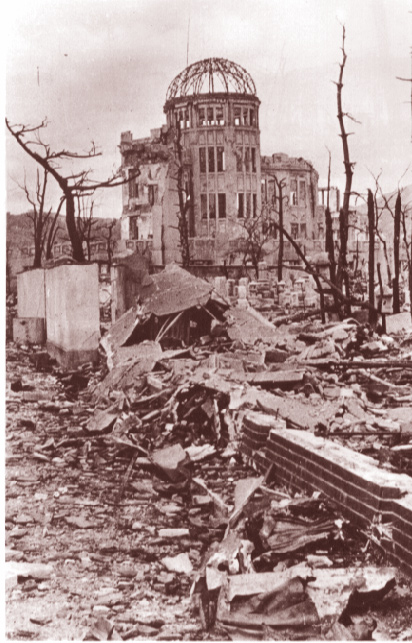
 On Hiroshima, Nagasaki anniversary, let’s work for nuclear-free future http://bangordailynews.com/2013/08/04/opinion/contributors/on-hiroshima-nagasaki-anniversary-lets-work-for-nuclear-free-future/?ref=OpinionBox By Ilze Petersons and Doug Allen, Aug. 04, 201 For more than 10 years, the Peace & Justice Center of Eastern Maine has held a commemoration in Bangor to remember those who died 68 years ago in Hiroshima and Nagasaki when the U.S. Armed Forces dropped two atomic bombs on the Japanese cities.
We’ll never know how many died, but studies estimate that 60,000 to 90,000 died instantly in Hiroshima on Aug. 6, 1945, and 40,000 died instantly in Nagasaki on Aug. 9. The total estimated death toll for both cities that year was about 200,000.
Every year, we remember the civilians who died, and we recommit to doing all that we can to make sure nuclear weapons are never used again.
Some suggest dropping the bombs was necessary to save more lives. But Admiral William D. Leahy, who served as chief of staff to President Franklin Delano Roosevelt, disagreed. Using “this barbarous weapon … was of no material assistance in our war against Japan,” he wrote in his memoirs. “The Japanese were already defeated and ready to surrender.
“My own feeling was that in being the first to use it, we had adopted an ethical standard common to the barbarians of the dark ages,” he continued. “I was not taught to make war in that fashion, and wars cannot be won by destroying women and children.”
President Dwight D. Eisenhower, who served as Allied commander in Europe during World War II, said of the Hiroshima bombing: “I was against it on two counts. First, the Japanese were ready to surrender and it wasn’t necessary to hit them with that awful thing. Second, I hated to see our country be the first to use such a weapon.”
Why should we reflect on the death and destruction caused by the only use of nuclear weapons 68 years ago?
Recently, President Barack Obama, while speaking in Berlin, said the U.S. would reduce the number of its deployed strategic nuclear warheads — currently 1,722 — by a third if Russia did the same. The president also called for reducing nuclear weapons in Europe.
“There is no ‘acceptable’ level of nuclear weapons that is consistent with the ultimate survival of civilization,” Robert Dodge, a member of the Physicians for Social Responsibility, wrote in a recent essay.
Many of the world’s nations seem to agree. Continue reading
World’s first nuclear bomb radiation victim – medical records discovered
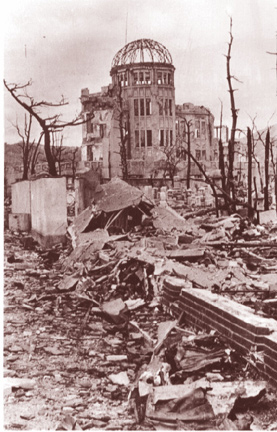 “The records are invaluable as those reporting in detail on changes in her health condition after she was exposed to a fatal level of radiation.”
Medical records of world’s first radiation victim from A-bomb recovered Asahi Shimbun, By YURI OIWA/ Staff Writer, 4 August 13,
Long-lost medical records detailing the sharply deteriorating health of the world’s first recognized radiation sickness patient have been
recovered 68 years after the victim died within weeks of being exposed to the atomic bomb in Hiroshima.
The patient, Midori Naka, a stage actress, died 18 days after she was injured in the nuclear blast on Aug. 6, 1945. She was staying in Hiroshima as part of a traveling theater troupe. After returning to Tokyo a few days later, Naka died while undergoing treatment, which included blood transfusions, at the University of Tokyo Hospital. She was 36.
The discovery came after decades of efforts by researchers to locate her missing records.The hospital kept updates of her condition leading up to her death and the results of her autopsy. But other vital records have been missing until their recent recovery.
Kazuhiko Maekawa, professor emeritus with the University of Tokyo who is expert in treating patients suffering from radiation exposure,
hailed the discovery of Naka’s medical records. Continue reading
No recovery in sight for collapsed uranium market
 No rebound for uranium seen as Japan idle plants Prices have sunk to the lowest in more than 7 years amid a glut of the radioactive metal and speculation Japan will delay restarting its nuclear reactors. MineWeb, Ben Sharples (Bloomberg) , 02 Aug 2013 (BLOOMBERG) Uranium prices are showing little sign of recovery after sinking to the lowest in more than seven years amid a glut of the radioactive metal and speculation Japan will delay restarting its nuclear reactors.
Prices may average $42.82 a pound this year, according to Morgan Stanley, while Bank of America Corp. is predicting $43.80. BMO Capital Markets, which cut its price estimate by 10 percent in July, forecasts $43 a pound. Uranium has averaged $40.94 so far in 2013 after sliding to $34.50 last month, the lowest since November 2005.
While Japanese power producers, including Tokyo Electric Power Co., are seeking to restart reactors as soon as possible as the cost of other fuels escalates, operations may not resume until next year, according to Deutsche Bank AG. That’s threatening to delay a rebound in demand for uranium, hurting miners such as Australia’s Paladin Energy Ltd. as supplies outstrip demand. There is about 60 million pounds of surplus uranium around the world, according to Cantor Fitzgerald LP.
“The process for restarts is clearly going to take some time,” said Jonathan Hinze, a senior vice president at Roswell, Georgia-based Ux, which provides research on the nuclear industry. “Japanese utilities are unlikely to require any new fuel until 2014 at the earliest. There is a realization that the uranium demand from Japan is unlikely to dramatically change anytime soon, especially this year.”
Price Weakness
Uranium for immediate delivery has dropped as much as 21 percent this year, extending a 17 percent decline in 2012, according to data from Ux. Prices slumped 12 percent in July, the biggest monthly loss since March 2011. They climbed as high as $152 in June 2007…
New South Wales’ getting two huge solar energy power plants
LIVING GREEN: Restoring habitats Newcastle Herald, By KAREN TOIRKENS Aug. 4, 2013“………NSW OUTBACK GOES SOLAR NEW South Wales is set to be home to the largest solar power station in the southern hemisphere, with power company AGL announcing that it will install two million thin-film photovoltaic panels at two sites in western NSW.
The solar-energy plants will have a combined 155-megawatt capacity, enough to power about 50,000 households.The larger of the two plants (102 megawatts) will be built in Nyngan, north-west of Dubbo, while the smaller 53-megawatt plant will be constructed near Broken Hill.
Together they will cover an area four times the size of the Sydney CBD.
Federal Minister for Climate Change Mark Butler said the installations represent a big step forward towards the contribution of solar to the nation’s energy mix.”Australia has the highest average solar radiation per square metre of any continent in the world and we should take advantage of that,” Mr Butler said.
The $450-million project will receive $166.7 million in federal funding through the Australian Renewable Energy Agency, with the NSW government investing a further $64.9 million in the project….. http://www.theherald.com.au/story/1682069/living-green-restoring-habitats/?cs=303
Construction will begin on the plants from January, with both expected to be supplying a combined 360,000 megawatts of clean electricity annually to the eastern Australian grid by late 2015.
South Australia’s renewable energy success, despite planned cutbacks in solar feed-in tariff
SA’s love affair with renewables isn’t just solar-focused; the state also has the largest wind power capacity in the nation. According to the Australian Energy Market Operator, approximately 29% of South Australia’s electricity came from renewable energy sources in 2012.
South Australia Solar Feed In Tariff Countdown http://www.energymatters.com.au/index.php?main_page=news_article&article_id=3872 5 Aug 13, South Australia’s feed in tariff will be slashed for new applications soon. To avoid the inevitable applications rush; households intending going solar may want to make a move now.
South Australia’s current solar feed in tariff for surplus exported electricity is comprised of two parts- a retailer contribution of 9.8c and a 16 cent component paid by SA Power Networks. Continue reading
1 This month

of the week – Australians for War Powers Reform (AWPR)
To see nuclear-related stories in greater depth and intensity
 Antinuclear