King Island shows the way towards 100% renewable energy

“The way these technologies are being used and integrated is world-leading and another example of the clever solutions to real-world problems that have been developed in Tasmania and can be exported globally.”
100% renewables: The King Island example, Business Spectator Laurie Guevara-Stone 9 Aug 13, Halfway between Tasmania and mainland Australia, in the heart of the Bass Strait, is rugged, windswept King Island. With a population of just under 2,000 and an area of just over 400 square miles, tiny King Island is becoming a big leader in electricity generation, demonstrating that a high-renewables future is possible.
King Island, and especially greater Tasmania, face many challenges due to climate change including water availability, flooding of coastal settlements, a rise of bushfires, and decreased agriculture and aquaculture industries. Although Australia’s contribution to global greenhouse gas emissions is small – and Tasmania’s even smaller, largely due to singificant amounts of hydro – the island has a goal of reducing carbon emissions by 60 per cent from 1990 levels by 2050.
Tasmania is on track to meet that target, thanks in part to lessons learned and the success at King Island. King Island is providing a significant demonstration of the potential opportunities for Tasmania through its King Island Renewable Energy Integration Project (KIREIP). Initiated by the government-owned electricity provider,Hydro Tasmania, KIREIP’s goal is to not only reduce dependence on fossil fuels, but also to help constrain power prices on the island.
Many islands use diesel to produce electricity. Although inefficient and expensive, it’s more accessible than other forms of fossil fuels for remote locales. Before any renewable energy technologies came to the island, King Island residents were consuming 4.5 million litres of diesel each year. By 2011, mainly through the use of wind turbines, that number was down to 2.6 million litres. KIREIP is hoping to reduce that number to 1.6 million litres, meaning that 65 per cent of the annual electricity used on King Island will come from renewables, with shorter durations of 100 per cent renewables power. KIREIP, supported by both Tasmanian and Australian government funding, will use a mix of solar, wind, biodiesel, storage and smart grid technologies to accomplish this goal.
Wind Power and the Roaring Forties…….
Energy Storage
To extend those periods of 100 per cent renewable energy penetration, and because there is often more wind power than can be used, Hydro Tasmania is installing energy storage. Its 3 megawatt/1.6 megawatt-hour UltraBattery storage system, the largest battery ever installed in Australia, will have the capacity to power the entire island for up to 45 minutes. Storing wind energy when there is excess generation and making it available when it is needed to meet demand will help maintain the stability of the power grid.
Smart Grid
Another part of KIREIP currently in progress is the Smart Grid Project. The smart grid will match the level of energy demand with renewable generation. Hydro Tasmania is currently enlisting volunteer households to have smart grid technology in their homes connected to their electric hot water system. When the wind slows down, instead of increasing diesel generation, the smart grid will turn off hot water services for a couple of seconds, until the wind picks up again.
While the temperature of the hot water won’t drop, the impact of not needing to start up the diesel generators will make a huge difference. This pilot program will last for up to three years with the hope of expanding it over the entire island…….
Solutions developed under KIREIP have the potential to be replicated across Tasmania, and from there across mainland Australia, and even beyond. As Hydro Tasmania Chairman David Crean said in a statement:
“The way these technologies are being used and integrated is world-leading and another example of the clever solutions to real-world problems that have been developed in Tasmania and can be exported globally.” http://www.businessspectator.com.au/article/2013/8/9/renewable-energy/100-renewables-king-island-example#ixzz2bWcPwFvD
No comments yet.
1 This month
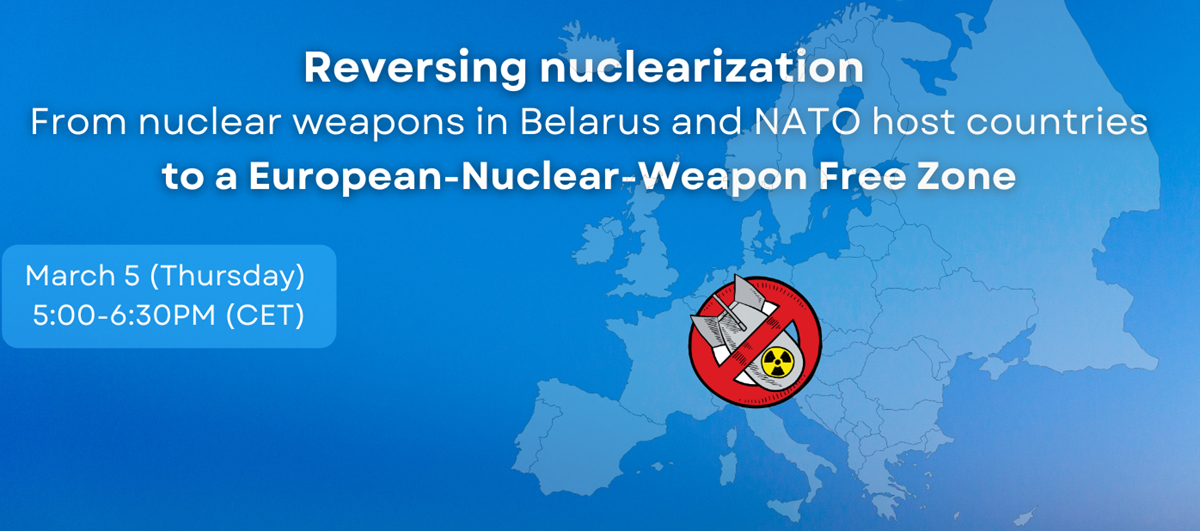
6 March -Online – Reversing nuclearization:
From nuclear weapons in Belarus and NATO host countries to a European-Nuclear-Weapon Free Zone
Mar 6, 2026 03:00 AM in Canberra, Melbourne, Sydney

of the week – Australians for War Powers Reform (AWPR)
To see nuclear-related stories in greater depth and intensity
 Antinuclear
Leave a comment