Australia’s clean solar energy revolution is well underway
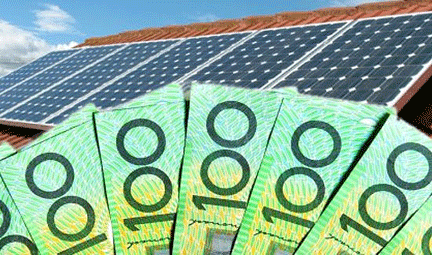 It’s in everyone’s interest to generate as much renewable energy as possible – except existing power providers that rely on burning coal or gas
Money trail backs the clean energy revolution, SMH, Ben Cubby, Peter Hannam 31 Aug 13 Across Australia, thousands of rooftops have been turned into solar-power money generators. Here’s a bright idea: what if, instead of paying for solar panels to keep your electricity bills down, you asked a solar company to put them on your roof for free, then paid them back with excess energy that you didn’t need?
What we are seeing is a transition from high carbon to a low carbon system.
If that sounds fanciful, bear in mind that a decade ago there were just a few hundred working solar-powered home in the country, run mostly at significant personal expense by enthusiasts. By the end of last year, 936,810 solar systems were installed, and the number cruised past 1 million earlier this year.
Slowly but surely, renewable energy is eating into the business model of the fossil-fuel-burning energy generators. Those in the industry liken it to the effect the internet is having on publishing: disrupting revenue, overturning tradition and, literally, tilting the balance of power in favour of the customer, rather than big corporations.
Oliver Yates, a former Macquarie Bank executive who was appointed to head the government’s Clean Energy Finance Corporation, describes renewable energy as ”the android on the pitch”.
The analogy goes that the traditional big players are now competing with new opposition that does not have to worry about week-to-week fluctuations in fuel costs, mining approvals, or the burdens of paying for a massive electricity grid. Whenever there is sunshine or wind blowing, the android keeps plodding along. When it isn’t, the traditional players are called back off the substitutes bench to kick on.
”At the end of the day, if your competitor is doing the same job for less, it’s a problem for you,” Yates says. ”Increasingly, we will see this taking effect on the profitability of the traditional players.”
At present, a small 1.5-kilowatt solar panel system might set a householder back about $4500, less a rebate of about $900, and would pay itself off in about seven years from savings on energy bills. According to the Climate Commission, the cost of a solar panel this year has dropped to less than a quarter of its price in 2002, driven by mass production of highly efficient solar panels in China.
But not everyone can afford that kind of outlay, especially given that solar panels are more popular in rural areas and outer city suburbs that tend to have lower and middle incomes. In Sydney, Blacktown is the solar energy epicentre, while solar panels in Melbourne’s working class west outstrip those in the inner city by five to one. In South Australia, 19.2 per cent of all households are now solar-powered, according to data from consultancy CleanTechnica.
One of the new players trying to take advantage of the android effect is California-based SunPower, which launched in Australia earlier this month, in partnership with local credit union Community First.
Its business model is based on free installation of solar panels, lengthy 10-year loans from the credit union to spread out repayments and payback based on the amount of power generated. It’s in everyone’s interest to generate as much renewable energy as possible – except existing power providers that rely on burning coal or gas.: http://www.smh.com.au/environment/energy-smart/money-trail-backs-the-clean-energy-revolution-20130830-2sw4d.html#ixzz2daAYJ2Yr
No comments yet.
1 This month

of the week – Australians for War Powers Reform (AWPR)
To see nuclear-related stories in greater depth and intensity
 Antinuclear
Leave a comment