Uranium industry’s hopes for a recovery are unfounded
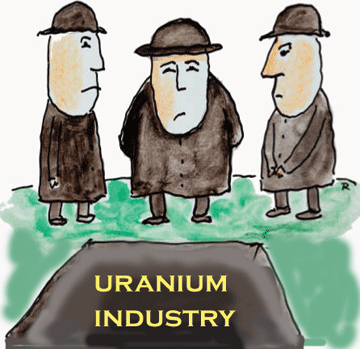 uranium’s losses have been sharper than many other raw materials, as the fuel also faces antinuclear politics, which are expected to hurt demand even if economic activity picks up.
“This is not only an extremely volatile commodity, but a volatile business. It only takes one headline, somewhere in the world, and 15 years of work is gone down the drain.”
, political opposition and cheap prices for alternative fuels, like natural gas and coal, make a recovery unlikely
Prices Pull Plug on Uranium’s Power Play, WSJ, 10 Sept 13, Fuel Trades at Multiyear Lows as Nuclear Energy Languishes By RHIANNON HOYLE Uranium prices are at their lowest level in nearly eight years, as investors and utilities give up on a quick revival for nuclear power.
The market for the radioactive fuel hasn’t recovered from the 2011 earthquake and tsunami that devastated Japan’s Fukushima Daiichi power plant. Due to safety concerns following the disaster, only two of Japan’s 50 reactors are running today, while Germany and France are reducing their reliance on nuclear power. In the U.S., some utilities have abandoned plans for new nuclear plants.
Spot uranium prices are down 22% this year. They traded at $34 a pound on Tuesday, their lowest level since November 2005. The Dow Jones-UBS Commodity Index, which tracks 20 commodities, is down 9%.
As the slump in commodities gathered pace late last year, some investors sought solace in uranium, a small market where futures are traded mainly by utilities and miners but the price can be traded by proxy through stocks or exchange-traded funds. Hopes were high that Japan, a major consumer of uranium, would get its nuclear reactors running again and demand for the fuel would accelerate.
Instead, as slowing global economic growth has hit prices for everything from copper to coal to corn, uranium has suffered because struggling economies require less electricity. But uranium’s losses have been sharper than many other raw materials, as the fuel also faces antinuclear politics, which are expected to hurt demand even if economic activity picks up.
“You’re not dealing with a commodity like copper or gold,” said Jeff Wright, a managing director of equity research with H.C. Wainwright & Co. “This is not only an extremely volatile commodity, but a volatile business. It only takes one headline, somewhere in the world, and 15 years of work is gone down the drain.”……..
After shutting down all of its nuclear reactors in 2011, Japan was expected to start powering up many of the plants as early as this year. Instead, utilities have asked for permission to restart just 12, beyond the two that already received approval and are running. The approval process ahead is likely to be slow.
In North America, the shale boom has given utilities building power plants the option of relying on cheap natural gas instead of uranium. In Europe, political opposition to nuclear energy has grown. Germany has pledged to shut off its nuclear reactors by 2022, while France plans to lower its reliance on nuclear energy to 50% by 2020, from up to 80% today.
Malcolm Gissen, president of San Francisco-based investment advisory firm Malcolm H. Gissen & Associates and co-manager of the Encompass Fund which invests in global resources companies, has reduced his holdings of uranium mining stocks over the past few months……
Investors point to rising uranium stockpiles as a reason for prices to remain low. Miners are sitting on piles of unsold uranium, with global supply currently exceeding demand by about 25 million pounds, according to Ux Consulting, a nuclear-research firm. The market was in balance prior to the Fukushima accident, according to Ux Senior Vice President Jonathan Hinze……
“I don’t think there is going to be any rush back” to uranium, said Neil Gregson, who oversees $3.5 billion in natural resources investments for J.P. Morgan Asset Management. “It is hard to see why a general resources fund might invest in uranium.” Mr. Gregson said he has about 1% of his portfolio in uranium stocks, a historically low exposure……
other investors and analysts say it will be several years before uranium prices bounce back. In the meantime, political opposition and cheap prices for alternative fuels, like natural gas and coal, make a recovery unlikely….. http://online.wsj.com/article/SB10001424127887323864604579067350842545272.html
No comments yet.
1 This month
7 April – WEBINAR – Australia and the Doomsday Clock – Preventing nuclear war through NoFirstUse and other policies
Online | Tuesday April 7, 4:00-5:30pm, Australian Eastern Time / 8:00-9:30am Central Europe Time
– Access the registration link
15 April – Zoom –Nuclear Power is Not the Solution
Apr 15, 2026 01:00 AM in Canberra, Melbourne, Sydney

Join the International Physicians for the Prevention of Nuclear War (IPPNW) on Tuesday, April 14th for a timely webinar exploring the risks associated with nuclear power and challenging the myth that it offers a simple, safe, carbon-free solution to the climate crisis

21 April Webinar: No Nuclear Weapons in Australia
Start: 2026-04-21 18:00:00 UTC Canberra, Melbourne, Sydney (GMT+10:00)
End: 2026-04-21 19:30:00 UTC Canberra, Melbourne, Sydney (GMT+10:00)
Event Type: Virtual
A virtual link will be communicated before the event.
Host Contact Info: australia@icanw.org

of the week – Australians for War Powers Reform (AWPR)
To see nuclear-related stories in greater depth and intensity
 Antinuclear
Leave a comment