So is Tony Abbott going to sign us up to the (rotten) Trans Pacific Partnership deal?
 And then there’s the big one, the US-driven Trans-Pacific Partnership Agreement (TPP), now being negotiated
“The Government has not and will not accept provisions that limit its capacity to put health warnings or plain packaging requirements on tobacco products or its ability to continue the Pharmaceutical Benefits Scheme’ – [Gillard Labor Government]
Abbott: Open For Business — And Multinational Lawsuits The Global Mail By Mike Seccombe September 20, 2013 Labor rejected it outright. Even the Howard government issued America with a rare “no” over the legislation, declaring it contrary to national interests. But now the Abbott Coalition is flirting with a trade agreement that would allow companies, acting increasingly in secret, to sue Australia if they don’t like its regulations…….. the Howard government was at first almost pathetically keen to do a deal with the United States.
In the end, however, Australians’ growing hostility to the trade agreement forced Howard, for once, to say “no” to George Bush.
It wasn’t a blanket refusal of an Australia-United States Free Trade Agreement (AUSFTA); a deal was eventually stitched up and began operating in 2005. The “no” was to one of America’s key demands: a provision called Investor-State Dispute Settlement, or ISDS.
What this arcane phrase refers to is the right of foreign companies to sue national governments of the signatory countries, not in domestic courts, but in opaque international forums, if they think some element of that government’s policy is harming their interests.
If a mining company, for example, is unhappy with environmental safeguards which inhibit its operations, if a pharmaceutical company is unhappy with the prices it gets for its drugs, if a chemical company is upset with the banning of an agricultural pesticide, if a tobacco company does not like laws restricting cigarette sales, ISDS provisions in trade agreements give them the means to challenge government policy and to seek compensation.
And they do this increasingly often, sometimes claiming enormous amounts of money. According to a report in May 2013 by the United Nations Conference on Trade and Development, which monitors these things, a record 58 ISDS cases were begun in 2012. In the same year, decisions were made on 42 cases by an assortment of more or less credible international arbiters. Only 31 of these were publicly disclosed, but of those, 70 per cent went in favour of the corporations, at least in part; and nine resulted in significant awards for damages, including one – to an oil company which sued Ecuador – for a record US$1.77 billion.
We’ll get to more cases later, but the first important point to understand is that, back in 2001, the Howard government wasn’t having a bar of an ISDS as part of the Australia-United States Free Trade Agreement. It heeded the warnings that such a provision would pose a great threat to good public policy, indeed to national sovereignty. It said “no”.
The second, more important, point to understand is that in 2013 Australia’s new conservative government, that of Tony Abbott, looks as if it is about to say “yes”. And not just to one instance of an ISDS, but perhaps to a couple of dozen, across a variety of trade agreements.
On the eve of the election, the Coalition released its trade policy, which includes a commitment to “remaining open to utilising investor-state dispute settlement (ISDS) clauses as part of Australia’s negotiating position” in future trade deals.
In saying it was “remaining open” to ISDS clauses, the Coalition was being cunningly understated, as was made clear elsewhere in the document…….
And then there’s the big one, the US-driven Trans-Pacific Partnership Agreement (TPP), now being negotiated between the US, Australia, Canada, New Zealand, Mexico, Peru, Chile, Singapore, Brunei, Malaysia, Japan and Vietnam; countries with a combined population of nearly 800 million people and a combined GDP of almost US$28 trillion.
The US hopes to wrap it up before the end of the year, and has flagged a milestone announcement, probably at a meeting coinciding with the APEC Economic Leaders’ Week in Bali in early October.
And among the controversial demands the US is making for TPP are most of those that Australia rejected in AUSFTA, including ISDS provisions. America is intent on stitching up this agreement; it was among the subjects of conversation during President Obama’s first, congratulatory phone call after Tony Abbott’s election victory.
The irony is that if Australia does sign up, it does not gain any trade benefits with America over and above those already included in the AUSFTA deal……..
the next, Labor government, following a 2010 inquiry by the Productivity Commission, which found few benefits and “considerable policy and financial risks arising from ISDS provisions”.
In 2011, the Australian government declared it would not agree to ISDS provisions under any circumstances. The wording of a statement from the Department of Foreign Affairs and Trade was unequivocal. It said, in part:
“… the Government does not support provisions that would confer greater legal rights on foreign businesses than those available to domestic businesses. Nor will the Government support provisions that would constrain the ability of Australian governments to make laws on social, environmental and economic matters in circumstances where those laws do not discriminate between domestic and foreign businesses.”
It continued, making specific reference to two of the chief concerns over potential legal action that might be brought under an ISDS:
“The Government has not and will not accept provisions that limit its capacity to put health warnings or plain packaging requirements on tobacco products or its ability to continue the Pharmaceutical Benefits Scheme …”http://www.theglobalmail.org/feature/abbott-open-for-business-and-multinational-lawsuits/700/
No comments yet.
1 This month
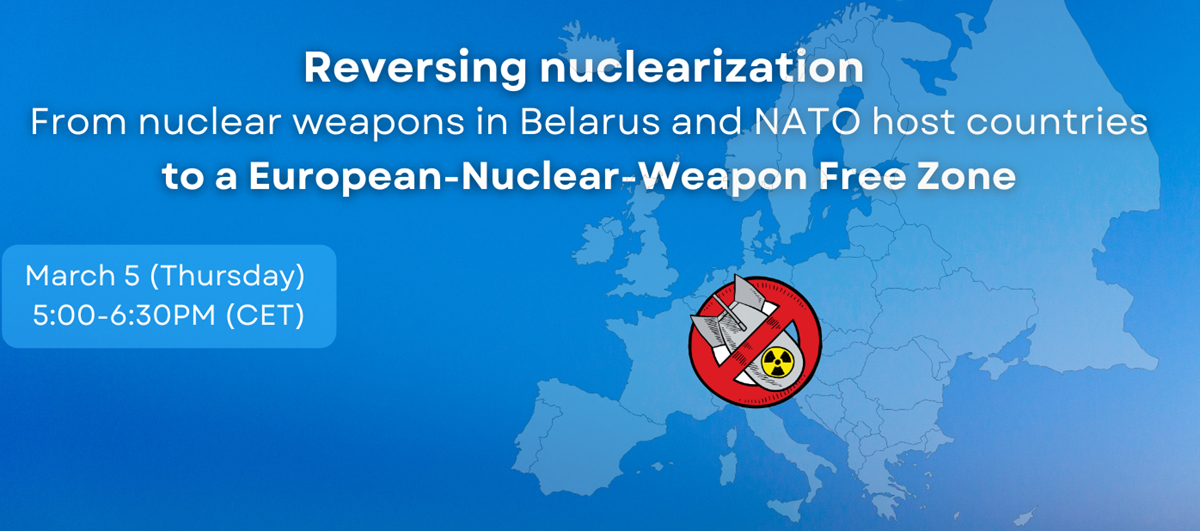
6 March -Online – Reversing nuclearization:
From nuclear weapons in Belarus and NATO host countries to a European-Nuclear-Weapon Free Zone
Mar 6, 2026 03:00 AM in Canberra, Melbourne, Sydney

of the week – Australians for War Powers Reform (AWPR)
To see nuclear-related stories in greater depth and intensity
 Antinuclear
Leave a comment