Climate and uranium news this week
 Bushfires tear across South Eastern Australia. Is this a taste of what is coming for this summer and beyond?
It follows Australia’s warmest 12 months on record. Our last summer broke 123 extreme weather records in 90 days. Last month was Australia’s hottest ever September on record.
The IPCC has released its Fifth Assessment Report. There’s a 95-100% probability that more than half of the observed increase in global average surface temperature from 1951 to 2010 is human induced.
And what is the Abbott government doing about climate change? The Climate Commission has been abolished. The Clean Energy Finance Corporation will be abolished. We no longer have a Department of Climate Change. On October 14, the draft legislation to repeal the carbon price mechanism, to be the first item of business for the 44th Parliament, was revealed.
The planetary crisis of climate change surely shows us that it requires planetary, internationally co-operative solutions. Australia was a leader in climate action – but look at us now – an international disgrace?
Uranium. Toro Energy holds it AGM today, amid accusations that it has misled shareholders by pretending that a new uranium deposit in Western Australia has gained regulatory approval, when it in fact, has not.
ASX investigation casts shadow over Toro uranium company’sAGM
 18 Oct 13 At today’s AGM Toro Energy is expected to face strong criticism from shareholders over an investigation by the ASX into claims that the company has released misleading information.
The investigation follows complaints to the ASX and ASIC by the Conservation Council and a shareholder, claiming that Toro has misled shareholders and investors by inferring that a newly discovered uranium deposit is included in their existing uranium mine proposal at Wiluna.
Toro Energy has an existing application to mine uranium at Wiluna which is limited to its Lake Way and Centipede deposits. This mining proposal has received a conditional environmental approval but requires a number of other approvals from both State and Federal regulators.
Nuclear Free Campaigner, Mia Pepper explained “The new deposit mentioned in Toro’s latest release to the ASX is not part of the current Wiluna mining proposal as suggested, and will require new and separate environmental and mining approvals which will add further delays and costs to Toro’s mining plans at Wiluna.
“This is not only misleading for shareholders, but we are concerned Toro Energy is attempting to avoid proper environmental assessment for their long-term plans for a uranium precinct at Wiluna.
“Toro want the ‘best of both worlds’ by promoting an expanded project to their shareholders and investors, while withholding the details of this expansion from the community and government regulators.
“We have also written to State and Commonwealth regulators calling on them to halt further approvals for Toro’s Wiluna proposal until they are able to undertake a full cumulative impact assessment of the company’s long-term plans.”
In addition to the lack of approvals, there are a range of serious environmental and other constraints to the expansion of the already problematic Wiluna proposal.
Ms Pepper continued “The Wiluna uranium proposal as it is, is an environmental catastrophe waiting to happen with plans to dump 9.1 million tonnes of radioactive mine waste in a Lake bed, and with only enough water for a third of the life of the mine.
“If Toro were to incorporate additional deposits, the proposal would be drastically different. A 100km network of small shallow uranium mines and waste dumps across two Lake Systems is very different to a single mine. The cumulative impact of these operations must be fully assessed.
People will be handing out economic reports to shareholders entering the AGM from 8.30am – 9am at the Celtic Club – 48 Ord St West Perth.
Media Comment – before and after the shareholders meeting:
Record levels of radiation leaked at Fukushima, following typhoon
 Japan: Typhoon Wipha causes more nuclear contamination at Fukushima Euro News 17 Oct 13, A typhoon that swept through Japan has caused more radioactive leaks at the troubled Fukushima plant. Workers there say they have detected high levels of radiation in a ditch leading to the Pacific Ocean and suspect heavy rains lifted contaminated soil…….http://www.euronews.com/2013/10/17/japan-typhoon-wipha-causes-more-nuclear-contamination-at-fukishima/
Radiation level in Fukushima No. 1 ditch hits record high, Japan Times, 17 Oct 13,FUKUSHIMA – The highest level yet of beta ray-emitting radioactive substances, including strontium, has been detected at one point in a drainage ditch at the crippled Fukushima No. 1 nuclear plant where measurements are regularly taken, Tokyo Electric Power Co. said Thursday.
According to Tepco, a water sample taken Wednesday at a point in the ditch some 300 meters from the ocean was found to contain 1,400 becquerels per liter of beta ray-emitting radioactive substances, the highest level ever detected at that location……
Radiation levels also hit record highs in water samples collected Wednesday at three upstream points in the drainage ditch, which passes close to the storage tank from which highly radioactive water spilled in August, with the amount of beta ray-emitting radioactive substances ranging from 2,000 to 2,300 becquerels per liter.
Tepco said it was unable to take seawater samples near the exit of the ditch because of bad weather.http://www.japantimes.co.jp/news/2013/10/17/national/radiation-level-in-fukushima-no-1-ditch-hits-record-high/#.UmGNJdJJMgs
SolarShare -Canberra’s exciting new community energy project
 Sun rises on a communal solar farm City News, Stephen Easton October 9, 2013 AS plans move ahead to build four fields of solar panels in the ACT, one of them Australia’s largest, there’s another with a more egalitarian spirit not far behind.
Launched in May, SolarShare plans to build a solar farm that will operate as a co-operative, rather than a company, so its member-shareholders will contribute to the cost of building its photovoltaic arrays and receive returns from the power they generate for years to come.
“Since then we’ve received about 200 registrations of interest from people who are keen to invest in excess of $670,000 in a community-owned solar farm, so we’ve received a fairly strong indication there that people support this idea, which is really great,” says project leader Lawrence McIntosh.
McIntosh is a renewable energy consultant who plays a central role in The Canberra Clean Energy Connection, a local, non-profit group that supports the ACT Government’s vision of Canberra becoming “the solar capital of Australia”…….http://citynews.com.au/2013/sun-rises-on-a-communal-solar-farm/
Finance experts predict major growth in renewable energy investment.
 Citibank: Renewables will get bulk of world’s new power investment http://fuelfix.com/midland/2013/10/10/citibank-renewables-will-get-bulk-of-worlds-new-power-investment/ October 10, 2013 The world is going clean: Renewable energy will make up more than 70 percent of investment in new power generation by 2025, a Citibank report said Thursday.
Demand for power is growing around the globe and most of it will be renewable. Of the nearly $10 trillion dollars that will be poured into the power sector in the next decade, more than $2 trillion will be invested in wind, followed by $1.5 trillion in hydropower and $1.3 trillion in solar power, as nations around the world begin to make the shift away from fossil fuel generation.
While natural gas has cut into coal’s dominance for power generation in the United States, the report notes that in the longer run, the lower price of solar energy will make it increasingly attractive, especially during peak demand periods, when wholesale power in Texas can cost as much as $4,500 per megawatt-hour.
“Solar steals the most valuable part of electricity generation at the peak of the day when prices are highest,” the report said. German natural gas power plants have already said they are reluctant to build new generation because of the impact of solar power on their profits, according to the report.
More than $37 trillion will be invested in the global energy infrastructure in the next two decades, with nearly 50 percent of it devoted to electricity generation, Citibank estimated in the report. Oil production will account for about 37 percent of total investment, followed by natural gas, coal and biofuels, at 23 percent, 3 percent and one percent, respectively.
Japan’s former Prime Minister working for a nuclear power free world
he [Kan] noted that already a new energy prospect is visible off the Fukushima coast, where a floating wind turbine is being tested. It has been dubbed “Fukushima mirai,” which means “Fukushima future” in Japanese. “In Japan,” Kan said, “we see that even without nuclear power plants we can actually supply energy to meet our demands.”
 The Nuclear Odyssey of Naoto Kan, Japan’s Prime Minister during Fukushima Having led Japan through the 2011 nuclear crisis, the elder statesman is now campaigning for a world without nuclear power, Scientific American, By David Biello, 17 Oct 13, (“……………Kan could not help but wondering how much worse the Fukushima meltdowns might get on the dark nights spent in his office after March 11, 2011. “What was going through my mind at the time?” Kan said through a translator during a public event at the 92nd Street YMCA in New York City on October 8. “How much worse is this going to get, and how can we stop this from getting even worse?”
Despite the dishonest propaganda, in fact Germany’s renewable energy program is thriving

 Myth-busting Germany’s energy transition Smart Planet By Chris Nelder | October 12, 2013 Major English-language media have been propagating a false narrative about the stunning success of Germany’s transition to renewable energy: theEnergiewende. To hear them tell it, the transition has been a massive failure, driving up power prices, putting Germany’s grid at risk of blackouts, and inspiring a mass revolt against renewables.
Nothing could be further from the truth……..
I debunked a few of the hoary tropes about the Energiewende one year ago, such as the notion that the grid can’t handle a large share of variable renewable power. But apparently many in the major Western media still haven’t gotten the memo.
So let’s clear out the fog and debunk a few of the favorite myths about theEnergiewende.
Myth: “After the Fukushima nuclear accident in Japan two-and-a-half years ago, Merkel quickly decided to begin phasing out nuclear power and lead the country into the age of wind and solar.” (This one is from the above-mentioned Der Spiegel article.)
Fact: Germany’s switch to renewables started in 1991, and the nuclear phaseout started in 2002. Continue reading
The Greens’ Christine Milne will be on the job in the Senate to keep carbon pricing
 We’ll assess Senate carbon options: Milne http://www.heraldsun.com.au/news/breaking-news/well-assess-senate-carbon-options-milne/story-fni0xqi4-1226741615225 AAP OCTOBER 17, 2013
AUSTRALIAN Greens leader Christine Milne has left open the possibility of flicking the government’s carbon tax repeal legislation to a Senate committee, delaying a vote until well into 2014.
The government will introduce a package of eight bills to parliament in November hoping the Senate will consider them before Christmas.
However, Prime Minister Tony Abbott has acknowledged an unsympathetic upper house may stymie that timetable.
Asked if the Greens and Labor would use their controlling numbers in the Senate to send the bill to a committee, potentially delaying the vote for months, Senator Milne told reporters in Canberra on Thursday: “We’ll look at all the parliamentary options that we have when the legislation is introduced.
“Rest assured, given the opportunity to vote on it we will vote on it and vote against any repeal.”
How the Greens would deal with the parliamentary process depended on “how things come through”.
Both the Greens and Labor have said they will block the repeal of the carbon tax, prompting threats from Mr Abbott of a double-dissolution election.
But Senator Milne said the prime minister would “run a mile” from going to the polls next year.
“I don’t think Tony Abbott will have the courage to face the people,” she said, adding the Greens “absolutely” did not think it was in the national interest to rush to an election.
- There has been speculation that Mr Abbott may wait for the half-Senate changeover in July, which will transfer the balance of power to the more like-minded mix of the Palmer United Party bloc and conservative independents.
Coal Seam Gas by any other name is still Coal Seam Gas
CSG industry wants to hide from its toxic name The Drum, By Matt Grudnoff 18 Oct 13, The words “coal seam gas” remain highly controversial and unpopular, which is why the industry wants to rebrand itself as “natural gas” as a way to avoid debate, writes Matt Grudnoff.
Just as those in the world of Harry Potter refused to utter Lord Voldemort’s name for fear of their lives, the gas industry appears equally frightened of using the words ‘coal seam gas’ for fear it might hurt its profits.
But just as calling Voldemort ‘He-Who-Must-Not-Be-Named’ didn’t make him disappear, calling coal seam gas (CSG) something else doesn’t make it any less of a concern for the community…….
These words are so toxic that the NSW government has proposed changing them. Rather than referring to ‘coal seam gas’ or ‘CSG’, it would instead be called ‘natural gas from coal seams’. Natural gas from coal seams might be technically correct, but we are left to wonder why the term needed expanding.
But the real question is why the industry is avoiding the debate. Could it be avoiding discussing environmental concerns because it fears that the public might be correct? Is its strategy not to engage a delaying tactic in the hope that CSG projects can be up and running before the full extent of the damage is known?……http://www.abc.net.au/news/2013-10-18/grudnoff-csg-industry-wants-to-hide-from-its-toxic-name/5030520
1 This month
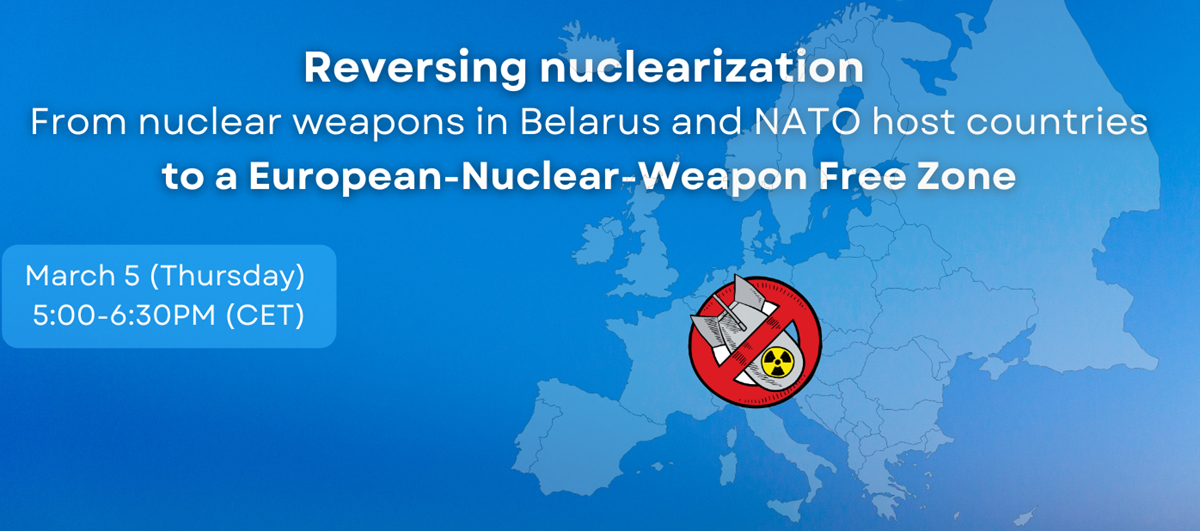
6 March -Online – Reversing nuclearization:
From nuclear weapons in Belarus and NATO host countries to a European-Nuclear-Weapon Free Zone
Mar 6, 2026 03:00 AM in Canberra, Melbourne, Sydney

of the week – Australians for War Powers Reform (AWPR)
To see nuclear-related stories in greater depth and intensity
 Antinuclear