Australian company Silex in solar and nuclear developments

enriched uranium demand would remain depressed in the next two to three years due to the shutdown of nuclear plants after the Fukushima nuclear plant disaster i
China solar backers sought in Australia, South China Morning Post Silex, claiming a technology edge, is talking to state-backed power generators for investment in an expansion of a major solar farm project Eric Ng eric.mpng@scmp.com 05 November, 2013 Silex Systems, an Australian solar energy and nuclear fuel enrichment technology firm, is in talks with Chinese state-backed power generators to invest in its major solar farm project in Australia and buy its equipment to develop projects in China.
The company, listed in Australia and the United States, commissioned a 1.5 megawatts solar farm in Victoria in July, and plans to build a 100MW expansion project on the same site late next year.
Its 1.5MW plant is Australia’s first grid-connected solar farm based on so-called concentrated photovoltaic (CPV) technology.
Silex chief executive Michael Goldsworthy said the company had started talks with two of the mainland’s five state-owned power generation groups about investing in the proposed 100MW project, and for them to buy equipment from Silex to develop solar farms on the mainland.
CPV uses curved mirrors or lenses to converge sunlight on to a small area of solar panels to generate electricity. Compared with the mass-commercialised silicon-based solar panels, CPV saves on panel costs as a much smaller area of photovoltaic material is needed.
However, extra investment is required on mirrors and lenses, sunlight trackers and cooling systems, which means it has yet to be mass-commercialised. Work to cut costs is also continuing.
Goldsworthy said the company aimed to cut costs so that developers of solar farms using its equipment would have a cost of 10 to 12 US cents per kilowatt-hour of energy generated. This covers equipment, operating, maintenance and finance costs.
“CPV uses the most efficient solar cells in the world with a sunlight energy conversion efficiency of 42 per cent today, compared to 18 per cent of the best silicon-based ones and 12 per cent of thin-film ones,” Goldsworthy told theSouth China Morning Post.
He declined to disclose the current cost to generate power from its commissioned solar farm, which is a pilot project. If successful operation is proven and funding is available, Silex will build the 100MW expansion project on the same site next year.
The federal and Victorian state governments have together committed A$110 million (HK$807 million), and Silex will seek project financing through a “special purpose vehicle” to meet the rest of the capital requirement. Silex has also planned a 10MW to 50MW project in Queensland, a 1MW project in Saudi Arabia and up to 1MW in California……..
Meanwhile, Goldsworthy said Silex had licensed a technology that used lasers to enrich uranium to a joint venture between GE, Hitachi and uranium miner Cameco. The enriched uranium can then be used as fuel in nuclear power generation.
Silex is entitled to royalties depending on the economic and technical viability of a commercial plant in the US, which is being ascertained.
Goldsworthy said enriched uranium demand would remain depressed in the next two to three years due to the shutdown of nuclear plants after the Fukushima nuclear plant disaster in Japan in 2011, but demand was expected to soar in the following two decades on rising demand from China, India and the Middle East. http://www.scmp.com/business/commodities/article/1347543/china-solar-backers-sought-australia
No comments yet.
1 This month
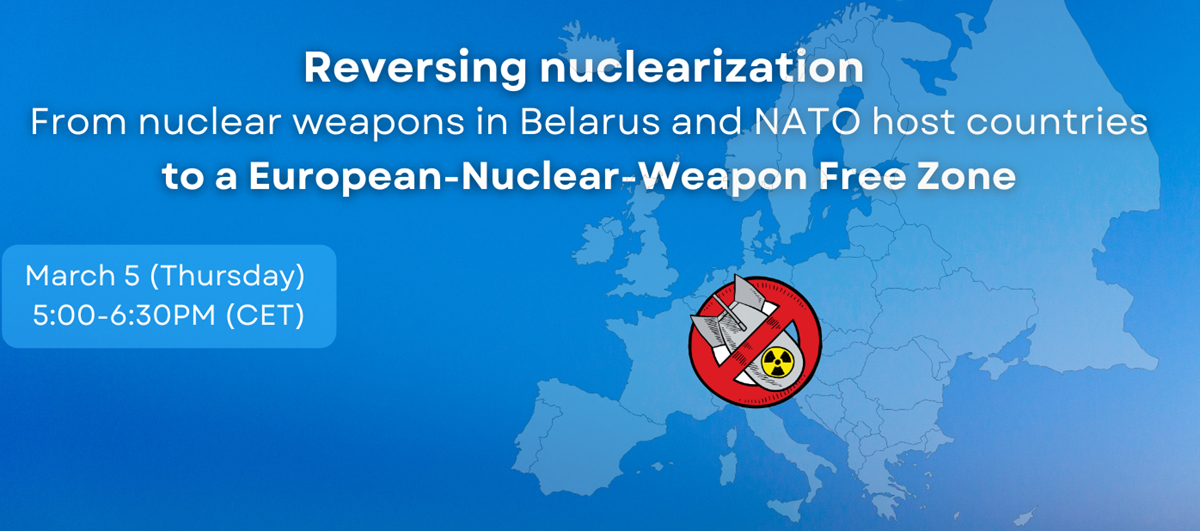
6 March -Online – Reversing nuclearization:
From nuclear weapons in Belarus and NATO host countries to a European-Nuclear-Weapon Free Zone
Mar 6, 2026 03:00 AM in Canberra, Melbourne, Sydney

of the week – Australians for War Powers Reform (AWPR)
To see nuclear-related stories in greater depth and intensity
 Antinuclear
Leave a comment