Australia’s Liberal government suppresses information and discussion of ideas
 despite the song and their promise to be a more accountable government, with more honesty and common sense than their Labor predecessors, the Liberals are doing everything they can to suppress discussion of ideas.
Abbott promised a more accountable government for Australians yet his has also become the most inaccessible  and shadowed from scrutiny. Cabinet ministers have to get approval from the Prime Minister’s office before they can speak publicly on ideas and issues. And why is it that Tony Abbott has been one of the most reluctant to publicly debate his ideas in either interviews or formal press conferences?.
Libs stifle debate while touting ‘battle of ideas’, The Age, January 12, 2014 –Amy Gray “…..It is tempting to sideline Bernardi as a “freelancing” backbencher whose “views do not represent the position of the government”, as described in a statement issued by Prime Minister Tony Abbott’s office last week.
But for all his flamboyant vilification of the millions of Australians who apparently bear the scarlet letters of ethnicity, sexual preference, medical autonomy and marital/family status, Bernardi is hardly freelancing when it comes to this strategy.
Seen from such an angle, it would appear Bernardi does represent the position of the government, not only due to his status as an elected senator who received top billing, but also because of the similar views and strategies used by his party teammates. Any disavowal from Abbott’s office appears disingenuous to say the least. The calls for “common sense” and “battle of ideas” and the cries against “the tyranny of political correctness” appear straight out of the Liberal Party hymn book and right now Bernardi is singing up a vulgar storm. Continue reading
“Direct Action” – Greg Hunt’s slush fund for the big polluters
Australian environment minister is totally, shamefully negligent with “direct action” policy Guardian Alexander White 12 Jan 14 The Australian government’s “direct action” policy is like giving money to an illegal drug dealer to stop dealing drugs, then having no penalty if he keeps selling them.

Moderate conservative that he is, Australian environment minister Greg Hunt ran on a platform of “lean” government, where private businesses “are the true creators of wealth”, individuals need to take personal responsibility for their actions, and the former Labor government’s carbon price was a “non-delivery of an invisible substance“. It was a surprise then, to learn last week, that Greg Hunt wants to give $3 billion to big polluting companies to reduce their emissions, but have no sanctions for those businesses if they fail to meet the reduction targets.
This is like giving money to an illegal drug dealer to develop innovative ways for him to stop dealing drugs, then having no penalty if he keeps selling them. Worse, the drug dealer could claim government funding for drugs that he supposedly didn’t sell over his “baseline” of sales, but carry on pushing drugs regardless.
You’d expect that a believer in lean government wouldn’t use billions in tax-payer’s money to create an expensive, totally ineffectual regulatory bureaucracy to auction permits to not emit carbon pollution.
The Australian government’s “direct action” policy will allow companies to bid for grants to implement the most efficient carbon reduction programs. Companies will have a “business as usual” baseline from which they agree to reduce their pollution. Several options are canvassed by Greg Hunt, including having multi-year compliance periods, or the ability for companies to “make good” by buying reduction credits from elsewhere.
In reality, the Emissions Reduction Fund is little more than a slush-fund for the big polluters.
What is surprising is that Greg Hunt seems unaffected by the cognitive dissonance of paying someone to not do something — to not emit a tonne of carbon dioxide — when his principle criticism of the carbon price was that it was a “non-delivery of an invisible substance”.
This policy is shamefully negligent.
Not just because it won’t actually reduce Australia’s carbon emissions and will fall vastly short of the inadequate 5% reduction target.But because you can’t measure what you don’t emit. Instead, you just assume how much you would have emitted and compare it to what you did emit. This is, needless to say, utterly subjective, and open to manipulation. Private companies will be given public funds to magically reduce their carbon pollution emissions, with no consequences if they fail to deliver.
As is so often the case with this government, Greg Hunt and prime minister Tony Abbott have a very flimsy moral case to implement their direct action policy, and the federal election does not qualify as a mandate to abolish the carbon price. Abbott may claim that the 2013 election was a “referendum” on the carbon price, but if so, only around 45.5% of voters supported the abolition by voting for the LNP. This falls to a miserable 37.7% in the Senate.
Implicit in their “direct action” policy is that it is a more effective way to reduce carbon emissions than the carbon price. This is a view that could only be held by someone if they didn’t accept the scientific basis forclimate change.
Considering Tony Abbott’s past statements that climate change is “crap” and that the carbon price was “socialism masquerading as environmentalism”, a common sense reading of the policy is that exists solely because of the climate change denialists in the ranks of the Liberal-National party……… This Liberal-National government is shamefully attempting to fleece everyday Australians out of $3 billion, handed out in grants to big polluters for magical, unmeasurable carbon emission reductions. http://www.theguardian.com/environment/southern-crossroads/2014/jan/12/greg-hunt-negligent-direct-action-climate-change-denialist
TEPCO’s failure: taking a new name: demands return of worker’s compensation
 Official: Tepco has failed at Fukushima, no progress made — Tepco to change name, start new business — Tepco demands nuclear workers return payments, anger passed tipping point http://enenews.com/tepco-to-change-name-and-start-new-business-official-tepco-has-failed-no-progress-made-with-leaks-or-reactors-tepco-demands-fukushima-workers-return-money-anger-has-breached-tipping-point
Mainichi,, Jan. 9, 2014: [TEPCO] plans to create a new brand name under which the utility will sell electricity in regions outside its own service area across the country as part of efforts to boost its earnings, it has been learned. […] TEPCO made the decision apparently because the beleaguered utility thought that clients could accept the service more easily if it were provided under a brand name other than TEPCO […] One of the main reasons why TEPCO is rushing to enter into the business of selling electricity throughout the country is that unless it boosts its earnings by increasing the number of its clients, it will not be able to secure enough funds to cover the costs of dealing with the Fukushima nuclear accident […]
Asahi Shimbun,, Jan. 10, 2014: Previously, these issues [i.e. Decommissioning, controlling radioactive water, land contaminated by radioactive fallout] were left entirely in the hands of [TEPCO] […] “The coming several years are crucial,” [Hajimu Yamana, the expected leader of government’s new decommissioning division] said. “If we crawl along as we have done, radioactive contamination will spread to groundwater and the sea. We have to pick up our pace.” […] TEPCO has failed to make progress in decommissioning the reactors and dealing with leaks of radioactive water at the plant. […]
Mainichi,, Jan. 10, 2014: The employee was among those who worked on the front lines immediately after the onset of the nuclear disaster in March 2011, Amid high levels of radiation, the employee and his colleagues trembled with fear as they worked to contain the unprecedented nuclear plant disaster […] he received a letter from TEPCO last spring asking him to return part of the compensation he received from the utility […] “That can’t be possible,” he thought, and read the letter over and over again. […] He shed tears of frustration and suffered sleepless nights. His coworkers had also received similar documents. A gloomy, depressing atmosphere prevailed, significantly undermining workers’ morale. […] suspension of compensation payouts to employees [started] in 2012 and the demand to return compensation in spring 2013 […]
Mainichi,i, Jan. 6, 2014: [TEPCO] is demanding that the families of employees return compensation […] In one case, a household is under pressure to return more than 30 million yen in damages from the company, raising concerns about future livelihoods. […] According to the sources, one TEPCO employee under pressure to return compensation was living with his wife and two children in a rented house in an area near the Fukushima No. 1 Nuclear Power Plant — where it has been deemed that evacuees are unable to return home in the foreseeable future with an annual radiation dosage of over 50 millisieverts. […]
Mainichi,, Jan. 4, 2014: [TEPCO employees] have been asked to return compensation payments, with the total amount exceeding 100 million yen. One employee said, “Around 100 employees have had their compensation payments stopped, and many of them have been asked to return money.” In October, TEPCO held a meeting in Fukushima Prefecture between company executives and employees. In an audio recording of the meeting obtained by the Mainichi Shimbun, an employee says, “Asking us to return the money sent to us has made everyone’s anger breach the tipping point.”
Ground squirrels sabotaging nuclear missile base
 How One Nuclear Missile Base Is Battling Ground Squirrels In Montana, squirrels have been tunneling under a base’s fences and setting off intruder alarms, prompting researchers to strengthen its defenses By Joseph Strombergsmithsonianmag.com August 30, 2013 Malmstrom Air Force Base, in Western Montana, is home to 150 Minuteman III intercontinental ballistic missiles, each tipped with a nuclear warhead. Each of these missiles is housed in an underground silo, staffed by two military personnel around the clock, and can be fired on a moment’s notice.
But in recent years, the base has been dealing with an enemy so relentless that they’ve been forced to call in outside help to defend against it. That fearsome enemy is a species of rodent known as Richardson’s ground squirrel.
Ground Squirrel Damage to Missile Silos
The squirrels, each about a foot long and 1-2 pounds, dig extensive underground tunnel networks (they’ve been known to excavate tunnel systems more than 30 feet in length). At Malmstrom, they’ve developed an annoying habit of tunneling underneath the fences that protect each nuclear missile’s silo……..The silos are scattered over some 23,000 square miles, so in some cases, simply traveling out to check out a false intruder alarm requires a substantial investment in time and resources.
Additionally, over time, the rodents have started damaging the base’s physical infrastructure. “They’re burrowing under foundations, undermining road beds and gnawing on cables,” Witmer says.
…… an underground barrier, they initially tested steel fabric (similar to steel wool) and a metal chain-link mesh, but they were no match for the squirrels. “They just tore through steel fabric, with their claws and ever-growing incisors, and squeezed right through the chain-link mesh,” Witmer says. http://www.smithsonianmag.com/science-nature/how-one-nuclear-missile-base-is-battling-ground-squirrels-3031350/#ixzz2qK5IQlFS
TPP. Sign online letter to the Trade Minister: reject investor rights to sue governments a
 TPP continues in 2014: AFTINET’s new online letter to the Trade Minster Jemma Williams Communications Campaigner Australian Fair Trade and Investment Network (AFTINET)

Leaders failed to meet their deadline to complete the Trans-Pacific Partnership (TPP) negotiations this year, largely because of community opposition in all negotiating countries. But the talks will continue in 2014.Ministers will meet again at the end of January, so it is important that we keep the pressure on. We have just launched a new, updated letter on our website to send to Trade Minister Andrew Robb, which focuses on the major issues now most in danger of being traded away.
The letter asks him to reject investor rights to sue governments and proposals which would cause higher medicine prices, and asks him to release the text of the agreement before it is signed.
Please sign the new letter and share it amongst your networks.
Health dangers in the heat wave
 Warning of health risks in the heat http://www.sunraysiadaily.com.au/story/2018053/warning-of-health-risks-in-the-heat/?cs=1259 Tony Masterson, Jan. 13, 2014, The first heat wave of 2014 is upon us, and while the scorching sun is a regular feature of the Mallee summer, we must not become complacent about its dangers – especially for those of us who work outdoors.
According to SunSmart, outdoor workers in Australia receive five to 10 times more sun exposure than indoor workers, placing them at an increased risk of skin damage and skin cancer
Construction workers have a higher risk of skin cancer than many other workers because of their exposure to ultraviolent radiation, through direct sunlight and reflected sun. Similarly, agricultural workers have a higher rate of contracting skin cancer.
Between 1999 and 2002, death rates of skin cancer for male farmers and farm managers aged were almost 60 per cent higher than the general population. At least one in every two Australians will require treatment some time in their life for various forms of skin cancer.
Workplace health and safety laws require employers to provide a safe working environment, which includes protection against risks associated with working in heat. This is the first really hot working week of the summer for many people in Mildura, so everyone needs to take extra care to make sure they look after themselves, their employees and their workmates.
Simple things like rescheduling work to cooler parts of the day, making sure there is drinking water available, and providing outdoor workers with sunscreen and protective clothing can help to keep workers safe during this scorching heat.
1 This month
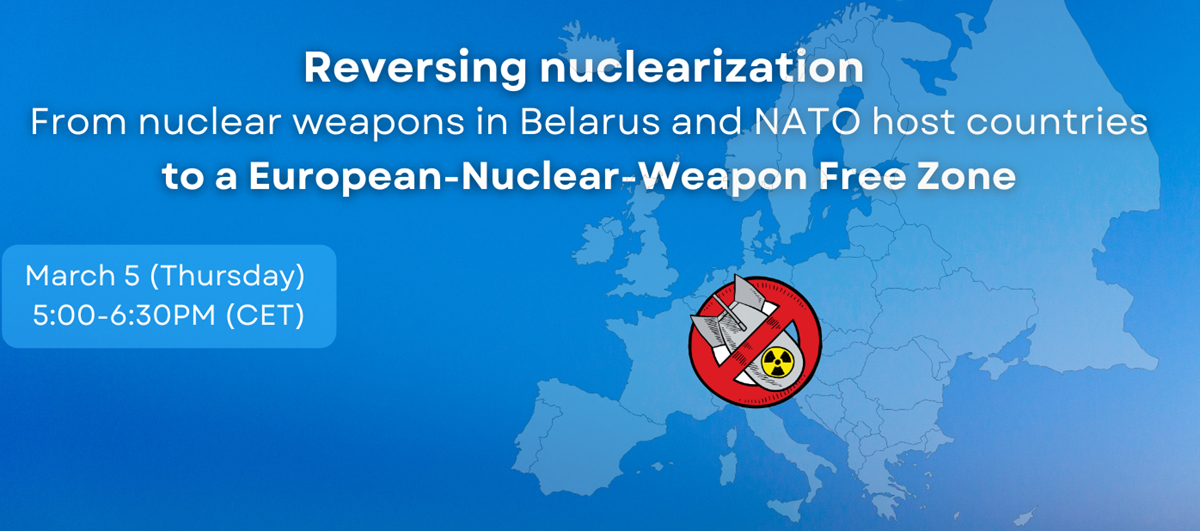
6 March -Online – Reversing nuclearization:
From nuclear weapons in Belarus and NATO host countries to a European-Nuclear-Weapon Free Zone
Mar 6, 2026 03:00 AM in Canberra, Melbourne, Sydney

of the week – Australians for War Powers Reform (AWPR)
To see nuclear-related stories in greater depth and intensity
 Antinuclear