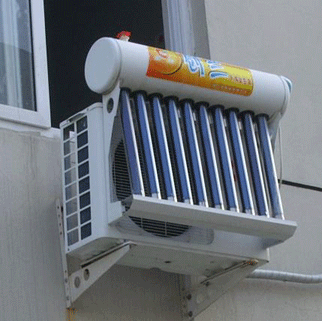
Solar air conditioning, solar power the clean way to keep cool
 Over one million Australian homes now have solar and our power pricing doesn’t handle them well either
under the status quo, those without air conditioning and with solar are being slugged unfairly.
Matthew Warren: The way we pay for electricity is out of date and urgently needs reform MATTHEW WARREN THE ADVERTISER FEBRUARY 03, 2014 THE recent intense heatwave across south-eastern Australia stretched many things to breaking point.Heatwaves provide a rare, but important examination of the power system.On a normal summer’s day in South Australia the peak load is around 1890 megawatts. In the heatwave it topped 3000 megawatts for almost three days straight. That put the network right at the edge of its capacity.
There is one key reason for these spikes in demand: increased deployment of airconditioners. On the hottest of days they are all turned on at once and this sends demand skyrocketing……
A large part of your household power bill is to pay for these infrequent events. It would make sense if those households with large air conditioners paid more than those who have only a small unit or none at all.
But they don’t. The Productivity Commission estimates that a household running a 2kW reverse-cycle air conditioner during peak times receives around $350 per year from other consumers without airconditioners.
For those who sweat through summer relying only on fans, the news that they are paying more to keep others cool will make them even hotter under the collar…….
All electrons are not equal: it’s not just about how much electricity you consume from the grid – but also the time that you use it and the maximum load you put on the system. We must start charging for electricity in a way that reflects this more.
Over one million Australian homes now have solar and our power pricing doesn’t handle them well either. In extreme heat solar helps reduce the peak demands. We estimate solar helped cut the recent maximum demand levels in Victoria and South Australia by 2-5 per cent.
Solar could be helping even more. The spikes in demand typically occur late in the afternoon, when output from north-facing solar is falling. If panels were tilted more to the west, solar could ease the peaks much more.
But under existing pricing any solar customer who shifts their panels to the west will end up worse off. The incentives we have created are distorted and need to change.
New pricing options need to be introduced to ensure no household pays more than their fair share.
More and more people are generating their own power from the sun and everyone wants to keep cool during intense heat. These trends will continue, but under the status quo, those without air conditioning and with solar are being slugged unfairly.
Tariff reform will not be easy. For the transition to succeed, government and industry will need to work together to educate and assist consumers through the changes.
Leaving things as they are is not an answer. There are more changes coming, from battery storage to electric cars.
Without reform now, the inequity we see today will only worsen in the future.Matthew Warren is the CEO of the Energy Supply Association of Australia http://www.adelaidenow.com.au/news/opinion/matthew-warren-the-way-we-pay-for-electricity-is-out-of-date-and-urgently-needs-reform/story-fni6unxq-1226816944371
No comments yet.
1 This month

of the week – Australians for War Powers Reform (AWPR)
To see nuclear-related stories in greater depth and intensity
 Antinuclear
Leave a comment