This week in Australian nuclear news
 Western Australian election. It’ s interesting that despite a joint Liberal-Labor attempt, aided by the MSM (Main Stream Media) to make the Greens and Scott Ludlam invisible, it didn’t work out that way. On first preferences, a big swing to the Greens, and swings away from both Liberal and Labor. Also a big swing to Clive Palmer’s Palmer United Party, (PUP) . The successful PUP candidate, Zhenya ‘Dio’ Wang had previously spoken in favour of keeping the Renewable Energy Target – ”the right scheme for maintaining and improving Australia’s environment”. However, Clive Palmer soon pulled Wang into line, though Clive did lose his cool in trying to explain the PUP’s true coal-promoting policy.
Climate change. Unfortunately, after preferences are sorted, the new Senate on July 1 will be amenable to Tony Abbott – the Government will be able to get its legislation through – undoing as much as possible all the legislation that meant taking action on climate change. Abbott’s business adviser, Maurice Newman, and the head of the panel to review the Renewable Energy Target, Dick Warburton are dyed in the wool opponents of renewable energy. Dick Warburton is a fervent believer in nuclear power for Australia.
Still more or less under the radar, are moves to get the full nuclear cycle in Australia. This is pretty secretive stuff. More about this later.
Nuclear submarines? The Liberal Party always keen for this – nuclear submarines for South Australia And, by chance? Tony Abbott, in Japan, has just been negotiating $40 billion expenditure on submarines and on joint research with Japan on submarine-related technology. Also joint military exercises with Japan (China wan’t like this)
Dick Warburton, nuclear power enthusiast, is heading Renewable Energy Review Panel
 Tony Abbott’s renewable czar: Nuclear only alternative to coal REneweconomy, By Giles Parkinson on
  9 April 2014 Tony Abbott’s handpicked head of the panel reviewing Australia’s renewable energy target, the self-avowed climate “sceptic” Dick Warburton, is no fan of renewable energy. In an article co-authored for Quadrant in 2011, Warburton insisted that nuclear energy was the only alternative to fossil fuel generation.
The two-part series for the conservative magazine – co-authored by Warburton along with poet and accountant Geoffrey Lehmann and Resmed founder Peter Farrell – is an eye-opening compendium of the major arguments that climate science deniers and fossil fuel lobbyists have ever thrown at climate science, against carbon pricing and against renewable energy.
The title of the two-part series was “An intelligent voter’s guide to global warming” (you can find Part 1 here and Part II here), and the authors pretended to “provide basic information often missing from the debate.” In fact, it is a collection of scientific howlers normally only found in right-wing blogs.
This, though, is the paragraph that might interest those likely to feel the impact of the decisions made by the RET review panel that Warburton now heads:
“Except for nuclear power, there are no straightforward strategies for reducing dependence on fossil fuels without large economic costs. Wind and solar generators often cannot function when needed. Wind machines operate at only about 25 per cent capacity in the UK. Even when the wind is blowing, “back-up capacity, usually gas-fired … had to be kept running, using fuel, generating steam, emitting CO2, ready to ramp up its turbines the moment sufficient supply from the wind machines stopped coming”. Two main obstacles with renewables are the difficulty of establishing transmission lines from sunny or windy places to where the power is needed and the absence of utility-scale storage technology for intermittent renewable energies. A US comparison estimated the following electricity generation costs per kilowatt hour: hydroelectric $0.03; nuclear and coal $0.04; wind power $0.08; natural gas $0.10 (other estimates for gas suggest about $0.04); solar power (construction costs only, ignoring production costs for which reliable data were unavailable) $0.22.”
And, a little later….
“The only current viable alternative to burning fossil fuels is to go nuclear. Although current known reserves of uranium are limited, it is likely that by developing new nuclear technologies and with new sources of uranium, humanity’s electricity needs could be satisfied by nuclear power for many hundreds of years or more.”
Fantastic. In the true sense of the word. One hopes that Warburton has caught up a little on the various technology costs. In the US, where his electricity generation costs are cited, nuclear is four times the price that he quotes. In fact, you would have to go back many, many years to find a time when it was just 4c/kWh.
Ditto with solar. Solar PV, including production costs (for which there is plenty of reliable data), costs around half that quoted by Warburton in the US. Some recent solar PV power purchase contracts, aided by a tax credit, have been at one-quarter of the price he quoted. Wind, according to General Electric, the largest provider of power equipment, is also around half of that quoted by Warburton, and new coal – according to investment bank Citigroup – is also four times the price quoted by Warburton. Even fracked gas is being priced out of the market by utility-scale solar. As Citigroup noted, quite bluntly: Nuclear and coal are not competitive with renewables on cost.
One also assumes that Warburton is aware that the cost of energy storage is falling, and likely to follow the pathway of solar, as Morgan Stanley has pointed out. This is one reason why grid operators in WA and Queensland are looking to reduce their poles and wires delivering centralised fossil fuels, because they cannot compete economically with solar and storage any more.
Warburton can catch up with Australian technology cost estimates at the Bureau of Resource and Energy Economics, which recently doubled its estimated costs of nuclear and dramatically reduced its estimates on the cost of solar.
One also hopes that Warburton is disabused of his idea that “fossil fuel” generation is left running, and polluting, waiting for the sun to stop shining and the wind to stop blowing. Such nonsense is only propagated by the most infamous of blogs haunted by climate science deniers, nuclear boosters and the anti-wind brigade. (Who are often the very same people).
A report by the US Department of Energy’s National Renewable Energy Laboratory puts this myth to rest. Those grids that have high renewables are actually using less fast-response peaking power than those relying almost exclusively on inflexible coal or nuclear generators………
The question that the renewables industry will be asking is this: Given that Warburton says he has investigated the climate science and declares that climate scientists do not know what they are talking about, what are the chances that he will accept the evidence from the renewable energy industry? Ideology, as we have seen with the media and the government since the September poll, is a mighty powerful editor. http://reneweconomy.com.au/2014/tony-abbotts-renewable-czar-nuclear-only-alternative-to-coal-65816
Abbott planning $40 billion defence submarine project, despite known dangers
 Submarines on collision course in busy sea, BRENDAN NICHOLSON, THE AUSTRALIAN, APRIL 10, 2014
AS submarines increasingly become the clandestine weapon of choice in the Asia-Pacific, an admiral from the US Pacific Fleet says regional nations must tell each other where their boats are operating or risk a deadly underwater collision.
The head of the US Pacific Command’s submarine force, Rear Admiral Phillip G. Sawyer, told a conference in Canberra yesterday the rapidly increasing number of submarines had created a greater chance of an underwater crash………
A US submarine had already collided with a supertanker in the Strait of Hormuz. It also emerged yesterday that the Abbott government is about to start negotiating with industry in Australia and with allied nations on how to structure the consortium which is to take on Australia’s biggest ever defence project — the building of new submarines for an estimated $40 billion.

The Australian was told the government will soon issue an “intent to consult” notice to major companies keen to join the submarine project.
A 130-strong expert team is being built up in Adelaide to integrate the best technology available in Australia and internationally into the new submarine.Defence Minister David Johnston and navy Chief Vice Admiral Ray Griggs told the conference they were talking to Japan about the possibility of using some of its technology.
That sparked claims from the opposition that the government was backing away from an election commitment to build 12 submarines in Adelaide.
Premier Jay Weatherill, who will join Tony Abbott in China this week, said yesterday that Senator Johnston appeared to be backing away from a commitment to build the next fleet of submarines in the state.
“Of course when you hear language like this from the federal government it is a cause of concern,” he said. “I think that there is only one solution — to build submarines here in South Australia. Not in South Australia and the nation’s interests in terms of manufacturing, but in terms of our defence needs.”
But Steve Ludlam, chief executive of the Adelaide shipbuilder ASC, said he would not be concerned if the government shifted its focus to a submarine design from overseas.
Additional reporting: Sarah Martin http://www.theaustralian.com.au/national-affairs/policy/submarines-on-collision-course-in-busy-sea/story-e6frg8yo-1226879396585#
ERA desperately trying to restore confidence in uranium investors for Ranger mine
ERA digs deep in search of a future BARRY FITZGERALD THE AUSTRALIAN APRIL 10, 2014
“…..Chief executive Andrea Sutton told ERA’s annual meeting in Darwin yesterday that the environmental impact statement would be submitted in the second half of this year. The company is targeting first production late next year and has a $120 million exploration decline and a $57m prefeasibility study into the development running concurrently. Uranium production at Ranger from stockpiled ore is suspended following the collapse of a leach tank in the processing plant in December.
The collapse released a slurry of ore and acid which was captured by the site’s containment system, with ERA saying that no material escaped into Kakadu.
The AGM was told that ERA’s board had approved a work plan to bring the processing plant to readiness for a restart. But a final clearance is required from the NT and federal governments.
Ms Sutton was not able to put a timeline on when that might happen, raising the prospect that ERA will have to secure uranium from other sources. The meeting was told that the quantities involved would depend on the timing of operations being restarted.
The company said it understood the “importance of restoring confidence in the safety and environmental performance of the Ranger mine”. http://www.theaustralian.com.au/business/era-digs-deep-in-search-of-a-future/story-e6frg8zx-1226879305475#
Community solar energy project underway in Illawarra, New South Wales
 Residents back renewable energy plan http://www.illawarramercury.com.au/story/2208044/residents-back-renewable-energy-plan/?cs=320 April 9, 2014, WOLLONGONG ADVERTISER A group of Illawarra residents aims to set up a small-scale renewable energy project, such as solar panels on a community building roof.
The plan came out of a community energy forum held at the Illawarra Aboriginal Centre, in Wollongong, on March 27.
Reading about climate change in 2006, Mr Nott said he felt this was one of the greatest challenges we faced. He organised a ‘‘Clean energy for eternity’’ human sign on Tathra Beach, which attracted 3000 people.
With the help of others, Mr Nott ran a fund-raising campaign to place solar panels on community buildings – so far they have provided solar panels to six surf clubs, 12 Rural Fire Service sheds, five churches, 15 community halls and four preschools.
The group’s most ambitious project is to build Australia’s largest community solar farm, providing half the power needs of Tathra Sewage Treatment Plant.
Graeme Jessop and John Davis from not-for-profit Clear Sky Solutions presented their investment model of renewable energy development. Last year they installed solar panels onto a Boggabri pub using investor funds.
Community Power Agency’s Nicky Ison spoke about community projects overseas. Forum participants agreed to work on a small-scale Illawarra renewable energy project, such as solar panels on a community building.
Organiser Rowan Huxtable said the network was very pleased at the community’s response and urged anyone wanting to help the project to contact them.Information: 0408 372 792 or email thuxtable55@optusnet.com.au
Pilliga protest: Aussies against fracking gather to protect Australia’s agricultural land
 North-coast artists and activists join Pilliga protest , Echo Daily, 10 April 14, The issue of CSG mining is in the forefront of people’s consciousnesses across the country and no less in the Pilliga, with activists locking on at the Santos coal seam gas drill rig site in the Pilliga forest.
On Saturday at Barkala Farm in the Pilliga, just north of Coonabarabran, a ‘Party at Maria’s Place’ concert was held to support to local residents united to protect prime agricultural land and culturally and environmentally significant country from quickly expanding CSG and coal mining in north west NSW.
Aussies Against Fracking, in conjunction with The Wilderness Society and Pilliga Pottery, organised the event, and The Echo’s Eve Jeffery and S Sorrensen were invited to make the journey, along with veteran journo Margo Kingston and Aussies Against Fracking director Nick Hanlon.
There, the group discovered sixth-generation farmers being forced out and arrested while entire farming regions are being bought up by Chinese state-owned corporation Shenhua Watermark Coal.
This fight is not about hippies with time on their hands. People from all walks of life including students, the aged, and farmers, are all downing tools and putting their life on hold to send a clear message. Lock The Gate!
There have been a reported 17 arrests so far, including eight on the weekend, says Ms Hanlon……….
The amalgamation of the Boggabri and Maules Creek mines in the northern Liverpool Plains will create the biggest coal mine in NSW. This mine will significantly increase greenhouse gas emissions for Australia and will impact on global climate change. Tim Flannery said recently that this mine is anticipated to create more greenhouse gas emissions in a year than the country of New Zealand.
With renewable alternatives available, and with the health impacts of the coal- and CSG-mining industries becoming increasingly apparent, highlighting the plight of a threatened rural Australia is increasingly urgent.http://www.echo.net.au/2014/04/north-coast-artists-activits-join-pilliga-protest/
AS Indian election draws close, anti nuclear groups organise in the young Aam Aadmi Party
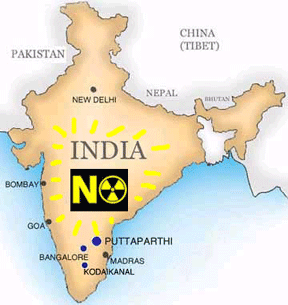 India’s Nuclear Energy Future at Risk in Elections, Financial Sense.com BY GLOBAL RISK INSIGHTS 04/09/2014, by Sean Durns, analyst at Global Risk Insights As Indian voters go to the polls this month, the choices they make in the voting booth will mark the future of nuclear energy in India. The young Aam Aadmi Party promotes an anti-nuclear platform that may significantly influence the country’s future energy composition.
On Monday, April 7, the world’s largest democratic elections began in what will likely be the world’s most populous country within the next ten years. Between April 7 and May 12, 815 million Indian voters cast their votes at 930,000 different polling stations. The electoral system in India is similar to the British parliamentary system. Voters are choosing 543 parliamentarians, who in turn will nominate a prime minister. If the results announced on May 16 indicate no actual majority, alliances will be formed and a coalition government will come to power.
The election will take place between three dominant political parties: the Bharatiya Janata Party (BJP), the incumbent Congress Party, which has been in power for much of India’s history, and the Aam Aadmi Party (AAP). The latter is a much younger party and a more regional political party in terms of strength. To the surprise of many observers, AAP saw some levels of success in last year’s state elections. It runs on a platform strongly emphasizing the need to combat the corruption endemic in Indian political life.
The AAP has also come out strongly against nuclear energy in India. Leader Arvind Kejriwal has publicly stated that the AAP is against the use of nuclear means to fulfil India’s energy needs. Kejriwal stated that “the destruction caused by nuclear power in case of an accident is enormous. This is why AAP is in-principle opposed to nuclear energy.” Other prominent members of the party, including Prashant Bhushan and Medha Patkar, call for a nuclear-free India.
The party has co-opted prominent members of the People’s Movement against Nuclear Energy (PMNE), encouraging them to run in certain districts. The movement garnered widespread attention during its three years of protests against the Kudankuluam nuclear power plant in the Tirunelveli district. Political opposition has already delayed new mines in Jharkhand, Meghalaya and Andhra Pradesh, areas essential in seeking to address fuel concerns……..
The growing opposition to nuclear energy in India is directly related to questions raised by the Fukushima disaster in Japan. Previously, Japan was considered a model for India in the adoption of atomic energy. Yet, Fukushima has raised concerns over India’s regulatory structures and infrastructure essential to supporting safe growth in the sector. The regulatory bodies are funded by the industry, and much of the oversight falls underneath the prime minister, leading to further oversight concerns.
Given the AAP’s concerns with regard to greater oversight and transparency, its support of improved infrastructure capabilities and its emphasis on grass root activism, opposing nuclear energy makes political sense for the party, particularly as it seeks to make inroads with key demographics.
The AAP seeks to contest more than 350 seats with over 268 candidates declared as of late March. One of the founders of the PMNE, SP Udayakumar, is among those seeking office. Udayakumar is running in Tamil Nadu along with seven other candidates from the AAP. The party has made significant progress on its plan to gain supporters in Iddinthakarai in Tamil Nadu, which is in the Tirunelvelli district and the very heart of the PMNE. The party stated previously that it had the goal of enrolling over 7,500 volunteers for poll work in the district………http://www.financialsense.com/contributors/global-risk-insights/india-s-nuclear-energy-future-risk-elections
Broken Hill’s solar farm, part funded by ARENA will keep going
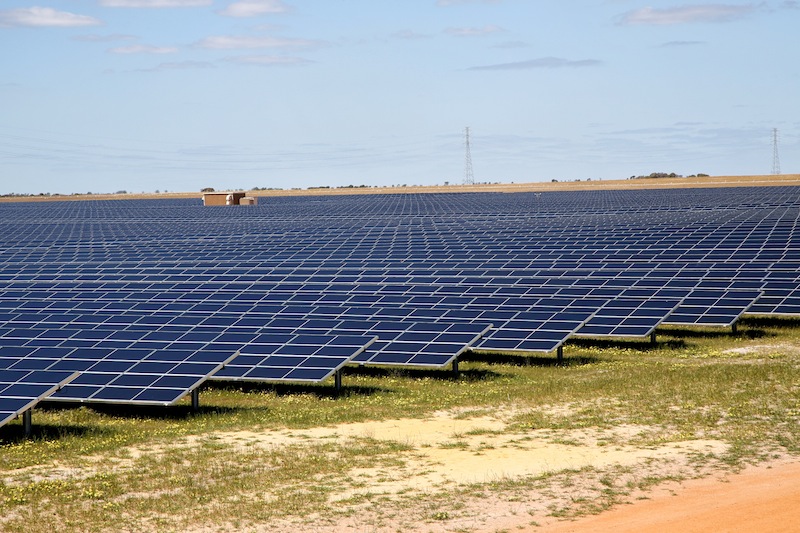 ‘Business as usual’ for Government agency part-funding Broken Hill and Nyngan Solar Farms, ABC News 10 April 14 Gavin Coote A solar farm at Broken Hill in far-western New South Wales will still go ahead, despite the contractor’s uncertainty about future renewable energy investment in Australia.
First Solar is building the Nyngan and Broken Hill Solar Farms, but is reconsidering its future investments because of uncertainty surrounding the Federal Government’s Renewable Energy Target.
The Australian Renewable Energy Agency, or ARENA, is an independent government agency and is helping fund the solar farm, along with the NSW Government.
The Agency says it won’t comment on any future projects in western New South Wales until they are signed off financially, but says it’s business as usual for the ARENA’s current programs, including those at Nygnan and Broken Hill…… “It is business as usual for ARENA, we are continuing to manage our existing projects and to assess and progress proposals we receive in accordance with our procedures and decision making processes.”….http://www.abc.net.au/news/2014-04-09/broken-hill-solar-farm-still-on-track-despite-investor-uncertai/5376866
History of the Peace Ship – and it will sail again
 The Remarkable Voyages of the Golden Rule, America’s Peace Ship CounterPunch, by LAWRENCE WITTNER, 9 April 14
In January 1958, Bigelow and three other crew members wrote to President Dwight Eisenhower, announcing their plans. As might be expected, the U.S. government was quite displeased, and top officials from the State Department, the Atomic Energy Commission, and the U.S. Navy conferred anxiously on how to cope with the pacifist menace. Eventually, the administration decided to ban entry into the test zone.
Thus, after Bigelow and his crew sailed the Golden Rule from the West Coast to Honolulu, a U.S. federal court issued an injunction barring the continuation of its journey to Eniwetok. Despite the legal ramifications, the pacifists set sail. Arrested on the high seas, they were brought back to Honolulu, tried, convicted, and placed on probation. Then, intrepid as ever, they set out once more for the bomb test zone and were arrested, tried, and—this time―sentenced to prison terms.
Meanwhile, their dramatic voyage inspired an outpouring of popular protest. Antinuclear demonstrations broke out across the United States. The newly-formed National Committee for a Sane Nuclear Policy went on the offensive. Moreover, an American anthropologist, Earle Reynolds, along with his wife Barbara and their two children, continued the mission of the Golden Rule on board their sailboat, the Phoenix. In July 1958, they entered the nuclear testing zone. That August, facing a storm of hostile public opinion, President Eisenhower announced that the United States was halting its nuclear tests while preparing to negotiate a test ban with the Soviet Union.
Even as test ban negotiations proceeded fitfully, leading to the Partial Test Ban Treaty of 1963 and, ultimately, the Comprehensive Test Ban Treaty of 1996, the Golden Rule dropped out of sight. Then, in early 2010, the vessel was discovered, wrecked and sunk in northern California’s Humboldt Bay. Contacted by historians about preserving theGolden Rule for posterity, officials at the Smithsonian Museum proved uninterested. But peace activists recognized the vessel’s significance. Within a short time, local chapters of Veterans for Peace established the Golden Rule Project to restore the battered ketch.
Thanks to volunteer labor and financial contributions from these U.S. veterans and other supporters, the ship has been largely rebuilt, and funds are currently being raised for the final stage of the project. Veterans for Peace hope to take the ship back to sea in 2014 on its new mission: “educating future generations on the importance of the ocean environment, the risks of nuclear technology, and the need for world peace.”
As a result, the Golden Rule will sail again, restored to its role as America’s most important peace ship. http://www.counterpunch.org/2014/04/09/americas-peace-ship/
Lawrence Wittner (http://lawrenceswittner.com) is Professor of History emeritus at SUNY/Albany. His latest book is a satirical novel about university corporatization and rebellion, What’s Going on at UAardvark?
First operating wave energy array scheme in the world, in Western Australia
 Western Australia wave energy project on the brink of commercialisation Oliver Milman theguardian.com, Wednesday 9 April 2014 A major sustainable energy plan has come closer to fruition with the launch of three giant buoys in Perth Australia could be set for a breakthrough in energy derived from waves, following the launch a major new project in Western Australia.
Carnegie Wave Energy unveiled three large buoys in Perth on Wednesday as part of a new $70 million technology which will feed energy into the Australian grid later this year.
The enormous buoys, called buoyant actuators, will be towed out into the ocean near Garden Island, off the coast of Perth.
The buoys will then be submerged and attached to underwater pumps. The movement of the ocean’s waves will cause the buoys to shoot high-pressure water through pipes which, in turn, will drive turbines and generators onshore, creating electricity.
The high-pressure water will also be fed into an onshore desalination plant, creating fresh water without the need for pumps.
Electricity and water provided by the project will be used by the department of defence for HMAS Stirling, Australia’s largest naval base, which is on Garden Island. The government, which has provided $13.1 million in funding through the Australian Renewable Energy Agency (ARENA), said the project will be the first operating wave energy array scheme in the world……
Ivor Frischknecht, chief executive of ARENA, said Carnegie should be congratulated for helping push forward the viability of wave energy in Australia.“Australia’s wave energy resources along our south and south-west coasts are among the best in the world and, importantly, can be reliably predicted days ahead,” he said.
“There is great long-term potential for wave energy in Australia, with a range of competitive Australian technologies being developed towards commercialisation.” http://www.theguardian.com/environment/2014/apr/09/western-australia-wave-energy-project-on-the-brink-of-commercialisation
Poland’s Renewable Energy Law ensures a future for renewable projects
 Poland approves renewable energy bill, Climate Spectator Reuters 9 Apr, Poland’s government approved a long-awaited draft law on Tuesday that lays out new long-term subsidies for renewable energy, aiming to cut costs to consumers as well as help the coal-reliant country meet EU climate targets……http://www.businessspectator.com.au/news/2014/4/9/policy-politics/poland-approves-renewable-energy-bill
Australia’s Mining operations increasingly seeking renewable energy partnerships
Business as usual’ for Government agency part-funding Broken Hill and Nyngan Solar Farms ABC News 10 April 14
The Clean Energy Council’s Kane Thornton says far-western NSW is well-positioned for clean energy projects, particularly when done in tandem with the mining sector.
“Places like Broken Hill obviously have a long and rich history in mining,” he said.
“But I think the future is going to be really interesting because it’s got a great resource in wind and solar and they provide a low-cost form of energy to continue to support things like mining and manufacturing and other important parts of the Australian economy.
“So it’s not surprising that a lot of these mining companies are actively looking at things like wind and solar in particular as a way to provide them a reliable source of lower cost energy and they can avoid the pain associated with higher gas prices and higher diesel prices.”http://www.abc.net.au/news/2014-04-09/broken-hill-solar-farm-still-on-track-despite-investor-uncertai/5376866
Chile’s rapid uptake of solar energy
Chile An Emerging Solar PV Powerhouse http://www.energymatters.com.au/index.php?main_page=news_article&article_id=4257 Chile installed 150MW of solar panels in the first quarter of this year and has a further 380MW of PV under construction.
According to GTM Research’s Latin America PV Playbook, Q2 2014; the 150MW tally is triple the amount that any Latin American country has ever installed in a single quarter.
A major contributor to the impressive first quarter total was SunEdison’s 50.7 MW San Andres solar farm; the largest merchant solar plant in Latin America to date. SunEdison recently announced it has sold a majority stake in the facility to a group of investors.
GTM Research forecasts Chile will install 244 megawatts of PV this year; some of which support the nation’s energy-hungry mining industry. Last year, Chile’s renewable energy capacity jumped 40 percent to just over one gigawatt. The nation’s renewable energy target demands utilities source 20 percent of their power from renewable sources – excluding hydro – by 2025.
GTM Research considers Latin America to be the “global frontier” for unsubsidized solar markets.
“With high insolation levels and growing demand, it is positioned to be one of the most attractive regions on the planet for solar development.”
Chile has a population of more than 17 million. According to Wikipedia, its electricity generation sector relies mainly on hydro-electric power (33% of installed capacity as of May, 2012), oil (13%), gas (30%) and coal (20%). Much of its fossil fuel is imported.
The nation’s newly elected president, Michelle Bachelet, this week announced a proposed carbon tax. Under the proposal, thermal power plants with a generation capacity of at least 50 megawatts will pay a tax of $5 per metric tonne of carbon dioxide emitted. The carbon tax would be the first to be implemented in South America.
1 This month
7 April – WEBINAR – Australia and the Doomsday Clock – Preventing nuclear war through NoFirstUse and other policies
Online | Tuesday April 7, 4:00-5:30pm, Australian Eastern Time / 8:00-9:30am Central Europe Time
– Access the registration link
15 April – Zoom –Nuclear Power is Not the Solution
Apr 15, 2026 01:00 AM in Canberra, Melbourne, Sydney

Join the International Physicians for the Prevention of Nuclear War (IPPNW) on Tuesday, April 14th for a timely webinar exploring the risks associated with nuclear power and challenging the myth that it offers a simple, safe, carbon-free solution to the climate crisis

21 April Webinar: No Nuclear Weapons in Australia
Start: 2026-04-21 18:00:00 UTC Canberra, Melbourne, Sydney (GMT+10:00)
End: 2026-04-21 19:30:00 UTC Canberra, Melbourne, Sydney (GMT+10:00)
Event Type: Virtual
A virtual link will be communicated before the event.
Host Contact Info: australia@icanw.org

of the week – Australians for War Powers Reform (AWPR)
To see nuclear-related stories in greater depth and intensity
 Antinuclear