Julie Bishop visits Hiroshima. Will she reflect on the real costs of Australia’s uneconomic uranium trade?
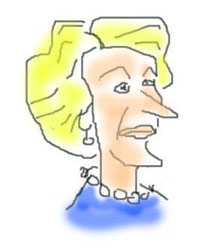 Julie Bishop’s visit to Hiroshima: a perfect time to debate our uranium industry http://www.theguardian.com/commentisfree/2014/apr/11/julie-bishops-visit-to-hiroshima-a-perfect-time-to-debate-our-uranium-industry Dave Sweeney theguardian.com, Friday 11 April 2014
Uranium is not like any other mineral – and because Australia is home to around 40% of the worlds’ uranium, the decisions we make on the subject matter Australia’s foreign minister Julie Bishop is in Japan today attend an international meeting on nuclear security in Hiroshima a city synonymous with nuclear threat. Indeed, a visit is not complete without wandering the hallowed grounds of the famous Peace Park, the epicentre of the early morning nuclear blast that killed up to 140,000 people on 6 August 1945.Bishop is also visiting a country that is still enduring the ongoing trauma associated with the Fukushima earthquake and tsunami and the wors tnuclear disaster of modern times – a disaster that, three years on, has left the region comprised of ghost towns and shattered lives.
In visiting Hiroshima, it would be fitting for Australia’s foreign minister to reflect publicly on Australia’s role in fuelling Japan’s continuing nuclear disaster. In October 2011, Robert Floyd, the director general of the Australian Safeguards and Non-Proliferation Office of the Department of Foreign Affairs and Trade, confirmed to the parliament that “Australian obligated nuclear material [uranium] was at the Fukushima Daiichi site and in each of the reactors”.
Given that, it would be timely for Bishop to use the opportunity to commito an independent cost-benefit assessment of Australia’s uranium trade, as directly requested by the UN secretary general Ban Ki Moon in the wake of the accident. The need for such an inquiry has never been more pressing.
n Australia, low uranium prices have seen existing uranium mines close down. New uranium mining projects are being delayed, and the sector is under pressure. And that’s not to even mention spills – such as was seen with the December 2013 uranium tank collapse and the leak at Rio Tinto’s ranger mine in Kakadu.
Australia also continues to uncritically supply our existing uranium customers, despite evidence of alarming unsafe practices in countries like South Korea. Our deal with Russia also deserves greater scrutiny, as the International Atomic Energy Agency has not carried out any inspections there since at least 2001. We aggressively push new uranium deals to countries like India, whose nuclear industry has been called unsafe by its own auditor general, and which point blank refuses to sign the global nuclear non-proliferation treaty.
Bishop’s visit to Hiroshima, of all places, is an ideal time to reflect on the very nature of Australia’s uranium – that it is not like any other mineral. Uranium can fuel both nuclear reactors and nuclear weapons, and it all becomes radioactive waste. Australia is home to around 40% of the worlds’ uranium, and the decisions we make matter. In the shadow of Fukushima, we need to review the costs and consequences of our uranium trade at home and abroad and act on the UN’s inquiry call.
If Bishop continues to put the interests of a high risk, low return industrial sector before those of our nation and region, the consequence is that it is likely that Australia’s uranium sector will fuel future Fukushimas. This need not, and must not, occur.
No comments yet.
1 This month
7 April – WEBINAR – Australia and the Doomsday Clock – Preventing nuclear war through NoFirstUse and other policies
Online | Tuesday April 7, 4:00-5:30pm, Australian Eastern Time / 8:00-9:30am Central Europe Time
– Access the registration link
15 April – Zoom –Nuclear Power is Not the Solution
Apr 15, 2026 01:00 AM in Canberra, Melbourne, Sydney

Join the International Physicians for the Prevention of Nuclear War (IPPNW) on Tuesday, April 14th for a timely webinar exploring the risks associated with nuclear power and challenging the myth that it offers a simple, safe, carbon-free solution to the climate crisis

21 April Webinar: No Nuclear Weapons in Australia
Start: 2026-04-21 18:00:00 UTC Canberra, Melbourne, Sydney (GMT+10:00)
End: 2026-04-21 19:30:00 UTC Canberra, Melbourne, Sydney (GMT+10:00)
Event Type: Virtual
A virtual link will be communicated before the event.
Host Contact Info: australia@icanw.org

of the week – Australians for War Powers Reform (AWPR)
To see nuclear-related stories in greater depth and intensity
 Antinuclear
Leave a comment