Australia’s Foreign Minister, Julie Bishop joins the ranks of the Nuclear Honorary Males
 Well, well, here am I always advocating that women should play a major role in matters nuclear. But look out for the Nuclear Honorary Males.
Yes, women are occasionally let in to the pro nuclear system. As long as they are selected by the middle-aged white male corporatocracy.
For example:
- Dixie Lee Ray, former chairwoman of the Atomic Energy Commission
- Margaret Thatcher – pushed for nuclear power (yes, to address climate change) but mainly in order to crush the coal miners’ union. Fan of nuclear weapons
- Anne Lauvergeon, former CEO of nuclear octopus AREVA
and we, in Australia, have Julie Bishop. In Hiroshima she dismissed the call of the non nuclear nations to work for a ban on nuclear weapons

Australia will have to come clean on nuclear weapons policy
Australian policy on nuclear weapons hopelessly conflicted http://www.smh.com.au/comment/australian-policy-on-nuclear-weapons-hopelessly-conflicted-20140410-zqt9l.html April 10, 2014 At a meeting in Hiroshima of the Non-Proliferation and Disarmament Initiative (NPDI), a group of 12 countries led by Australia and Japan, Foreign Minister Julie Bishop made much of Australia’s supposed commitment to ridding the world of nuclear weapons.
- But Australian policy on nuclear weapons is hopelessly conflicted. With one hand, it promotes nuclear disarmament, yet with the other, it clings anxiously to US nuclear weapons for national security. Australia wants to get rid of nuclear weapons and keep them too.
- There is no secret about this: Bishop wrote in February that Australia “has long and actively supported nuclear disarmament … and worked tirelessly toward the goal of a world free of nuclear weapons” and also that Australia “will continue to rely on nuclear deterrence” for its security as long as nuclear weapons exist. She is the latest custodian of a bipartisan policy that has been passed down through consecutive governments for decades.
- As long as nothing much was happening with nuclear disarmament, Australia could safely advocate it. But the emergence of a global movement to examine the humanitarian consequences of nuclear weapons, and a related push for a treaty banning them, has put Australia on the spot.
International conferences held in Oslo last year and in Nayarit, Mexico, in February concluded that any nuclear detonation would completely overwhelm humanitarian and disaster response capabilities, and cause unacceptable long-term harm worldwide.
Australia cautiously participated in these meetings, but clearly with misgiving. And at the United Nations last October, when 125 countries, including Japan and five other NPDI members, made a joint statement on the humanitarian consequences of nuclear weapons, Australia baulked – and weaselled out.
Pressed to explain why Australia could not join the statement, officials said the sentence, “It is in the interest of the very survival of humanity that nuclear weapons are never used again, under any circumstances,” was incompatible with Australia’s reliance on nuclear deterrence.
Calls for a new treaty to ban nuclear weapons have further exposed the contradictions in Australia’s policy. There is no legal reason Australia could not join such a treaty tomorrow: Australia has no nuclear weapons. As a member of the Nuclear Non-proliferation Treaty (NPT) it has sworn off them.
The official response, however, has been to oppose such a ban because it would not “guarantee” nuclear disarmament. This is a ludicrous excuse, given that none of the approaches Australia and the NPDI advocate will “guarantee” disarmament either (in fact most of them are hopelessly bogged down).
That a polished performer like Bishop would field such a flimsy rationalisation only shows how bare the intellectual cupboard at the Foreign Ministry is. They can’t find a better argument, because there isn’t one.
Despite the increasing visibility of its inherently contradictory policy, the government blithely continues to seek a high profile on nuclear disarmament.
- The people of Hiroshima will surely welcome Bishop’s earnest undertakings to address the humanitarian impact of nuclear weapons and pursue nuclear disarmament. They will be less impressed by her extraordinary statement that “the horrendous humanitarian consequences of nuclear weapons are precisely why deterrence has worked” – in other words, that Australia depends for its security on the very humanitarian consequences it claims to be working to avoid.The contradictions emerge even within the NPDI. The purpose of the NPDI is to support implementation of the 64-point “action plan” on non-proliferation and disarmament agreed by the 189 members of the NPT. Australia is a prominent proponent of the plan. But the very first of these 64 actions requires Australia to “pursue policies that are fully compatible with the treaty and the objective of achieving a world without nuclear weapons”. How is relying on nuclear weapons compatible with the objective of achieving a world without nuclear weapons?
- The circle simply cannot be squared. Follow the tortuous reasoning to its conclusion and it reduces to “Australia supports nuclear disarmament, just as soon as it has happened”.
- As the humanitarian initiative gathers momentum, and as a ban treaty looms closer, Australia’s policy will become increasingly untenable. It will soon have to choose: nuclear weapons – yes or no. If the answer is yes, the only honest course is to drop the pretence of working towards a world free of nuclear weapons and leave the NPT. If the answer is no, then there are policy challenges ahead – but overcoming them would put Australia on the right side of history.
- Richard Lennane is a former United Nations disarmament official and Australian diplomat.
Uranium supply will outlast the uneconomic nuclear industry
reality appears to be relegating nuclear power to the uneconomic category of history
 Enough Uranium, but Nuclear Power Is Still Shrinking http://www.truthdig.com/report/item/enough_uranium_but_nuclear_power_is_still_shrinking_20140412 By Paul Brown, Climate News Network This piece first appeared at Climate News Network.
LONDON—There is enough uranium available on the planet to keep the world’s nuclear industry going for as long as it is needed. But it will grow steadily more expensive to extract, because the quality of the ore is getting poorer, according to new research.
Years of work in compiling information from around the world has led Gavin M. Mudd from Monash University in Clayton, Australia to believe that it is economic and political restraints that will kill off nuclear power and not any shortage of uranium, as some have claimed.
Writing in the journal Environmental Science & Technology that renewables do not have the disadvantages of nuclear power, which needs large uranium mines that are hard to rehabilitate and which generates waste that remains dangerous for more than 100,000 years.
In addition, research shows that renewable technologies are expanding very fast and could produce all the energy needs of advanced economies, phasing out both fossil fuels and nuclear.
Mudd, who is a lecturer in the department of civil engineering at Monash, has compiled decades of data on the availability and quality of uranium ore. He concludes that, while uranium is plentiful, mining the ore is very damaging to the environment and the landscape. Continue reading
Australia’s Radioactive Racism on show in the ‘Radioactive Exposure Tour’
Radioactive Exposure Tour hits Australia https://www.greenleft.org.au/node/56258 Saturday, April 12, 2014 By Rachel Evans The Friends of the Earth “Radioactive Exposure Tour” is taking place from April 12 to 27. Forty people will travel from Melbourne and Adelaide through to Alice Springs and Tennant Creek.
The tour will take people to the heart of the Australian nuclear industry, exposing the realities of “radioactive racism” and the environmental impacts of uranium mining.
Organisers of the tour said: “The tours have been organised since the 1980s, and this year it will stop in Adelaide and Port Augusta, hearing some of the inspiring stories from the Irati Wanti campaign, the Gugada Tent Embassy and the British atomic tests of the 50s and 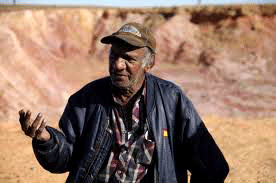 60s. The tour will travel through Kokatha and Arabunna country, visit the Olympic Dam uranium mine and spend time with Arabunna elder Uncle Kevin Buzzacott.”
The tour will “witness sunset over Lake Eyre and the unique and fragile ecosystems of the Mound Springs, which have been devastated by the colossal water usage of the Olympic Dam mine. As we continue north to Alice Springs we’ll stop by Pine Gap to consider the Australian government’s complicity in the US war-machine and the outdated notion of ‘extended nuclear deterrence’. We’ll meet more inspiring people with a long history opposing the nuclear industry and the NT intervention in Alice Springs before continuing to Tennant Creek.”
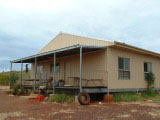 Muckaty, 120 kilometres north of Tennant Creek, is an important part of the radioactive tour. Muckaty was the fourth site to be assessed as a potential radioactive waste dump site in the Northern Territory and the only area left under consideration.
As Beyond Nuclear Initiative points out: “In 2007 the Muckaty Land Trust was nominated as an additional site by the Northern Land Council, despite opposition from many Aboriginal traditional owners of the area.”
The National Radioactive Waste Management Act introduced by former resources minister Martin Ferguson maintains many provisions of the John Howard government’s laws. These “can be used to impose a nuclear waste dump in the NT against the wishes of both Aboriginal landholders and the NT government.”
[For more information, visit Radioactive Tour online]
Politically and economically, Abe government could be damaged by decision to restart nuclear power
 Tokyo’s decision on nuclear power plants ‘may backfire’
It could cost PM Abe politically and set back his economic policies: analysts Business Times BY ANTHONY ROWLEY
The controversial decision goes against the non-nuclear policy adopted by the Democratic Party of Japan government before Mr Abe’s Liberal Democratic Party returned to power at the end of 2012 and could backfire in a number of ways, analysts say.
With polls showing a significant proportion of Japanese remaining opposed to the restart of the nation’s 50 or so nuclear reactors that have been idled since the Fukushima disaster, the political price of restoring nuclear power could be high for Mr Abe, some claim.
At the same time, there could be economic consequences such as setting back the policy being pursued by the Bank of Japan (BOJ) under pressure from Mr Abe to replace deflation with annual inflation of 2 per cent. So far much of the progress towards this target has been driven by “imported inflation” in fuel costs…..(subscribers only) http://www.businesstimes.com.sg/premium/world/tokyos-decision-nuclear-power-plants-may-backfire-20140414
Greens want Victoria to have a Clean Energy fund to help businesses and homes
 Greens call for state clean energy fund, http://www.theage.com.au/victoria/greens-call-for-state-clean-energy-fund-20140413-36ldj.html 13 April 14, The Greens want the Victorian government to establish a state-based clean energy fund to make solar panels more affordable.
Australian Greens Leader Christine Milne call for the creation of a Victorian Solar Fund to help homes and businesses deal with the upfront costs of solar panels.
Senator Milne said the fund would make money for the state and reduce power bills. “Australia is a leader in solar science but is underinvested in solar power, depriving us of jobs that the community is calling out for,” she said on Sunday.
“We can create the financial incentives to put solar panels on roofs, for no money down, delivering immediate savings on electricity bills.”
A personal story from a Fukushima volunteer hlper
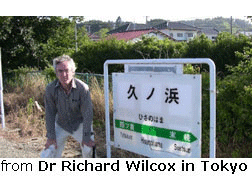 Japan’s Radioactive Potemkin Village: The Government’s Double-Dealing Data, rense.com. By Richard Wilcox, PhD, 4-12-14 A Volunteer Speaks
“………My colleague, Chiho Takahashi, a student at Tsuda College, recently wrote of her experiences as a volunteer to support the folks at the Adachi temporary housing facility:
“In November of 2012, I went to the Adachi temporary housing in Nihonmatsu for the first time. Almost all of the children that participated in our event were shorter than me, my height is 148 cm. But as I visited periodically during the next year and a half I noticed the children growing in height. In that way I could measure the passage of time and see that the victims’ lives were not “temporary” at all but taking place over a long period.
Children who were first grade students of elementary school became third grade students. Children who were first grade students of junior high school became high schoolers. I asked myself, ‘do you think that it is a temporary life?’ I could not think so.
In February of 2013 I had an experience where an elderly man let me into his house at the Adachi temporary housing. He lives in the house all alone. I went up his steps into his small quarters. There are four rooms in the house: kitchen, living room, bed room and bath. He showed me into the living room where there was akotatsu (Japanese foot warmer) and suggested that I warm myself in the kotatsu because it was very cold that day. We talked for about 30 minutes in afternoon and he told me about his children and grandchildren but he rarely sees them because they live in Tokyo and Miyagi prefectures. He was proud that he had done forestry and farming work using his big truck before he was forced to move to Nihonmatsu from Namie town because of the 3.11. disaster. Since then, he has lost everything and has nothing to do every day but drink in broad daylight. There were some bottles of rice wine and potato liquor on the table in the living room.
When I was heard his sad story I could only say to him that ‘that’s too bad.’ Although I felt I was not useful to him I tell people this story to people in Tokyo so they will know what a hard life it is in the temporary housing of Nihonmatsu.
I want many people to know the experience which I saw and heard and felt in Tohoku. I can’t carry out expensive projects like government, but I have always felt that I should try to do important things with my precious friends even if they might seem ‘small.’ In this way, maybe I can inspire more people from Tokyo to assist the refugees of the Tohoku and Fukushima disasters, even if it is just one person at a time. Our small volunteer made the singular effort to go to Nihonmatsu to assist the temporary housing residents, so too if each person made a small but sincere effort it might create a larger effect.”
* Richard Wilcox is a Tokyo-based teacher and writer who holds a Ph.D. in environmental studies and is a regular contributor to the world’s leading website exposing the Fukushima nuclear disaster, Rense.com. He is also a contributor to Activist Post. His radio interviews and articles are archived athttp://wilcoxrb99.wordpress.com and he can be reached by email for radio or internet podcast interviews to discuss the Fukushima crisis at wilcoxrb2013@gmail.com. http://www.rense.com/general96/jpsradioctv.html
1 This month

of the week – Australians for War Powers Reform (AWPR)
To see nuclear-related stories in greater depth and intensity
 Antinuclear