The costs to Australia of climate inaction
Australian business and investors operate in a global business environment. While our current political and business leaders pursue an approach of not regulating the greenhouse emissions of Australian industry, the global economy is rapidly moving in the opposite direction.
Australia’s economy will suffer if we fall behind on climate action Martijn Wilder The Conversation, 18 June 2014,
Australia’s economy faces grave threats from climate change, but the greatest threat is if we do not make a serious effort to reduce greenhouse gas emissions.
It’s not just the physical impacts of climate change that will hurt Australia’s economy. In a new report released today by the Committee for Economic Development of Australia, I and others argue that falling behind on reducing greenhouse gas emissions leaves Australia’s economy vulnerable to global efforts to tackle climate change.
But so far Australian government and business has focused on the cost of reducing emissions, despite evidence that it will be far more costly to do nothing.
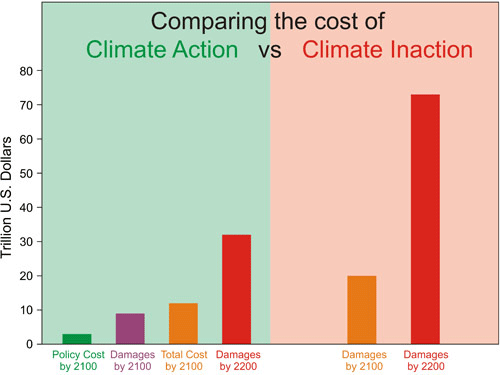
Counting the costs of climate action
In Australia it has long been the view that limiting emissions through carbon pricing will directly limit economic growth. This is despite industry being largely protected from the costs of efforts to reduce emissions through the Clean Energy Act through free emissions permits and compensation.
More recently we have seen growing business support for the repeal of the Clean Energy Act (including carbon pricing). There is now clear intent from government and business to remove emissions regulation, and currently the government’s proposed Direct Action plan has no immediate alternative regulatory cap to reduce greenhouse gas emissions.
This fragmented and inconsistent political approach to reducing greenhouse gas emissions is likely contributing to the inaction and attitude of Australian business, which is a long way behind the rest of the world……….
At this year’s World Economic Forum, the President of the World Bank, Jim Yong Kim, publicly supported divestment from carbon intensive assets.
The World Bank has also modified its energy lending strategy to limit financing of coal-fired power plants to “rare circumstances” and only in countries that have “no feasible alternative” and the world’s largest public financial institution, the European Investment Bank, has also implemented restrictions.
Increasingly international pension funds, with more than US$30 trillion under management, are also heading in this direction and changes are also increasingly occurring in the financing sector. For example, Deutsche Bank’s recent statement that it would not consider financing the expansion of the Abbot Point Coal Facility.
Australian business and investors operate in a global business environment. While our current political and business leaders pursue an approach of not regulating the greenhouse emissions of Australian industry, the global economy is rapidly moving in the opposite direction.
The CEDA report The Economics of Climate Change will be launched by Ross Garnaut, Quentin Grafton and Martijn Wilder today in Melbourne. http://theconversation.com/australias-economy-will-suffer-if-we-fall-behind-on-climate-action-28093
No comments yet.
1 This month
15 April – Zoom –Nuclear Power is Not the Solution
Apr 15, 2026 01:00 AM in Canberra, Melbourne, Sydney

Join the International Physicians for the Prevention of Nuclear War (IPPNW) on Tuesday, April 14th for a timely webinar exploring the risks associated with nuclear power and challenging the myth that it offers a simple, safe, carbon-free solution to the climate crisis

of the week – Australians for War Powers Reform (AWPR)
To see nuclear-related stories in greater depth and intensity
 Antinuclear
Leave a comment