Aboriginal Australia has had a huge victory in the Muckaty nuclear waste dump case
This has been hard fought litigation, and we are proud to have given voice to the resilience and determination of our clients Elizabeth O’SheaToday, the Commonwealth Government has agreed not to act upon the nomination of land at Muckaty Station as a site for Australia’s first radioactive waste dump. The resolution comes seven years after the nomination, four years after the court case was started, and two weeks into a seven week trial. The matter has settled with no admission of liability. Maurice Blackburn’s social justice practice conducted this case on a pro bono basis, and we couldn’t be prouder of the outcome or happier for our clients.Muckaty Station, 110km north of Tennant Creek, is an Aboriginal land trust under the Aboriginal land rights act. In the 1990s, the Aboriginal land commissioner, justice Gray, was tasked with working out who were the traditional owners of that particular country and the nature of land tenure under customary law. He wrote a report and handed the land back to Aboriginal people on the basis of his findings.
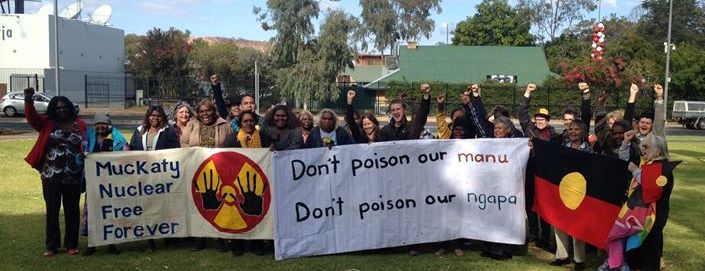
Understandably, the return of land to Aboriginal people is a source of immense pride for many. Aboriginal people treat their customary obligations seriously and with dignity, undercutting many of the old lines about Aboriginal people from the reactionary songbook.
In relation to Muckaty, there may be many Aboriginal people who have an interest in the land under customary law. The NLC is charged with dealing with land according to certain rules. They have legal duties to obtain informed consent from people who have primary spiritual responsibility for country, but also to give those with an interest in the land the opportunity to express their views.
In 2005, the Howard government introduced legislation to facilitate the building of Australia’s first radioactive waste dump. The Commonwealth had sites that it owned already and could use, but the NLC lobbied to introduce a provision which permitted Aboriginal people to volunteer a site.
In 2006, the NLC began negotiations with the Commonwealth about a nomination of a site on the Muckaty land trust. The proposed nomination was immediately contentious. Eventually, the Commonwealth offered $12m in the event that the nomination was declared to be the site of the dump. The NLC say they obtained consent and consulted with the right people. The deal was signed in 2007.
There is no doubt that some traditional owners consented to the nomination. It is easy to see why – these are some of the poorest people in Australia and this is a lot of money, though it starts to look quite miserly when compared with international examples.
However, there are five key dreamings on Muckaty that are relevant to this site. The NLC’s stated position was that one sub-branch of one dreaming group were exclusively able to consent to the nomination. Representatives of every other dreaming oppose the dump.
This contrasts with justice Gray’s report, which clearly articulates how decisions about country in the Central Desert area are made collectively, by consent. It is also troubling for other reasons. This proposal is not a microwave tower, or a railway or even a mine. This proposal involves burying radioactive waste on country, within a short distance from a significant sacred site. Even if, as the Commonwealth maintains, it will be safe within a couple of hundred years, it arguably involves permanent sterilisation of land under customary law. The consultation for a proposal of this significance should have been thorough, so people knew exactly what it was they were consenting to, but also that any dissent was treated seriously and as potentially a reason not to proceed with the proposal.
The court heard evidence last week from traditional owners and witnesses on behalf of the applicants seeking to stop the dump. The court was presented with a united front from traditional owners, who explained that the consultation process was confusing and unclear, with people not certain about the location of the proposed dump or who that land belonged to. Meetings were very tense and people felt like they weren’t listened to. The witnesses told the court that they were not told who would be getting the money or how it would be managed.
The NLC maintains it has done everything properly. The traditional owners maintain that they were ridden over roughshod and the anthropology which identified the relevant people to speak for country was mistaken. Hopefully, this is an opportunity for the NLC to reflect on their processes and try to get it right.
This has been hard fought litigation and we are proud to have given voice to the resilience and determination of our clients. In the seven years since this nomination was made, the movement to stop a dump on Muckaty has grown. Local council, unions, community groups all got on board and stood firm in their opposition to the dump.
But the truth is that this is a much bigger issue than the court case. This is an opportunity to rethink these issues from a public policy perspective. These remain some of the most important discussions we can have. If you are a person who places importance on the rights of Aboriginal people, the protection of the environment or simply good governance, you have a duty to be part of them.
Tony Abbott and Julie Bishop determined to keep Climate Change OFF the G20 Agenda
 Audio: Julie Bishop confirms climate change won’t be high on G20 agenda ABC Radio. Te World Today Rachael Brown reported this story on Friday, June 20, 2014 TANYA NOLAN: After weeks of speculation, the Federal Government has today confirmed it won’t be making climate change a priority during November’s G20 summit in Brisbane. The issue dogged Prime Minister Tony Abbott on a recent overseas trip, where he met world leaders, including US president Barack Obama who supports a cap and trade scheme and wants the issue on the G20 agenda.
But the Foreign Minister, Julie Bishop, says it’s not the right forum to discuss climate change.
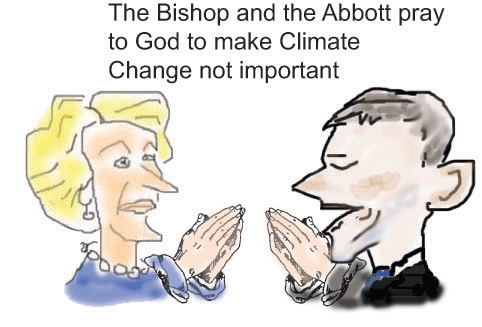
She’s made the comments at Melbourne’s C20 forum, a grouping of civil society organisations, which say the Federal Government is missing an opportunity to make climate change a top priority.
But the World Wildlife Fund says climate change is an economic issue………. Julie Bishop says the summit has to stick to a strong and focused economic agenda.
But the World Wildlife Fund says climate change is an economic issue. http://www.abc.net.au/worldtoday/content/2014/s4029630.htm
Thyroid cancer rates have skyrocketed among Fukushima’s children
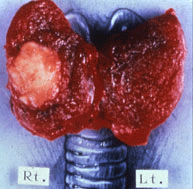 Fukushima’s Children are Dying (includes audio)http://ecowatch.com/2014/06/14/fukushima-children-dying/2/ Harvey Wasserman | June 14, 2014 Some 39 months after the multiple explosions at Fukushima, thyroid cancer rates among nearby children have skyrocketed to more than forty times (40x) normal.
More than 48 percent of some 375,000 young people—nearly 200,000 kids—tested by the Fukushima Medical University near the smoldering reactors now suffer from pre-cancerous thyroid abnormalities, primarily nodules and cysts. The rate is accelerating.
More than 120 childhood cancers have been indicated where just three would be expected, says Joseph Mangano, executive director of the Radiation and Public Health Project.
The nuclear industry and its apologists continue to deny this public health tragedy. Some have actually asserted that “not one person” has been affected by Fukushima’s massive radiation releases, which for some isotopes exceed Hiroshima by a factor of nearly 30.
But the deadly epidemic at Fukushima is consistent with impacts suffered among children near the 1979 accident at Three Mile Island and the 1986 explosion at Chernobyl, as well as findings at other commercial reactors. Continue reading
Northern Land Council in 2005 asked Australian government to change law. to faciliiate nuclear dump on Aboriginal land
NT News, 20 June 14 The NLC’s decision to pull out of a Federal Court case, which was arguing the NLC had acted deceptively and had consulted the wrong traditional owners, means the site on Muckaty will no longer be used for a radioactive waste dump. The NT News welcomes this decision, which has also seen the Commonwealth agree to settle the case and abandon Muckaty.
While understanding the nation needs to store radioactive waste, we do not believe the fact we do not have full statehood should see the Territory forced to take a dump on any form of land, Aboriginal or otherwise.
The site should be chosen based on the best scientific advice, not because money is waved in the faces of impoverished Aboriginal people. If the proper scientific advice is that the dump should be located on land within the Territory, we will look closely at the proposal when the  time comes.
The NLC is, however, hardly above criticism in this saga. It asked the Commonwealth to change the law in 2005, so traditional owners could nominate their land.
It says it used the right anthropology and located the right people, but we will never know: they pulled out of the case before their lawyers were subject to cross-examination in the Federal Court.
They wasted an untold amount of money arguing for the dump, causing a lot of anguish for people in Tennant Creek and nearby Elliott, and a lot of confusion in Darwin and Alice Springs.
We are prepared to take Mr Morrison at his word that the reason the NLC agreed to settle the case was because he did not enjoy seeing such deep fractures among the traditional owners…….” http://www.ntnews.com.au/news/opinion/good-first-step-by-council-boss-over-muckaty/story-fnk0b216-1226961682192
Many Fukushima nuclear cleanup volunteers became ill, and many died
 Fukushima Guide: “Lots of people suddenly started having nose bleeds, cats and dogs too, it lasted for some time” after 3/11 — Article: Many who volunteered in Fukushima have died, including 2 students from group of 15 helping to decontaminate http://enenews.com/fukushima-guide-lots-of-people-suddenly-started-having-nose-bleeds-cats-and-dogs-too-it-lasted-for-some-time-after-311-article-many-who-volunteered-in-fukushima-have-died-including-2-stud?utm_source=feedburner&utm_medium=email&utm_campaign=Feed%3A+ENENews+%28Energy+News%29
Zukunashi no Hiyamizu, June 9, 2014 (h/t Dissensus Japan]: Why many of decontamination volunteers died — “Genpatsu Mondai” wrote a blog article in the May 21, 2014 titled “Joining the volunteer with Fukushima citizens result in sudden death!!! Two of fifteen students in the neighborhood already died from an unknown cause”. In this article, you can read many dead cases of volunteers who went to Fukushima and worked there. They went to contaminated area and worked for decontamination as volunteers. […] Basically the purpose of volunteers is to go to the contaminated area where the air dose rate is high and to work there.
Sulejman Brkic, June 12, 2014: We left for Fukushima by bus very early on May 31, from Yokohama […] At the rest area where we stopped to pick up our guide, Masumi K. […] According to Masumi san, the population is divided between those who trust the government and the ones who don’t […] Don’t forget Fukushima are the words spoken to us by Masumi K. […] Masumi is from Okuma which she fled with her family after the nuclear explosions in 2011 […] She has been also battling cancer for some time now […] her husband got seriously sick and needed a new kidney, Masumi gave him one of hers. […] [A] young anonymous worker [at Fukushima Daiichi] told us […] about so many small and big acts of exploitation […] that…well…one stops listening, not on purpose, but it’s just too much, too overwhelming, it starts sounding normal after a while, I am sorry I can’t remember all of it. At every step in that area one can see or hear or feel the Japanese government’s lies and crimes. […] After the young anonymous worker, Masumi K talked again. She told us, again among many other stories of suffering, about the increase in suicides, consumption of alcohol, domestic violence, depression…she also told us how after the ongoing nuclear disaster there was a time when quite lots of people suddenly started having nose bleeds, cats and dogs too, it lasted for some time and then it suddenly stopped.
Residents and safety experts not happy with China’s race for nulcear power in Shandong province
Losers aplenty in China’s race for nuclear power THE AUSTRALIAN JUNE 21, 2014 Scott Murdoch China  Correspondent Beijing IN China’s far eastern region of Rongsheng, the government is rolling out one of the most ambitious nuclear power developments in the world.
China has commissioned at least three power plants in the Shandong province as it attempts to reduce its reliance on fossil fuels. However, the details of the projects remain tightly controlled, with hundreds of residents, farmers and business owners left to question their future amid concerns over the safety of nuclear technology. Continue reading
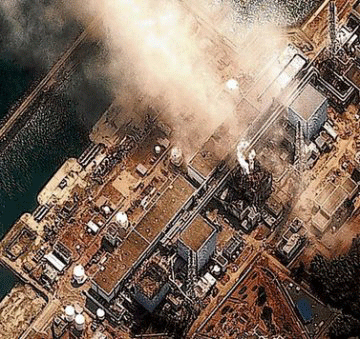
Fukushima nuclear reactor buildings far too radioactive for workers to look for molten cores
 Hemisphere facing generations of radiologic contamination” from Fukushima — TV: It’s a major humanitarian crisis — NYT: “Nobody really knows” if 100s of tons of plutonium & uranium fuel resolidified — Experts: It’s certain reactor cores ‘moved around’; “Flowed to different part of buildings”? (VIDEO)
Al Jazeera, June 17, 2014: Fukushima ‘ice wall’ looking more like a dirt Slurpee […] Skeptics of the plan to build a massive ice wall […] didn’t have to wait particularly long for their first “I told you so.” […] “We have yet to form the ice stopper because we can’t make the temperature low enough to freeze water,” a TEPCO spokesman said. […] What if freezing causes the ground to sink? What if the ice and the ensuing expansion and contraction interrupts or further damages drainage in the reactor buildings? […] TEPCO’s experiment around the margins does nothing to address the hot mess at the core (as it were) of the crisis, and is cold comfort to those people still displaced or a country and hemisphere facing generations of radiologic contamination.
Christopher Morris, Muon Radiography Program Leader, June 16, 2014: “It’s certain that the reactor cores melted and the material moved around. By using muons going through the cores, we can make a radiograph of the uranium material and find out how much is left inside the pressure vessel, how much has leaked out of the pressure vessel.”
Duncan McBranch, Los Alamos Lab’s Chief Technology Officer, June 18, 2014: “The material itself may have melted and flowed to a different part of the building. Invasive techniques such as video endoscopy or introduction of robots run the risk of releasing radiation.”
New York Times, June 17, 2014: […] there are three wrecked reactor cores, twisted masses of hundreds of tons of highly radioactive uranium, plutonium, cesium and strontium. […] most of the material in the plant’s reactors resolidified, in difficult shapes and in confined spaces, wrapped around and through the structural parts of the reactors and the buildings. […] that is what the engineers think. Nobody really knows, because nobody has yet examined […] “nobody knows what happened inside,” [McBranch] said. “Nobody wants to go in to find out.” […] concrete, steel and water will all be distinguishable from uranium, plutonium and other very heavy materials. […] Testing will begin later this year, officials say, and final images will be produced next year.
KRQE, June 18, 2014: LANL technology to examine Fukushima damage […] “This is a major humanitarian crisis,” said Matt Durham, a post-doctoral researcher at Los Alamos […] “They are much too radioactive to go in and look at things,” said Christopher Morris, the lead researcher on the project. […] LANL hopes the detectors will be used in about a year. >> Full broadcast here
What will happen next, about Australia’s obligation to take back its high level nuclear waste?
 Australia’s first nuclear waste dump in limbo after Muckaty Station ruled out news.com.au 21 June 14, paul.toohey@news.com.au“……..In 2012, Labor introduced changes to the Commonwealth Radioactive Waste Management Act. It broke its promise by continuing to allow Aboriginal groups to nominate land (therefore validating Muckaty) but included another significant clause.
It said if a nomination on Aboriginal land should fail, any private landholder, anywhere in Australia, could nominate their land for the waste dump, as long as vaguely specified community consultations were made.
What is likely now to happen is that some small struggling outback town — preferably one in a geologically suitable arid zone — is likely to get together and go for some of that $12m, or whatever amount the Commonwealth is prepared to offer.
The Beyond Nuclear Initiative will then likely relocate and begin another campaign. And the reality is that it will be able to raise much more substantial popular opposition than it did with remote Muckaty, which was pretty much out of sight and mind…….
Behind the scenes, Muckaty has been deeply divisive. As traditional owners fought each other, it became clear that few had real traditional knowledge of land they rarely, if at all, visited.
And some in the NLC, the organisation that is supposed to represent the interests of traditional owners, wondered why they were involved in a dump nomination at all…….
The case got going in Melbourne several weeks ago and then moved to Tennant Creek where, last Saturday, there was explosive evidence that went widely unreported…….
The Ngapa clan can now nominate another site on the northern part of Muckaty for a dump, and the Commonwealth has given them three months to do so. But the same disputes about who owns that site would almost certainly curse that nomination, as it would any other nomination of Aboriginal land in the Territory……
The government is prepared to store the repatriated fuel rods at Lucas Heights near Sydney in the short term, but this case has only stalled, not ended, the search for a site. http://www.news.com.au/technology/science/australias-first-nuclear-waste-dump-in-limbo-after-muckaty-station-ruled-out/story-fn5fsgyc-1226961714663
Muckaty still at risk of getting radioactive trash dump
 Muckaty could still house nuclear dump, 9 News 20 June 14 Opponents of a nuclear waste dump in the Northern Territory have won the battle, but perhaps not the war. The Northern Land Council has three months to nominate another site for Australia’s nuclear waste storage facility after abandoning the Muckaty site, following a seven-year battle with Aboriginal traditional owner groups who launched a Federal Court challenge against the NLC for what they said was inadequate consultation and a failure to obtain informed consent from all traditional owners.
The NLC settled with opponents of the dump midway through a trial that had travelled from Melbourne to Tennant Creek and Muckaty, and was due in Darwin next week. “The NLC have walked away without being held truly accountable,” said Gerry McCarthy, local member for the Barkly tablelands, of which Muckaty is a part.
He now hopes for a scientific approach to locating the dump, which previous reports said would suit conditions in the northwestern corner of South Australia.
“Science will prove this facility needs to go to the driest part of this continent, (with) a water table very deep and preferably contaminated by salt, and also an area of minimal infrastructure that provides access to what will be low to intermediate-level waste coming home from France shortly,” he said.
Australian Conservation Foundation spokesman Dave Sweeney told AAP that for 20 years, successive governments had tried to find a “remote and vulnerable community and a remote place to dump Australian waste”. He said the federal government needed “an open, inclusive, evidence-based assessment of the range of radioactive waste management options available” for responsible and effective long-term storage.
Clan members think the NLC capitulation is not the end of the matter, with Marlene Bennett saying they were “still feeling slightly apprehensive”…….. Federal Minister for Indigenous Affairs Nigel Scullion told ABC he hoped for another nomination of a northern site at Muckaty, not susceptible to the conflicts of the first.
Mr McCarthy said the NT couldn’t refuse the dump, which “should never be forced on a community due to constitutional exploitation”.Spent nuclear fuel rods are due to be returned to Australia from France by mid-2015, and traditional owners are ready to continue their fight if Muckaty is circled again. http://news.ninemsn.com.au/national/2014/06/19/10/05/land-council-abandons-muckaty-dump-push#g3vDwhQZgipFw5Th.99
A new battle could be coming, to save Aboriginal land from radioactive trash dumping
 Muckaty battle won, but war far from over Crikey Paddy Gibson Friday, 20 June 2014 After much wrangling, yesterday the federal government agreed not to continue with its original plans for a nuclear waste dump at Muckaty Station, a win for the local Aboriginal community. But another fight could be coming.
The Northern Land Council and federal government yesterday announced their … (registered readers only)http://www.crikey.com.au/2014/06/20/muckaty-battle-won-but-war-far-from-over/?wpmp_switcher=mobile
Kylie Sambo says Muckaty nuclear waste legal case is similar to Mabo case
 Muckaty: our case is like Mabo, our land is ours to protect http://www.theguardian.com/commentisfree/2014/jun/19/muckaty-our-case-is-like-mabo-our-land-is-ours-to-protect
We’ve been fighting for eight years to stop a waste dump on our land. We brought people from different Dreamings, different clans together for this victory Kylie Sambo They’ve finally heard us. Tennant Creek, where my people, the Warlmanpa and Warumungu live, won’t become Australia’s first waste dump. We’ve been fighting for eight years to stop the dump, and the government did nothing about it. Finally, we had to take them to court before they understood that we were serious, that we didn’t want a waste dump in the Muckaty area.
My whole family and other extended families, the communities around the Tennant Creek region, and other people who are living there have all been supporting us these past few years, as we’ve been doing our rallies and speaking up.
They’ve come on board and joined us, marched with us in Tennant Creek. This year has been a very good outcome. A lot of people from different Dreamings, different family groups, different clans have come together in our struggle. I believe this is an impressive way to show we stick together, we fight together.
I was worried a bit that the case would go the other way. My sister kept saying, “We’re going to win this one, we’re going to win this one!” My mind was set that the decision was going to be made in March next year. When I got the news, I was shocked that we won. I’ll travel back to Tennant Creek and celebrate this weekend. I’ll probably celebrate all week.
I believe that our case is similar to the Mabo case, and the legal struggles other communities have been fighting against the government for years to protect their land. That’s what we’re doing.
How many times has the government seen people fighting for their country, and yet they keep doing this. They have to understand us: our land means a lot to Aboriginal people because it’s ours, because it’s ours to protect.
Australia legally bound to take back Lucas Heights high level radioactive trash from France by late 2015
The case got going in Melbourne several weeks ago and then moved to Tennant Creek where, last Saturday, there was explosive evidence that went widely unreported
 Australia’s first nuclear waste dump in limbo after Muckaty Station ruled out news.com.au 21 June 14, paul.toohey@news.com.au THE Federal Government always suspected a radioactive waste dump on Aboriginal land was too good to be true. Now their fears have been realised.
The Northern Land Council, after seven years heavily backing Aboriginal land at Muckaty station for the site of the nation’s radioactive waste facility, has withdrawn its nomination for the site in the midst of a Federal Court case.
The Muckaty dump site is dead. Some are celebrating, but Australia has a problem. It needs a dump, yet no state or territory wants it.
The Commonwealth would not — you would think — succeed in asking a regional neighbour to store our radioactive waste, in the way they store asylum-seekers on our behalf in offshore detention.
PUSH BACK: Muckaty Station plan dumped
THE WAR: Where to put Australia’s nuclear waste dump
Australia needs to find a home for reprocessed nuclear fuel rods that will be returned from France in late 2015, and something needs to be done about low-level radioactive waste currently stored in hospital car parks.
Industry Minister Ian MacFarlane has bravely expressed hope that another Aboriginal group from the Territory will now step forth to nominate their land, but it is doubtful the Commonwealth would want to risk another Muckaty.
The battle over the location of the dump, for all these years contained to the relative obscurity of the remotest parts of northern Australia, could well now shift to country towns in WA, Queensland, SA or NSW as the Commonwealth continues an urgent quest to locate suitable land.
They thought they had it covered in 2005 when the then chief executive of the NLC, Norman Fry, came up with a scheme to locate the dump on Aboriginal land.
The Commonwealth, startled but grateful for the proposal after they had earlier lost a case to locate the dump in SA, changed the law so that Aboriginal traditional landowners could nominate their land for the dump.
A group from Muckaty, north of Tennant, duly proposed their land, in exchange for $12.2m (of which only $200,000 has so far been paid). But there were constant questions as to who the proper traditional owners were…….. http://www.news.com.au/technology/science/australias-first-nuclear-waste-dump-in-limbo-after-muckaty-station-ruled-out/story-fn5fsgyc-1226961714663
Ray Aylett, Muckaty cattle station manager supports nuclear waste siting there
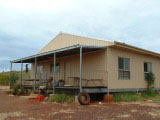 Muckaty manager will support second nuclear waste nomination ABC News 20 June 14 The manager of Muckaty cattle station says he doesn’t care where a nuclear waste facility is put on the property, because it will mean more infrastructure. The Northern Land Council (NLC) has withdrawn its original nomination of a small section of Muckaty Station, 600 kilometres north of Alice Springs, as the site for Australia’s first nuclear waste dump.
But the NLC has not ruled out the possibility of making a second nomination on behalf of Traditional Owners from the Muckaty Aboriginal Land Trust.
The Federal Minister for Industry, Ian McFarlane, has given the NLC three months to come up with a second nomination, and says it could possibly be an area on Muckaty known as the ‘Northern Site’.
The station manager of Muckaty, Ray Aylett, says while it’s not up to him, he would support a second nomination……Ray Aylett is currently in a dispute with the Northern Land Council about his licence on the property, saying he was given an eviction notice to be out by this month.
A tender for a grazing licence on the property was advertised late last year, but Mr Aylett says he doesn’t know where the process is up to.
The NLC is yet to respond to ABC Rural’s request for clarification on the status of the property’s lease. http://www.abc.net.au/news/2014-06-20/muckaty-nomination-support/5537722
AUDIO; Northern Land Council on failed bid for Muckaty nuclear waste dump
AUDIO: Land council plans internal review after failed Muckaty nuclear dump bid http://www.abc.net.au/news/2014-06-20/land-council-plans-internal-review-after-failed/5540368 20 Jun 2014The bid for a nuclear waste dump on a particular spot at Muckaty Station, north of Tennant Creek, has fallen over after seven years of opposition. The Northern Land Council, which nominated the site on behalf of some of the Ngapa clan, agreed to an out-of-court settlement. But there is growing expectation a second site at Muckaty will soon be nominated.
1 This month
15 April – Zoom –Nuclear Power is Not the Solution
Apr 15, 2026 01:00 AM in Canberra, Melbourne, Sydney

Join the International Physicians for the Prevention of Nuclear War (IPPNW) on Tuesday, April 14th for a timely webinar exploring the risks associated with nuclear power and challenging the myth that it offers a simple, safe, carbon-free solution to the climate crisis

of the week – Australians for War Powers Reform (AWPR)
To see nuclear-related stories in greater depth and intensity
 Antinuclear