Our toxic planet – from plastic bags to nuclear waste
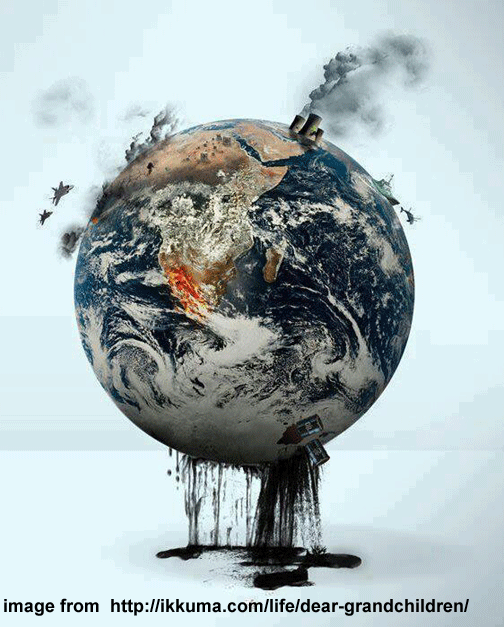
Plastic Bags, Nuclear Waste and a Toxic Planet, Energy Collective, Steven Cohen, September 3, 2014 Last week we saw California move a step closer to banning one-time-use plastic bags and the Federal Nuclear Regulatory Commission legalize above-ground storage of nuclear waste. What’s the connection? Every once in a while I think it is useful to turn aside from the deeply rooted, but relatively straightforward problem of climate change, to the growing use of uncontrolled toxic substances in our daily economic life. The toxicity of our environment may well be more difficult to address than the problem of climate change.
The use of toxics in the goods we consume is so widespread that when firefighters enter a modern home that is burning, they must wear breathing devices for protection from the toxicity of the fumes that emanate from our burning floors, appliances, and walls. Household toxics are dangerous, but nothing compared to nuclear waste. Nuclear waste is one of the most toxic substances we have ever fabricated, always bringing to mind the late Barry Commoner’s common sense statement that nuclear power was a “hell of a complicated way to boil water.”………
These bags are an integral component of our throwaway lifestyle, and create major waste management and litter problems throughout the nation. Lightweight plastic bags can be found in the ocean, in trees, and just about everywhere. They are filling up landfills at a rapid rate. We managed to live without them before they were introduced in the 1970s and we’ll probably survive after they are gone; assuming California Governor Jerry Brown signs the bill and California begins yet another national environmental trend.
While we see progress on the coast, we remain mired in toxic waste back in the nation’s capital. The problem is that our broken political process is incapable of dealing with the nuclear waste that is accumulating at the nation’s civilian nuclear power plants. …….
In order to allow plants to be licensed again, the Nuclear Regulatory Commission decided that nuclear waste could now be stored indefinitely in well-guarded and well-maintained above ground storage facilities. Scientists estimate that some nuclear waste will remain toxic for hundreds of thousands of years. In fact, one of the reasons for below ground storage was the likelihood that the repository would last longer than our current civilization.
Many of my climate change-oriented colleagues argue that nuclear power is a realistic and desirable replacement for fossil fuels. But any close look at the technical and political problems of nuclear waste should provide ample reason to look elsewhere for a solution to our energy needs. ………..
Our economy is filled with a range of substances and products that have been engineered without much thought given to long term environmental impacts. Our houses and fences were once made of wood, a fairly traditional and very biodegradable material that literally grows on trees. Today vinyl and other plastics that last longer and are easier to maintain have replaced wood in homes all over America. Many of our consumer products are far from biodegradable; some include toxics and many are designed for planned obsolescence. These ordinary, mundane products are entering our waste stream and finding their way into fragile, interconnected ecosystems all over the planet. Sometimes the impact is minor, sometimes it is significant, but generally it is unexamined, careless and casual.
From ordinary plastic bags to extraordinary pools of nuclear waste, we have unleashed a staggering array of poisons into the same ecosystems that feed us and provide us with other biological necessities such as air and water. In some cases, such as nuclear waste, we have heard decades of discussion and debate about risks, costs and benefits. However in most cases, we are either ignorant or barely aware of the impacts and potential risks…….
No comments yet.
1 This month
7 April – WEBINAR – Australia and the Doomsday Clock – Preventing nuclear war through NoFirstUse and other policies
Online | Tuesday April 7, 4:00-5:30pm, Australian Eastern Time / 8:00-9:30am Central Europe Time
– Access the registration link
15 April – Zoom –Nuclear Power is Not the Solution
Apr 15, 2026 01:00 AM in Canberra, Melbourne, Sydney

Join the International Physicians for the Prevention of Nuclear War (IPPNW) on Tuesday, April 14th for a timely webinar exploring the risks associated with nuclear power and challenging the myth that it offers a simple, safe, carbon-free solution to the climate crisis

21 April Webinar: No Nuclear Weapons in Australia
Start: 2026-04-21 18:00:00 UTC Canberra, Melbourne, Sydney (GMT+10:00)
End: 2026-04-21 19:30:00 UTC Canberra, Melbourne, Sydney (GMT+10:00)
Event Type: Virtual
A virtual link will be communicated before the event.
Host Contact Info: australia@icanw.org

of the week – Australians for War Powers Reform (AWPR)
To see nuclear-related stories in greater depth and intensity
 Antinuclear
Leave a comment