Government cover-up of Australia’s involvement in nuclear bomb testing
The following summarizes some of the key conclusions of the Royal Commission:
- The Australian government controlled media reporting such that news items provided what the UK government deemed suitable only;
- Prior to the first tests on the Australian mainland, the Government Cabinet, Parliament and news media were not informed of what was happening;
- It is likely that the major tests resulted in a general increase in cancer within the Australian population;
- Exposure to radiation increased the risk of cancer in nuclear veterans;
- There was a failure to adequately take into account the distinctive lifestyle of Aboriginal people living in the region;
- The authorities were negligent in their management, equipping and briefing of the crews of the Lincoln aircraft who were directed to fly through the nuclear cloud in the Totem 1 test;
- In the Buffalo tests, “. . . the attempts to ensure Aboriginal safety during the Buffalo series demonstrate ignorance, incompetence and cynicism on the part of those responsible for that safety.” (12)
This summary is a very small and selective account of the content of the Royal Commission’s Report.
Since Hiroshima: Australia’s Active Involvement in the Use and Abuse of Nuclear Energy Sunday, 05 October 2014 09:59By Lindsay Fitzclarence, Truthout “………..By 1952, the government had signed a contract with the CDA (Combined Development Agency) representing the UK and United States to supply uranium (5).
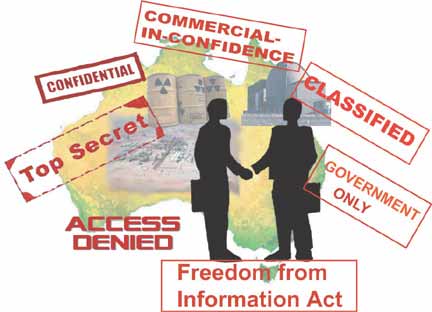
At the same time, in a remarkable expression of executive power, the pro-royalist prime minister of Australia, Robert Menzies, agreed to a British request to begin testing of atomic weapons in its former colony (6). At the dawn of the Cold War nuclear arms race, Australia was an active participant at both ends of the weapons cycle: the source of primary nuclear fuel and as a nuclear testing ground.
British tests began in 1952 and concluded in 1963. During this time, 12 bombs were exploded, the largest being 60 kilotons (1 kiloton = 1,000 tons of TNT). Three devices were tested at Monte Bello islands off the coast of Western Australia, and nine were tested on the Australian mainland in South Australia.
The tests were conducted in clusters and code named as Operations: “Hurricane,” “Totem,” “Mosaic,” “Buffalo” and “Antler” (7). Within this same time frame, literally hundreds of “minor trials” of associated weapon devices occurred. Several of these tests involved deadly plutonium as the material source and also occurred during the period of the nuclear test moratorium between the United States and Soviet Union. The so-called minor tests were characterized with the innocuous titles of “Kittens,” “Rats,” “Vixen” and “Tims” (8).
These major and minor tests were conducted under a veil of extreme control and secrecy. Even up to current times, some information about the processes and outcomes of the tests has not been released by the British government. Making public the cold hard facts about what occurred has been an extended and, at times, problematic process.
In the decade and a half after the tests, information about what had actually occurred began to filter into the public domain. As increasing numbers of individuals who were involved became ill, their medical conditions became known. Stories and anecdotes shared by displaced Indigenous landowners began to enter the wider community. Decisions about the repair and restoration of the test sites were necessary and thus became public. As a result, concerns about the truth of what had actually occurred grew and began to consolidate into a chorus of protest.
In 1980, the government of the time was pressured into establishing an inquiry to satisfy demands for an alternative and more detailed account of the political and cultural facts of the testing period. The Australian Ionising Radiation Advisory Council (AIRAC) was commissioned to conduct the inquiry and duly delivered a report three years later (9). This report has been dubbed a whitewash in basically confirming and legitimizing the pre-existing, superficial narratives about the testing program (10).
A change of government in late 1983 paved the way for an alternative narrative about the tests. In July 1984, a Royal Commission was established and directed to investigate a large number of matters, including the nature of measurements taken during and after testing, health warnings provided to those involved, safety procedures used to control movement of persons in the testing area, fallout measurements and monitoring, disposal of contaminated material and the contents of reports and other classified documentation held by the United Kingdom. (11)
The following summarizes some of the key conclusions of the Royal Commission:
- The Australian government controlled media reporting such that news items provided what the UK government deemed suitable only;
- Prior to the first tests on the Australian mainland, the Government Cabinet, Parliament and news media were not informed of what was happening;
- It is likely that the major tests resulted in a general increase in cancer within the Australian population;
- Exposure to radiation increased the risk of cancer in nuclear veterans;
- There was a failure to adequately take into account the distinctive lifestyle of Aboriginal people living in the region;
- The authorities were negligent in their management, equipping and briefing of the crews of the Lincoln aircraft who were directed to fly through the nuclear cloud in the Totem 1 test;
- In the Buffalo tests, “. . . the attempts to ensure Aboriginal safety during the Buffalo series demonstrate ignorance, incompetence and cynicism on the part of those responsible for that safety.” (12)
This summary is a very small and selective account of the content of the Royal Commission’s Report. What this selection provides, however, is a snapshot of the Australian government’s complicity and passivity in the production of a dangerous, exploitive and destructive form of Cold War politics. This story, unfortunately, does not end here. One outcome of this dubious Cold War politics is Australia’s ongoing involvement in the nuclear fuel cycle. Uranium mining and export still occurs in several sites in the state of South Australia and in the Northern Territory.
This willingness to be involved in the first phase of the nuclear fuel cycle needs to be interpreted against the backdrop of cultural ignorance, political duplicity and neocolonial arrogance and exploitation. It is around this matter that Henry Giroux’s observation about the redemptive politics in remembering Hiroshima (and Nagasaki) becomes relevant. What is required in Australia, and elsewhere, is a politics of reclaiming a radical imagination and accepting responsibility to take part in activities aimed at avoiding these tragedies that must be better understood in order not to be repeated. http://www.truth-out.org/news/item/26593-since-hiroshima-australia-s-active-involvement-in-the-use-and-abuse-of-nuclear-energy
No comments yet.
1 This month
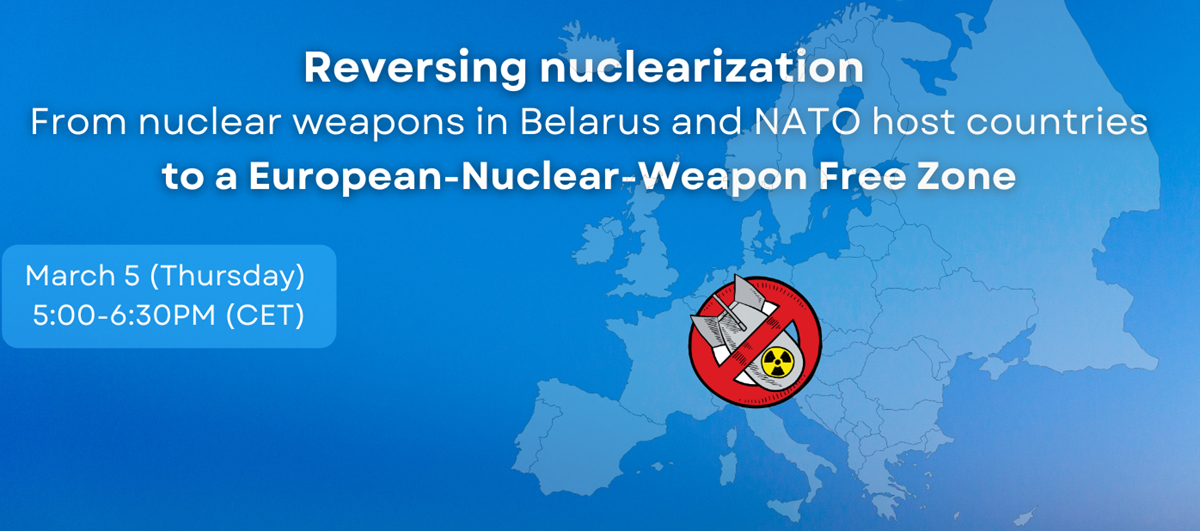
6 March -Online – Reversing nuclearization:
From nuclear weapons in Belarus and NATO host countries to a European-Nuclear-Weapon Free Zone
Mar 6, 2026 03:00 AM in Canberra, Melbourne, Sydney

of the week – Australians for War Powers Reform (AWPR)
To see nuclear-related stories in greater depth and intensity
 Antinuclear
Leave a comment