International pressure on Abbott, over his climate sceptic policies
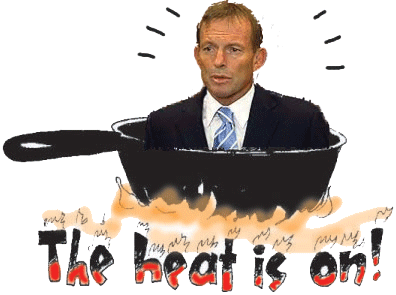
Abbott continues to allow vested interests and narrow definitions of Australia’s business priorities to control the agenda. These priorities emphasise protecting mining and resource companies, no matter what the long-term costs, even when they are becoming less successful with their largest client.
US–China emissions deal puts pressure on Abbott Macro Business Cross-posted from The Conversation: Unconventional Economist November 14, 2014 | While most of the world is celebrating the US–China pact on climate change, the deal puts pressure on the Australian government and resources companies to rethink relations with China.by Kerry Brown, Executive Director, China Studies Centre at University of Sydney
The deal, signed at the APEC summit in Beijing this week, includes agreement to cut emissions and work together to mitigate the impact of climate change. For the first time China has set 2030 as the year in which its emissions are expected to peak. The deal creates a common framework with the United States, the other largest greenhouse gas producer in the world, to take action.
Chinese President Xi Jinping started the APEC summit hoping for blue skies in the capital. With this deal, he is showing he is prepared to take action to achieve this.
For Australia this means that environmental compliance costs in China will rise. Australian companies will have additional costs of doing business there. Meanwhile Chinese companies will drive a harder bargain as their cost base lowers.
Australian resource companies, which are already suffering a dip in their relations with their largest clients, will experience more of a squeeze on their profits. This will impact Australia’s overall growth rate.
News of the agreement comes as India announces plans to stop thermal coal imports in three years. Australian coal companies will not even have a significant alternative export market to China.
This means the Australian government needs to rethink our economic engagement with China. This is not just about refocusing our export emphasis from resources to services. It is about truly partnering with China in its environmental challenges, rather than adding to them.
The Australian government’s stance on climate change is therefore even more important. It is in the unfortunate position of being totally at odds with China about a crucial economic sector and a major issue that impacts on it. It is a bad position to be in and some intellectual realignment needs to take place. However, Australia still seems intent on taking the most parochial, least enlightened position of all G20 attendees on climate change. Abbott continues to allow vested interests and narrow definitions of Australia’s business priorities to control the agenda. These priorities emphasise protecting mining and resource companies, no matter what the long-term costs, even when they are becoming less successful with their largest client.
However, it is becoming more difficult for Abbott to defend his reluctance to be proactive on the use of renewable energy on the grounds of protecting Australian business. If the leaders of the world’s largest economies can do this, then Australia should be comfortable following them.
This weekend’s G20 meeting places pressure on Abbott to step up. It will be interesting to see how he words the G20 final communique. It may be way ahead of any previous stance on the environment that Abbott has shown a willingness to support. Will this G20 be the first time a final statement is made that all but the host nation can stand by?……….http://www.macrobusiness.com.au/2014/11/us-china-emissions-deal-puts-pressure-on-abbott/
No comments yet.
1 This month

of the week – Australians for War Powers Reform (AWPR)
To see nuclear-related stories in greater depth and intensity
 Antinuclear
Leave a comment