Julie Bishop goes for nuclear power, as Ziggy Switkowski hedges his bets
But he [Dr Ziggy Switkowski] agreed that if there were improvements in wind and solar technology over the next two decades to make them more reliable around the clock, renewable energy sources could be more viable than nuclear.
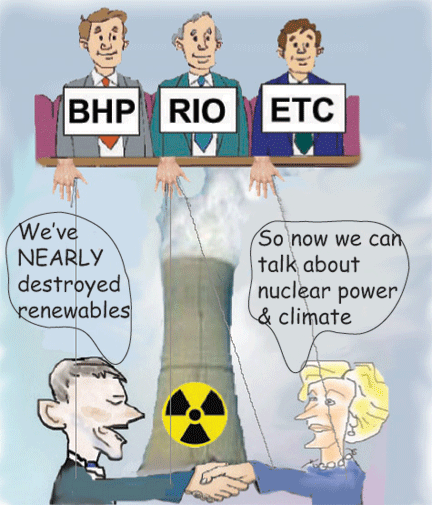 Julie Bishop reopens nuclear debate as route to cut carbon dioxide emissions, SMH, November 30, 2014 Latika Bourke Foreign Minister Julie Bishop says nuclear energy remains an option for Australia, describing it as an “obvious direction” as it considers how to cut carbon dioxide emissions after 2020.
Ms Bishop called for a an open discussion about the feasibility of nuclear power, given Australia’s abundance of uranium, but accused Labor of resorting to a scare campaign when the issue was raised during the Howard government years
……….Ms Bishop flies to Lima, Peru, in just over a week to attend the annual United Nations climate conference, where Australia will face pressure to announce its climate targets for beyond 2020 and it’s understood the Prime Minster has personally requested Trade Minister Andrew Robb chaperone Ms Bishop so he can factor in the economic impacts of any new targets Australia considers. Mr Robb, with three major trade deals under his belt, was due to be in South America at the time. Mr Robb was instrumental in influencing the coalition partyroom against former Leader Malcolm Turnbull and his support for Labor’s emissions trading scheme……….
Dr Switkowski praised Ms Bishop’s comments and said “nuclear power simply has to be in the mix in Australia’s energy future” given its negligible carbon footprint and Australia’s geological stability.
“It’s a big call for our leaders to engage in this debate, but a good one because it will take some time for communities and industries to get comfortable again with the current and future generations of nuclear technology,” he said.
Dr Switkowski said community sentiment towards nuclear power had been warming in Australia until the Fukushima disaster in 2011.
But he said advances in small modular reactors could make nuclear commercially viable for Australia as early as next decade because they addressed the main concerns people typically held about reactors – waste, their proximity to population centres and the risk of a catastrophic accident.
“The small modular reactors will provide a real opportunity to consider nuclear power again because they are a tenth of the size of a nuclear or coal-fired powered station,” he said.
But he agreed that if there were improvements in wind and solar technology over the next two decades to make them more reliable around the clock, renewable energy sources could be more viable than nuclear. “It’s a bit of a race, given the time that’s been lost due to Fukushima,” he said.
The government is likely to increase its uranium trade to China and India, and has in the past sold the resource to Russia. ………http://www.smh.com.au/federal-politics/political-news/julie-bishop-reopens-nuclear-debate-as-route-to-cut-carbon-dioxide-emissions-20141129-11w17k.html
No comments yet.
1 This month
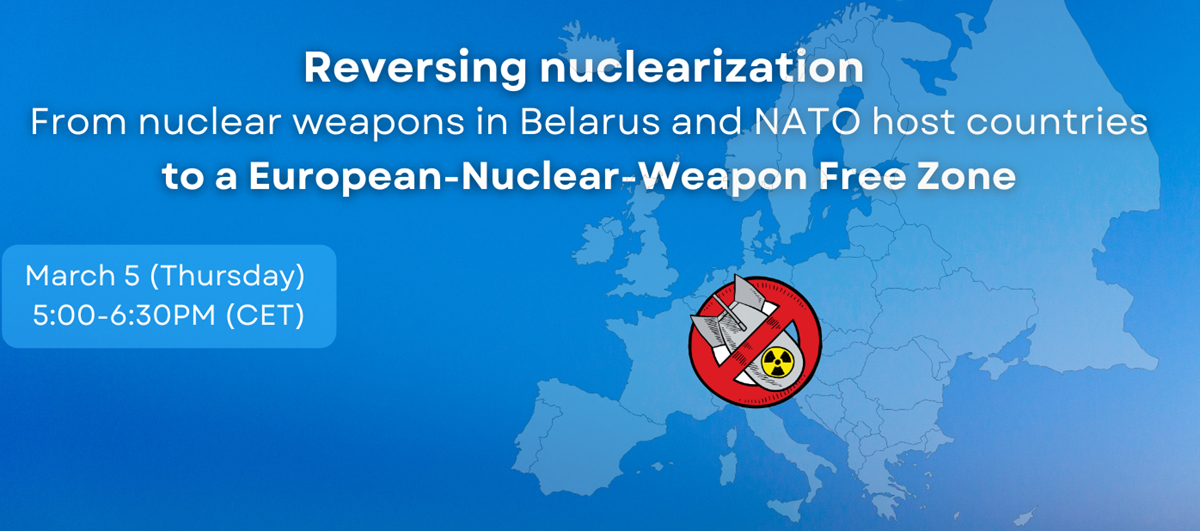
6 March -Online – Reversing nuclearization:
From nuclear weapons in Belarus and NATO host countries to a European-Nuclear-Weapon Free Zone
Mar 6, 2026 03:00 AM in Canberra, Melbourne, Sydney

of the week – Australians for War Powers Reform (AWPR)
To see nuclear-related stories in greater depth and intensity
 Antinuclear
Leave a comment